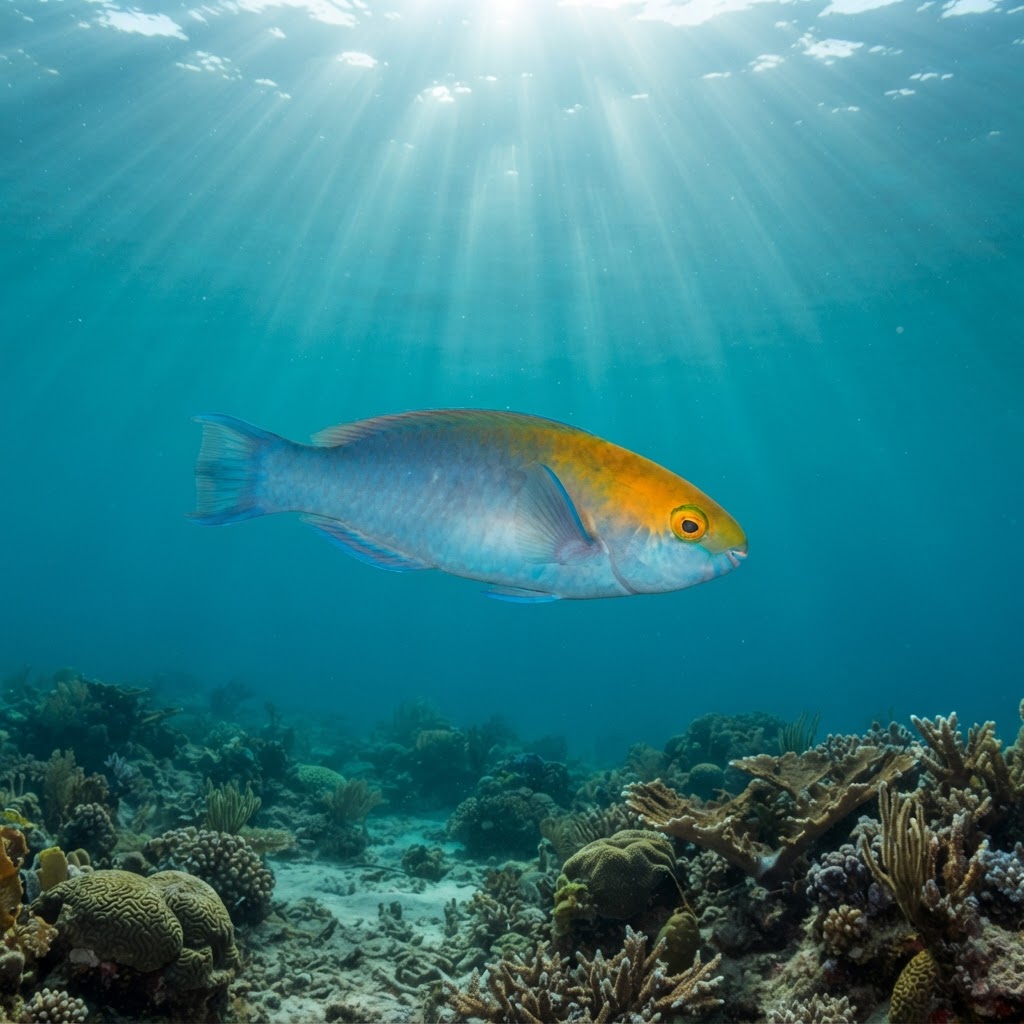
Scarus coeruleus
Bright turquoise reef giants seen in Florida, Aruba and Bonaire year-round in warm 26-28C water. Here's how to find one.
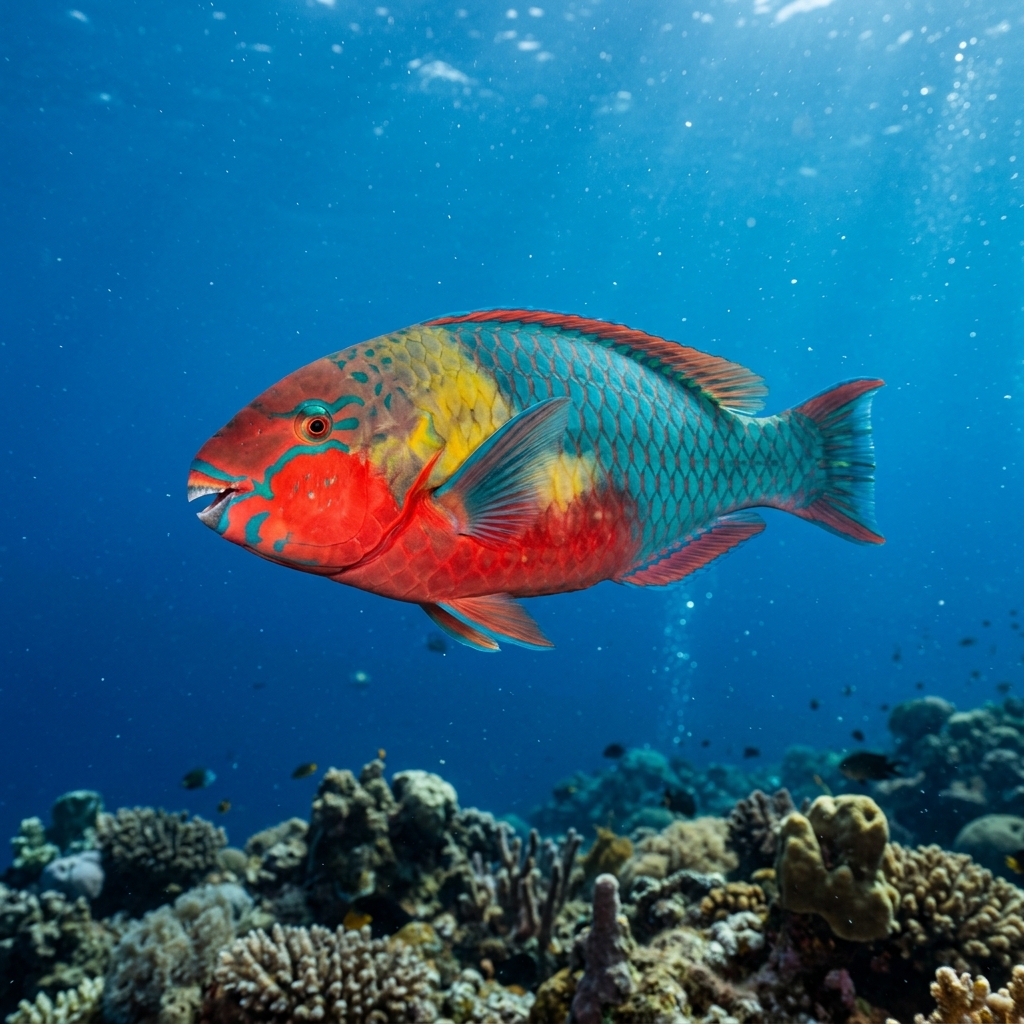
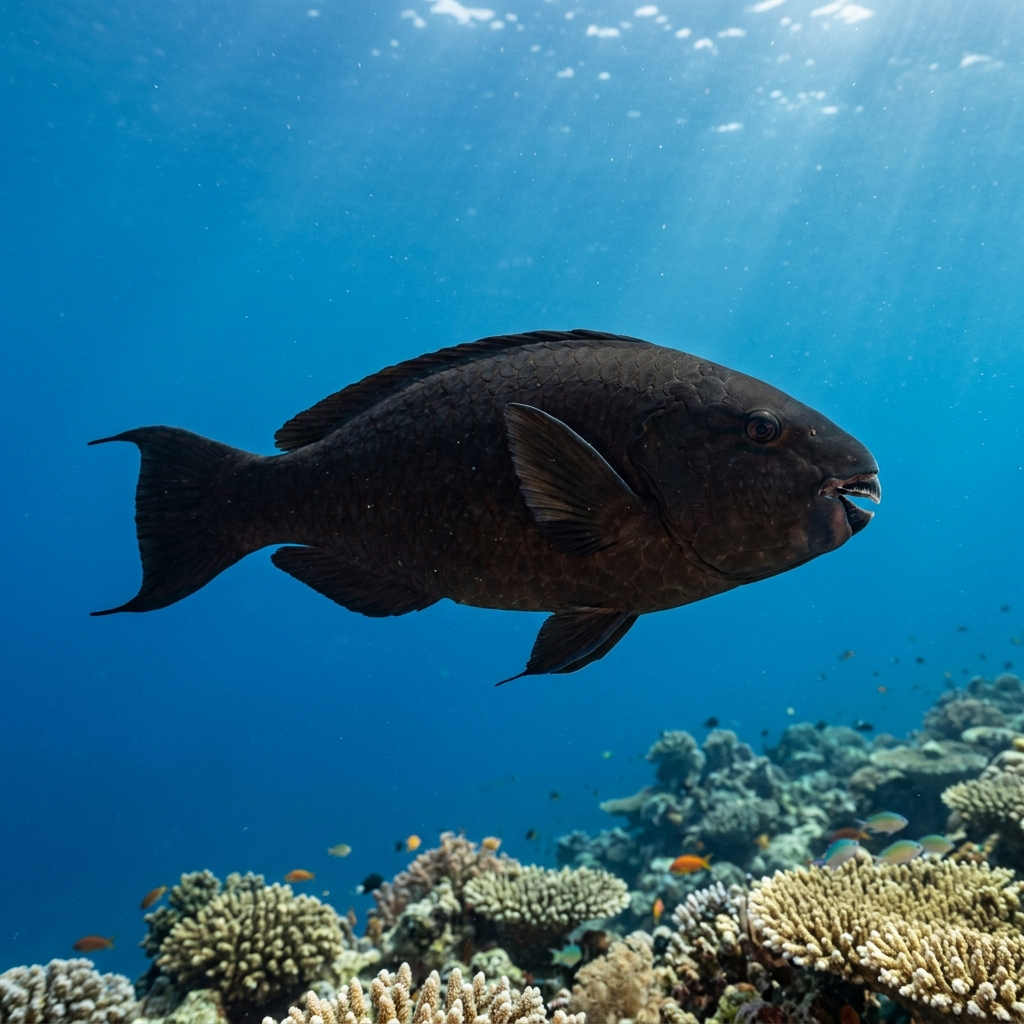
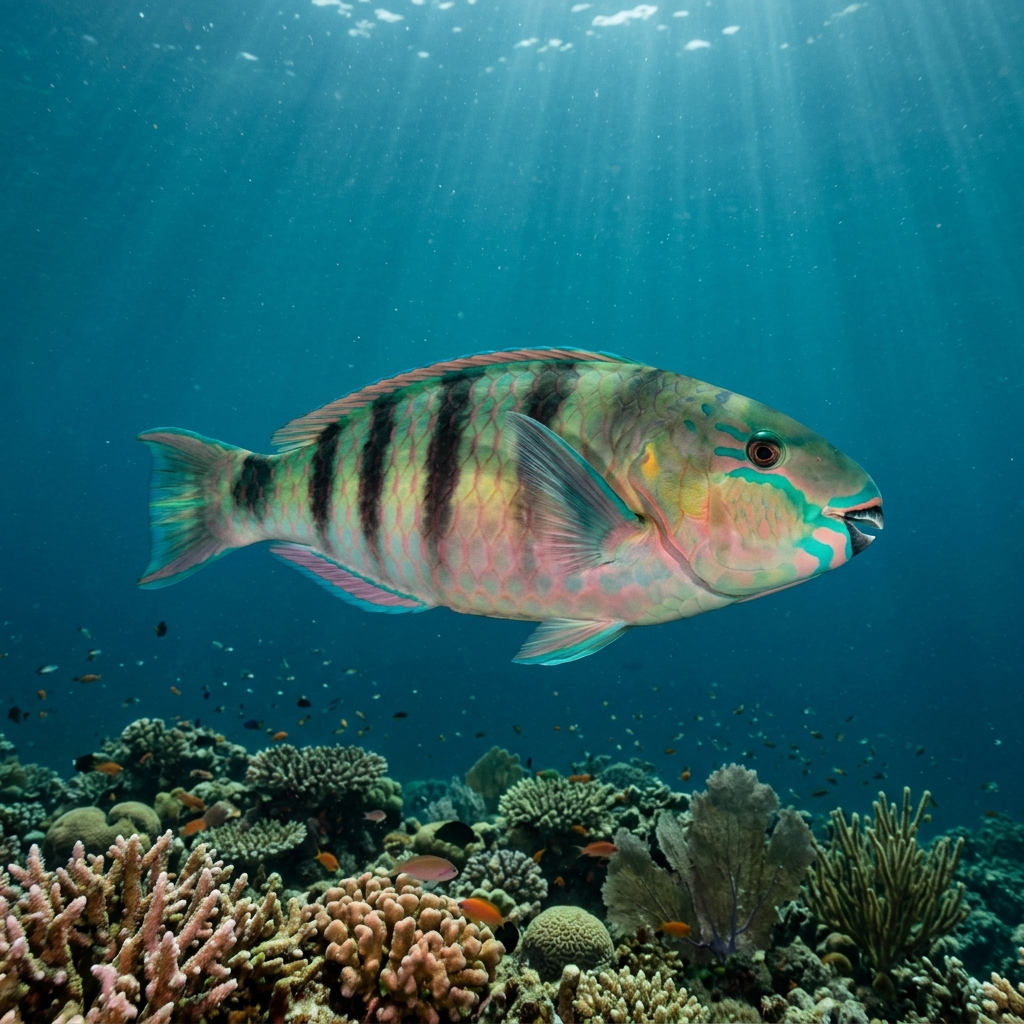
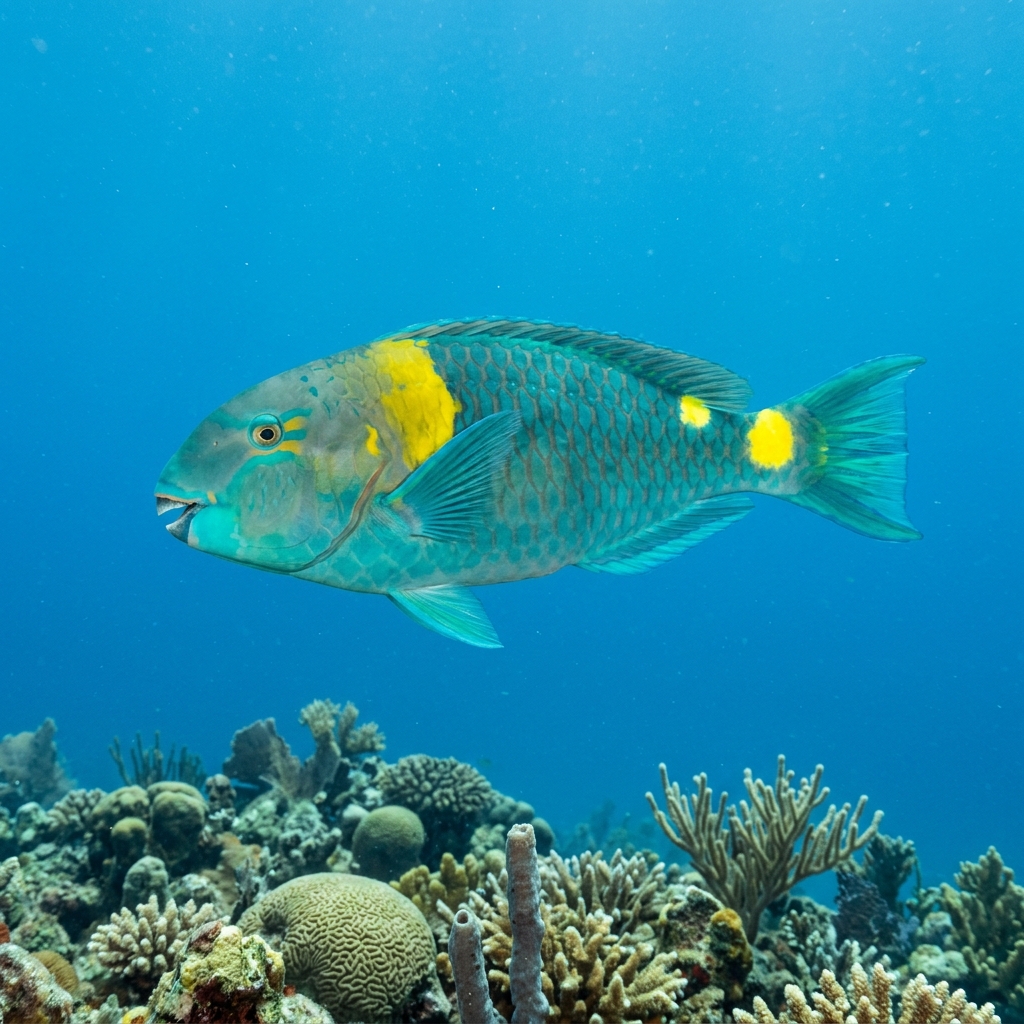
Look for a large, slab-sided fish washed almost entirely in turquoise to deep blue, with a fused, parrot-beak mouth used for grazing algae off rock and coral. Adults can push past 80cm, making them one of the bigger fish cruising a reef flat, and a yellowish-orange patch on the snout of some individuals is the giveaway they're maturing into that colour phase. Younger fish run a duller grey-blue and are easy to overlook against open water.
Expect to see it grazing alone or in loose pairs over reef flats and rubble zones, scraping algae off dead coral and rock with that fused beak, often audible as a soft crunching if you get close. It tends to hold a fairly consistent territory and won't bolt at the sight of divers, letting you watch a full feeding pass if you keep your distance and your finning calm. Most logs describe it as uncommon rather than common, so a sighting usually means one or two fish, not a school.
Parrotfish grazing is a real reef-maintenance job: by scraping algae off dead coral they clear space for new coral growth, and the pulverised rock they pass through their gut becomes some of the fine white sand found on Caribbean beaches.
No clear seasonal pattern shows up in the sightings, and with a comfortable range of 26.1 to 28.2C across its Caribbean and Florida haunts, it's a year-round encounter rather than a seasonal one.
Florida is by far the most reliable place to find them, logged across dozens of sites, with strong secondary populations in Aruba around Mangel Halto, Baby Beach and the Antilla Wreck Area. Belize's Lighthouse Reef, Curacao's Banda Abou, Bonaire's East Coast, Grand Cayman and Honduras's Bay Islands all produce regular sightings too, usually as one or two fish rather than a crowd.
Mapping where Blue Parrotfish is logged…
Florida is the most consistent location, with further sightings in Aruba, Belize's Lighthouse Reef, Curacao, Bonaire, Grand Cayman and Honduras's Bay Islands. Most encounters are one or two fish grazing a reef flat rather than groups.
There's no strong season in the sightings data, and the water temperatures they're found in, roughly 26 to 28C, hold steady across the year on these Caribbean and Florida reefs, so they're a year-round sighting.
Look for a large, uniformly turquoise-blue fish with a fused beak-like mouth, often over 60cm long, grazing slowly across dead coral or rock. A yellow-orange patch on the snout can appear as they mature.
They typically reach around 84cm, making them one of the larger parrotfish species and a noticeably big fish to spot cruising a reef flat.
No. They're herbivores that spend their time grazing algae and generally ignore divers, so there's no real risk in getting close for a look.
Their grazing scrapes algae off dead coral, keeping surfaces clear for new coral to settle, and the rock they process comes out the other end as fine sand, so they're doing real reef housekeeping every time you see one feeding.
Site and sighting data is aggregated from diver logs, iNaturalist and GBIF. For taxonomy and conservation status:
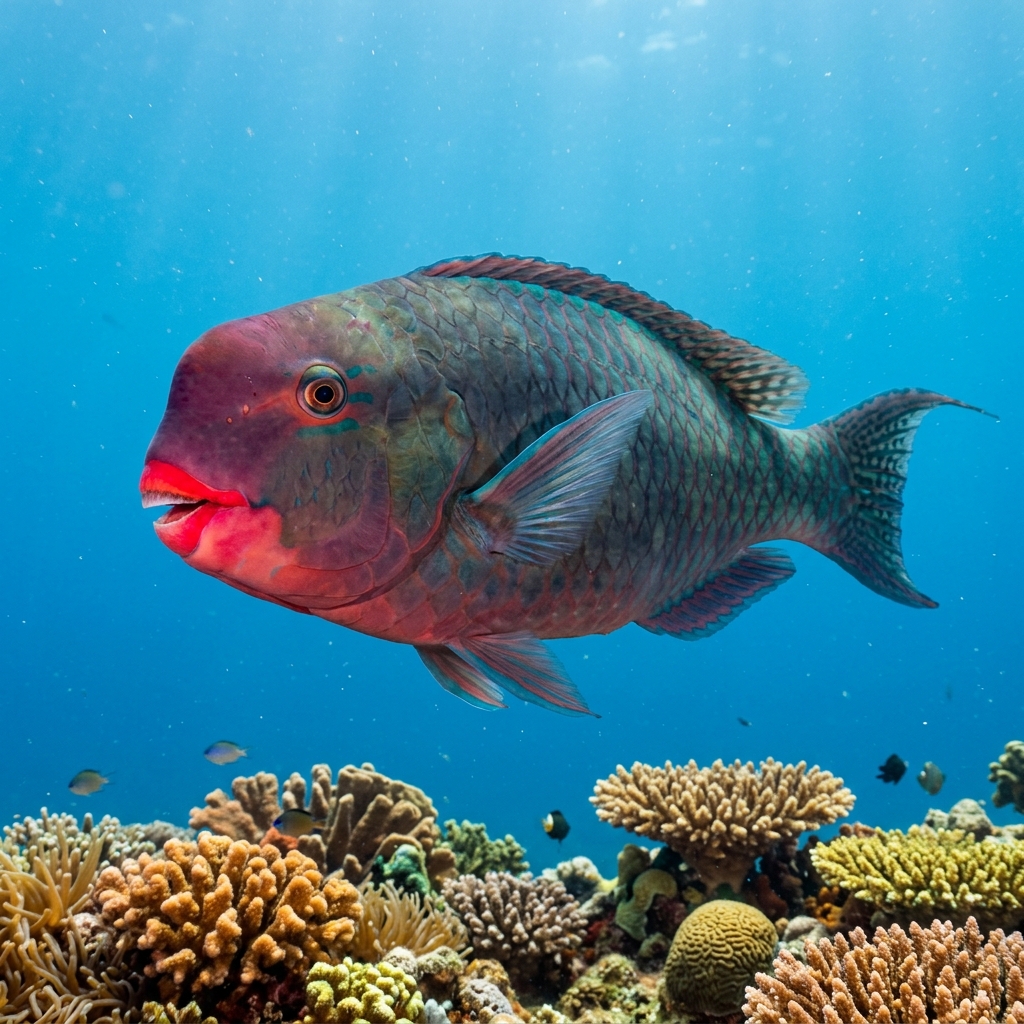
Redlip Parrotfish
2,789 sites