Callinectes sapidus
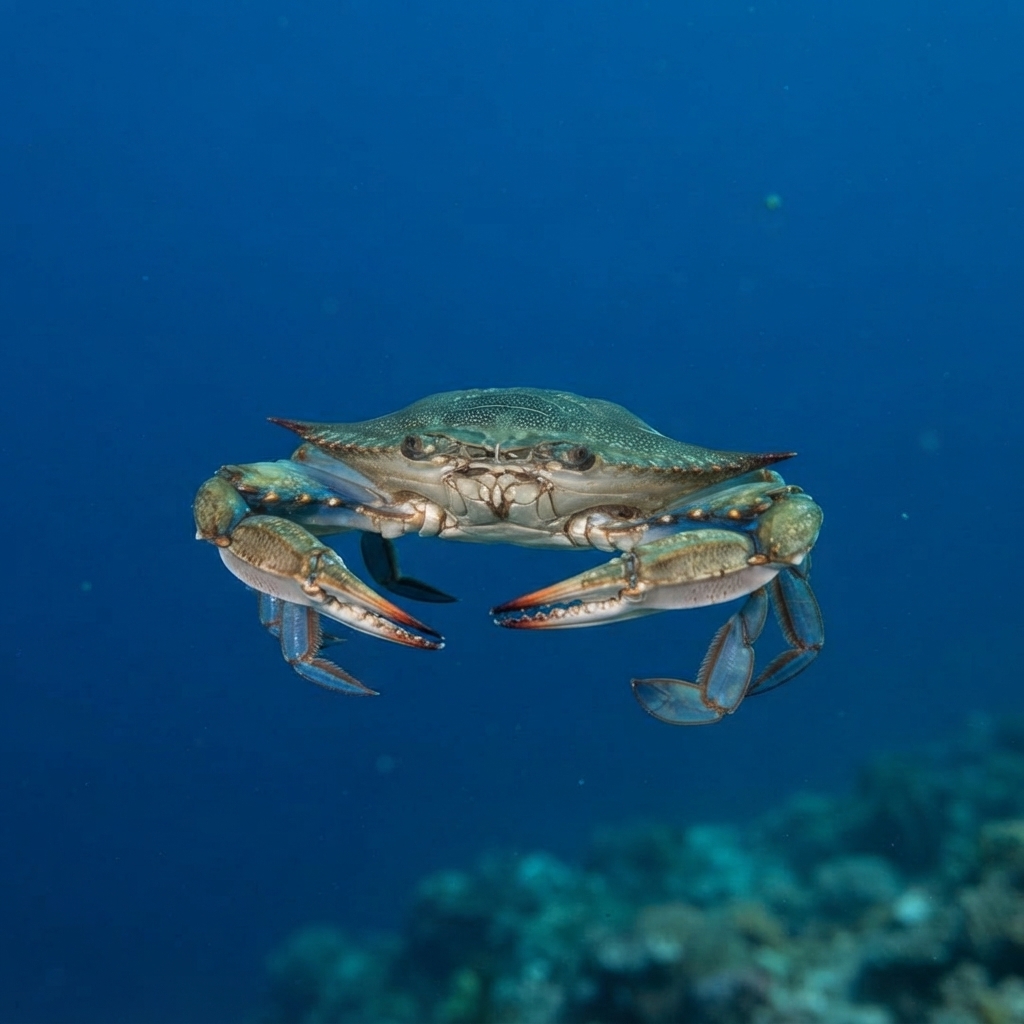
Bright blue claws and a paddle-tipped back leg give this crab away in the Algarve, Florida and Valencia's shallow, silty water year-round.
Safety warning
The claws deliver a sharp, painful pinch and it will raise them in defence rather than retreat, so give it space and avoid cornering it against a wall or your body. Handle only with gloves if at all, and keep fingers well clear of the claw reach.
If you're pinched
Strong pinchGeneral first-aid guidance, not a substitute for professional medical care. In an emergency, call your local emergency number.
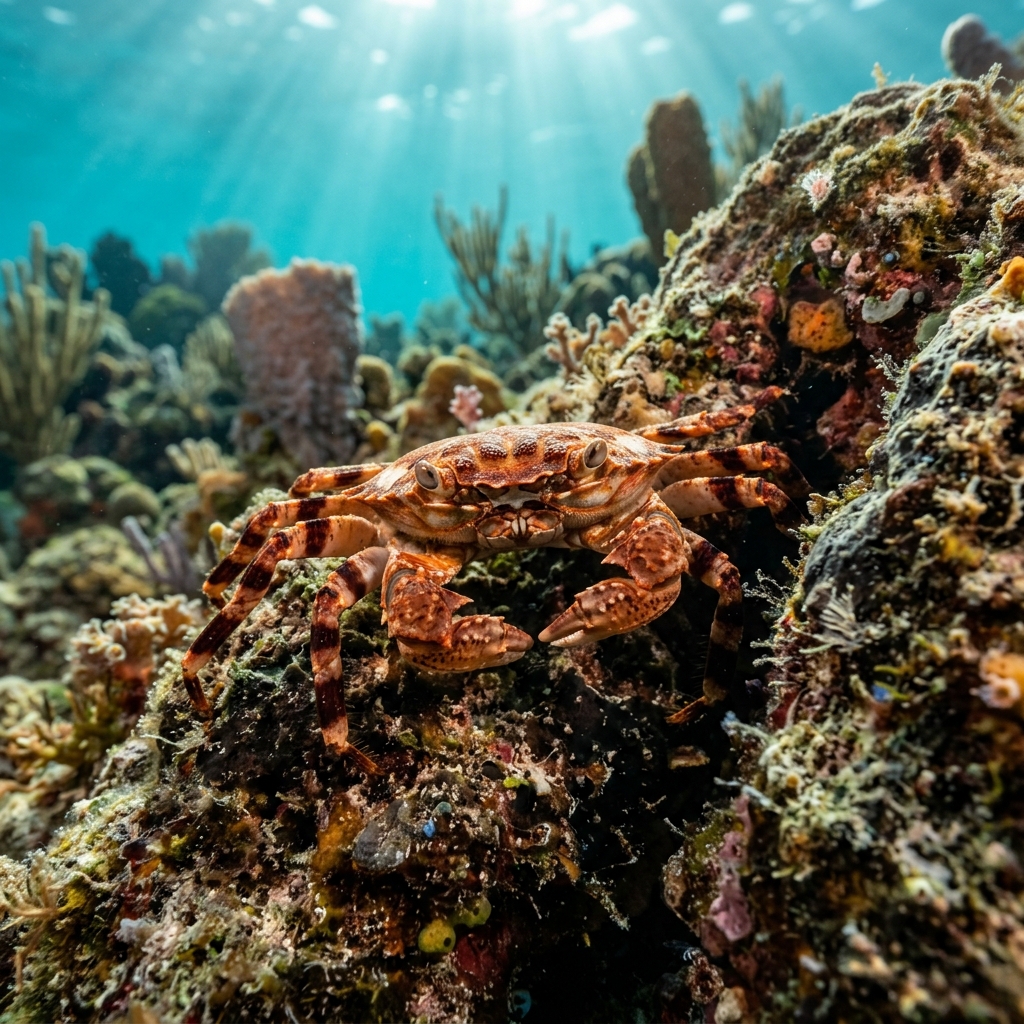
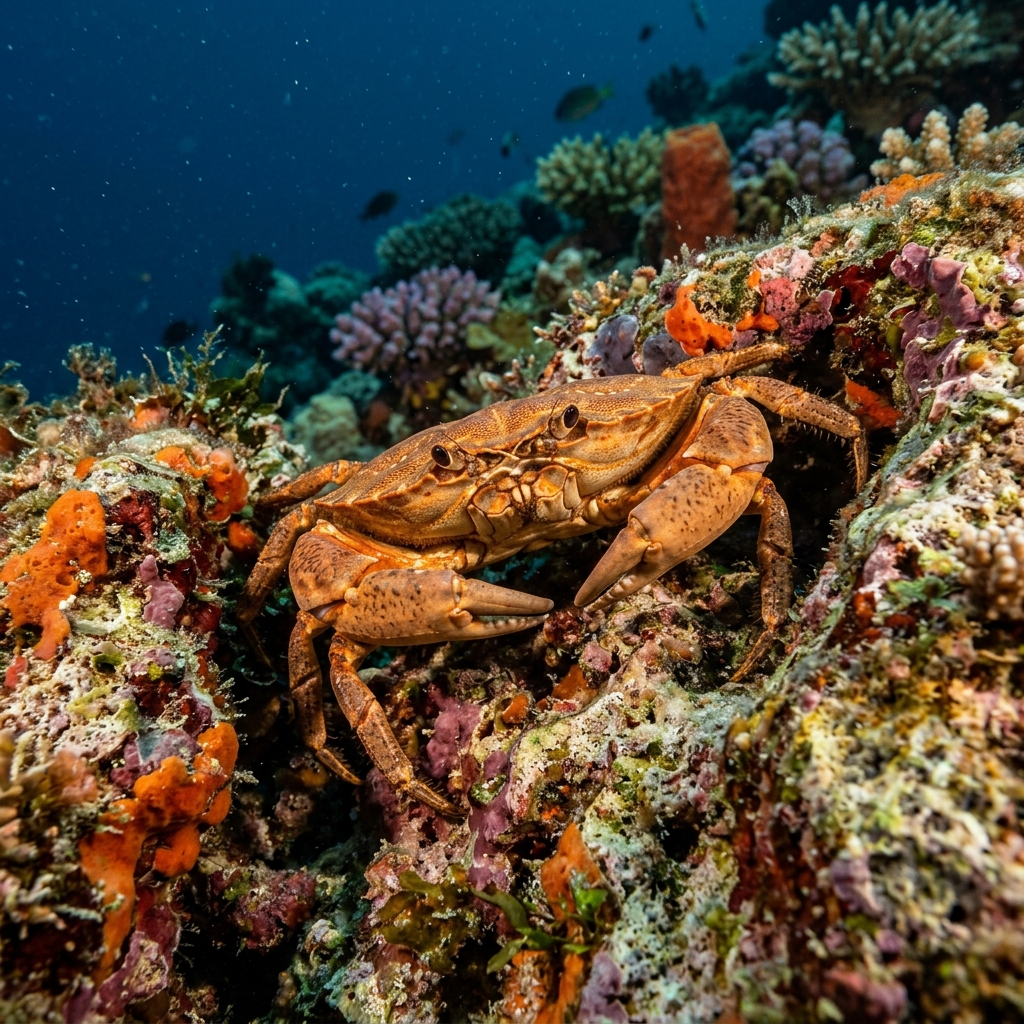
A wide, spiny-edged shell about 15 cm across, usually mottled olive to brownish-grey, with claws tipped in a distinctive bright blue (females show orange-red tips instead). The rearmost pair of legs is flattened into paddles for swimming, which is the fastest way to tell it apart from other shallow-water crabs. It often sits partly buried in sand or mud with just the eyes and antennae showing.
Expect to find it working the sand and mud at the bottom of bays, lagoons and harbour edges, often half-buried and easy to miss until it darts sideways. It's a confident scavenger and hunter that won't flee a diver outright, and it may raise its claws in a defensive stance if you get too close. Most sightings are in shallow, calm water rather than out on open reef.
It swims as readily as it walks, using its paddle-shaped back legs to scull sideways through open water, a trick most bottom-dwelling crabs can't manage.
No clear seasonal pattern shows up in the sightings, and with a comfortable range of roughly 12 to 26 C it turns up across estuaries and shallow coastal sites all year.
Most often logged in the United States, especially Florida and the Northeast, and it's a reliable find across Spain and Portugal, particularly the Algarve, Valencia and the Balearic Islands. Smaller but consistent numbers turn up in Mexico's Yucatán Peninsula, the Ionian Islands of Greece, and Gibraltar.
Mapping where Blue Crab is logged…
Florida and the Northeast US are the strongest areas, alongside Portugal's Algarve and Spain's Valencia and Balearic Islands. It also shows up reliably in Mexico's Yucatán Peninsula, Greece's Ionian Islands and Gibraltar.
There's no strong seasonal pattern in the sightings, and it tolerates a wide range of water temperatures from about 12 to 26 C, so it's a fair bet on shallow coastal dives at any time of year.
They can deliver a painful pinch with their claws and will raise them defensively if approached too closely rather than flee. Keep a respectful distance and never try to grab one bare-handed.
Look for a mottled olive-brown shell around 15 cm wide with bright blue-tipped claws (orange-red in females) and flattened, paddle-shaped rear legs used for swimming. It's usually found sitting in sand or mud rather than on rock or reef.
They typically reach around 15 cm across the shell, making them one of the larger swimming crabs a diver will encounter in shallow estuarine water.
Site and sighting data is aggregated from diver logs, iNaturalist and GBIF. For taxonomy and conservation status:
European Green Crab
2,469 sites