Malacanthus latovittatus
Elongated, pale blue-grey and often hovering over rubble near its burrow, this blanquillo turns up year-round in Okinawa and the Maldives' Central Atolls.
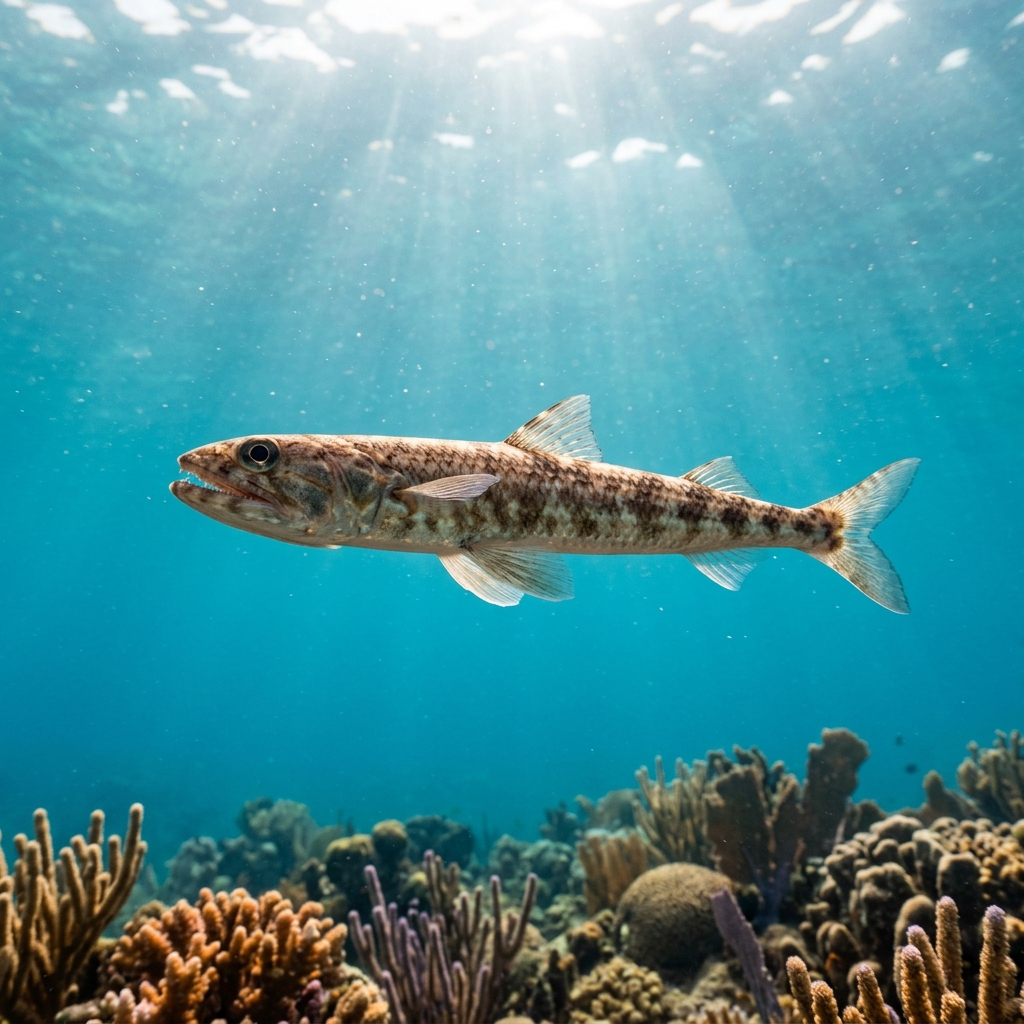
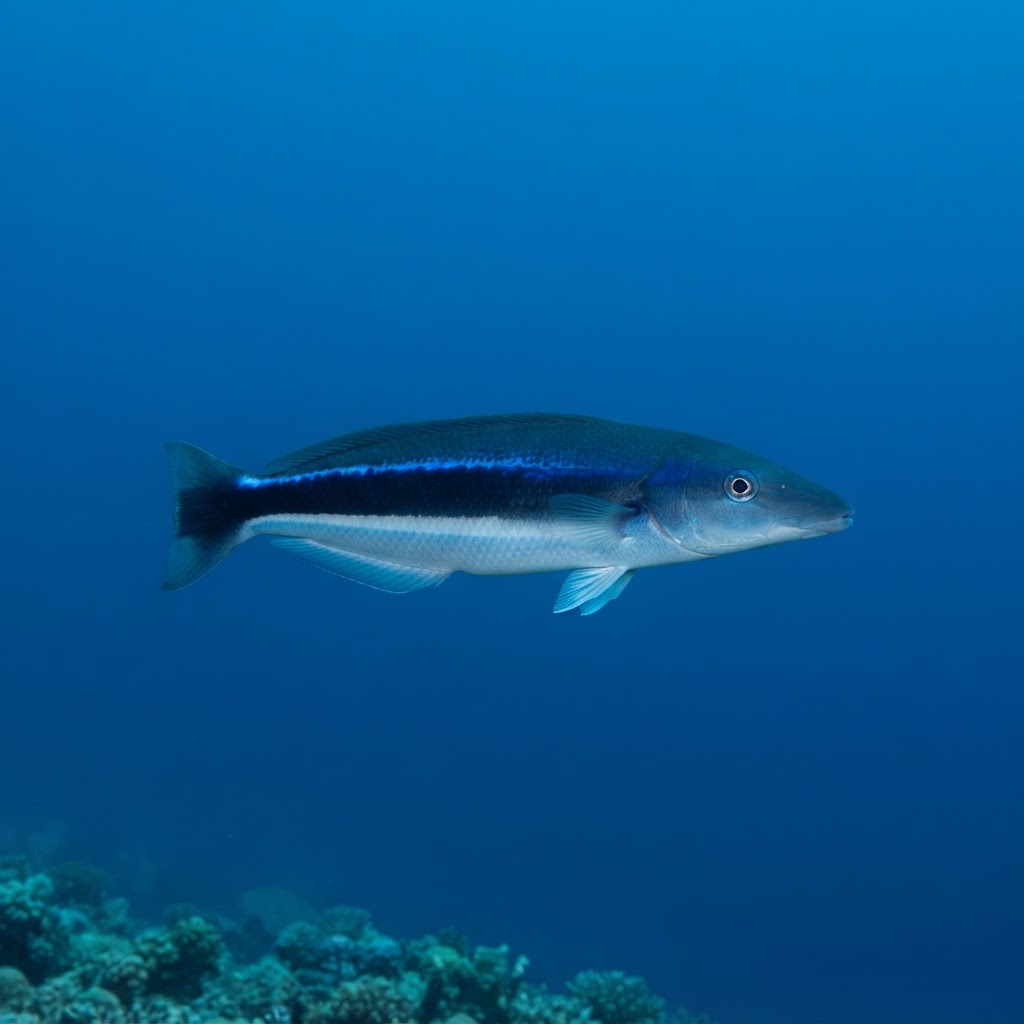
An elongated, torpedo-shaped fish reaching around 31 cm, with a pale blue-grey body that can flush darker or lighter depending on mood and light. Look for a long dorsal fin running nearly the length of the back and a slightly protruding lower jaw, giving it a faintly grumpy profile. It hovers a body length or two above sand and rubble patches rather than sitting on hard coral, which is often the first thing that gives it away.
Usually seen hovering just off the bottom over open sand, rubble, or the sloping edges of a reef, often near a burrow it can dart into if startled. It tends to keep a cautious distance from divers, drifting away rather than fleeing outright, and is most often spotted singly or in loose pairs during daylight dives. Because it favours open, featureless terrain over coral, it's easy to overlook unless you're scanning sand flats and rubble zones specifically.
Like other blanquillos, it digs and maintains a burrow in sand or rubble that it retreats into when threatened, so a sighting near a patch of open bottom is often a fish guarding a bolt-hole rather than just passing through.
No clear seasonal pattern shows up in the data, and with a comfortable range of roughly 24.6 to 29 C it's present on these reefs year-round. Plan around general dive-season logistics for your chosen country rather than a blanquillo-specific window.
Most reliably logged in Japan's Okinawa and Ryukyu Islands and across the Maldives' Central and Northern Atolls, with solid numbers also coming out of Sumatra in Indonesia, Atauro Island in Timor-Leste, and Palau's Rock Islands. Thailand's Phuket and Khao Lak also produce regular sightings, so it's a realistic find across a wide swathe of the Indo-Pacific rather than a single specialty site.
Mapping where Blue Blanquillo is logged…
Okinawa and the Ryukyu Islands in Japan and the Central and Northern Atolls of the Maldives are the most consistent regions, with further sightings across Sumatra, Atauro Island in Timor-Leste, Palau's Rock Islands, and Phuket and Khao Lak in Thailand.
There's no strong seasonal signal in the sightings, and its comfortable temperature range of about 24.6 to 29 C means it's found on tropical reefs throughout the year.
Look for a slender, torpedo-shaped fish around 31 cm long with a pale blue-grey body and a long low dorsal fin, hovering just above sand or rubble rather than perched on coral.
They typically reach about 31 cm in length, a slim, elongated build rather than a bulky one.
No, they pose no danger to divers and simply drift off if approached too closely.
It digs and defends a burrow in sand or rubble, ducking inside when it feels threatened, which is why sightings often happen near open bottom rather than coral structure.
Site and sighting data is aggregated from diver logs, iNaturalist and GBIF. For taxonomy and conservation status:
Soldierfish
3,612 sites