Pycnochromis nigrurus
Small blue-grey damselfish common on Zanzibar's reefs, thriving in 24-29C water year-round with no clear season.
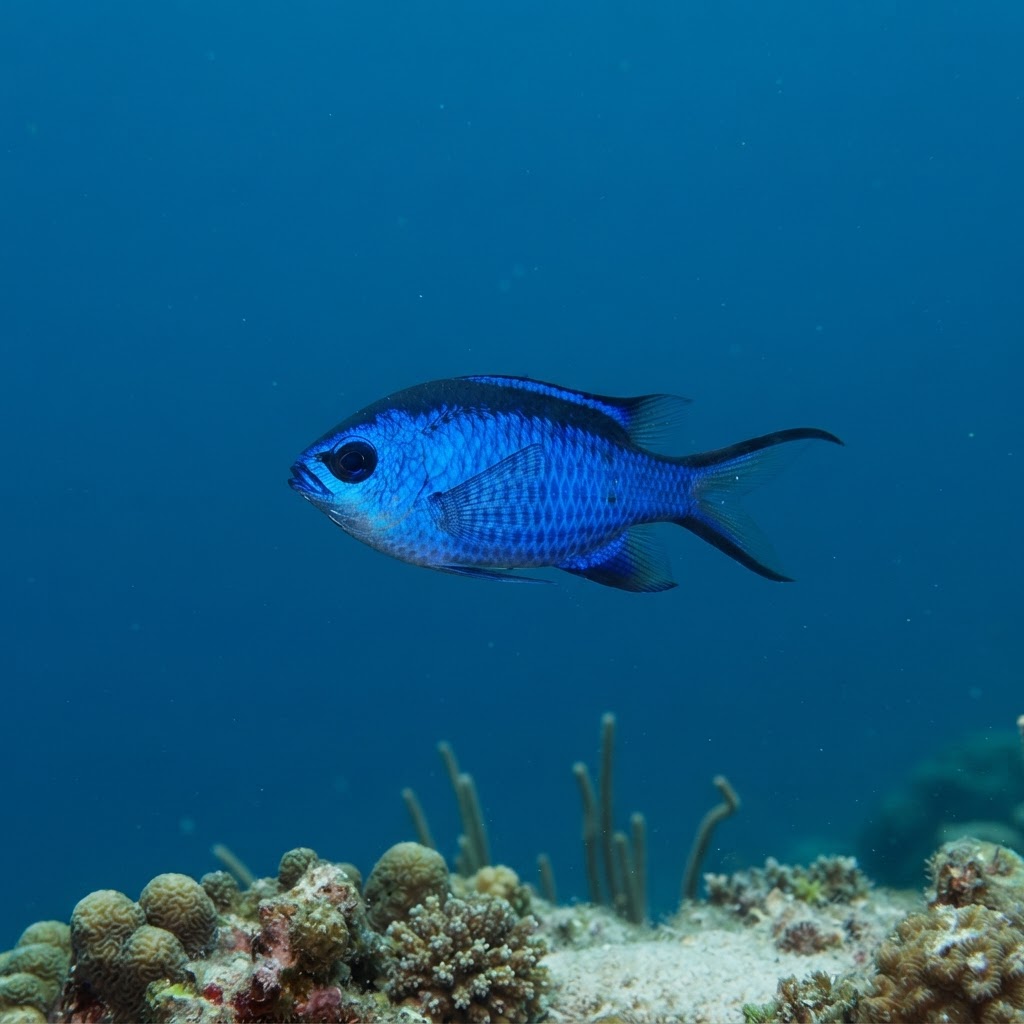
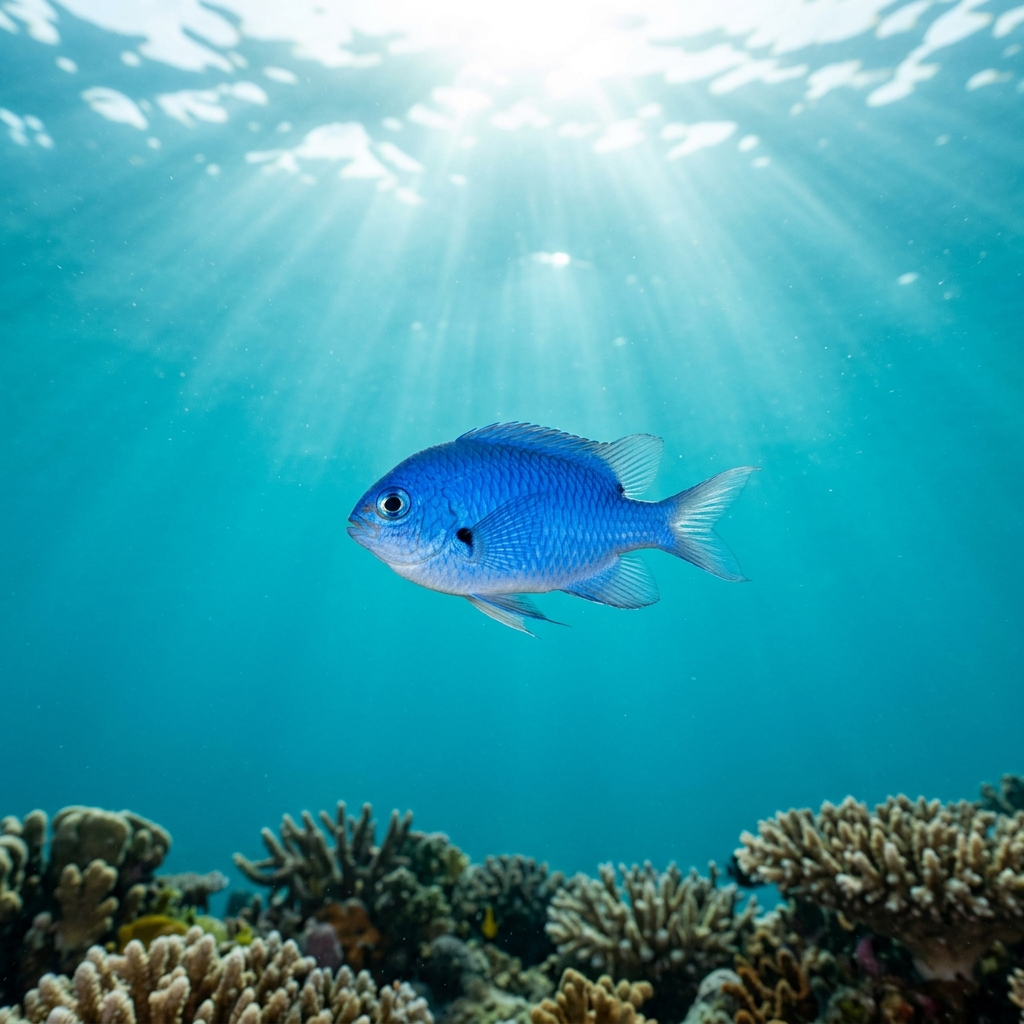
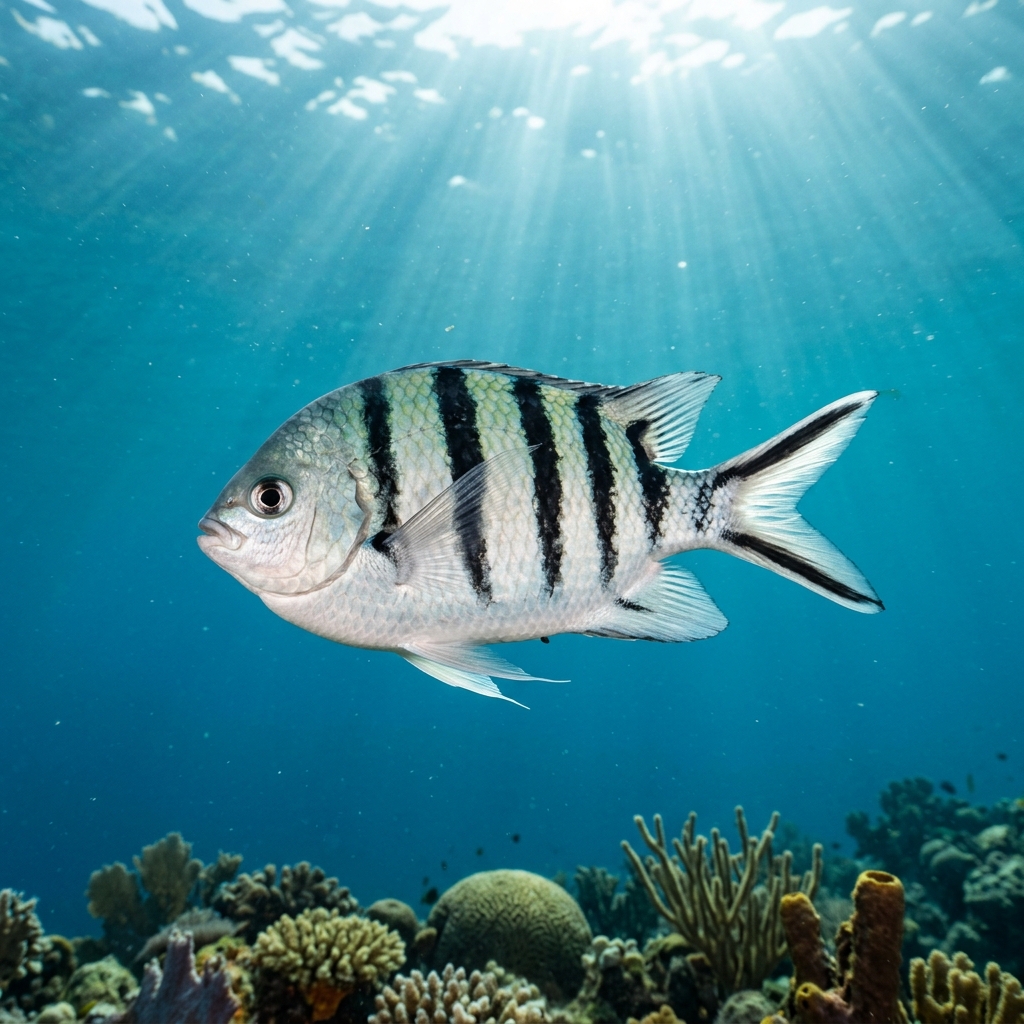
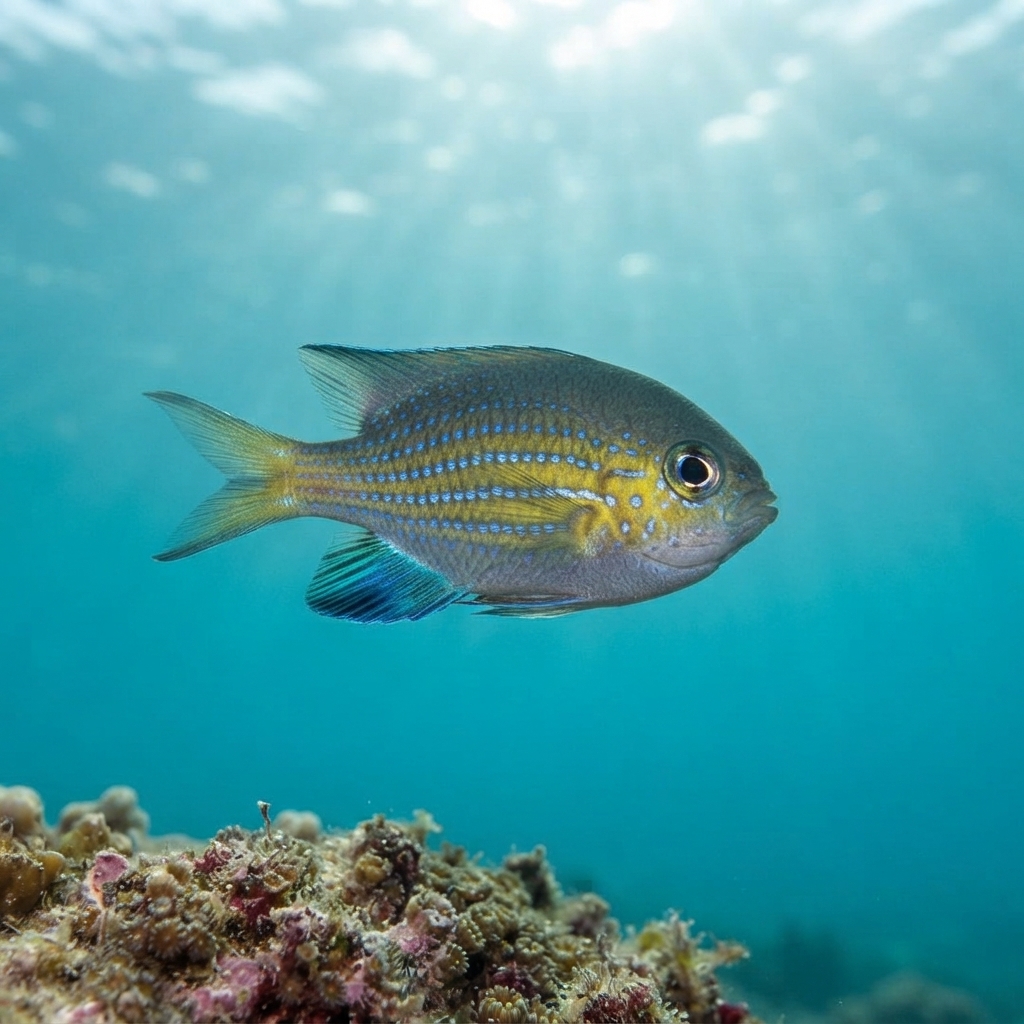
A small, slender damselfish about 4 cm long, with a pale grey to blue-grey body that darkens sharply toward the tail. The dark tail band against the lighter body is the main feature to key on, along with its habit of hovering just above the reef in loose groups rather than sitting tight to it. No strong stripes or spots to complicate the picture, which itself is a useful clue against busier-patterned damselfish.
Divers typically find it hovering in small, loose groups just off the reef structure, picking at drifting plankton in the water column rather than feeding directly off the substrate. It tends not to react much to divers, holding its position or drifting back into cover rather than darting for shelter. Most sightings are logged at uncommon to common frequency, so it's often present but easy to overlook among busier reef fish.
Like most Chromis species, it feeds mainly on plankton picked from the water column above the reef, which is why you'll usually spot it hanging in midwater rather than grazing on coral or rubble.
No clear seasonal pattern shows up in the data, and with a comfortable range of about 24 to 29C, it's a year-round presence on the reefs where it occurs. Plan around general conditions at your chosen site rather than a specific month.
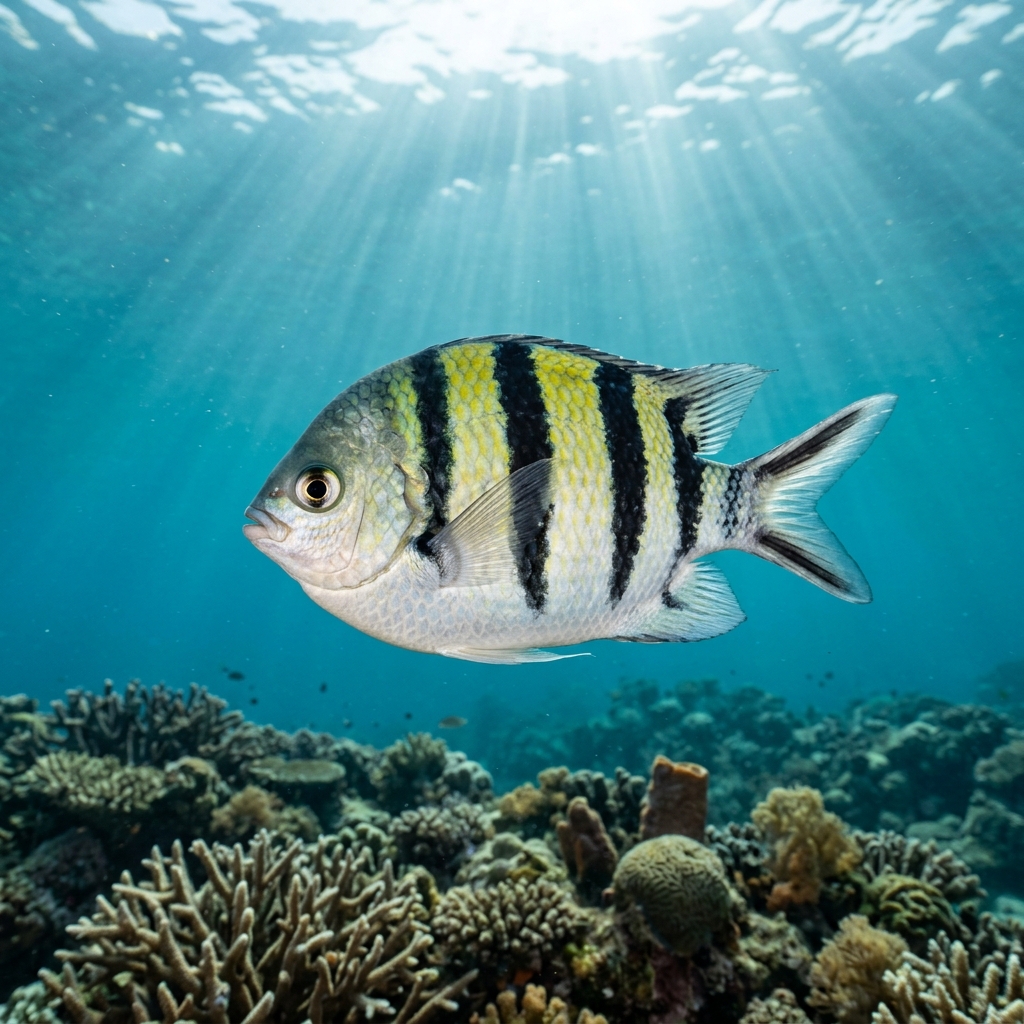
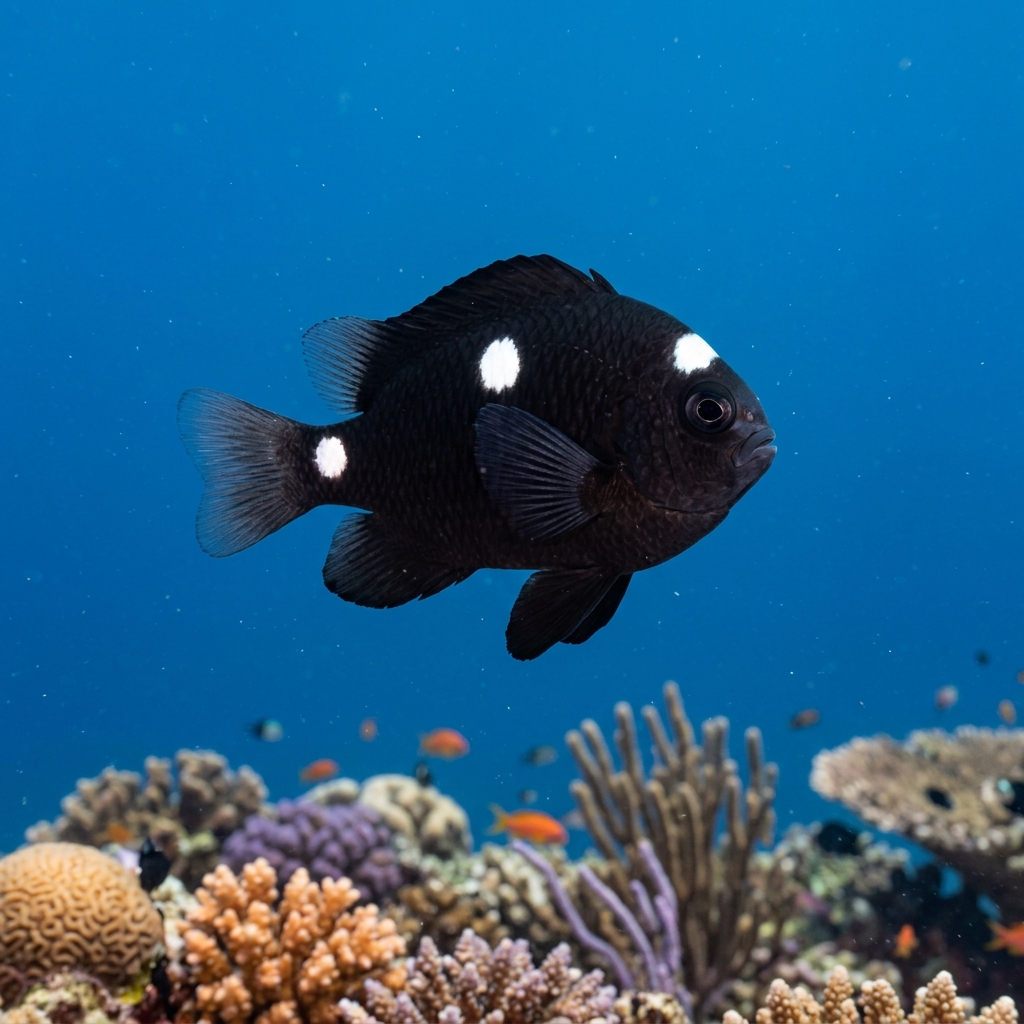
Reef neighbours a diver could mistake it for. Use the identification notes above to tell them apart.
Most reliably logged around Zanzibar in Tanzania, which accounts for the bulk of recorded sightings, with smaller but confirmed populations in Reunion's Saint-Paul region, the Inner Islands of Seychelles, and Inhambane in Mozambique. Tanzania is clearly the strongest bet if you want a good chance of ticking this one off.
Mapping where Blacktail Chromis is logged…
Zanzibar in Tanzania is by far the most reliable spot, with additional sightings logged in Reunion's Saint-Paul region, the Inner Islands of Seychelles, and Inhambane in Mozambique.
There's no strong seasonal pattern in the sightings, so it's considered a year-round fish. It sits comfortably in water between about 24 and 29C, which covers most tropical reef diving conditions.
Look for a small grey-blue damselfish around 4 cm long with a darker tail that contrasts against its paler body. It's usually seen hovering in loose groups just above the reef rather than tucked into crevices.
They stay small, topping out around 4 cm, so they're easy to miss among larger reef fish unless you're looking closely.
No, they pose no danger to divers. They're a small, harmless plankton-feeder that generally ignores passing divers.
Site and sighting data is aggregated from diver logs, iNaturalist and GBIF. For taxonomy and conservation status:
Dascyllus
3,697 sites