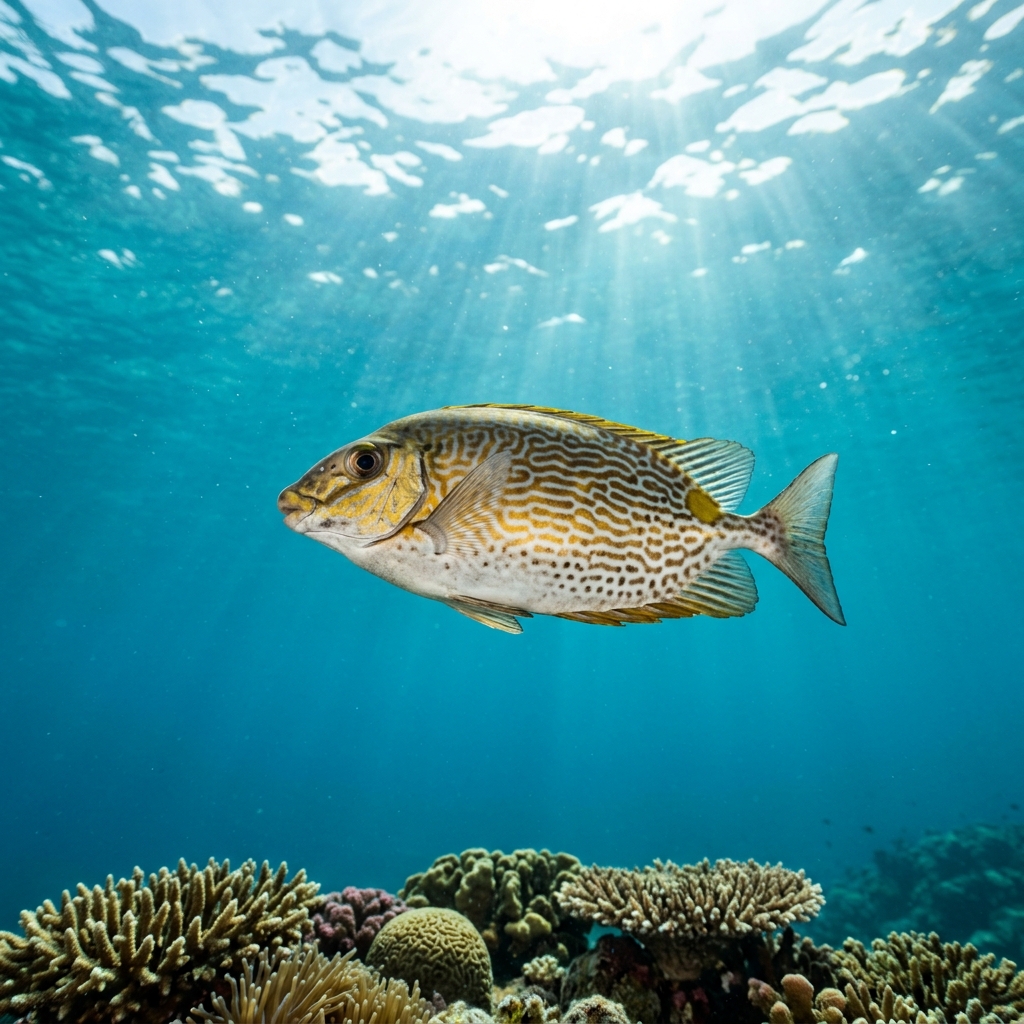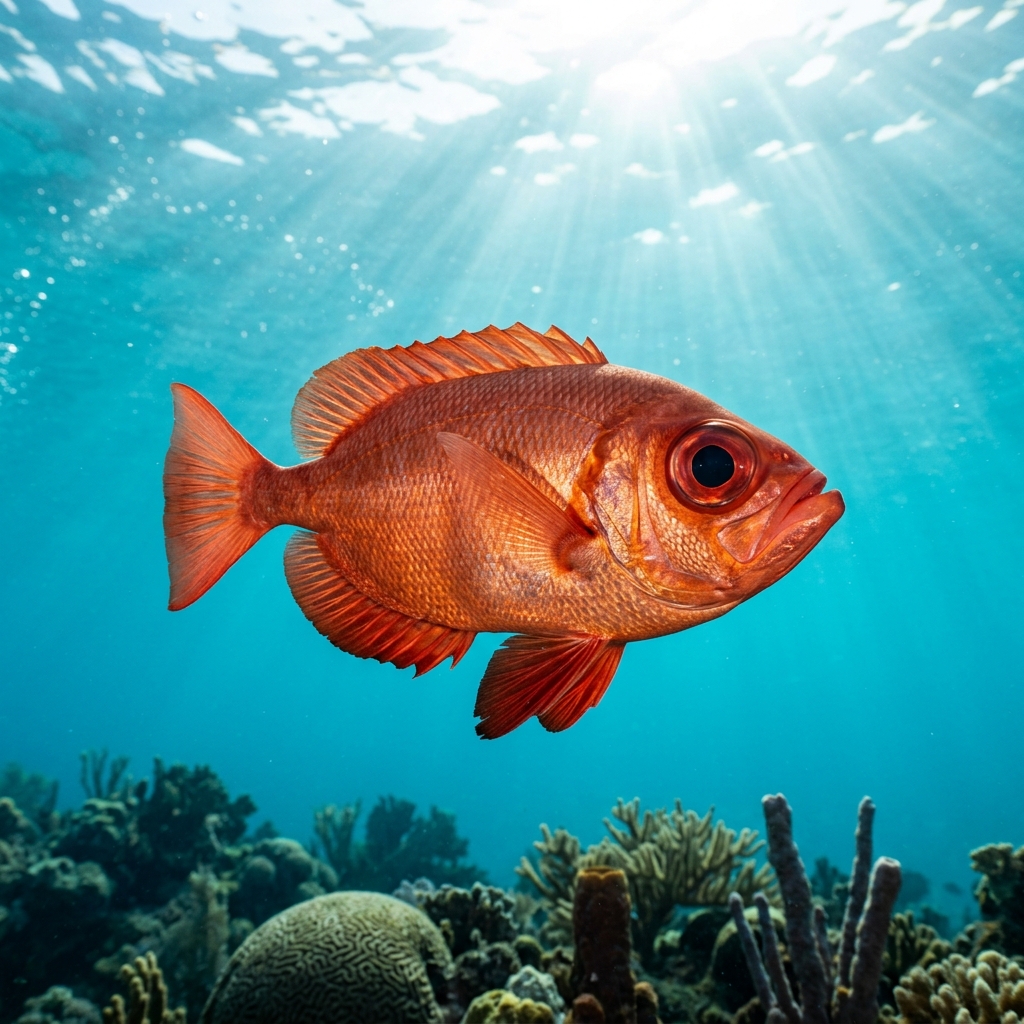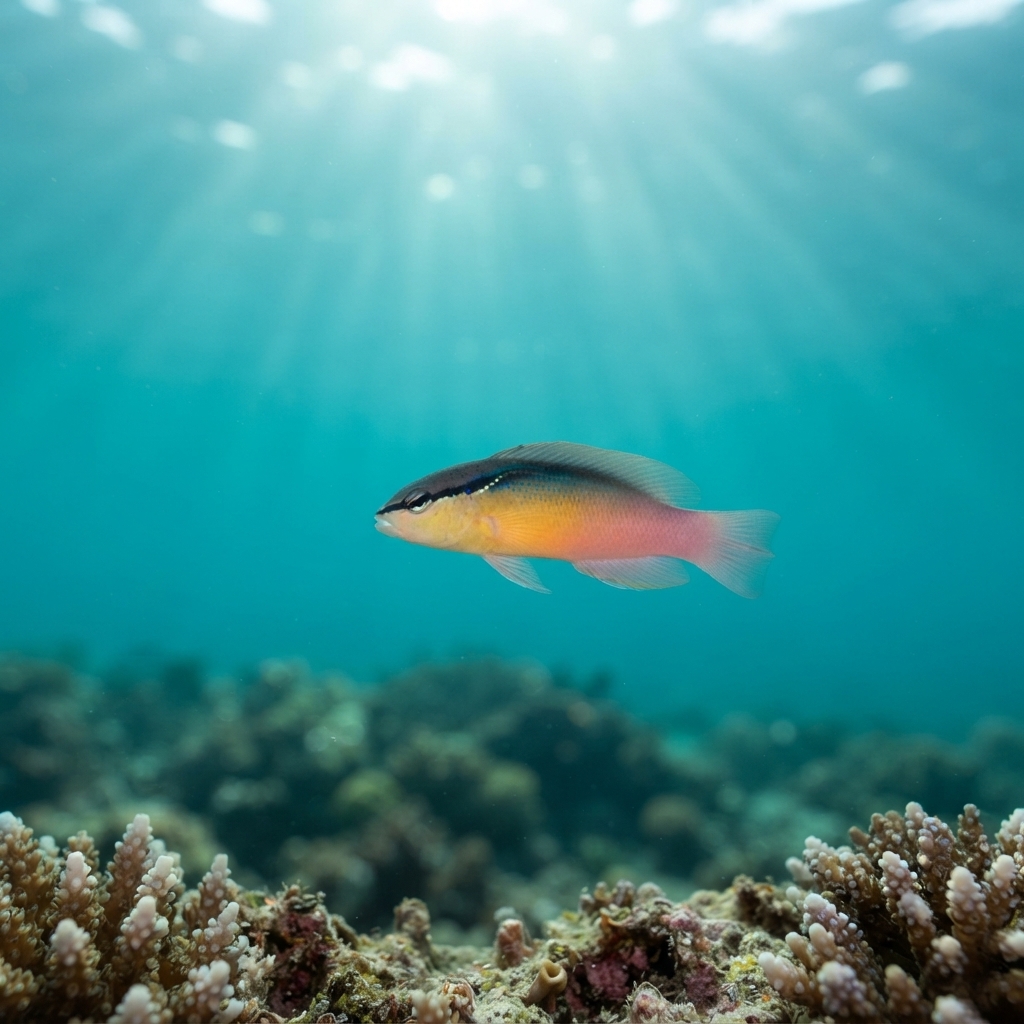
Pseudochromis perspicillatus
Track down this small reef fish on Luzon's rubble slopes, where it turns up uncommonly year-round in 24-29 C water.
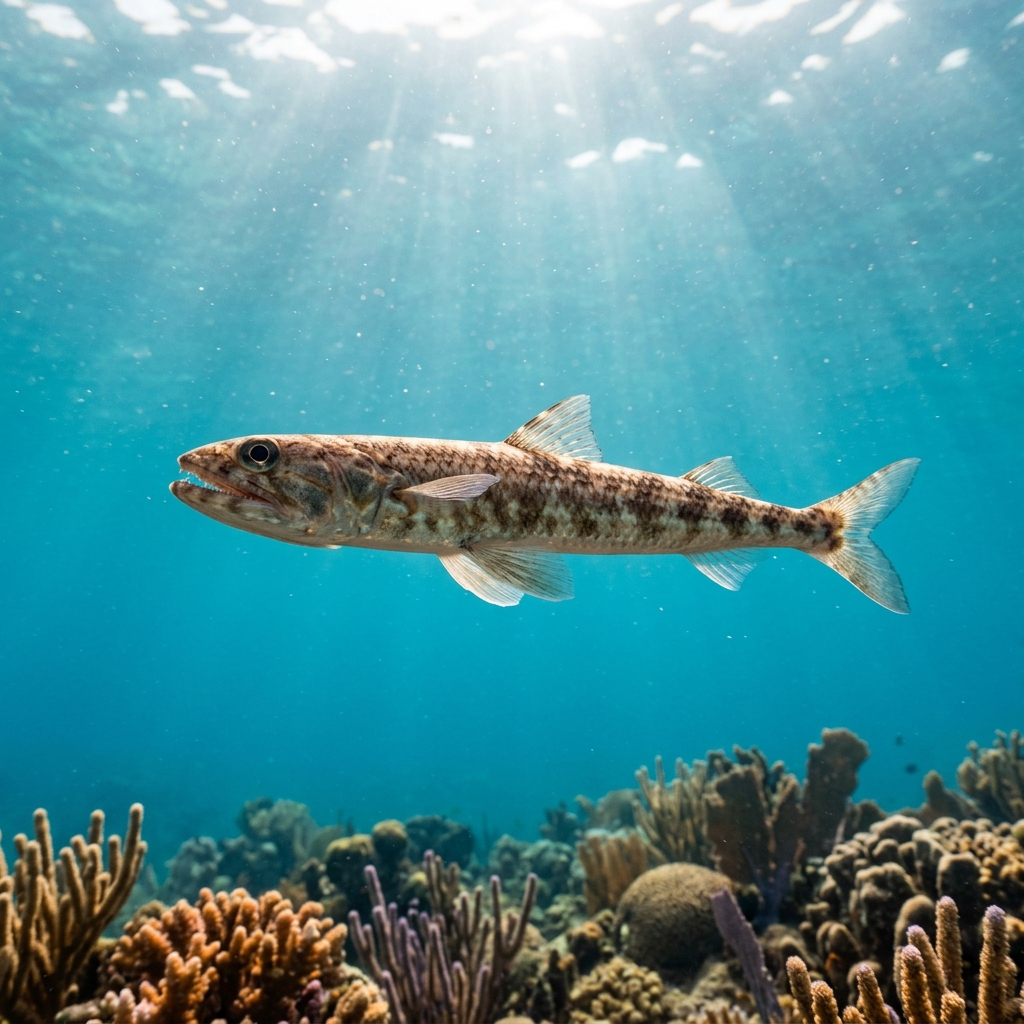
A slender, elongated fish that tops out around 8 cm, easy to overlook among rubble and coral debris. Look for the dark stripe running along the body that gives it its name, set against a paler background, and the pointed snout typical of dottybacks. It tends to hover close to cover rather than swim openly across open reef, so divers usually spot it near a hole or crevice rather than mid-water.
Divers typically find it tucked close to rubble, coral debris, or small crevices rather than out in the open, moving in short darting bursts between cover. It is not a fish that approaches divers or holds still for long, so a slow, patient approach and a scan of low-lying reef structure gives you the best chance of a decent look. Given its small size and shy habits, it is easy to swim right past without noticing.
Dottybacts like this one are known for being territorial and aggressive toward other small reef fish despite their size, often chasing off intruders many times their own length from a claimed patch of rubble or reef.
There is no clear seasonal pattern in the sightings, and its comfort range of roughly 24 to 29 C matches warm tropical reef conditions year-round, so any time you are diving Luzon or Timor-Leste is worth a look.
This one is most reliably logged around Luzon in the Philippines, which accounts for the bulk of recorded sightings, with additional records from Dili in Timor-Leste and a single site in Raja Ampat, Indonesia. If you are specifically hunting for it, Luzon's dive sites currently give you the best odds, though even there it is logged as an uncommon find.
Mapping where Blackstripe Dottyback is logged…
Luzon in the Philippines is the most reliable region for sightings, with additional records from Dili in Timor-Leste and one site in Raja Ampat, Indonesia. Even in these spots it is logged as uncommon, so treat any sighting as a bonus rather than a guarantee.
There is no strong seasonal pattern in the data, and it is recorded across a warm 24.2 to 29.2 C range, so it can turn up on tropical reefs at any time of year.
Look for a small, slender fish around 8 cm long with a dark lateral stripe running along an elongated body. It stays close to rubble and crevices rather than swimming in open water, darting for cover when approached.
They are small reef fish, typically reaching about 8 cm in length, which makes them easy to miss among rubble and coral debris.
No, they pose no danger to divers. They are small, shy fish that retreat into cover rather than confront anything larger than themselves.
Like many dottybacts, it is disproportionately territorial for its size, aggressively defending a patch of rubble or reef against other small fish despite being only about 8 cm long.
Site and sighting data is aggregated from diver logs, iNaturalist and GBIF. For taxonomy and conservation status:
Soldierfish
3,612 sites