Austrolabrus maculatus
Small speckled wrasse logged across Western Australia and New South Wales in 15-23C reef water, year-round and mostly uncommon.
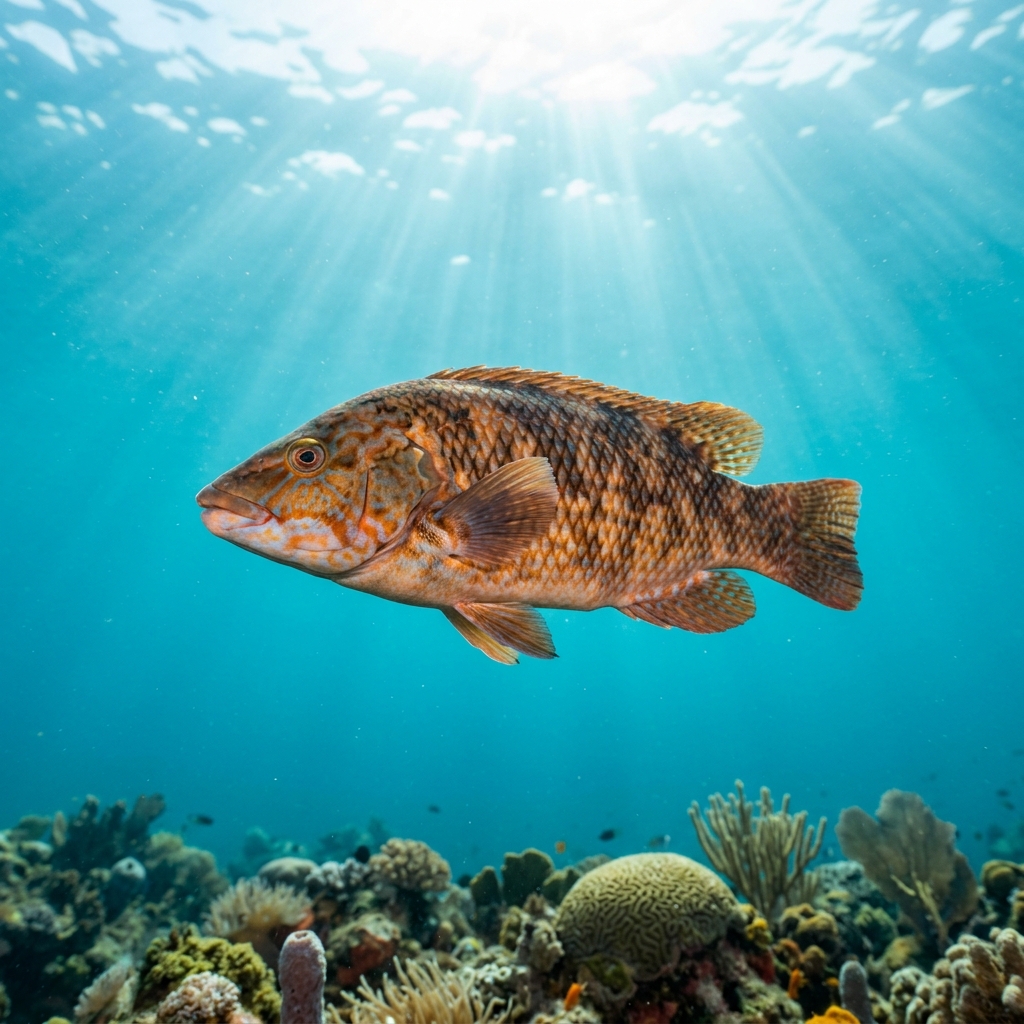
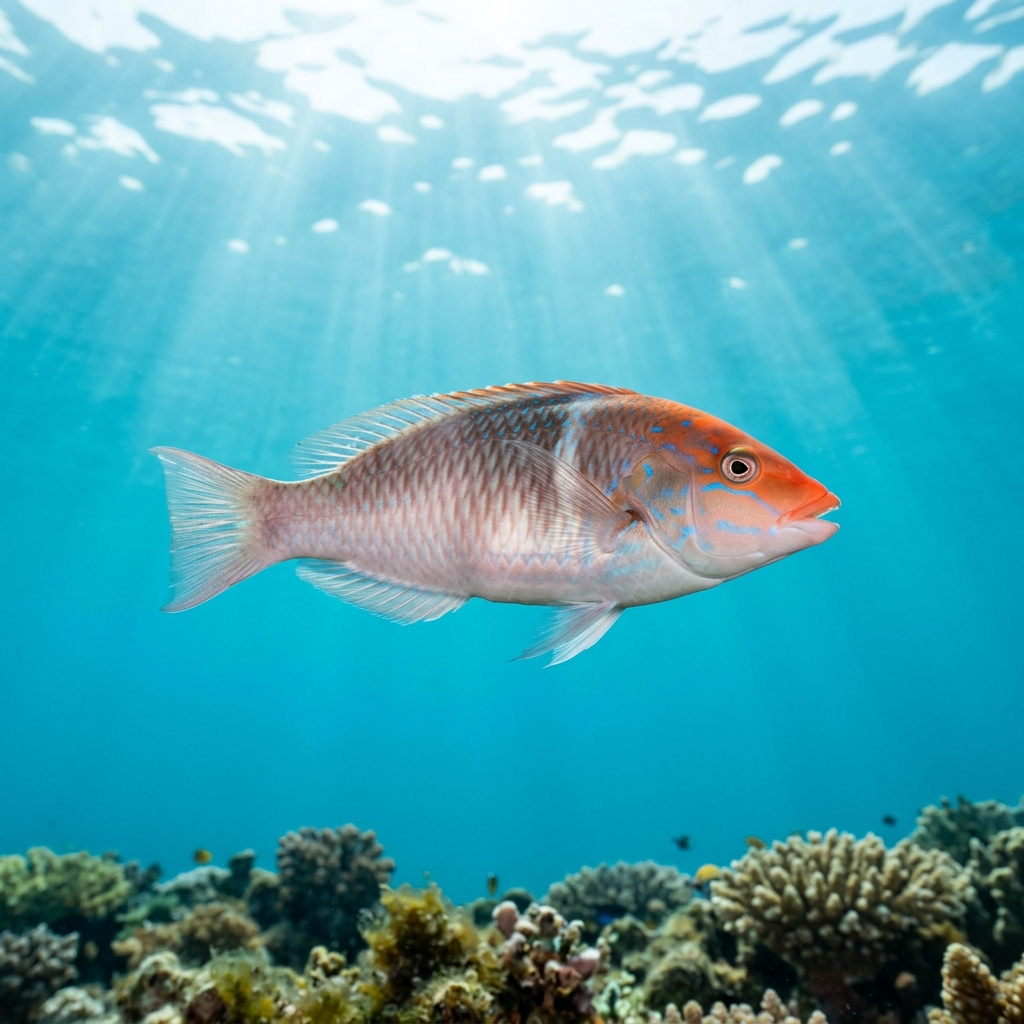
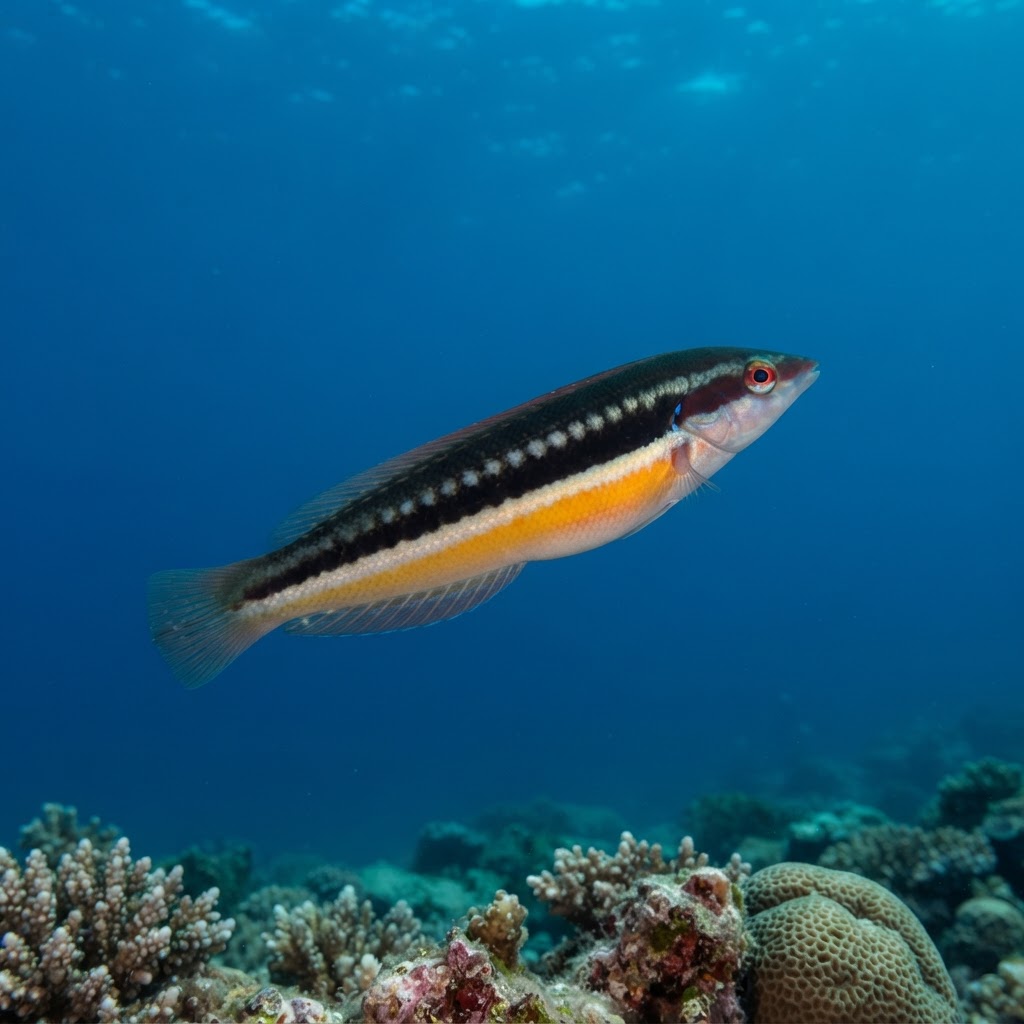
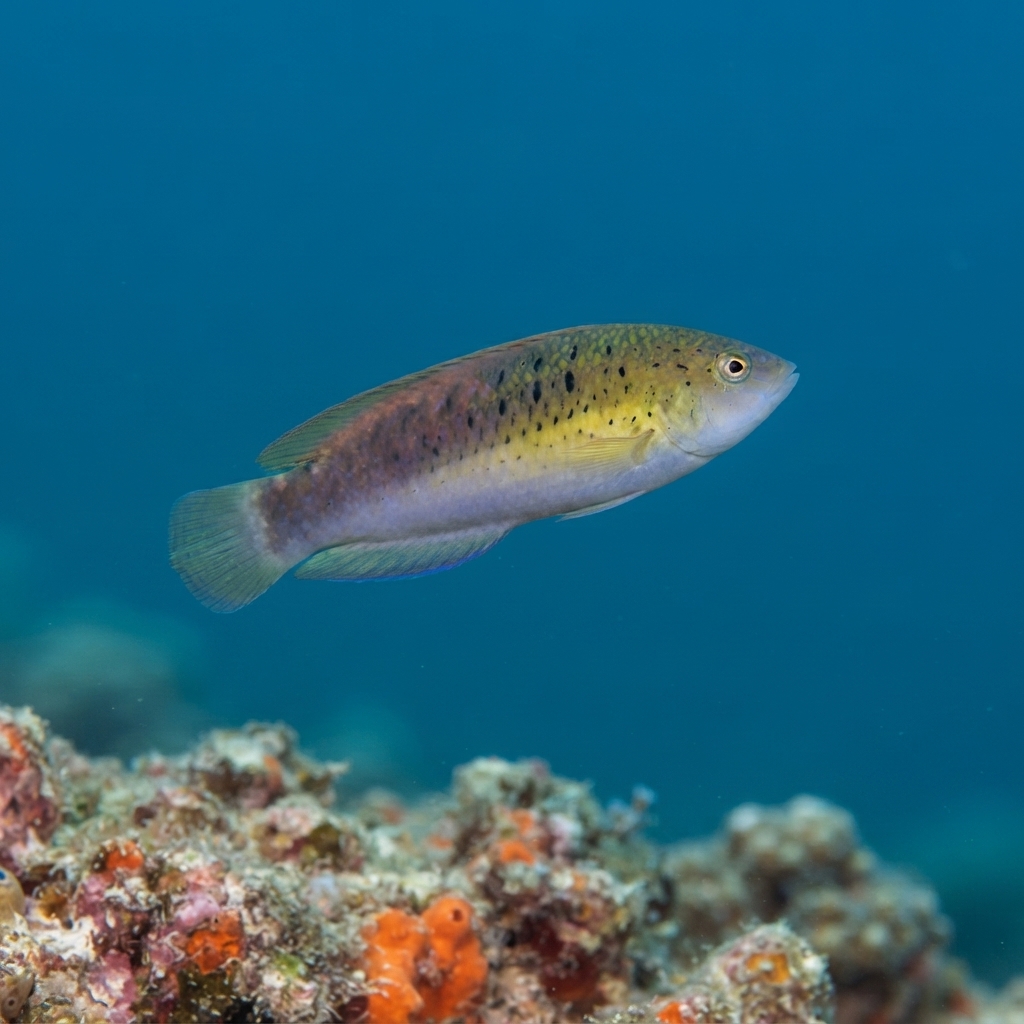
A small, slender wrasse rarely more than 8 cm, so easy to overlook against rocky reef and kelp edges. Look for a scattering of dark spots across a pale to olive-brown body, the marking that gives the fish its name. It swims low over reef structure with quick, darting movements rather than cruising in open water.
Divers typically find it picking around low reef structure and crevices rather than out in the open, often close to the substrate where its spotted pattern blends with mixed rock and algae. It is not a fish that follows divers or shows curiosity, more one you spot if you slow down and check ledges and reef nooks carefully. Most sightings come from single individuals rather than groups.
Like many small labrids, it likely spends most of its time picking at invertebrates hidden in reef crevices, a feeding style that keeps it tucked close to structure rather than out on open sand.
Sighting logs show no strong seasonal pattern, so treat it as a year-round find. Its recorded temperature range of roughly 15 to 23C fits Australia's temperate reefs across most of the year, so timing your dive around season matters less than searching the right terrain.
This one is an Australian speciality, most logged in Western Australia, followed by New South Wales and South Australia. Divers most often report it as uncommon to rare, so it rewards a slow, close look at rocky reef rather than a quick scan.
Mapping where Blackspotted Wrasse is logged…
It is essentially an Australian find, with the strongest logs from Western Australia, followed by New South Wales and South Australia. Look for it on temperate rocky reef rather than tropical coral.
Sighting data does not show a clear season, so it is considered a year-round species. Its comfort range of roughly 15 to 23C spans much of the year on southern Australian reefs, so any season with reasonable visibility works.
Look for a small wrasse under 10 cm with a slender body covered in dark speckled spots over a pale to brownish base colour. It stays close to rocky reef structure and moves in quick, low darts rather than swimming in open water.
They are a small species, typically reaching around 8 cm as adults. This makes them one of the more easily missed wrasses on Australian temperate reefs.
Most divers who log it describe sightings as uncommon, with fewer reports of it being rare or common. It is not a fish you can expect on every dive, so finding one is a bit of a reward for careful reef searching.
Site and sighting data is aggregated from diver logs, iNaturalist and GBIF. For taxonomy and conservation status:
Bird Wrasses
3,632 sites