Labroides pectoralis
A tiny reef cleaner spotted year-round in Palau's Peleliu and Vanuatu's Efate, in warm 25-29 C water. Here's how to spot one.
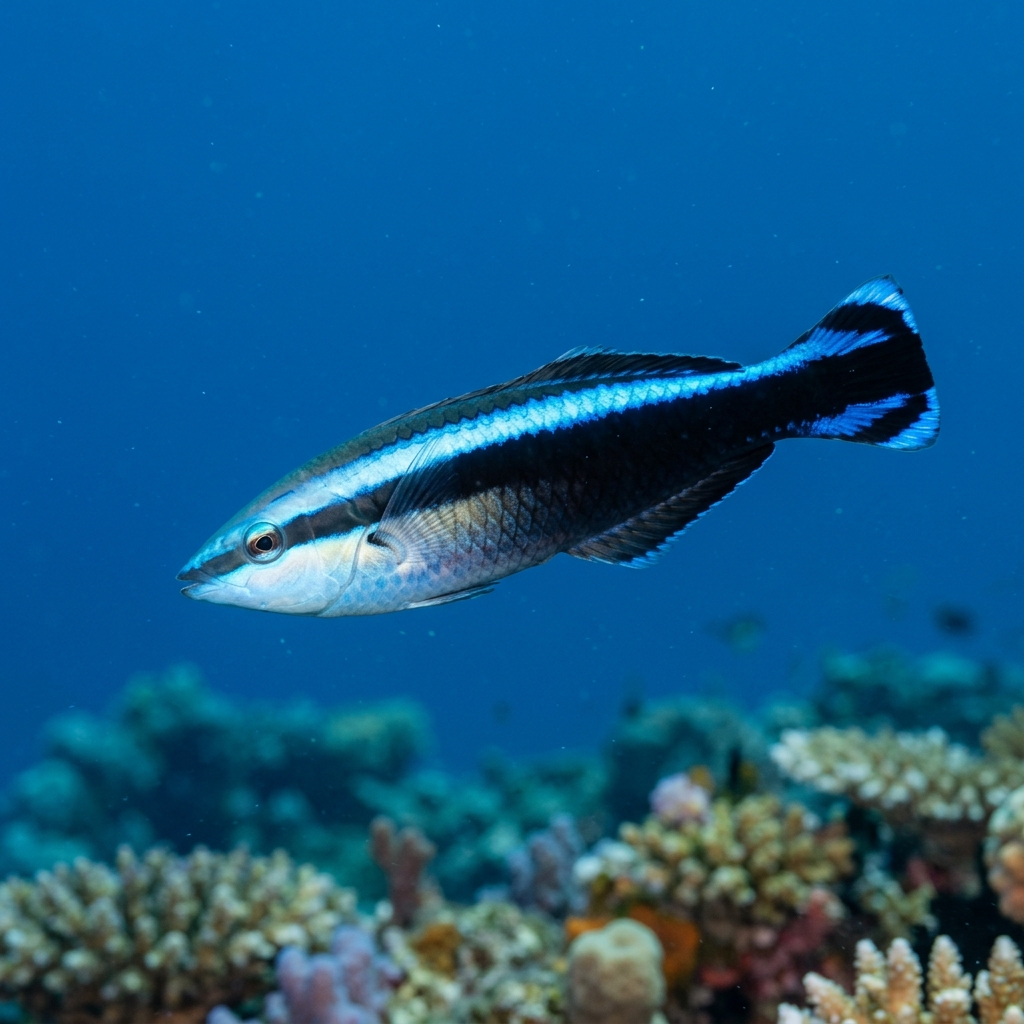
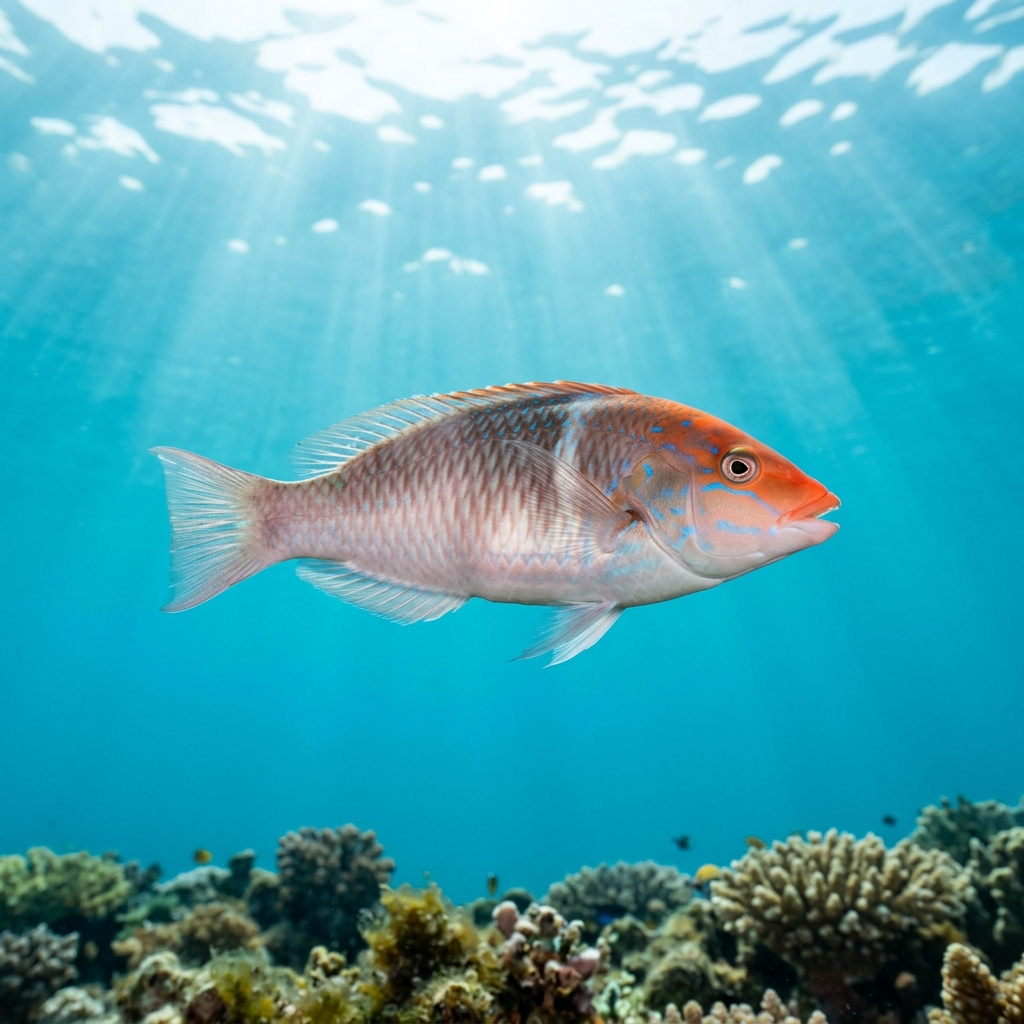
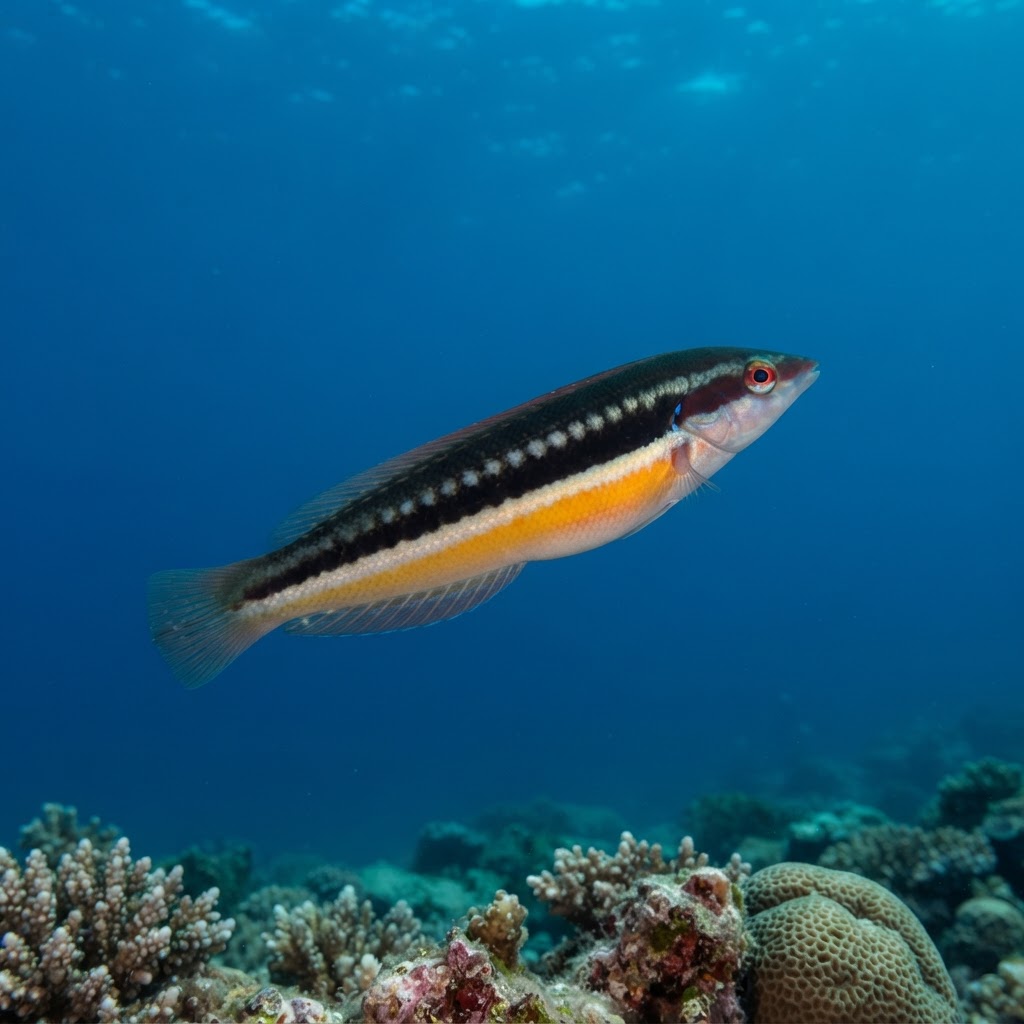
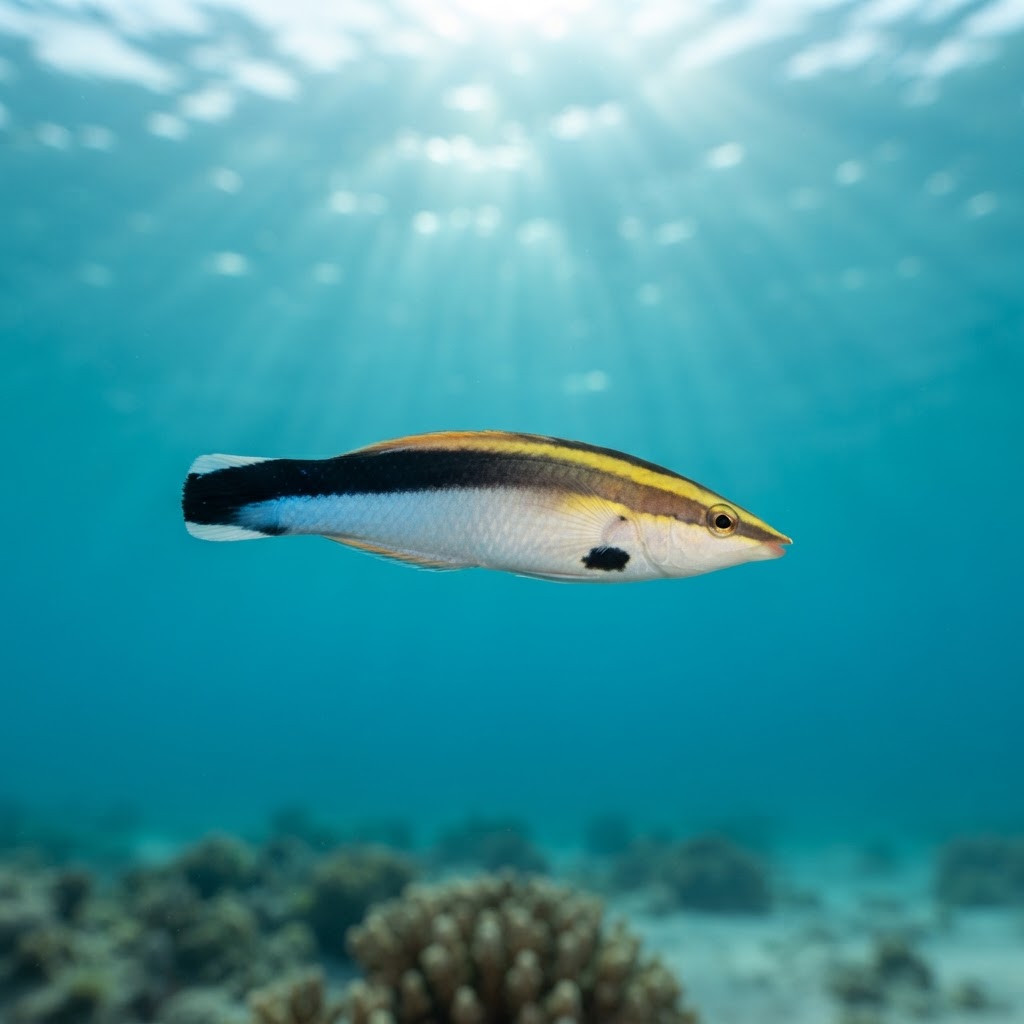
Tops out around 8 cm, a slim torpedo-shaped body built for darting in and out of coral heads. Look for a pale to yellowish body with a dark horizontal stripe running toward the tail and a distinct black spot near the base of the pectoral fin that gives this species its name. It swims with the same hovering, almost jerky motion typical of cleaner wrasses, often near a fixed patch of reef it treats as a cleaning station.
Divers typically find it working a small patch of reef, hovering close to coral or rubble while picking parasites off passing fish at an informal cleaning station. It tends to stay low-key and close to structure rather than venturing into open water, and it rarely pays much attention to divers unless you hover directly over its patch.
Like other cleaner wrasses, it makes a living picking parasites and dead skin off client fish, effectively running a small health-check post on the reef that other species queue up to visit.
No clear seasonal pattern shows up in the data, and with a comfortable range of 25.4 to 29.4 C, warm tropical reefs suit it all year round. Plan around good visibility and calm conditions at these sites rather than a particular month.
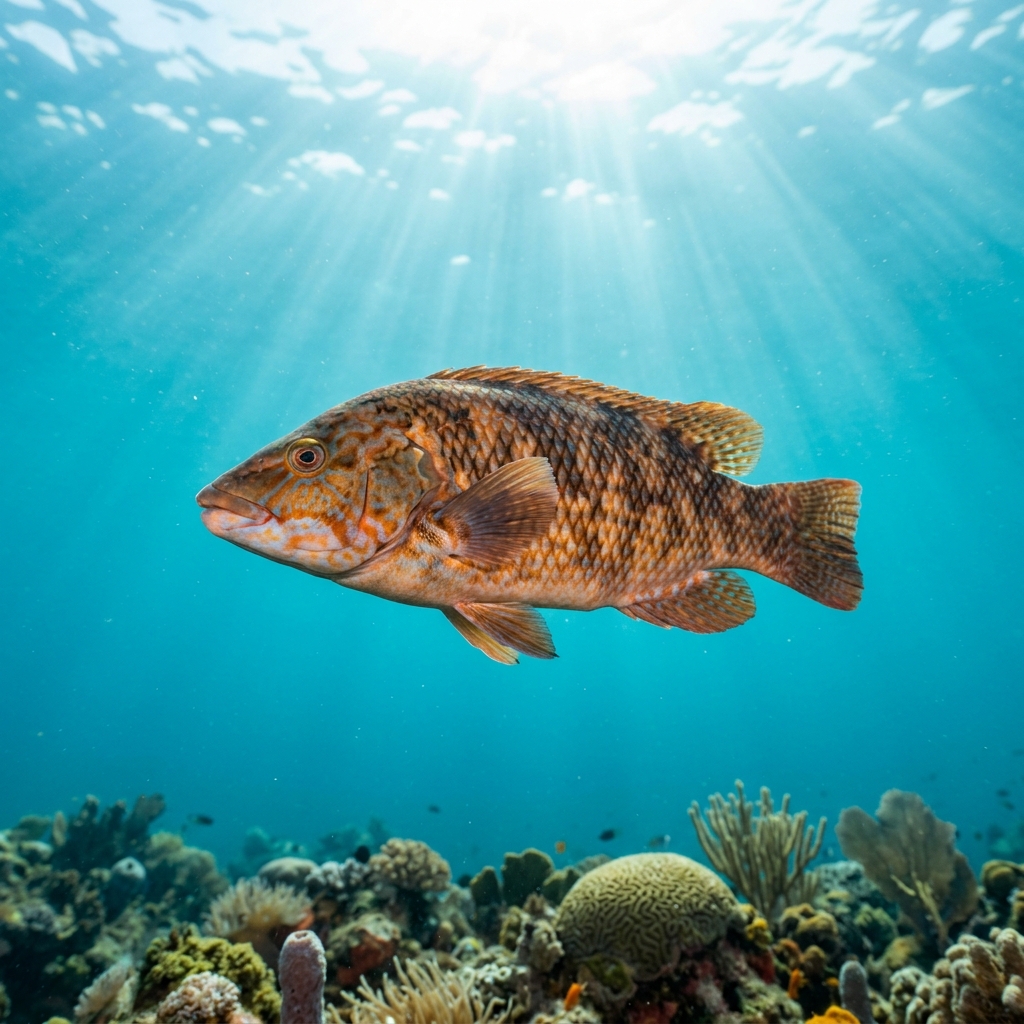
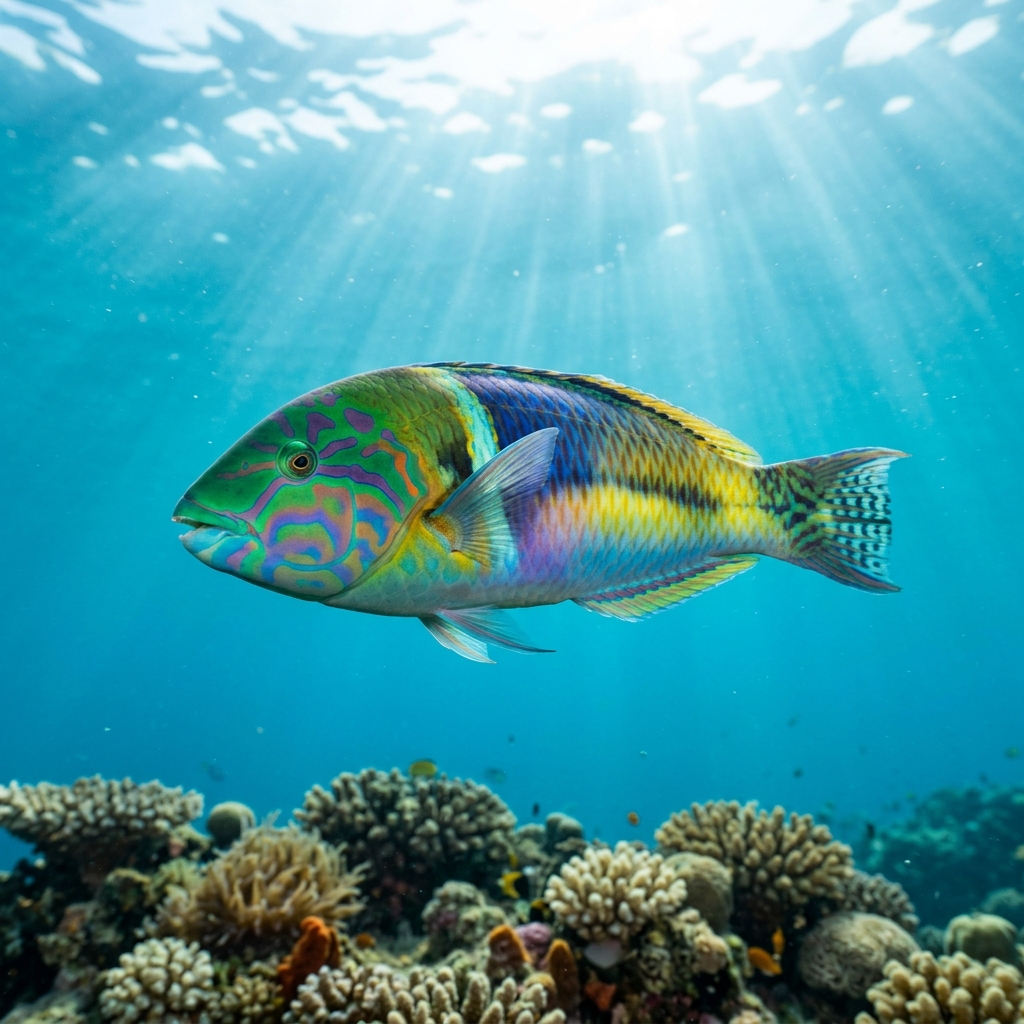
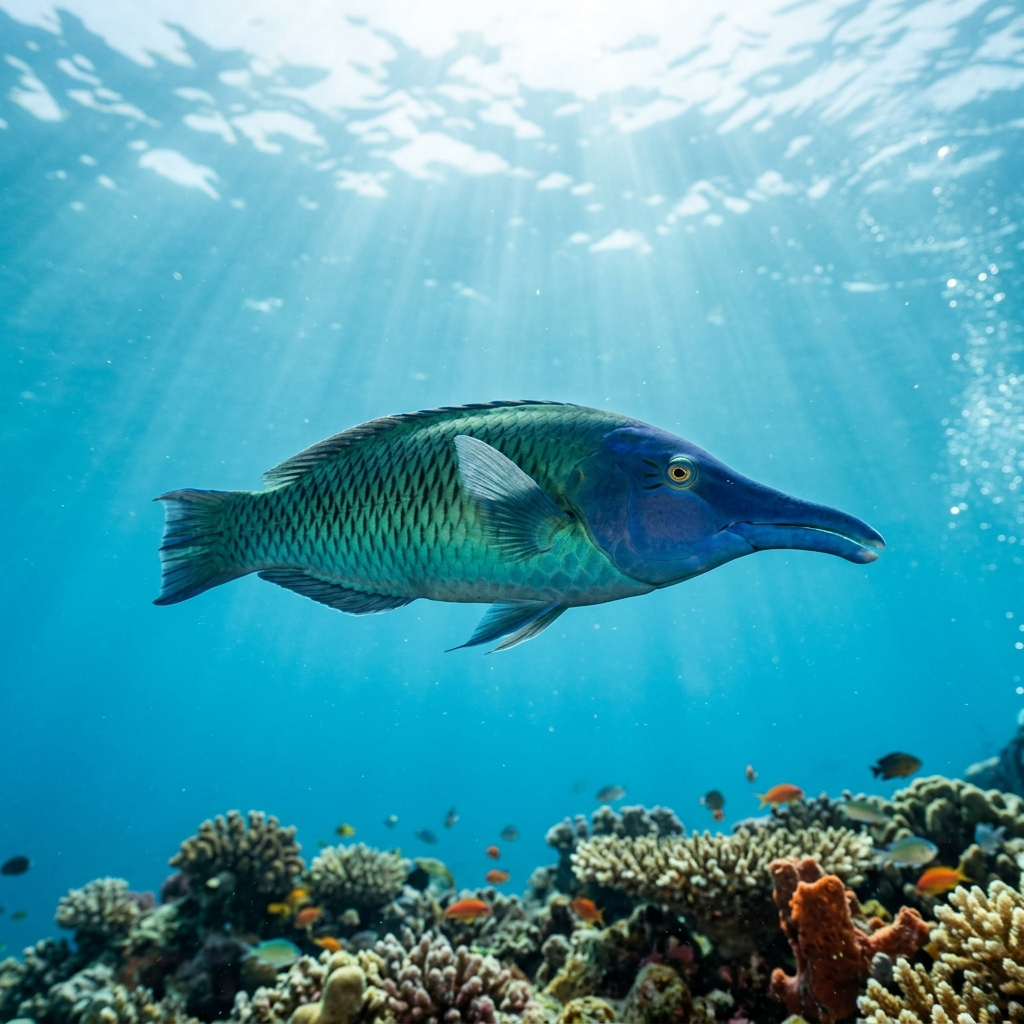
Reef neighbours a diver could mistake it for. Use the identification notes above to tell them apart.
Most reliably logged around Peleliu in Palau and Efate in Vanuatu, with additional sightings in Sulawesi, Indonesia and Hienghène in New Caledonia. Sightings run uncommon to rare across all known sites, so treat any encounter as a nice bonus rather than a guaranteed tick on a reef checklist.
Mapping where Blackspot Cleaner Wrasse is logged…
Palau's Peleliu region and Vanuatu's Efate are the most consistent spots, with fewer sightings logged in Sulawesi, Indonesia and Hienghène, New Caledonia.
There's no strong seasonal signal in diver sightings, and its 25.4 to 29.4 C temperature niche is met on tropical reefs year-round, so any time you're diving these regions is fair game.
Look for a small, slender wrasse around 8 cm with a pale body, a dark stripe toward the tail, and a black spot at the base of the pectoral fin. It hovers near a fixed cleaning station rather than swimming openly across the reef.
They stay small, reaching around 8 cm as adults, which is typical for cleaner wrasses that rely on being agile rather than large.
It runs a cleaning station on the reef, picking parasites and dead tissue off client fish that stop by, a behaviour shared with other Labroides cleaner wrasses.
Site and sighting data is aggregated from diver logs, iNaturalist and GBIF. For taxonomy and conservation status:
Bird Wrasse
3,632 sites