Chromis punctipinnis
Blue-grey damselfish with a spotted tail, most reliably logged around California kelp forests at 13-19C year-round.
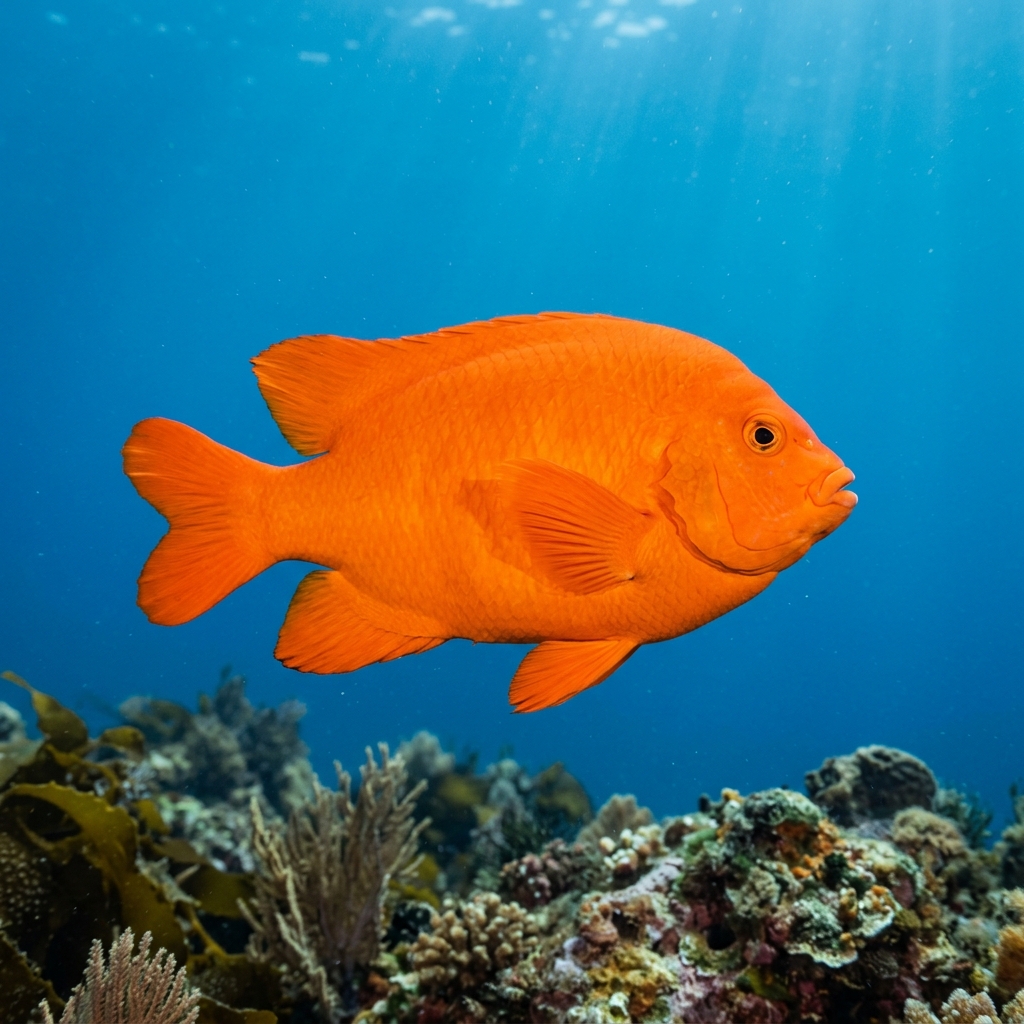
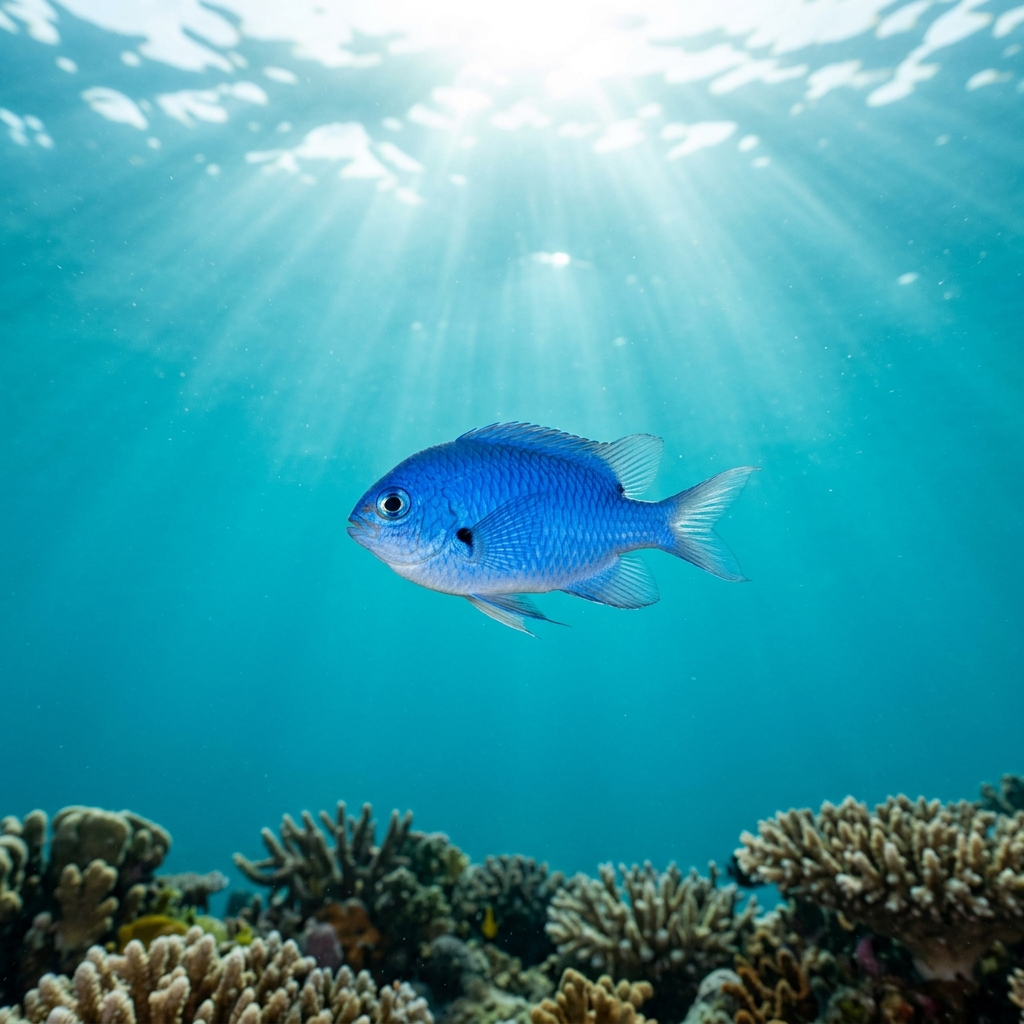
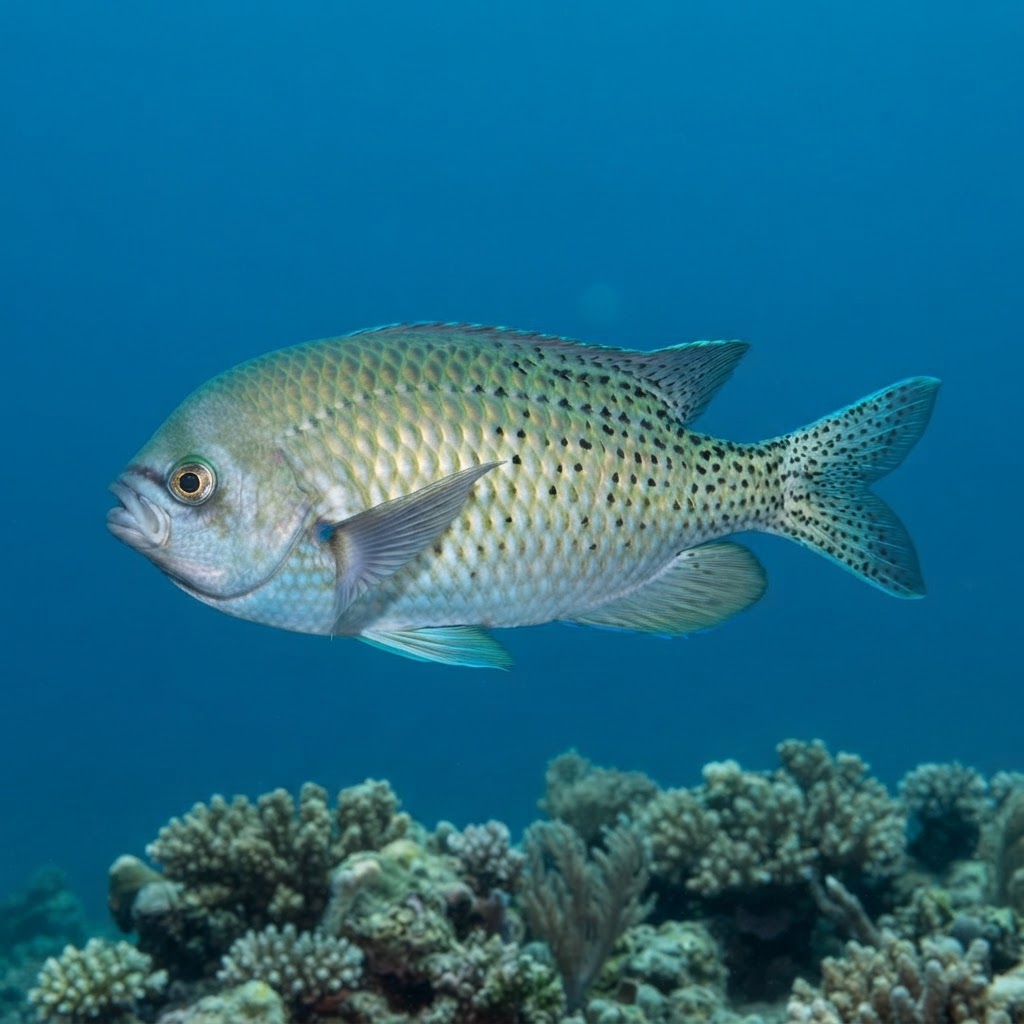
Deep-bodied damselfish around 17 cm, coloured blue-grey on the upper body fading to a paler belly, with a scatter of small dark spots across the rear body and tail that separates it from plainer reef fish at a glance. It often shows a faint violet sheen on the head and shoulders in good light. Schools tend to hang in loose midwater clouds well off the bottom rather than hugging the reef.
Look up rather than down: blacksmith spend much of the day suspended in loose schools well above the reef or kelp canopy, picking plankton out of the water column. They pay divers little attention and will let you swim right through the school without scattering far. At most sites they are logged as uncommon to common rather than a guaranteed mass encounter, so a scattered school of a few dozen is a typical sighting.
Feeding mid-water on drifting plankton rather than grazing the reef bottom is what sets blacksmith apart from most of their damselfish relatives, which tend to be more territorial and bottom-associated.
Sightings are logged year-round with no strong seasonal pattern, which fits its comfort range of roughly 13 to 19C across California's kelp forests through the seasons. Expect a similar chance of encountering it on any dive at a site where it is present, whatever the month.
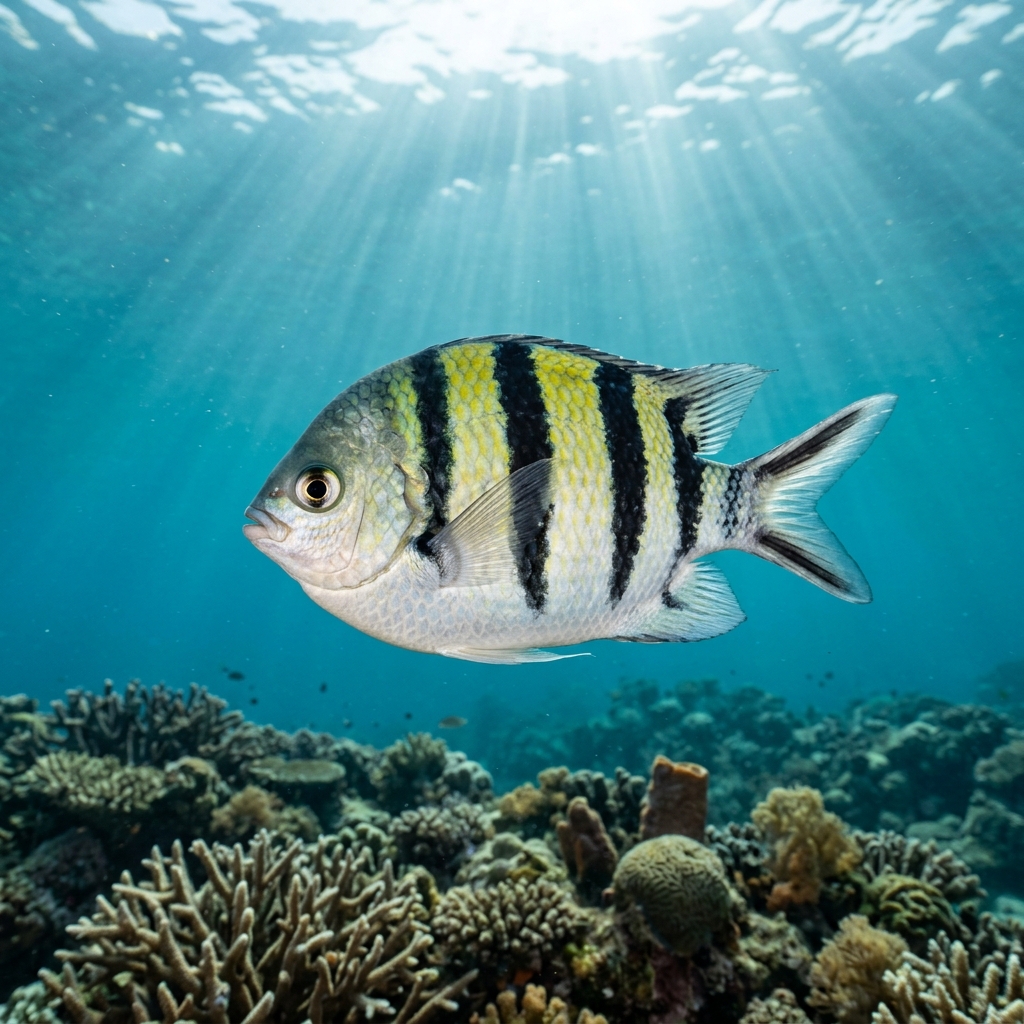
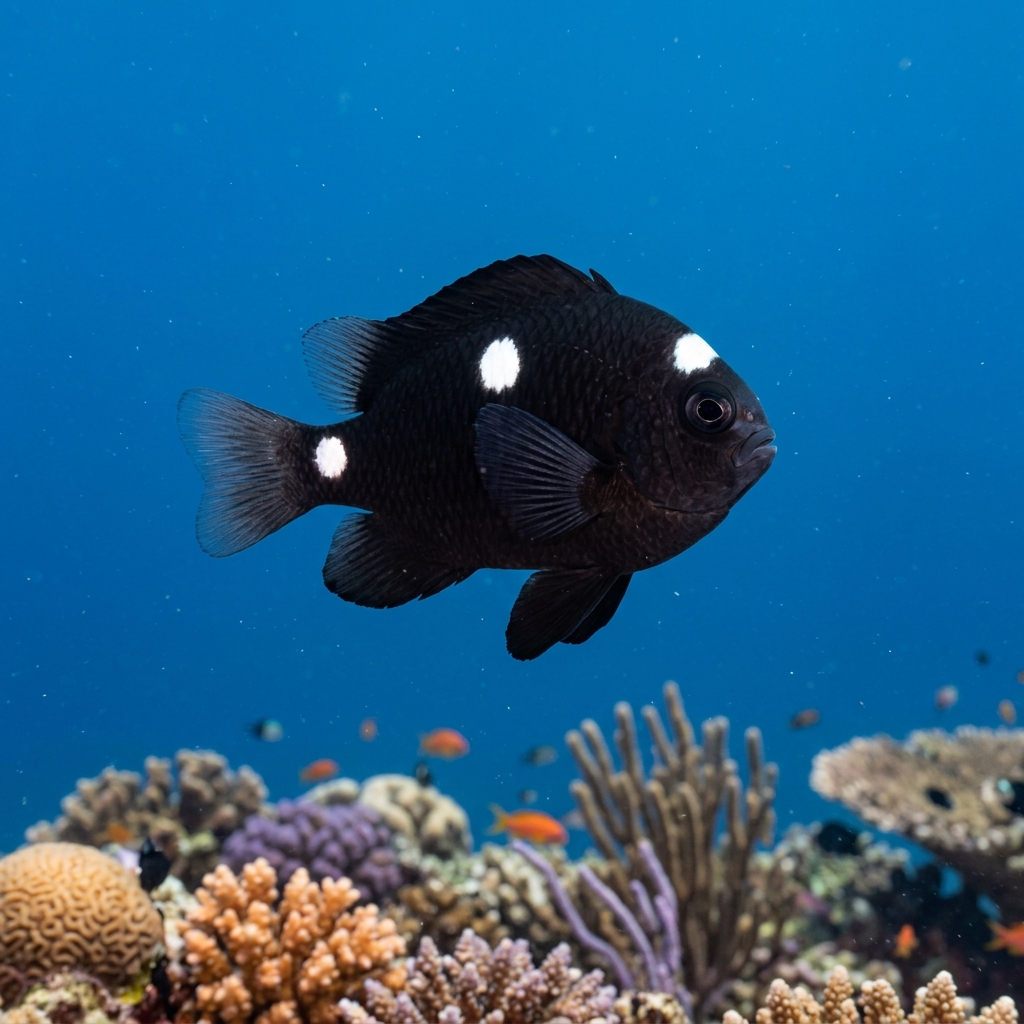
Reef neighbours a diver could mistake it for. Use the identification notes above to tell them apart.
This is a California speciality, most commonly logged along the mainland coast and islands of California, with a smaller but reliable presence further south in Baja California, Mexico. Divers see it consistently on rocky reef and kelp forest sites where it schools in midwater over structure.
Mapping where Blacksmith is logged…
California is by far the strongest area, especially along the mainland coast and islands, with a smaller population found in Baja California, Mexico. It is a fixture of rocky reef and kelp forest diving in these regions.
There is no strong season logged for this species, so it is seen year-round wherever it occurs. Water temperature in its range runs roughly 13 to 19C across the seasons, and it stays present throughout.
Look for a deep-bodied, blue-grey damselfish around 17 cm hovering in loose schools well off the bottom, with small dark spots scattered across the tail and rear body. The midwater schooling habit, rather than sitting on the reef, is a strong clue on its own.
They typically reach around 17 cm, a modest size that fits their habit of forming loose feeding schools rather than standing out as a solo trophy sighting.
No. They ignore divers and simply carry on feeding in the water column, making them an easy, low-drama fish to swim alongside.
Site and sighting data is aggregated from diver logs, iNaturalist and GBIF. For taxonomy and conservation status:
Dascyllus
3,697 sites