Rhinogobiops nicholsii
A palm-sized goby that perches on rock and rubble from California to British Columbia in water as cold as 8 C. Here's where divers actually find it.
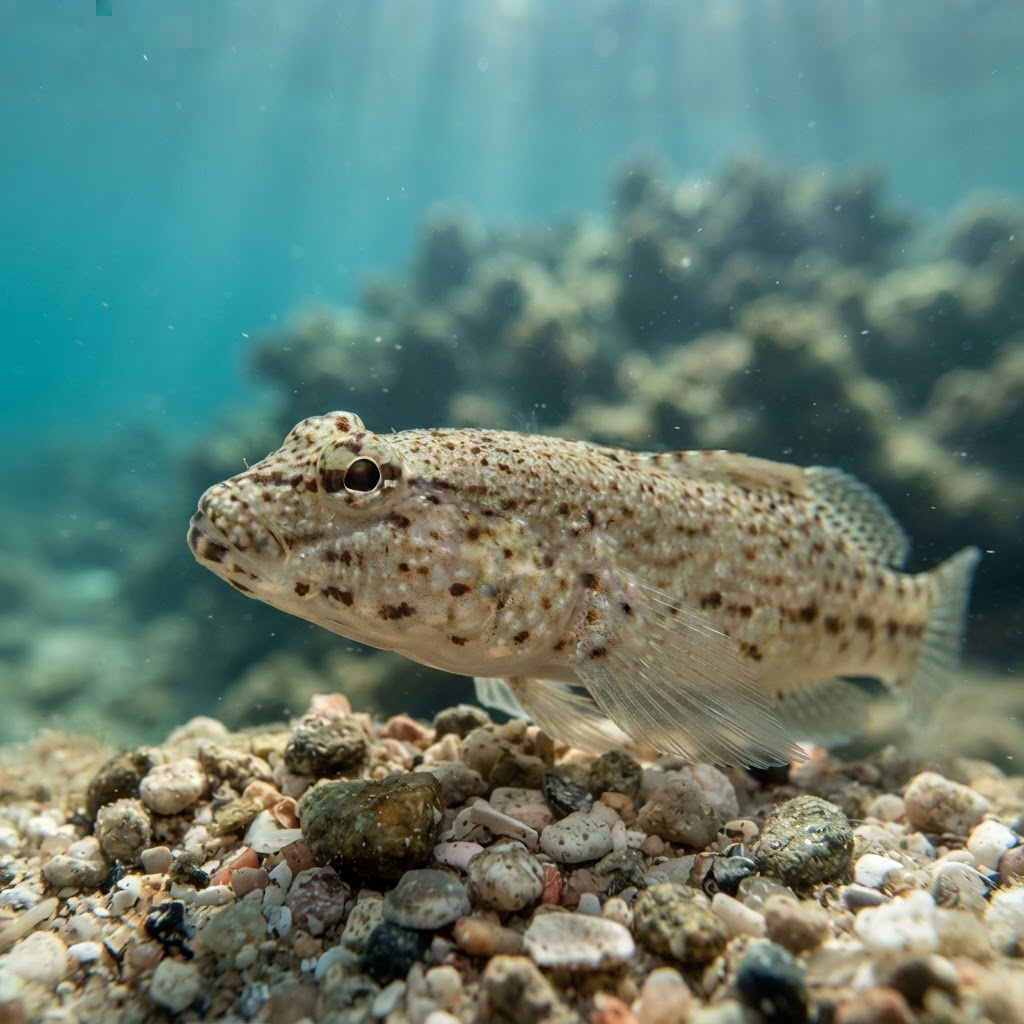
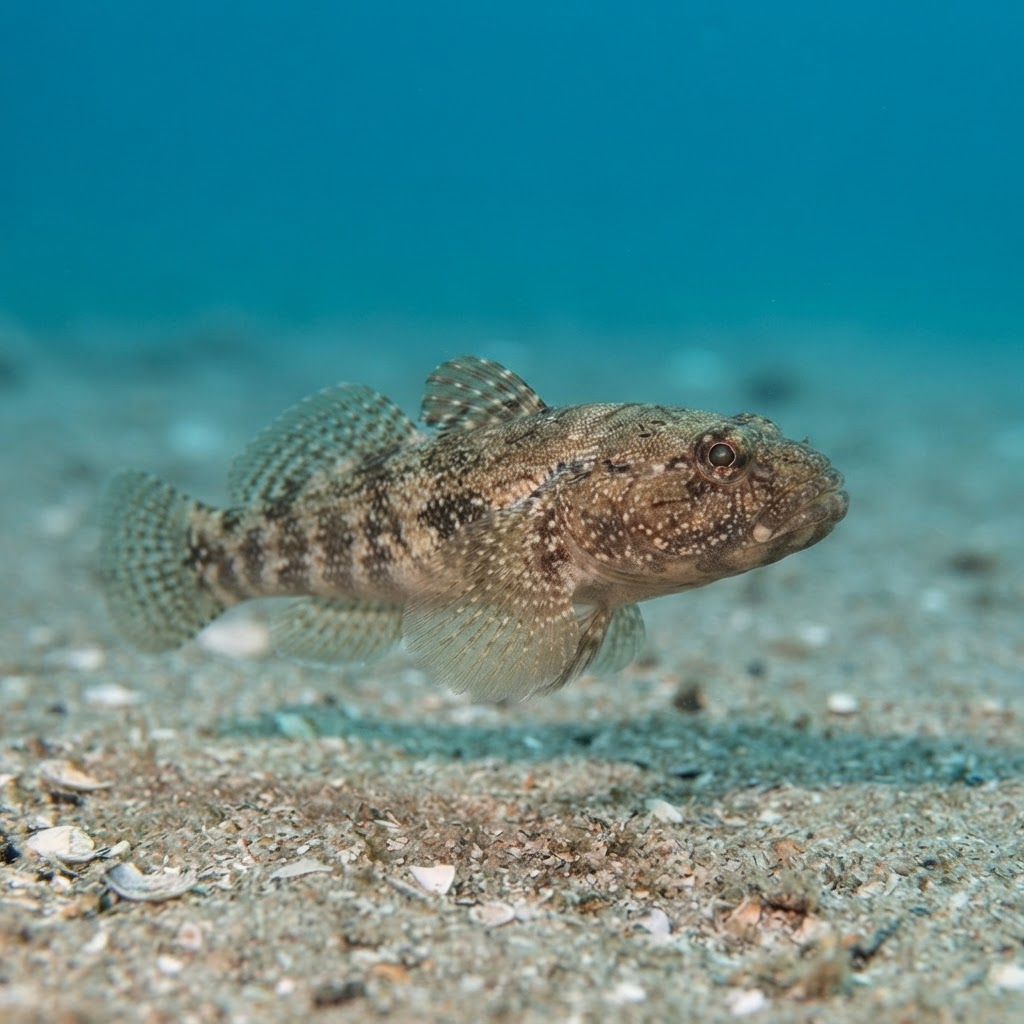
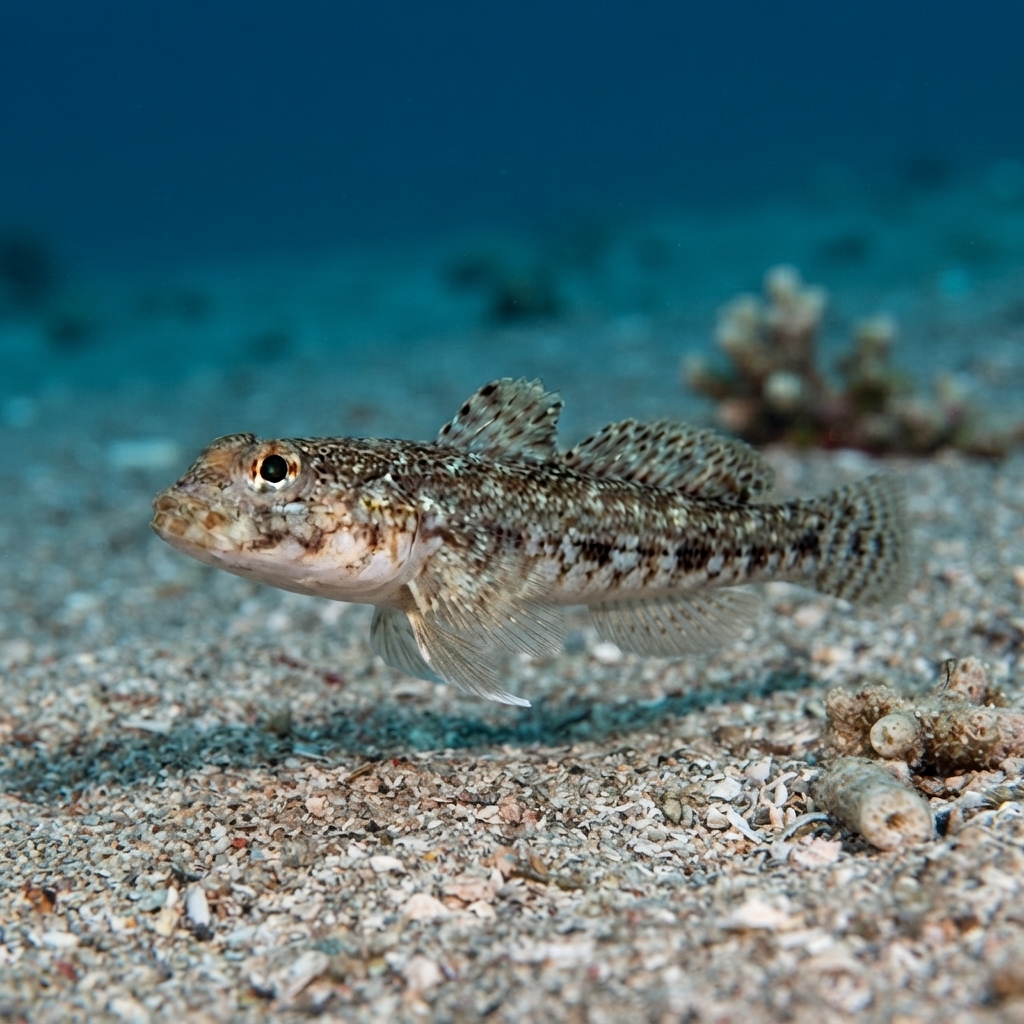
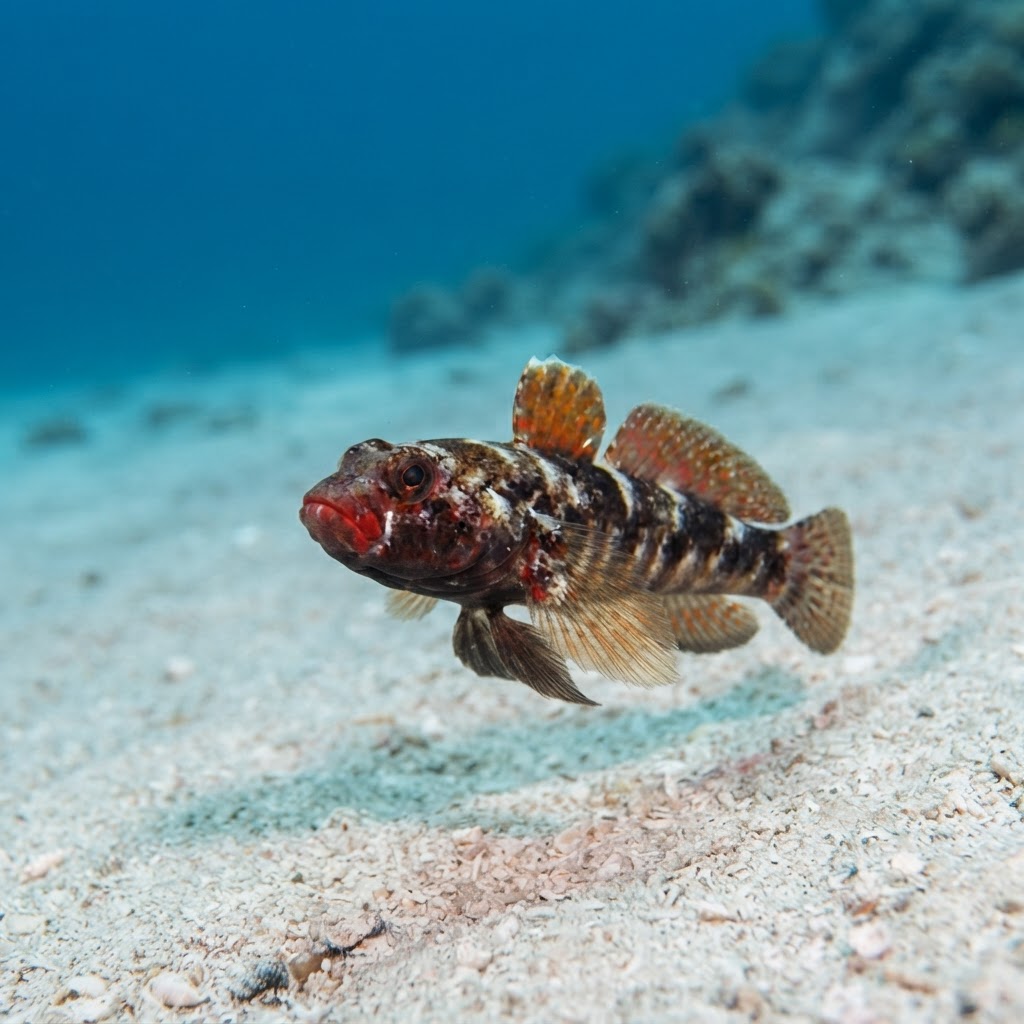
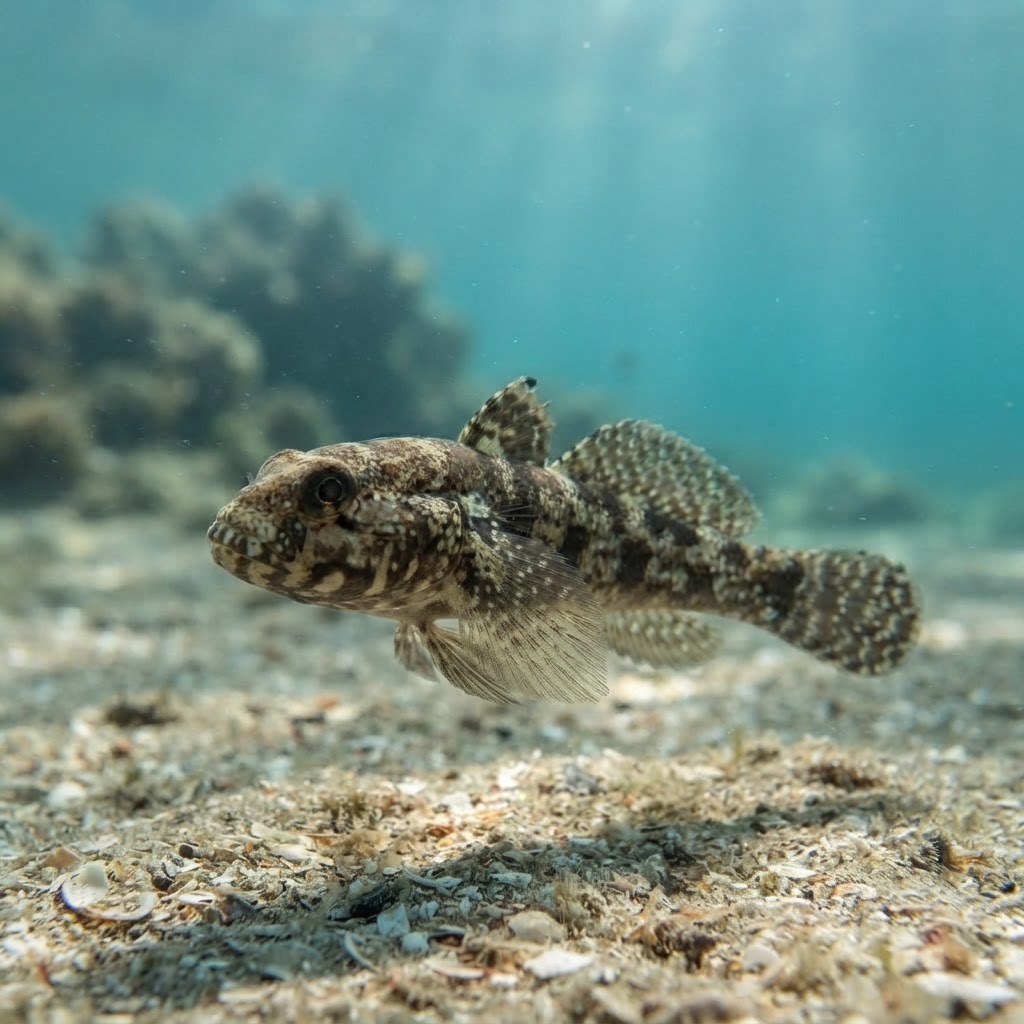
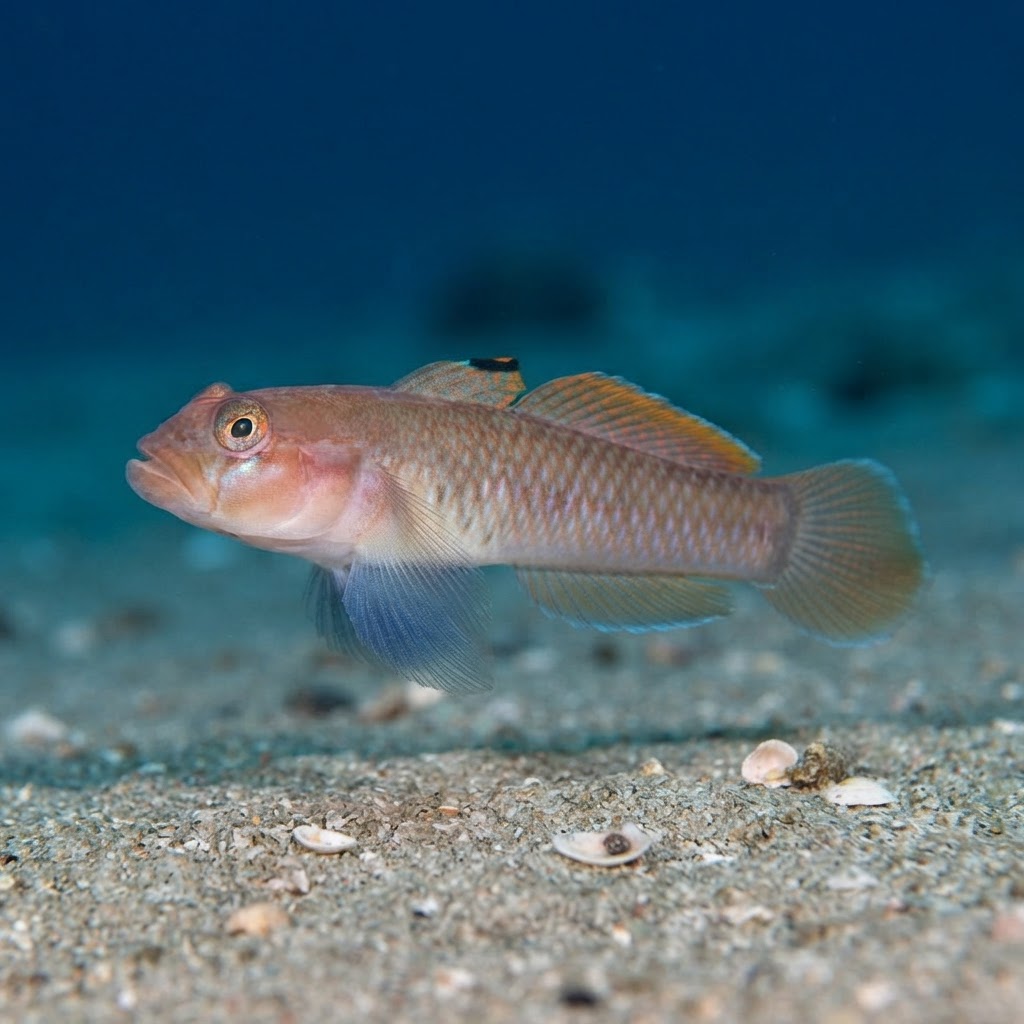
Look for a slim, torpedo-shaped fish no longer than about 10 cm, usually seen propped on its pelvic fins on rock or sand rather than swimming freely. Body colour runs from pale tan to olive-brown, often with faint darker blotches along the flank, but the giveaway is the oversized black eye rimmed with a thin blue or gold edge that catches your torch beam. It has a single continuous dorsal fin and sits close to the substrate, darting only a short distance when disturbed before settling again.
Expect to find it perched motionless on a rock ledge, boulder field, or patch of rubble, watching the water column rather than cruising it. It holds its ground as divers pass, usually only shuffling a short hop to a nearby perch rather than fleeing into a hole, which makes it an easy macro subject if you slow down and look at eye level with the reef. Most logs describe it as rare to uncommon at any given site, so it rewards divers who scan low structure carefully rather than mid-water.
Males guard and fan the egg clutch alone after a female deposits them under a rock or shell, standing sentry over the nest until the eggs hatch.
Sightings are logged year-round with no clear seasonal spike, which fits its comfort range of roughly 8 to 13 C, well within the cool water typical of California and British Columbia dive sites in most months.
Most reliably logged along the US West Coast, especially California, and in British Columbia, Canada, with a smaller but steady presence in Baja California, Mexico. Divers also report it further north into the Pacific Northwest and occasionally as far as Alaska, generally on rock and rubble bottoms rather than open sand.
Mapping where Blackeye Goby is logged…
California and British Columbia are the strongholds, with additional sightings in Baja California, the Pacific Northwest, and occasionally Alaska. It favours rocky reef and rubble bottoms over open sand.
There's no strong seasonal pattern in the sightings data, so it's considered a year-round find. Its temperature niche of about 8 to 13 C matches typical West Coast dive conditions most of the year.
Look for a small, brownish fish under 10 cm perched on rock rather than swimming, with a noticeably large dark eye as the key feature. It stays close to the bottom and hops short distances when approached.
They top out around 10 cm, making them one of the smaller reef fish divers log on West Coast dives. Most individuals seen are close to this full size since they mature quickly.
Males take sole responsibility for guarding the egg clutch, standing over the nest site under a rock until the young hatch. This paternal care is unusual among reef fish of similar size.
Site and sighting data is aggregated from diver logs, iNaturalist and GBIF. For taxonomy and conservation status:
Slender Goby
806 sites