Halichoeres poeyi
Uncommon but reliable off Florida, Anguilla, and Rio de Janeiro, this small wrasse turns up on reefs warmed to 26-28C year-round.
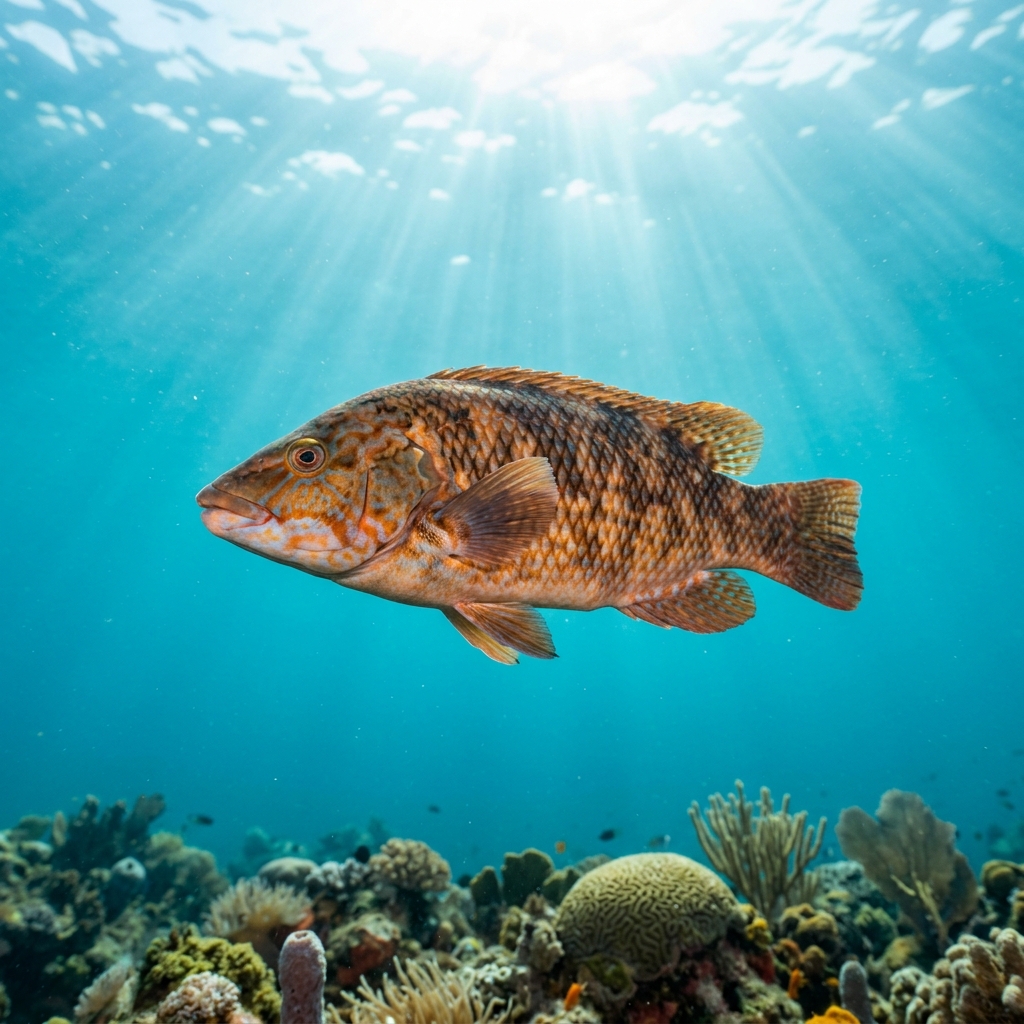
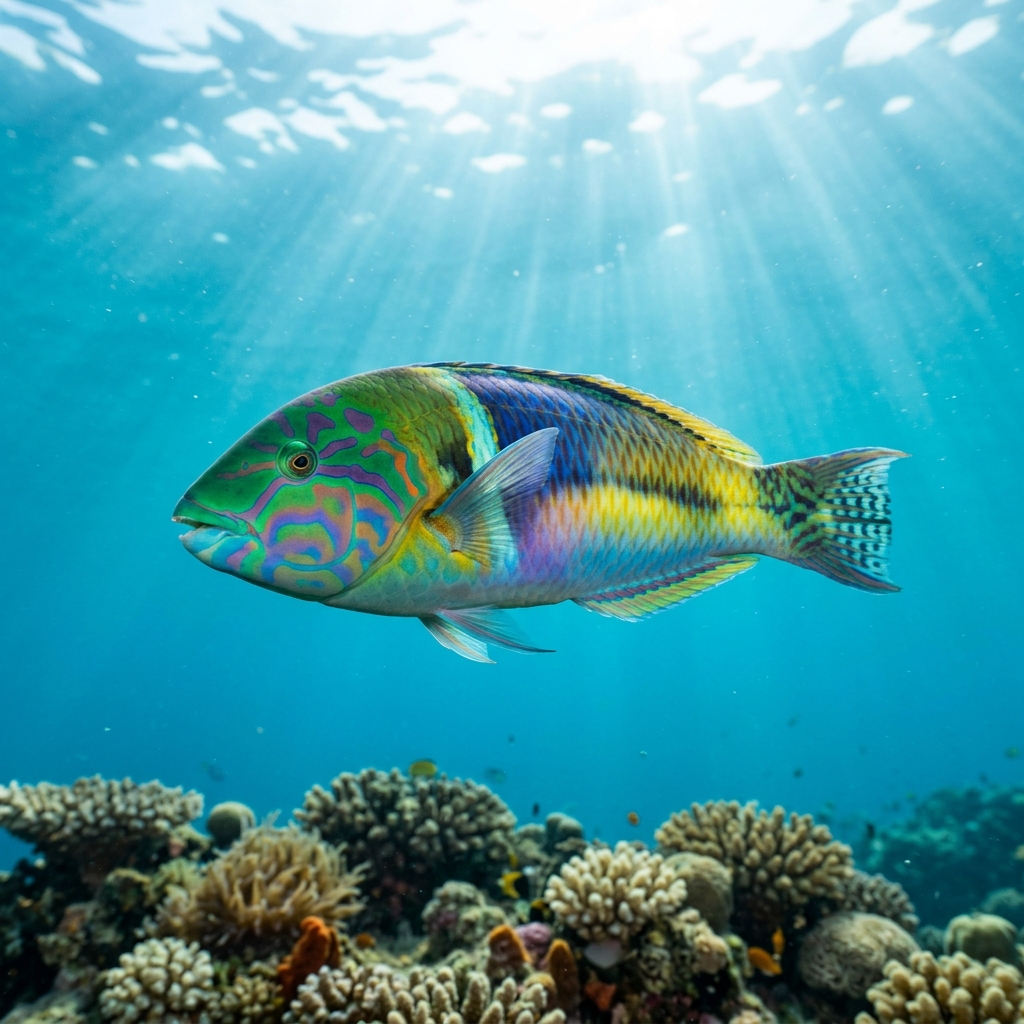
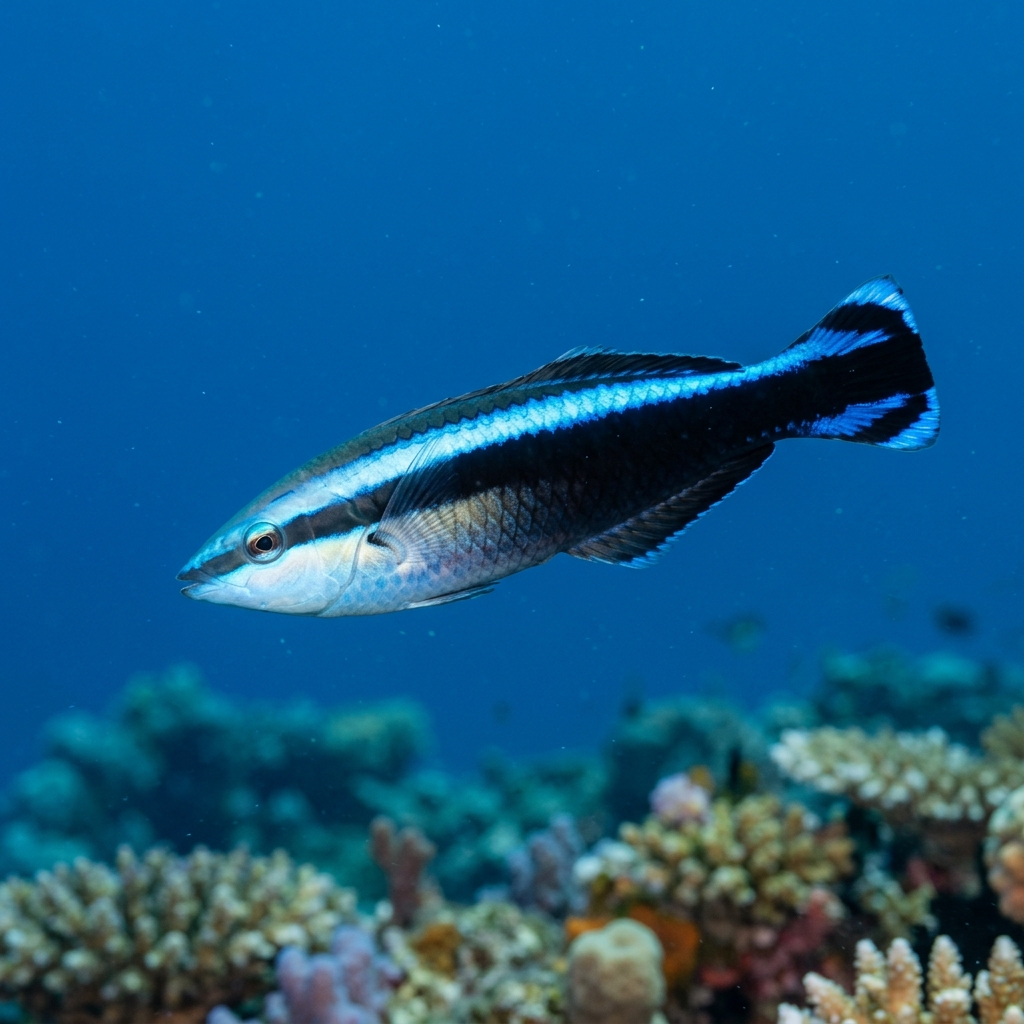
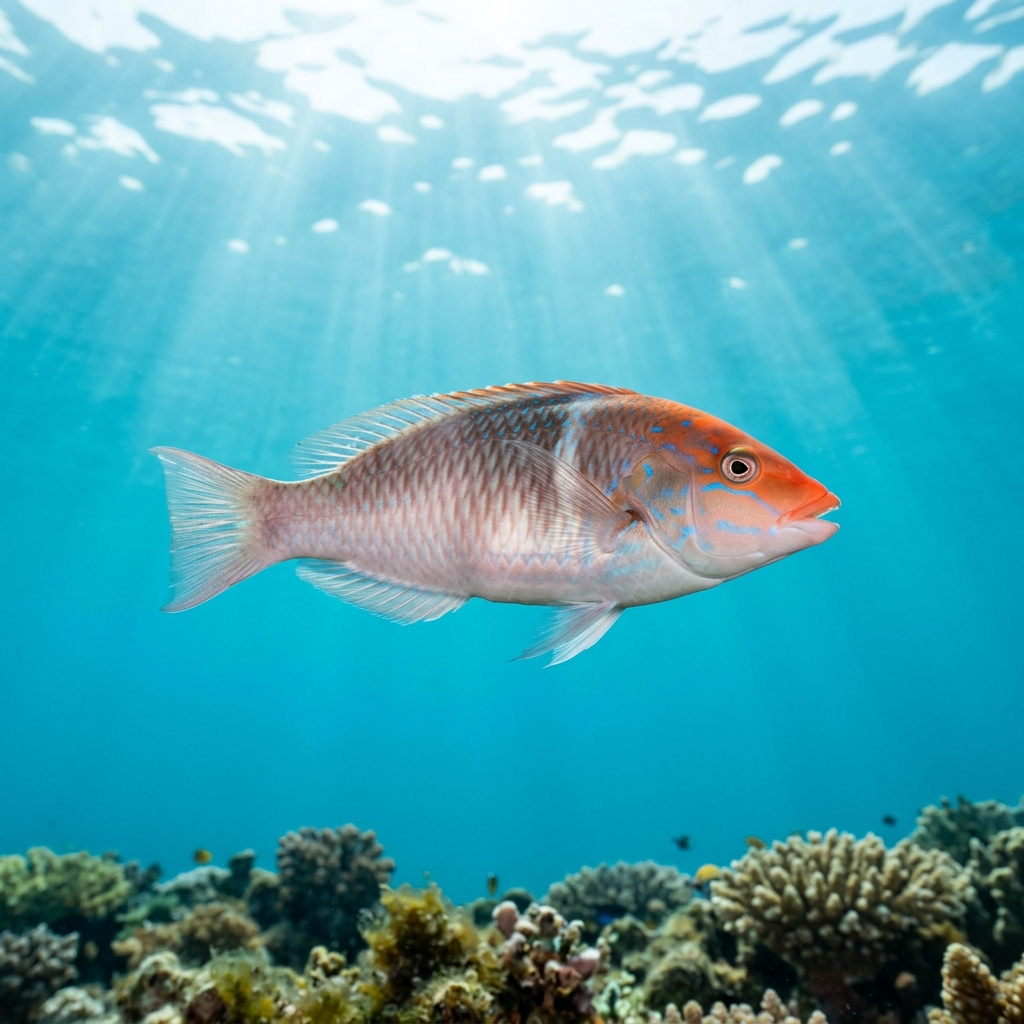
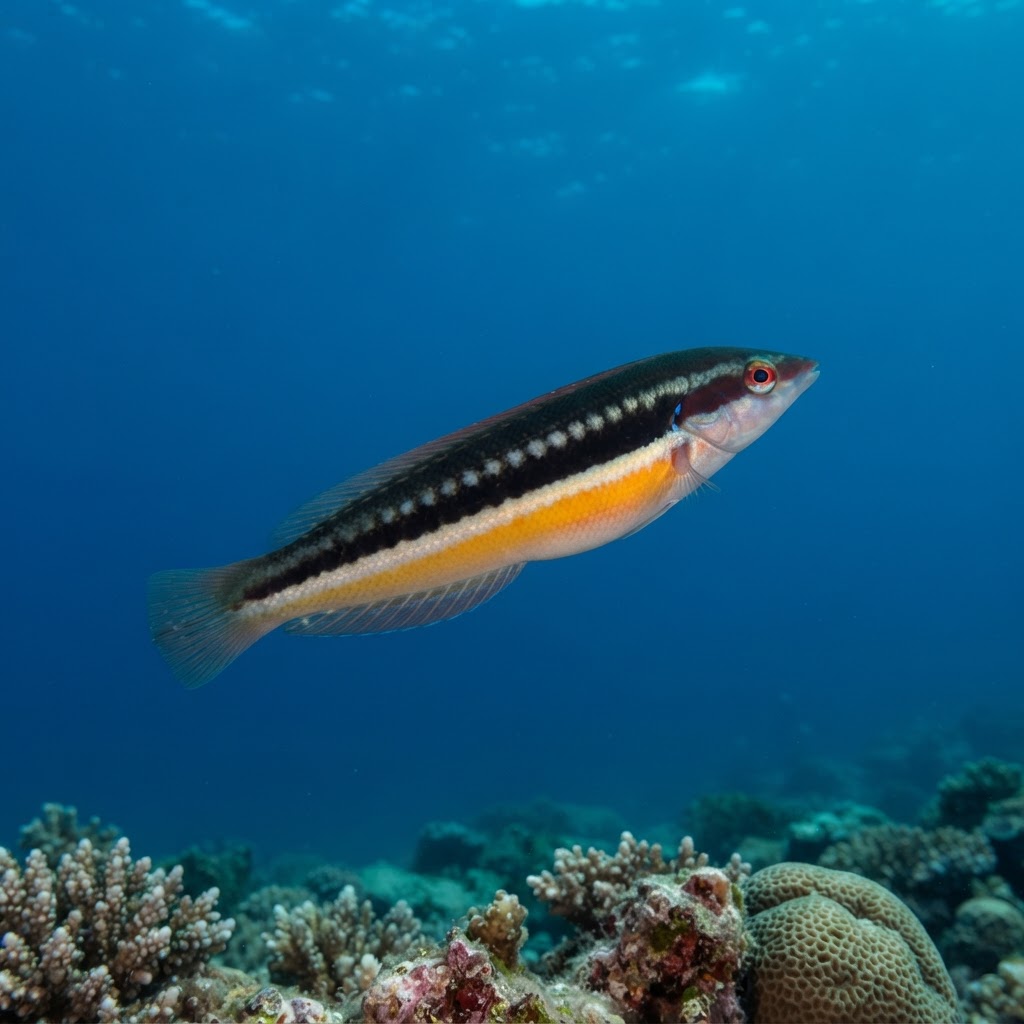
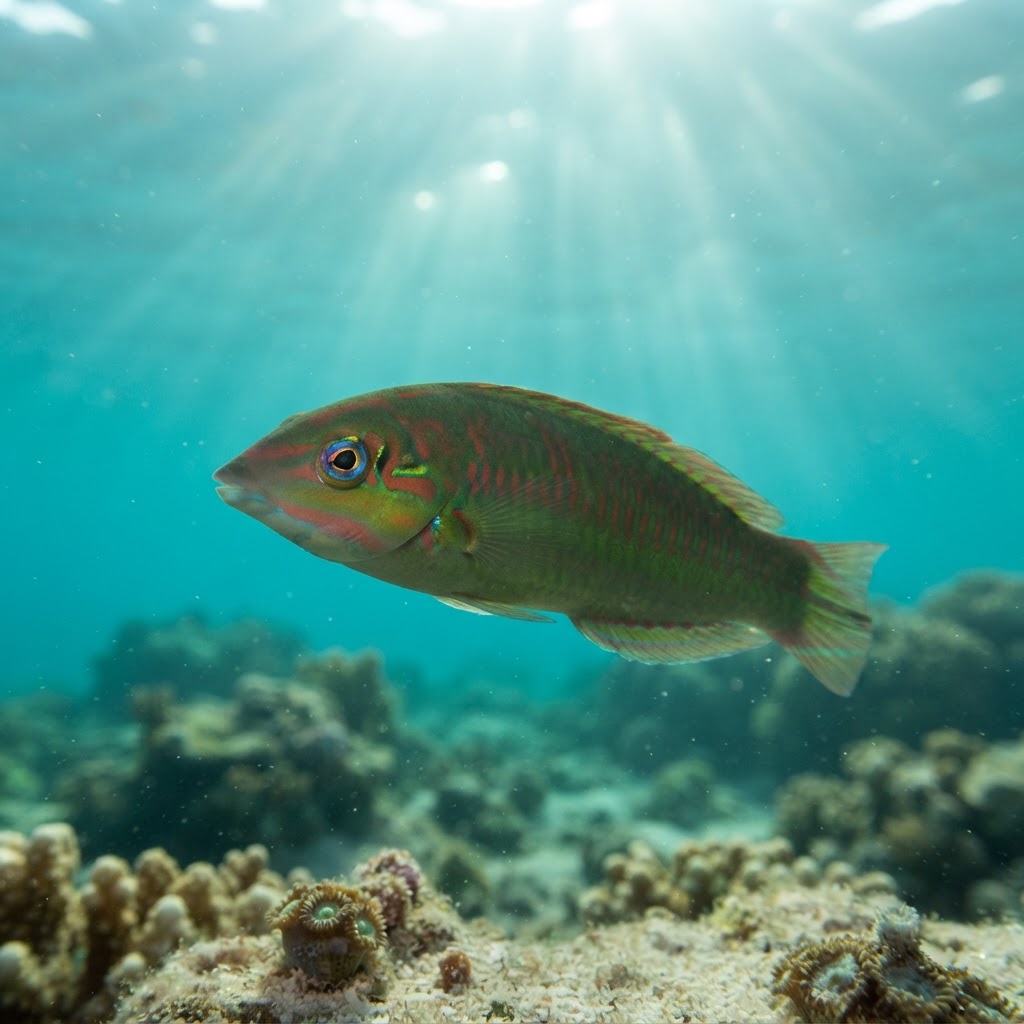
A slim, torpedo-shaped wrasse that tops out around 14 cm, with a greenish to yellowish body and faint stripes running along its flanks. The giveaway mark is the dark blotch just behind the gill cover, roughly where an ear would sit, which is what gives this fish its name. It swims in short, darting bursts low over sand patches and rubble near reef edges rather than holding still in open water.
Expect to see it picking over sand and rubble patches close to the reef base, hunting small invertebrates rather than schooling in open water. It tends to keep a low profile and will dart for cover among rocks or weed if you get too close, so slow, level approaches give the best look. Divers log it most often as a background fish spotted while working reef edges rather than as a target sighting.
Like many small wrasses in the genus Halichoeres, it likely changes sex and colour pattern as it matures, a common trait in this group though not specifically documented here.
No strong seasonal pattern shows up in the sighting data, so treat this as a year-round fish on the reefs where it lives. It sits comfortably in water between about 26 and 28 C, which matches Caribbean and southwest Atlantic reef temperatures for most of the year.
Most reliably logged off Florida in the United States, with strong showings around Rio de Janeiro and Bahia in Brazil, and around Boca Chica in the Dominican Republic. Anguilla's main island and cays also produce regular sightings, and it turns up less frequently around Martinique's Saint-Pierre, St. Martin/Sint Maarten, and Puerto Rico's San Juan area.
Mapping where Blackear Wrasse is logged…
Florida in the United States is the most consistent spot, alongside Rio de Janeiro and Bahia in Brazil, Boca Chica in the Dominican Republic, and Anguilla's main island and cays. Smaller numbers turn up around Martinique, St. Martin/Sint Maarten, and Puerto Rico.
There's no clear seasonal spike in sightings, so it's considered a year-round fish. It favours reef water in the mid-to-high 20s Celsius, which is available across most of the year in its Caribbean and southwest Atlantic range.
Look for a slender greenish-yellow wrasse around 14 cm long with a dark blotch behind the gill cover, near where an ear would be. It moves in quick darts low over sand and rubble rather than cruising in open water.
They stay small, typically reaching around 14 cm in length, which puts them among the more compact reef wrasses divers encounter.
No, they pose no threat to divers. They're small, shy fish that dart away from divers rather than approach, so there's nothing to watch out for beyond normal reef etiquette.
It's logged as uncommon at most sites where divers report it, with a smaller share of sites recording it as rare. It's the kind of fish you might spot while scanning sand patches near a reef, not one you'd plan a dive specifically to find.
Site and sighting data is aggregated from diver logs, iNaturalist and GBIF. For taxonomy and conservation status:
Cleaver Wrasse
2,700 sites