Eviota atriventris
A tiny reef goby logged across Visayas, Palau's Koror & Malakal, and Malaysia's east coast in warm 28C water year-round.
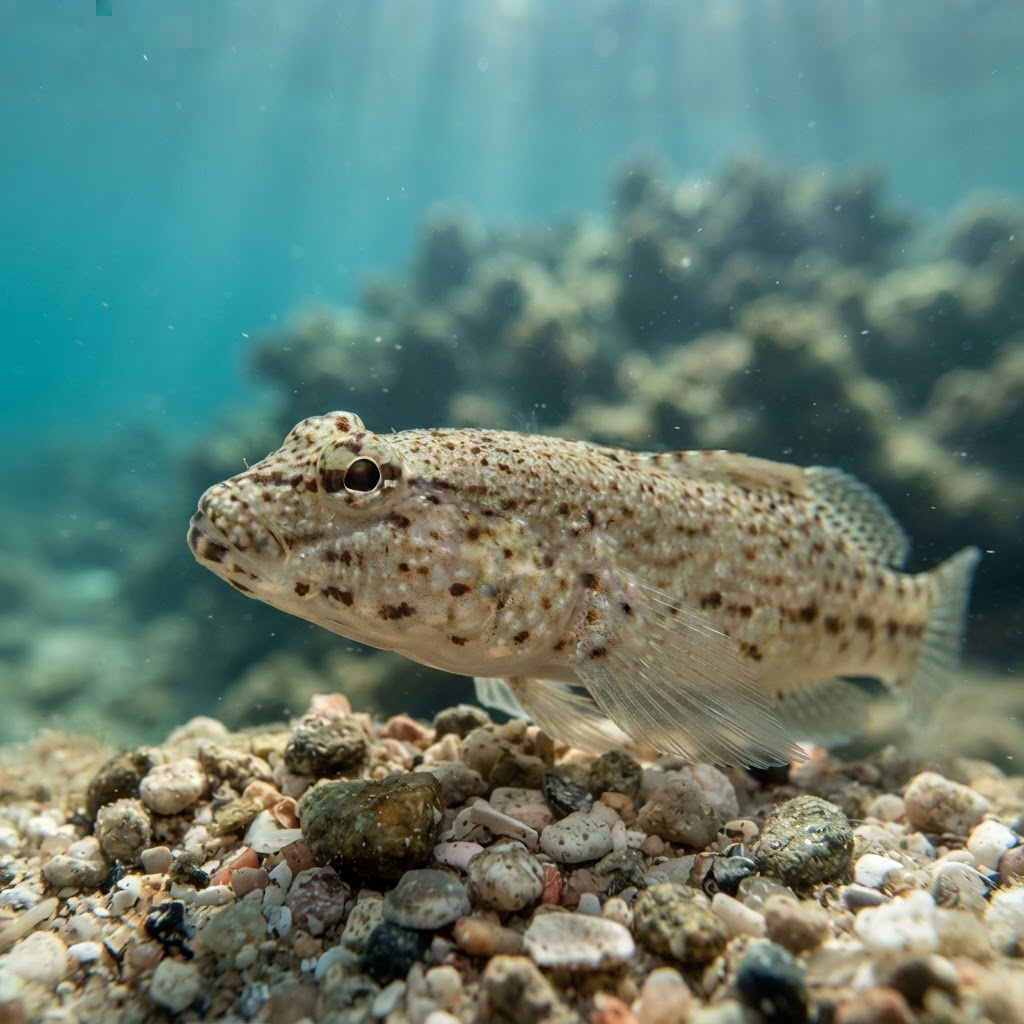
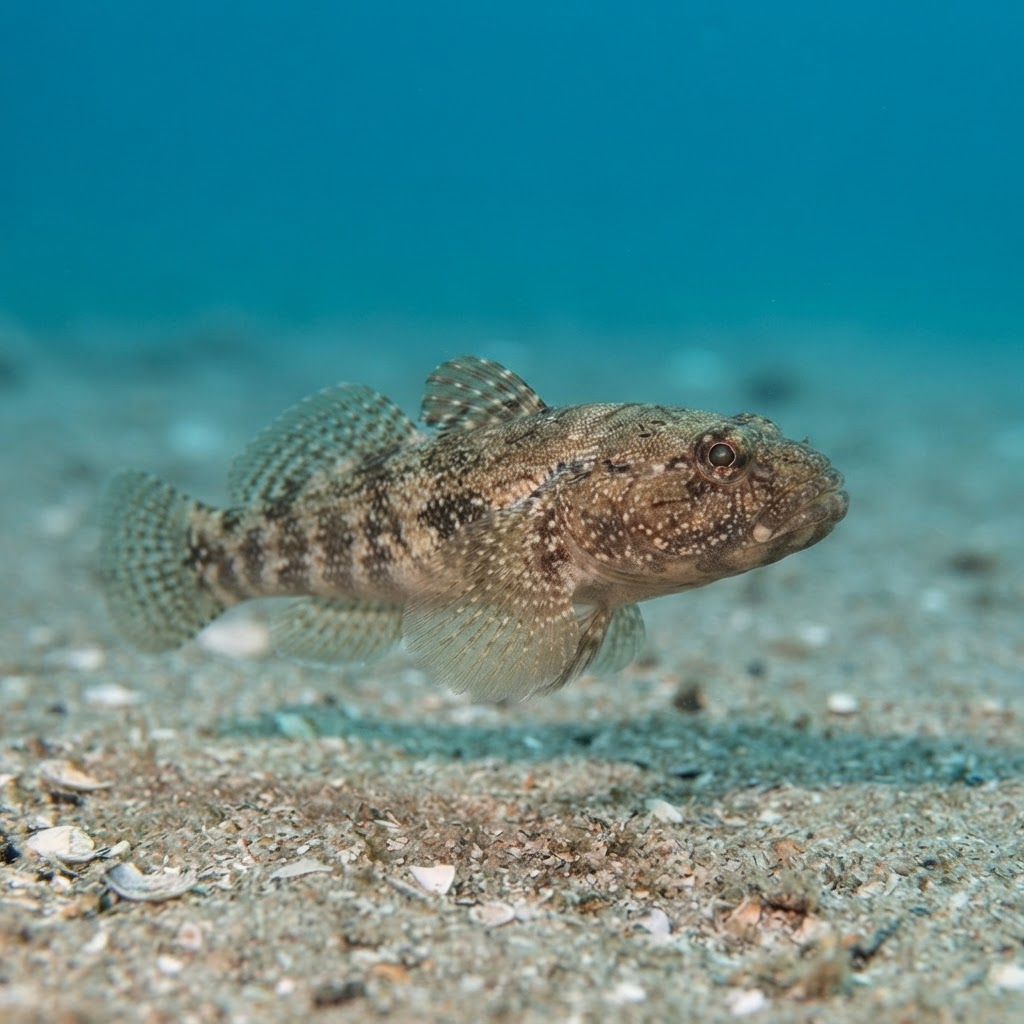
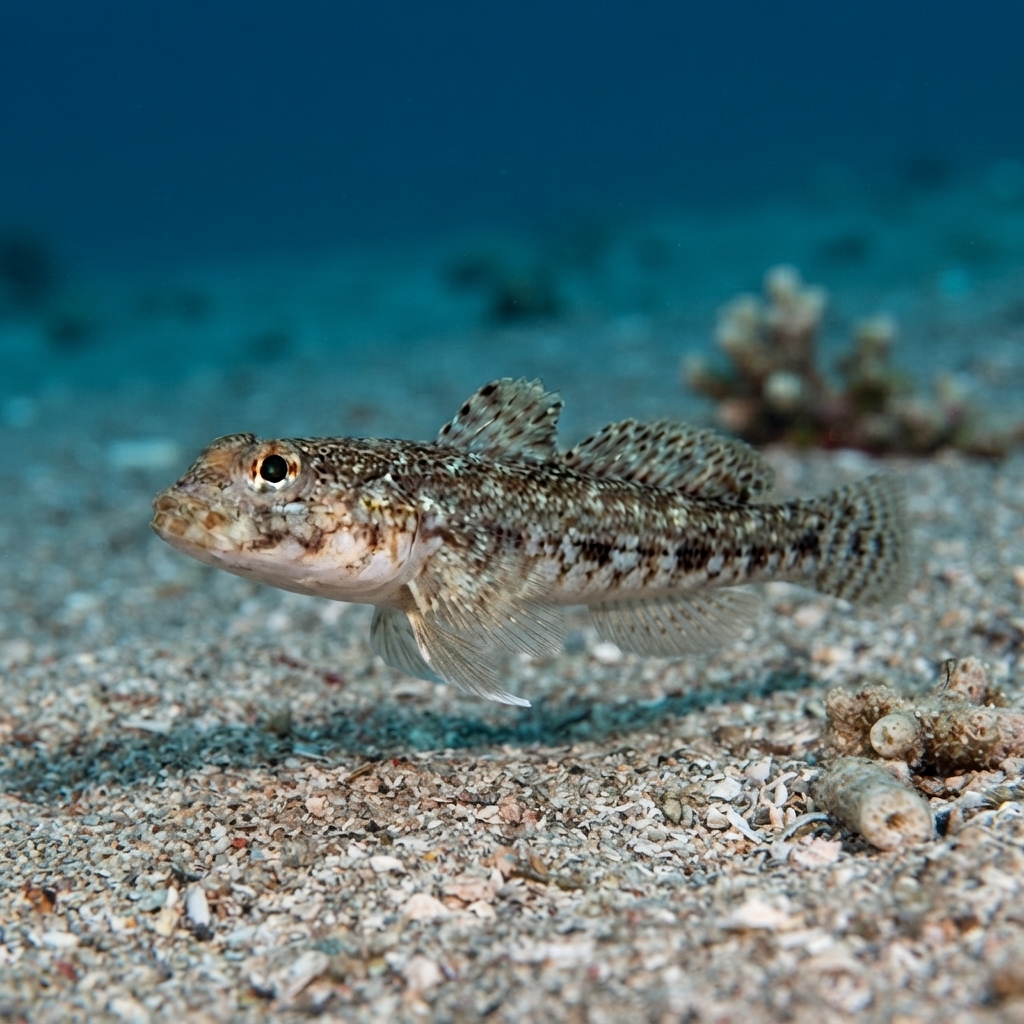
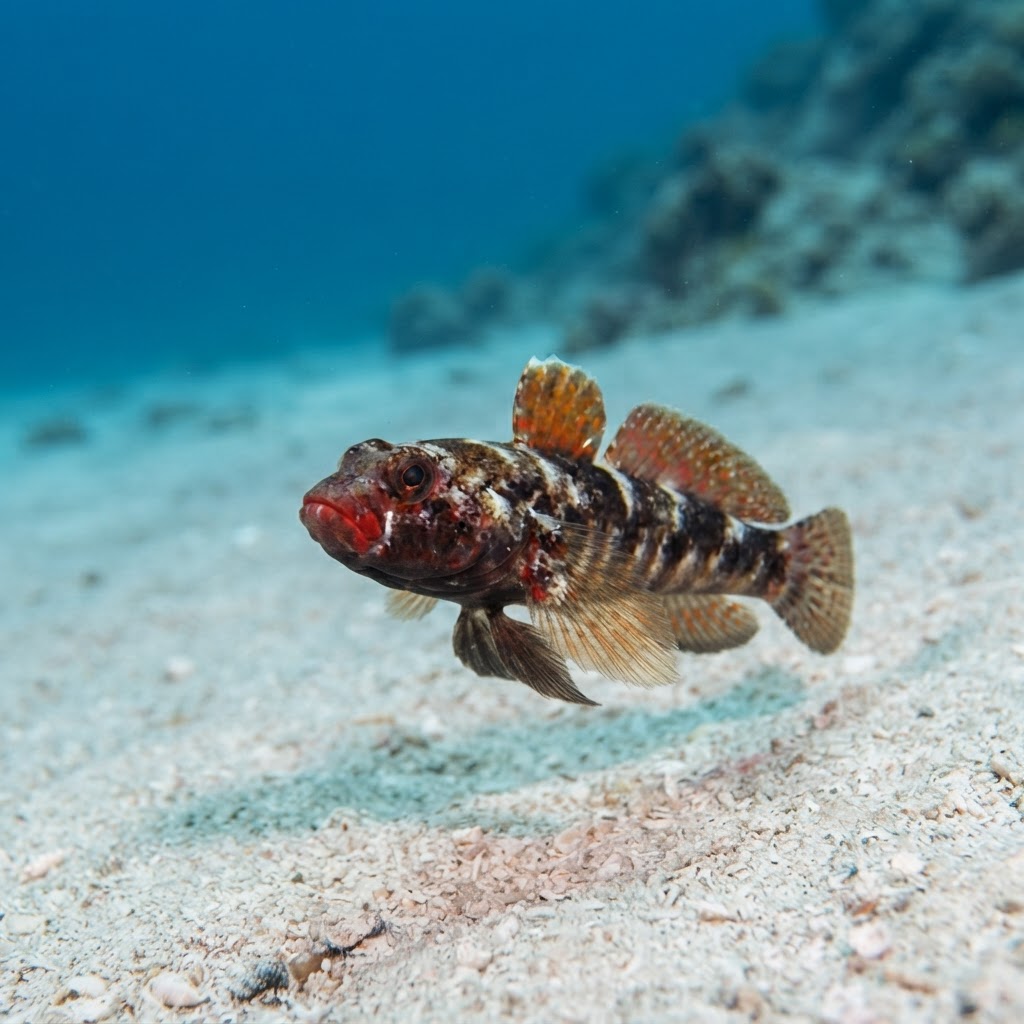
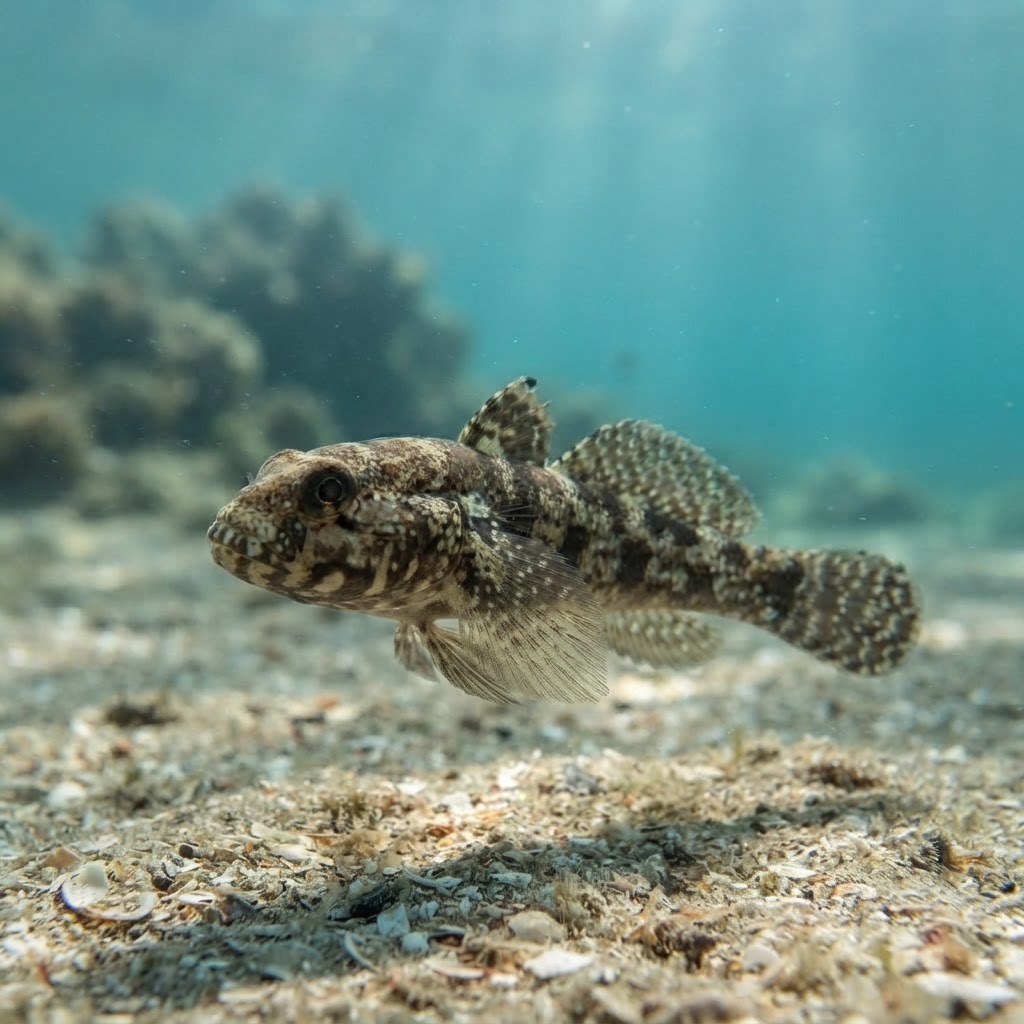
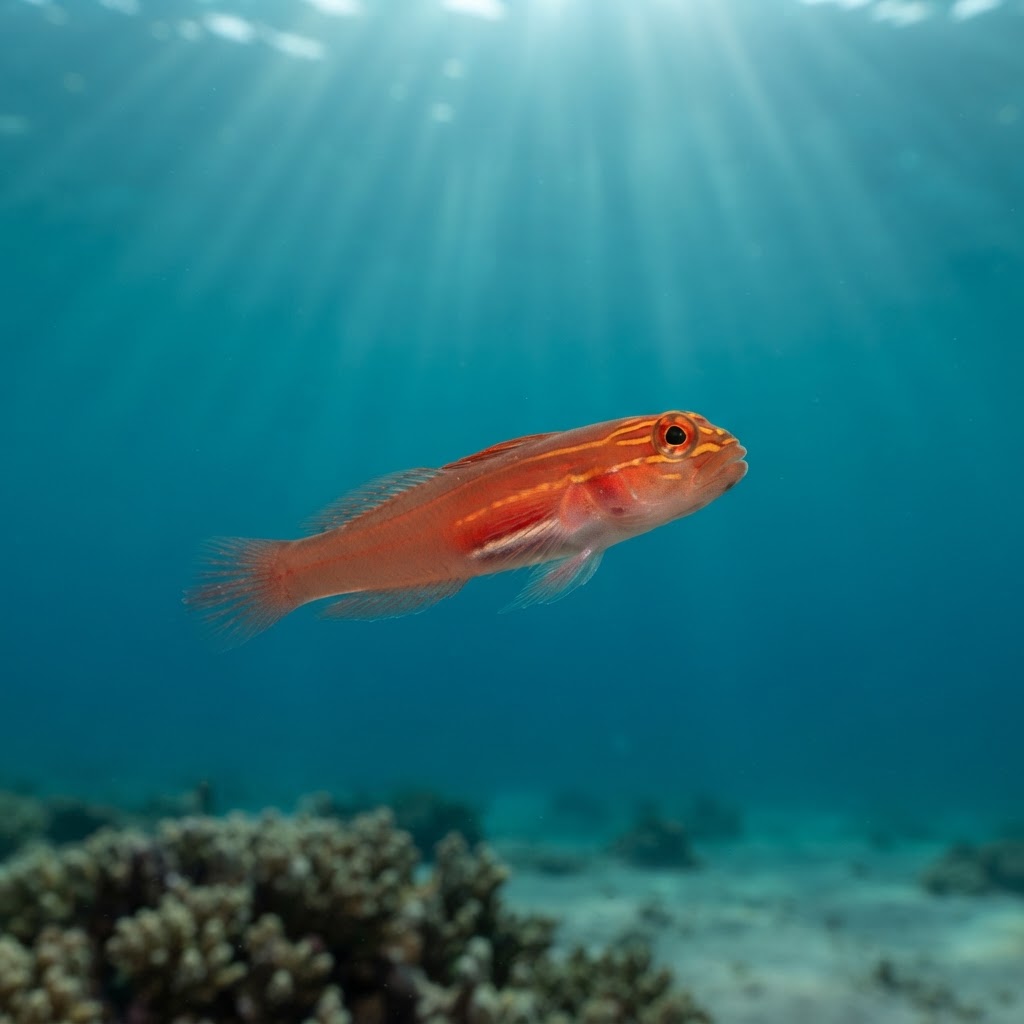
A pin-sized goby, easy to miss unless you slow down and scan rubble and coral heads at close range. Body is mostly translucent to pale, with a dark, dense patch across the belly that gives the species its name and is the clearest thing to key on at arm's length. It perches rather than swims freely, propped on its pelvic fins with its head slightly raised, tail flicking now and then to hold position.
Spends most of its time stationed on a chosen bit of rubble, dead coral, or reef substrate, holding still or making short darting hops rather than cruising. Divers who slow their fin kicks and scan low over the reef at close range are the ones who spot it; it tends to hold its ground rather than bolt when a light or lens gets close, though it will duck into a crevice if pressed. Most sightings come from routine reef and rubble patches rather than any particular structure, so it rewards a slow, macro-focused pass over a fast swim-through.
Like other Eviota gobies, it's thought to have a short life cycle measured in weeks to a few months, meaning the individual you photograph today is very likely a different fish from the one on the same patch of reef a season later.
Comfortable across a narrow warm band of 27.8 to 29.3C, and sightings show no detectable seasonal pattern, so it's a year-round find on the reefs where it occurs.
Most reliably found in the Visayas region of the Philippines and around Koror & Malakal in Palau, with a solid presence on Malaysia's east coast peninsula. Smaller numbers have been logged in Sulawesi, Indonesia and around Tufi in Papua New Guinea, so it's worth a careful look on reefs across the Coral Triangle and Palau generally.
Mapping where Blackbelly Dwarfgoby is logged…
Best odds are in the Visayas region of the Philippines and around Koror & Malakal in Palau, with a good number of sites also on Malaysia's east coast. It's also been recorded in Sulawesi, Indonesia and near Tufi, Papua New Guinea.
There's no clear season in the sighting data, and it sits comfortably in warm 27.8 to 29.3C reef water year-round, so any month works for a dive trip aimed at finding it.
Look for a tiny, mostly translucent goby perched on rubble or coral with a distinct dark patch across its belly. It holds still or hops in short bursts rather than swimming freely, so slow, close scanning is the way to spot it.
Exact size figures aren't well documented for this species, but like other Eviota gobies it's a tiny reef fish, typically only a couple of centimetres long and easy to overlook without a macro lens.
No. They're harmless, tiny reef fish that pose no risk to divers and simply hold their position on the reef when approached.
Almost certainly not. Eviota gobies as a group are known for very short lifespans, often just weeks to a few months, so populations turn over quickly on the reef.
Site and sighting data is aggregated from diver logs, iNaturalist and GBIF. For taxonomy and conservation status:
Slender Goby
806 sites