Thalassoma nigrofasciatum
A small reef wrasse most often logged in Queensland, present year-round in 25 to 28C water. Here's how to spot one.
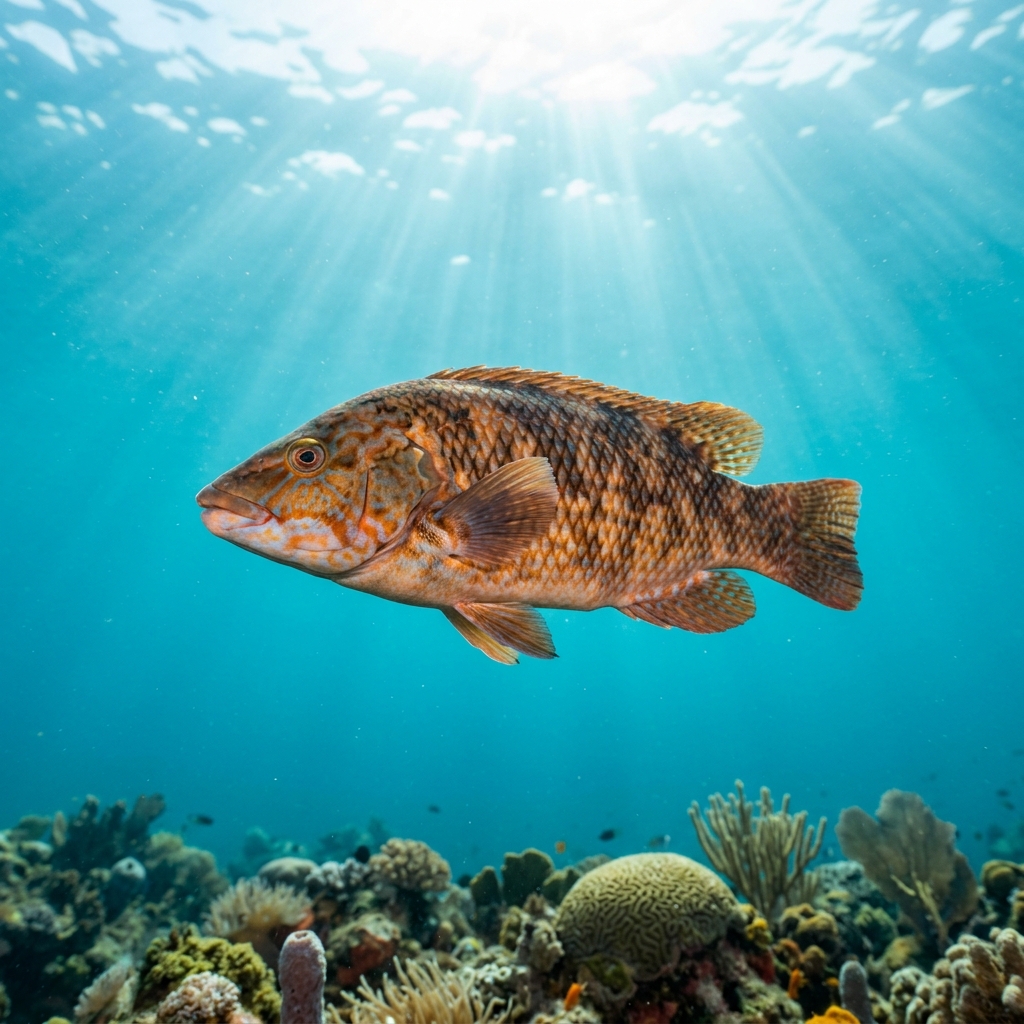
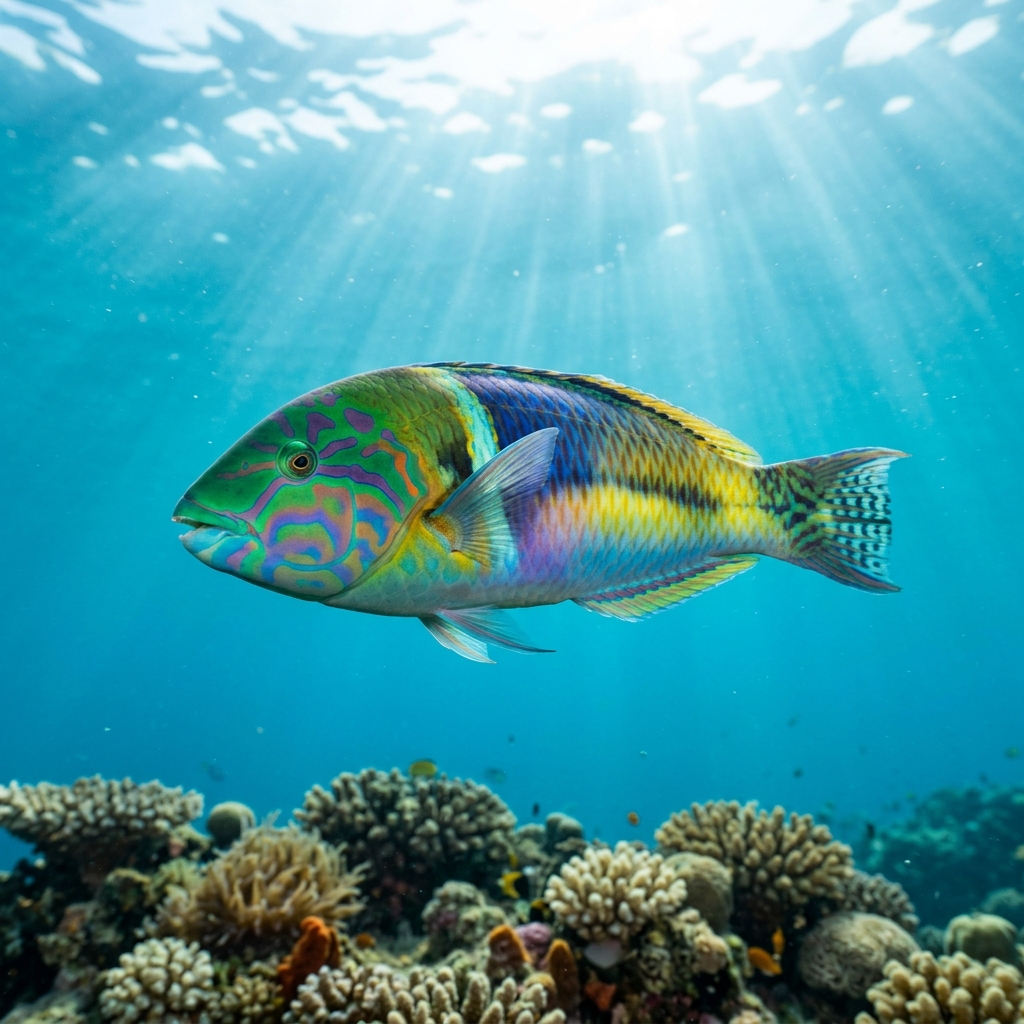
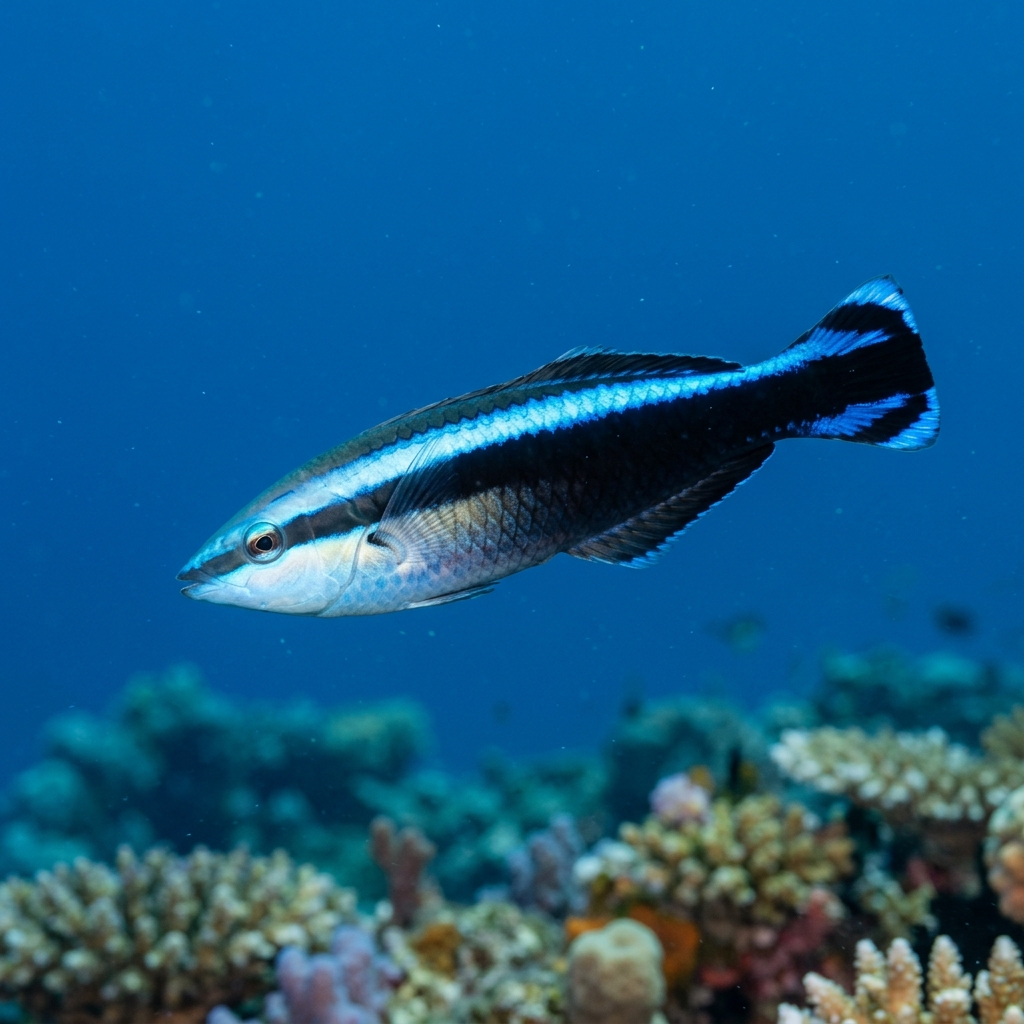
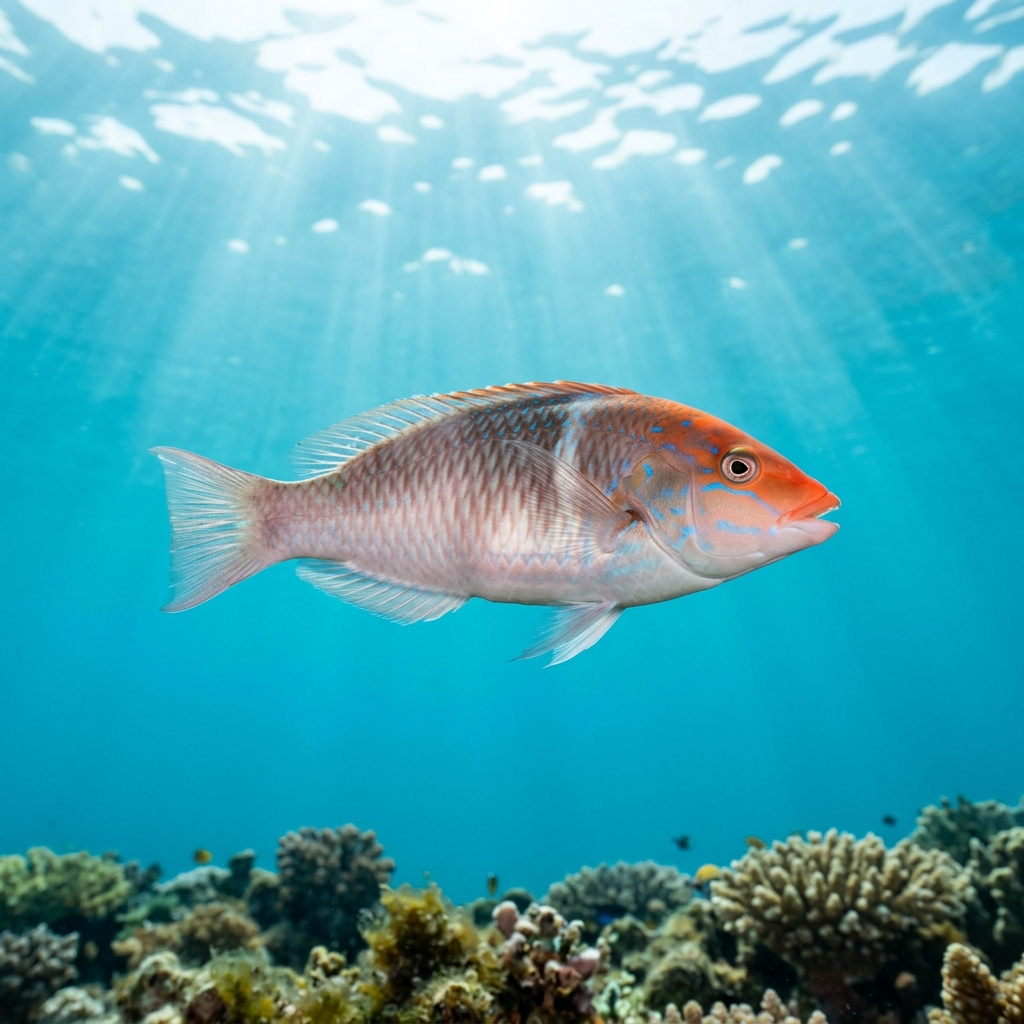
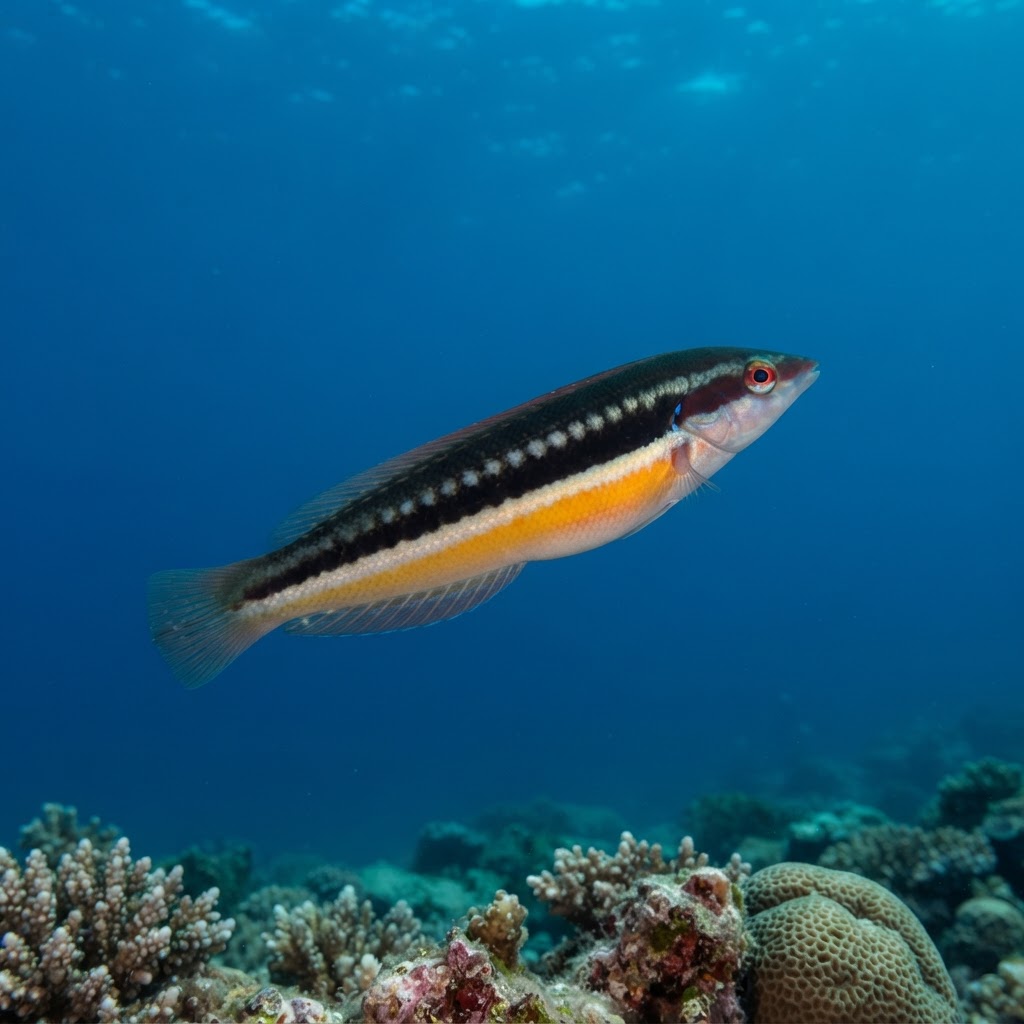
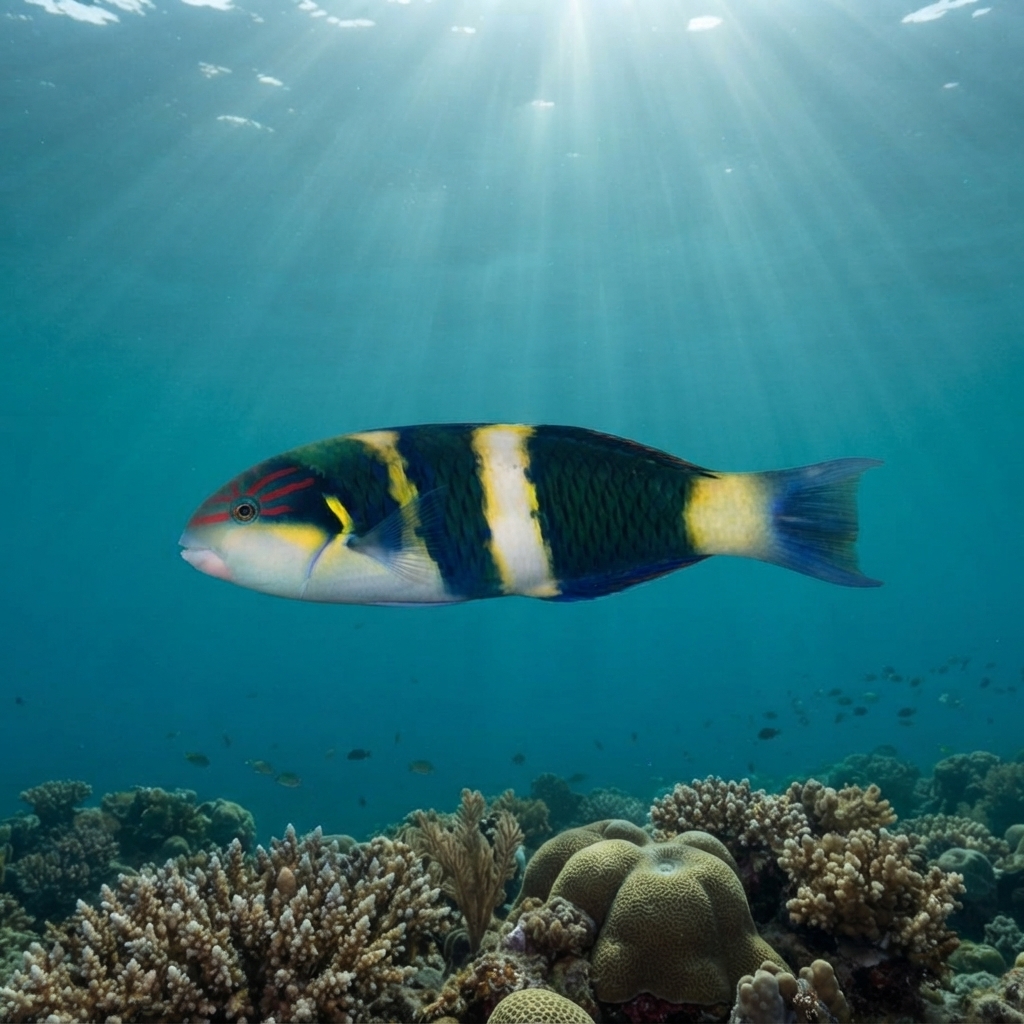
A small, slim-bodied wrasse around 14 cm, easiest to pick out by the dark vertical bar crossing its mid-body against an otherwise pale to olive base colour. It swims with the typical wrasse action, quick pectoral-fin strokes rather than a full-body sweep, staying low over the reef. Look for it darting between bommies or ducking into coral crevices rather than holding still in open water.
Divers typically spot it picking around low coral structure and rubble patches in shallow water, usually alone or in loose ones and twos rather than schools. It's a fast, darting swimmer that tends to keep its distance, so most sightings are brief glimpses as it flits between cover. Given its shallow depth range, it's a fish you're more likely to notice on the ascent or during a shallow safety stop than deep on the reef.
Like other wrasses in the genus Thalassoma, it's likely a protogynous hermaphrodite, meaning individuals can start life as female and later change sex to male, a trait well documented across this fast-swimming reef genus.
No clear seasonal pattern shows up in the sightings, and it sits comfortably in 24.6 to 28.5 C water, so it's a year-round find on the reefs where it occurs.
Most commonly logged on reefs in Queensland and New South Wales, Australia, with a reliable presence around Efate in Vanuatu and Nouméa and the Loyalty Islands in New Caledonia. It also turns up occasionally off Port Moresby, Papua New Guinea, but the Australian east coast is by far the strongest bet.
Mapping where Blackbar Wrasse is logged…
Queensland and New South Wales in Australia are the strongest areas, with further sightings around Efate in Vanuatu and Nouméa in New Caledonia. It's an uncommon find at most sites rather than a guaranteed sighting.
There's no strong seasonal pattern in sightings, and it tolerates a warm 24.6 to 28.5 C range, so it can be seen year-round on the reefs it inhabits.
Look for a small, slender wrasse around 14 cm with a distinct dark vertical bar across its mid-body. It swims with quick, darting movements low over coral and rubble rather than cruising in open water.
They're a small wrasse, typically reaching around 14 cm in length, and stay in shallow water down to about 15 m.
No. They're a small, harmless reef fish that poses no risk to divers and tends to avoid close contact anyway.
Likely yes. Like many wrasses in the genus Thalassoma, individuals are thought to be protogynous hermaphrodites, starting out female and later changing to male.
Site and sighting data is aggregated from diver logs, iNaturalist and GBIF. For taxonomy and conservation status:
Bird Wrasses
3,632 sites