Myripristis jacobus
Big red eyes, a dark shoulder bar, tucked into reef crevices on Bonaire's Leeward Coast year-round in 24-28C water.
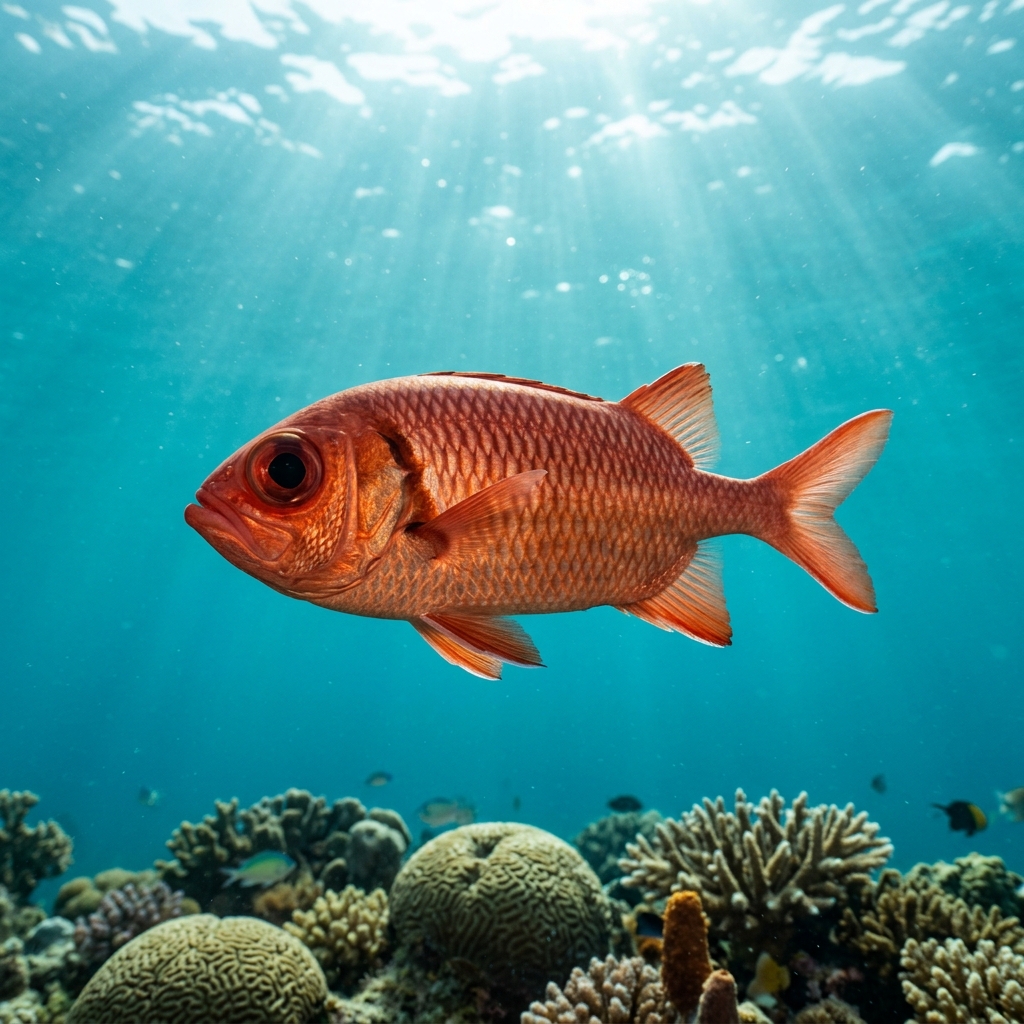
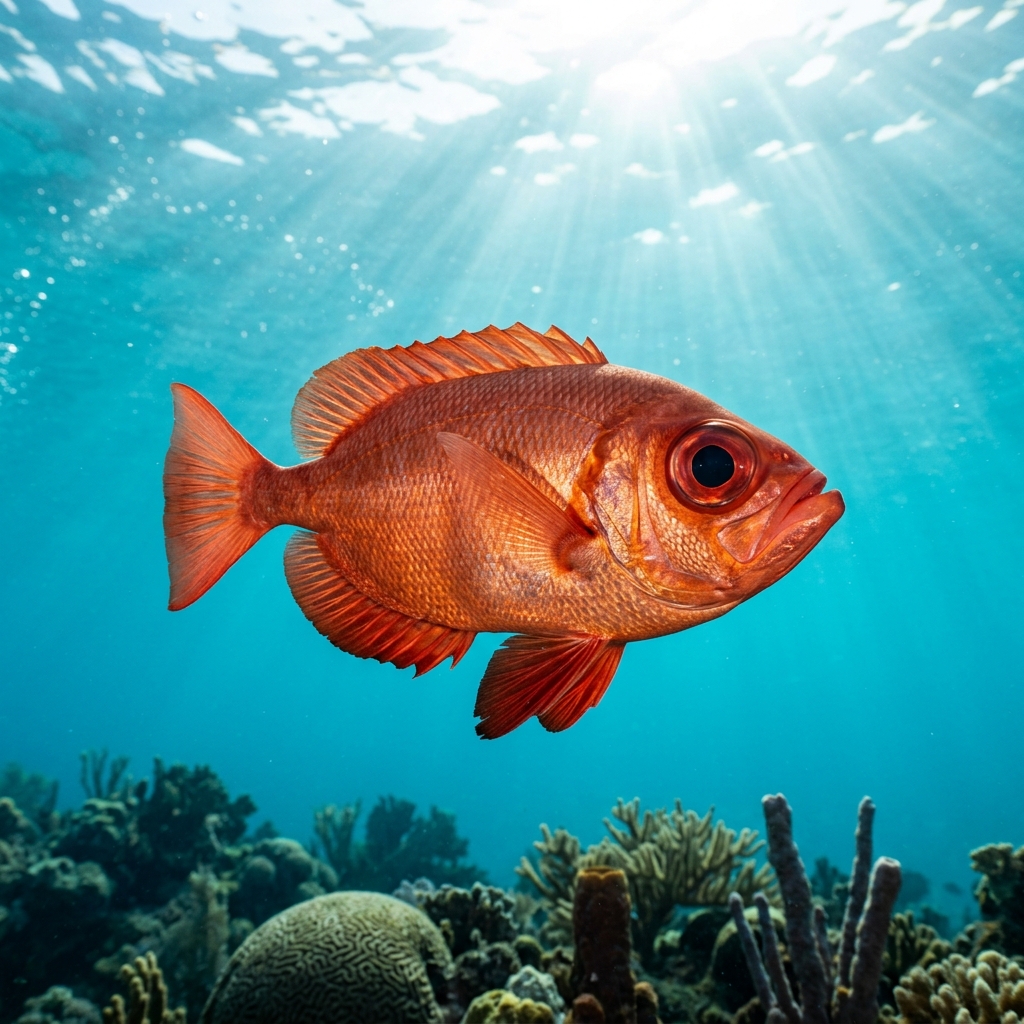
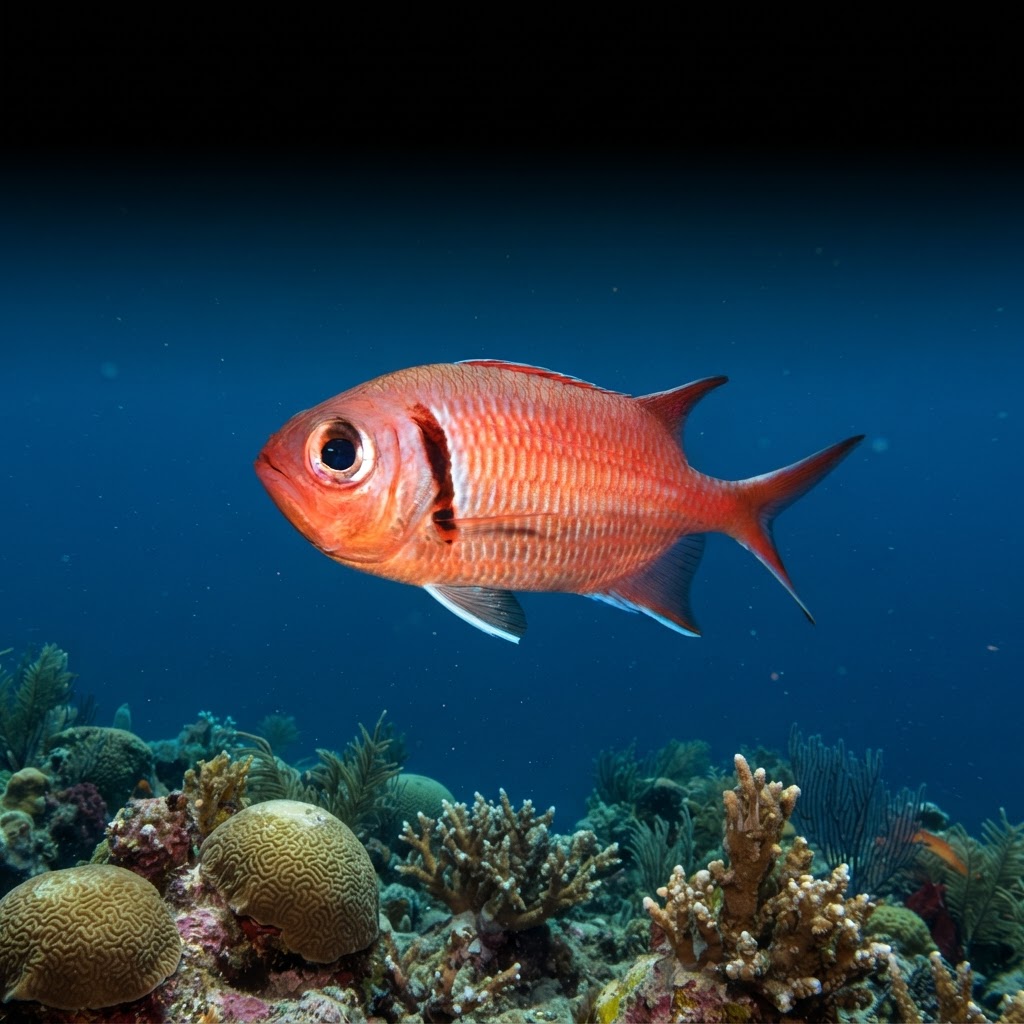
Look for a compact, deep-bodied fish about 17 cm long, coloured a solid brick-red to orange with large, glassy dark eyes built for low light. The name-giving feature is a black or dark grey bar running across the shoulder just behind the gill cover, which stands out even in torchlight. It often hovers in loose groups close to reef structure rather than swimming out in the open.
Divers usually find these fish clustered under ledges, in crevices, and around coral heads by day, packed in loosely with others of their kind and staying close to shelter rather than out on open sand. Their oversized eyes are a giveaway that they're built for dawn, dusk, and night activity, when they spread out over the reef to feed. During daylight dives they tend to hold position and let divers approach fairly closely before retreating deeper into cover.
Those large eyes are a classic nocturnal-reef-fish adaptation: soldierfish and their squirrelfish relatives do most of their active hunting after dark, which is why daytime encounters mean finding them parked under overhangs rather than chasing anything.
No clear seasonal pattern shows up in the sightings, and with a comfortable range of roughly 23.6 to 28C, reefs across its Caribbean and Atlantic range stay within that band year-round, so any month works.
This is a reliable reef fish across the wider Caribbean, most consistently logged along Bonaire's Leeward Coast, around Tortola and the Southern Islands in the British Virgin Islands, and on Grenada Island and Carriacou. It also turns up regularly in Curacao's Willemstad and South Coast sites, the US Virgin Islands (especially Saint Croix), Colombia's Caribbean coast, and Cape Verde further offshore in the Atlantic.
Mapping where Blackbar Soldierfish is logged…
They're a common sight across the Caribbean, with strong numbers on Bonaire's Leeward Coast, around Tortola in the British Virgin Islands, and on Grenada and Carriacou. Curacao, the US Virgin Islands, Colombia's Caribbean coast, and Cape Verde also produce regular sightings.
There's no strong season in the sighting data, and the water temperatures they're found in (roughly 23.6 to 28C) hold steady across the year on these reefs, so they're a year-round find.
Check for a red to orange, deep-bodied fish around 17 cm with big dark eyes and a distinct black bar across the shoulder behind the gills. They're usually seen hovering in small loose groups near reef crevices and overhangs rather than out in open water.
They typically reach around 17 cm in length, making them a small to mid-sized reef fish that's easy to overlook until you spot that shoulder bar.
Their oversized eyes are adapted for low-light and nighttime feeding. By day they mostly shelter under ledges and in crevices, becoming more active at dawn, dusk, and after dark.
No. They're a harmless reef fish that tends to hold near cover and poses no threat to divers.
Site and sighting data is aggregated from diver logs, iNaturalist and GBIF. For taxonomy and conservation status:
Soldierfish
3,612 sites