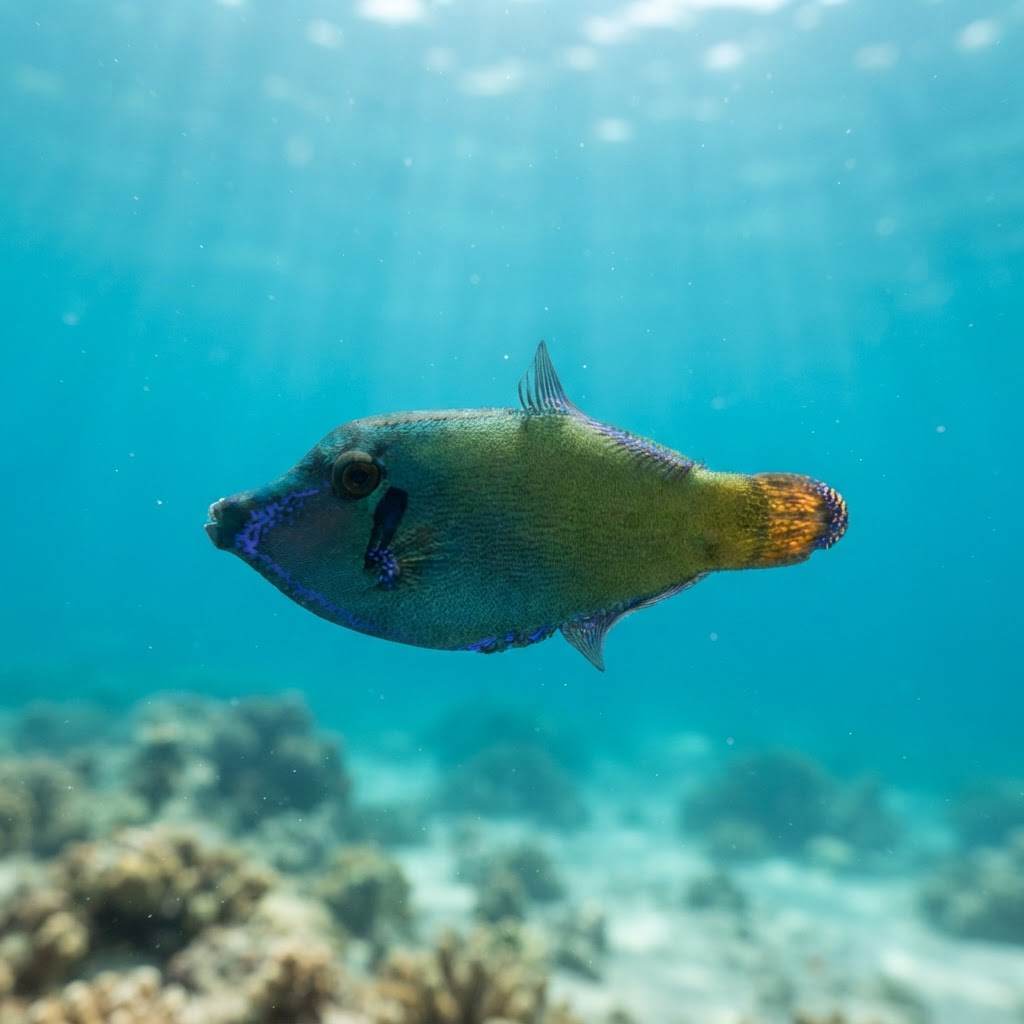
Pervagor janthinosoma
Small purple filefish with a dark saddle, most reliably logged around Saint-Leu, Reunion, in warm 24-29C water year-round.
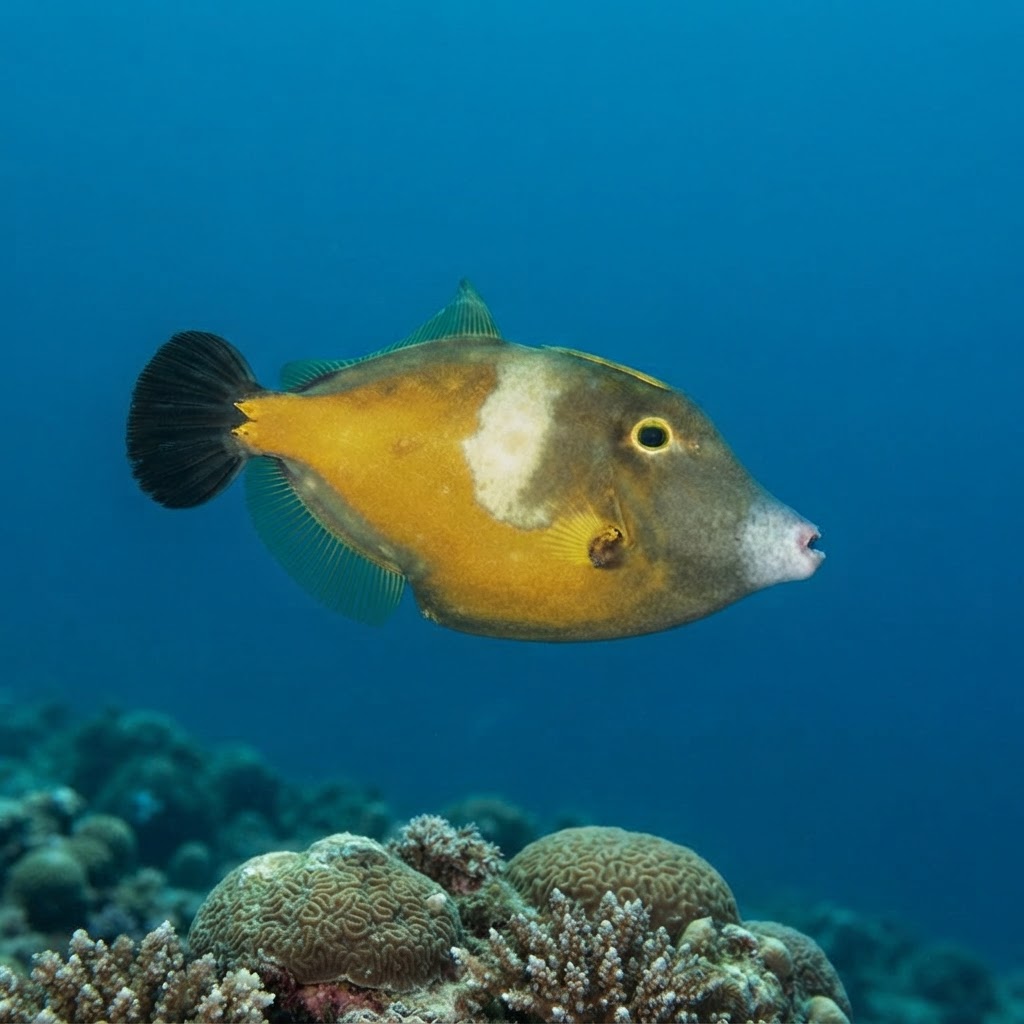
A small, laterally flattened fish barely bigger than your palm, with a purplish-brown to reddish body that can shift shade depending on mood and lighting. The giveaway is the dark blackish saddle-shaped patch across the rear half of the body, contrasting against the paler front. It swims with slow, almost hesitant fin flicks rather than a fast tail-driven cruise, and tends to hang at odd angles near cover rather than out in open water.
Divers usually find it tucked in close to coral heads, rubble, or gorgonians, picking at algae and small invertebrates rather than patrolling open reef. It is generally unbothered by divers at a normal distance, drifting off at a lazy pace if approached too closely rather than bolting. Most sightings are logged as uncommon rather than a guaranteed find, so it rewards a slower look at the reef structure rather than mid-water scanning.
Like other filefish, it can lock itself into crevices using an erectile dorsal spine, wedging its body so tightly that predators struggle to pull it free.
There is no clear seasonal pattern in the sightings, and with a comfortable range of roughly 24 to 29C it is present on these reefs year-round rather than tied to a particular month.
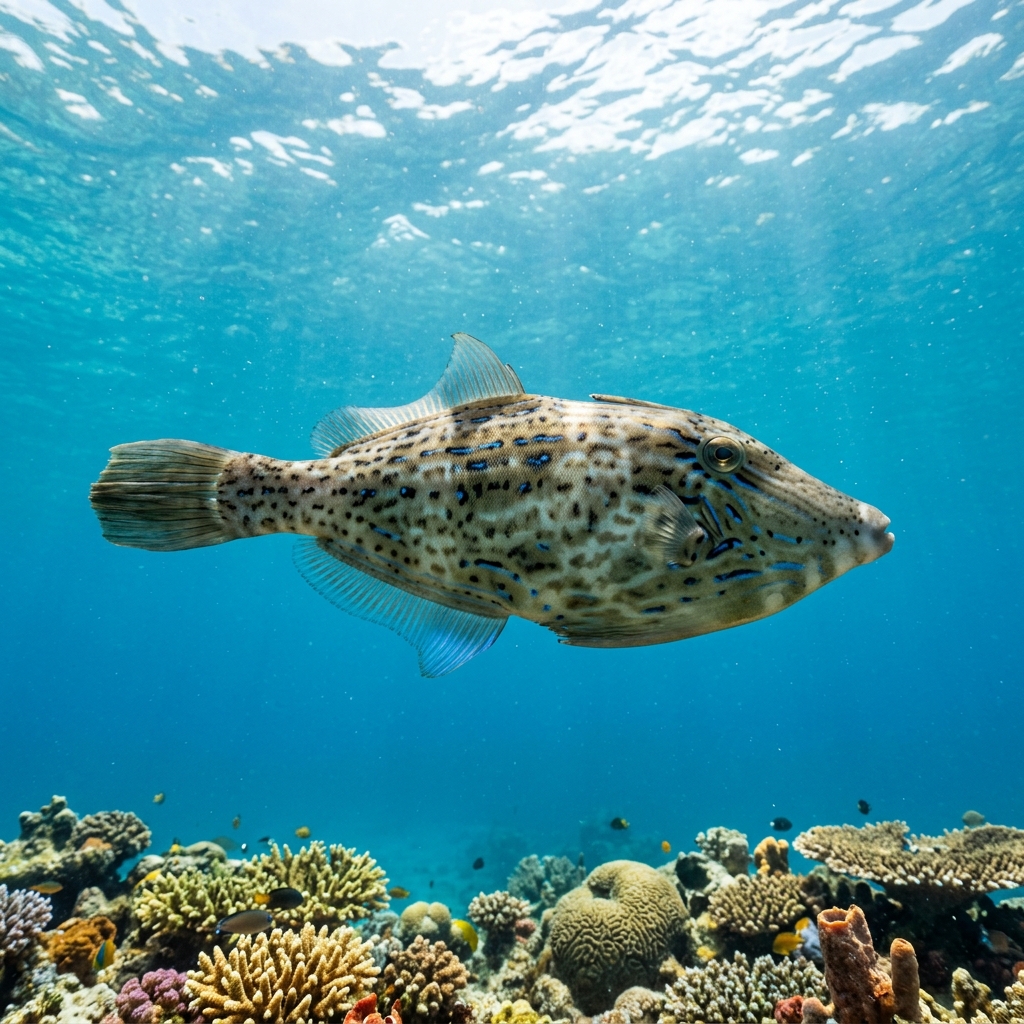
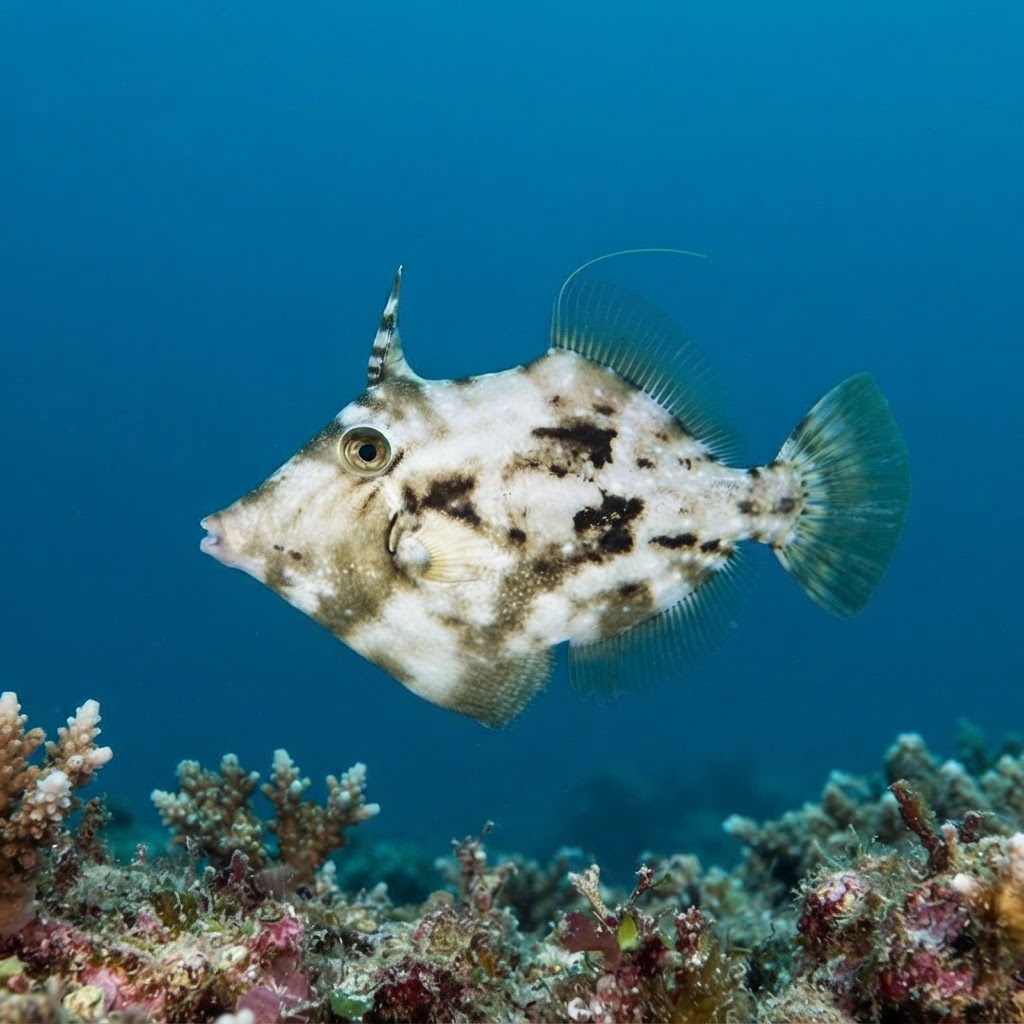
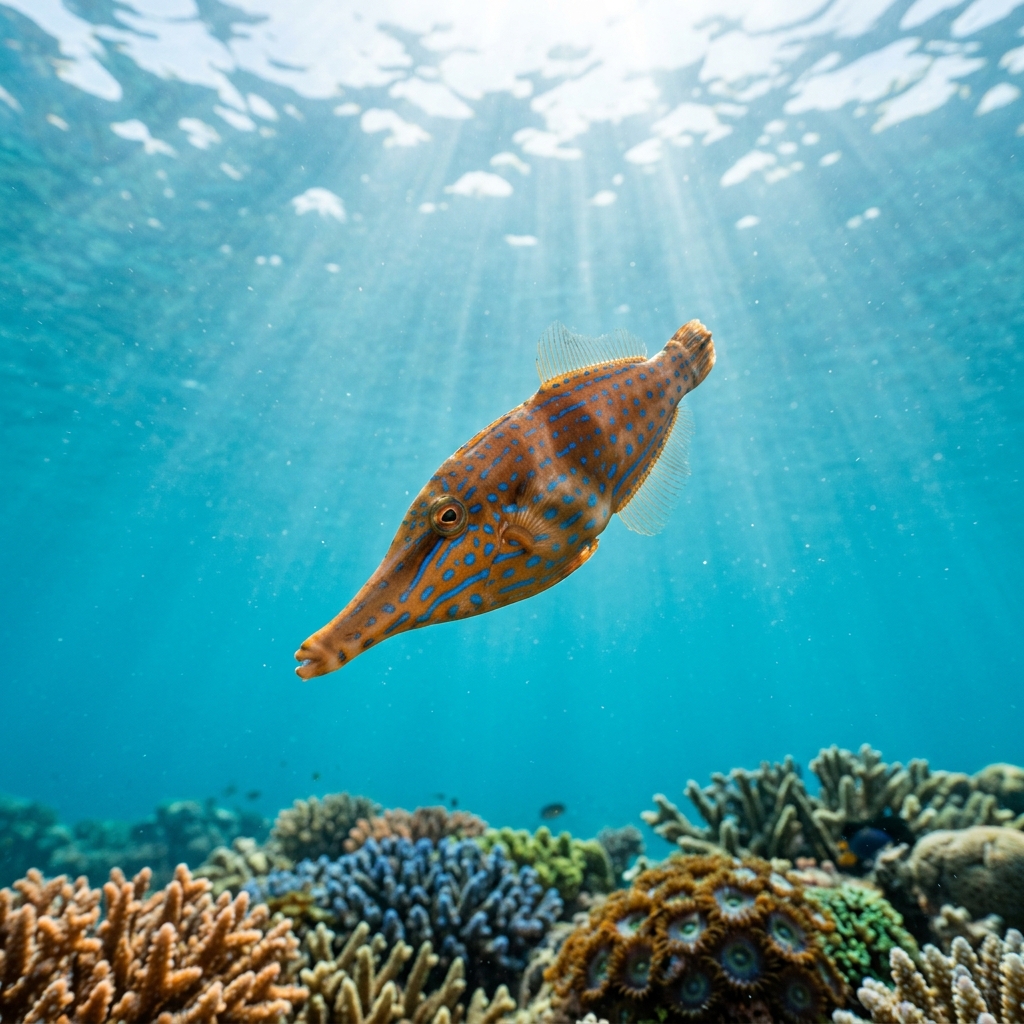
Reef neighbours a diver could mistake it for. Use the identification notes above to tell them apart.
Most reliably logged around Saint-Leu on Reunion, which carries the bulk of sightings for this species, with further strongholds around Apra Harbor and Tumon Bay in Guam and Longdong in Taiwan. Scattered records also come from New South Wales in Australia, Nha Trang in Vietnam, and Viti Levu in Fiji, so it turns up across a wide swathe of the Indo-Pacific even where it is not the headline fish.
Mapping where Blackbar Filefish is logged…
Saint-Leu on Reunion is the strongest spot for this species, with further sightings around Apra Harbor and Tumon Bay in Guam and Longdong in Taiwan. It also shows up occasionally in Australia, Vietnam, and Fiji.
No strong season shows up in the sighting data. It tolerates a warm 24 to 29C range, so it is present on tropical reefs throughout the year.
Look for a small, flat-bodied fish around 9cm with a purplish-brown body and a distinct dark saddle patch across the rear half. It moves with slow, deliberate fin beats and stays close to coral or rubble rather than swimming in open water.
They are small reef fish, typically reaching around 9cm, so they are easy to overlook against busy coral or rubble backgrounds.
No. They pose no threat to divers and simply drift away if approached too closely.
They can raise a stiff dorsal spine and wedge themselves tightly into reef crevices, using the spine to lock their body in place so predators cannot pull them out.
Site and sighting data is aggregated from diver logs, iNaturalist and GBIF. For taxonomy and conservation status:
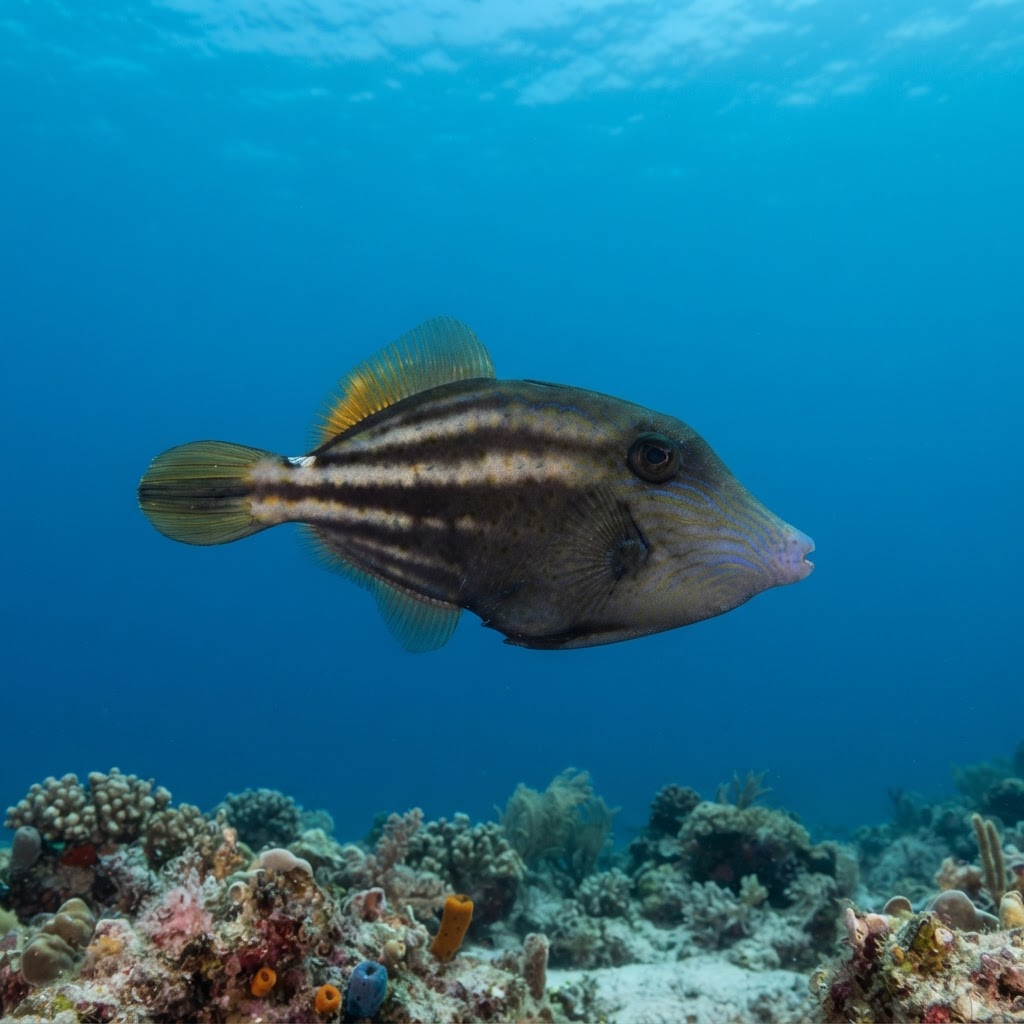
Orangespotted Filefish
836 sites