Pycnochromis retrofasciatus
A small reef damsel spotted year-round in the Visayas and Taveuni, comfortable in warm 25-29°C water on tropical drop-offs.
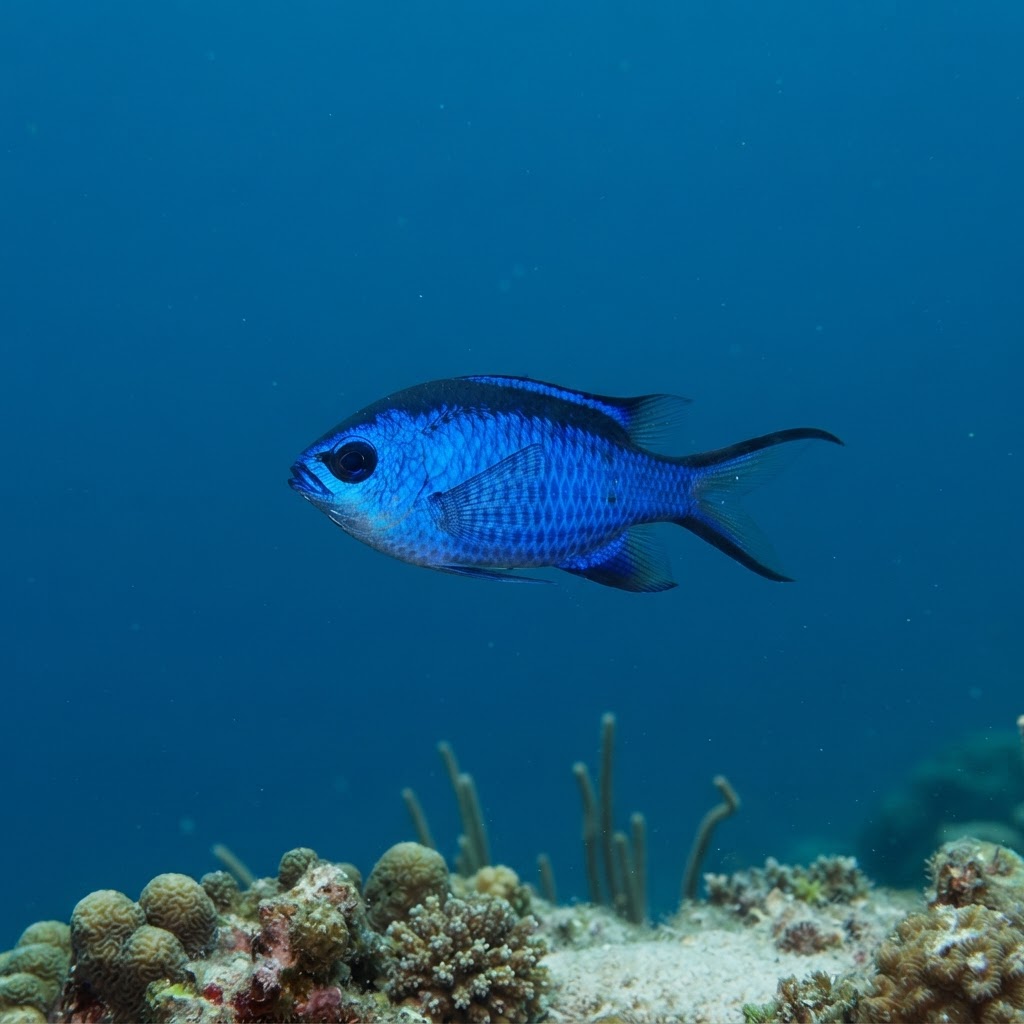
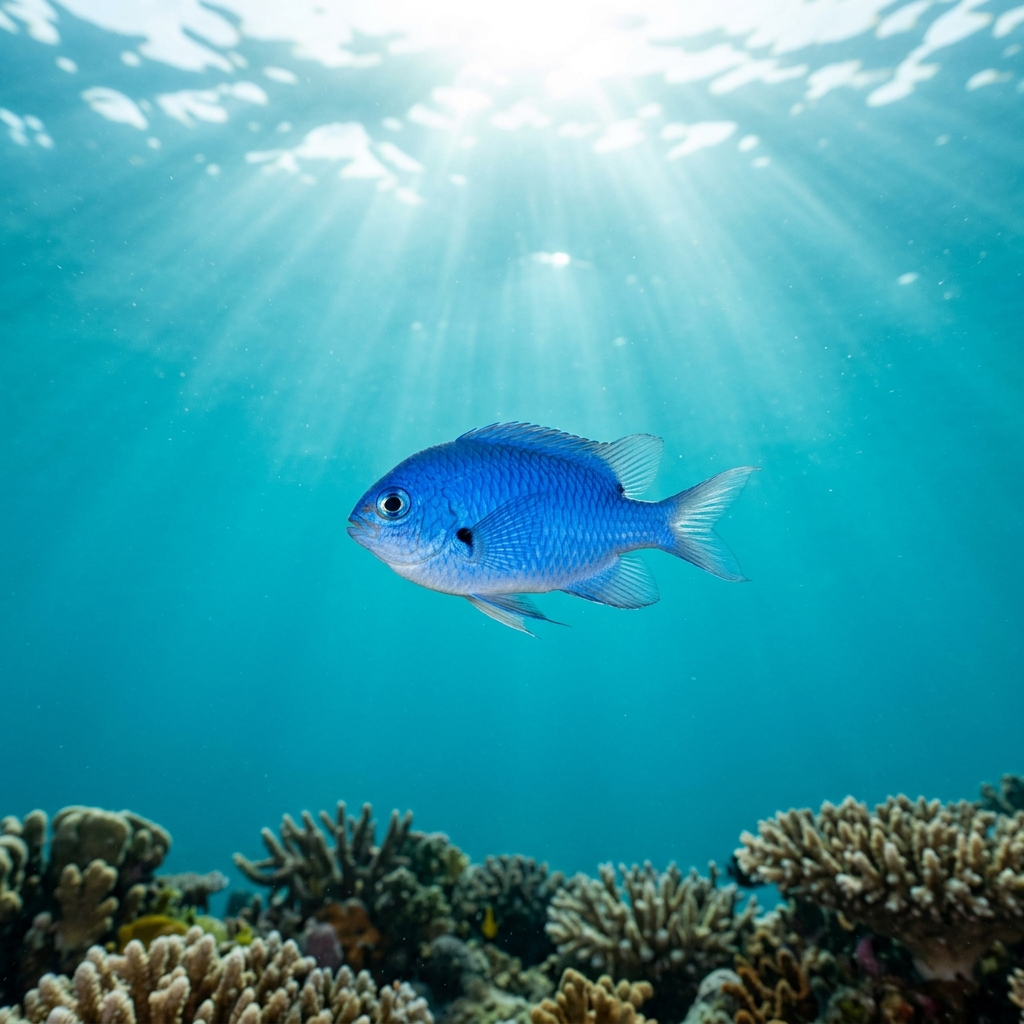
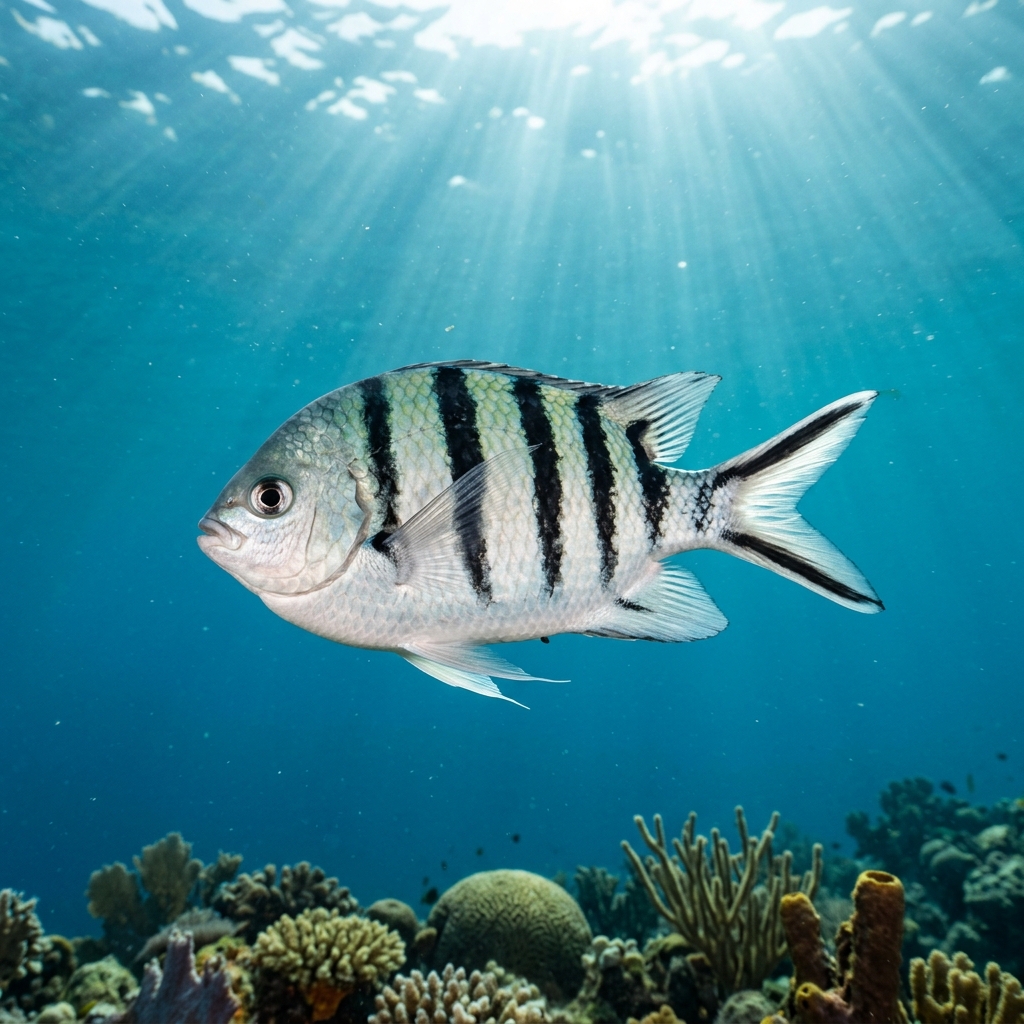
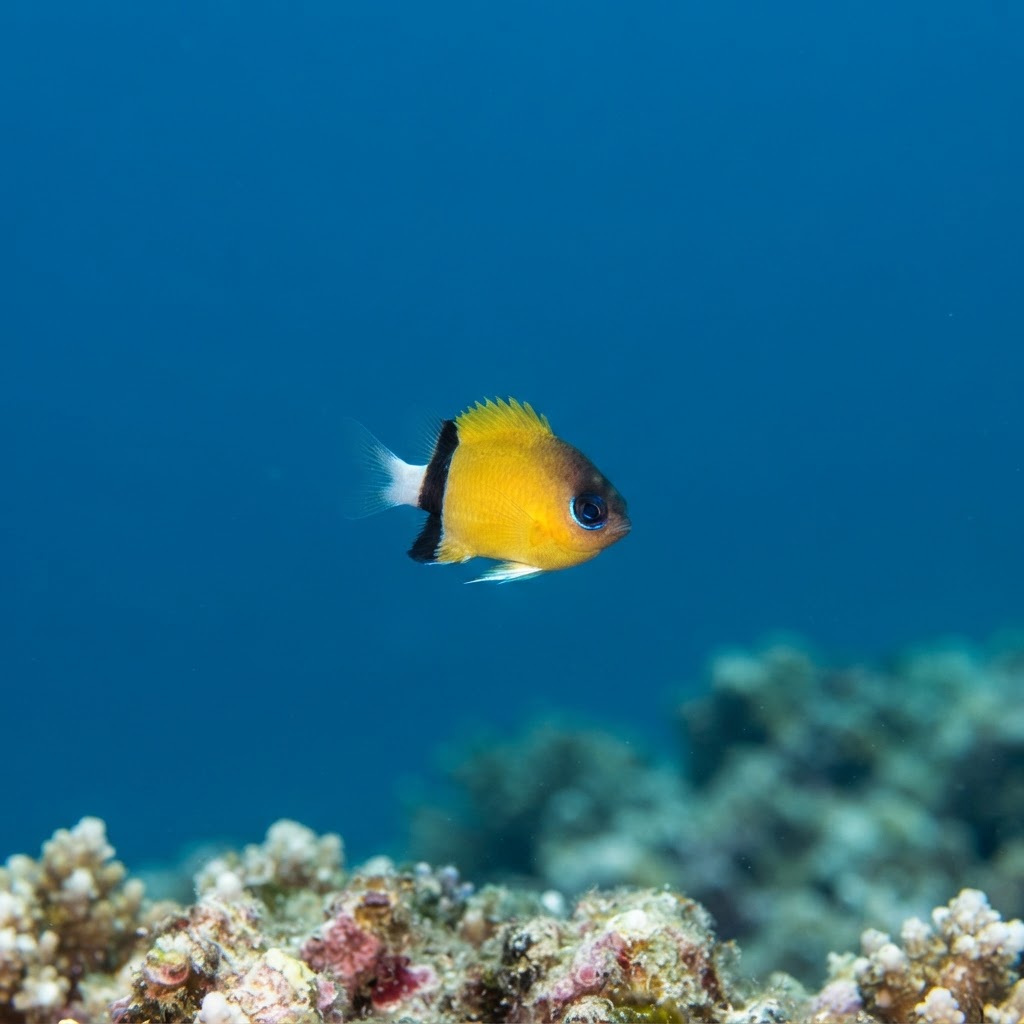
A pocket-sized damselfish at around 4 cm, with a slender oval body in pale blue-grey that catches a faint iridescent sheen in open water. The name-giving feature is a dark vertical bar running through the rear half of the body, just ahead of the tail, which separates it from plainer chromis species. It usually hangs in loose groups just off the reef structure rather than tight against it.
Look for it hovering in loose aggregations a short distance above coral heads and reef slopes, picking at drifting plankton in midwater rather than grazing the substrate. It tends to hold its position over the reef when divers approach, dropping closer to cover only if pressed, and is most often noticed as part of a mixed cloud of small damselfish rather than alone. Found across a wide depth range from shallow reef flats down past 100 metres, so it turns up on both casual reef dives and deeper drop-off dives.
Its depth range stretches from 12 metres to as deep as 120 metres, a wider spread than most reef damselfish, which suggests it is equally at home on shallow lagoon reefs and on the upper mesophotic slopes that few recreational divers reach.
No clear seasonal pattern shows up in the sighting data, and with a comfortable range of 25.4 to 28.9°C it stays on tropical reefs year-round. Plan around the diving season for whichever region you are visiting rather than a particular month for this fish.
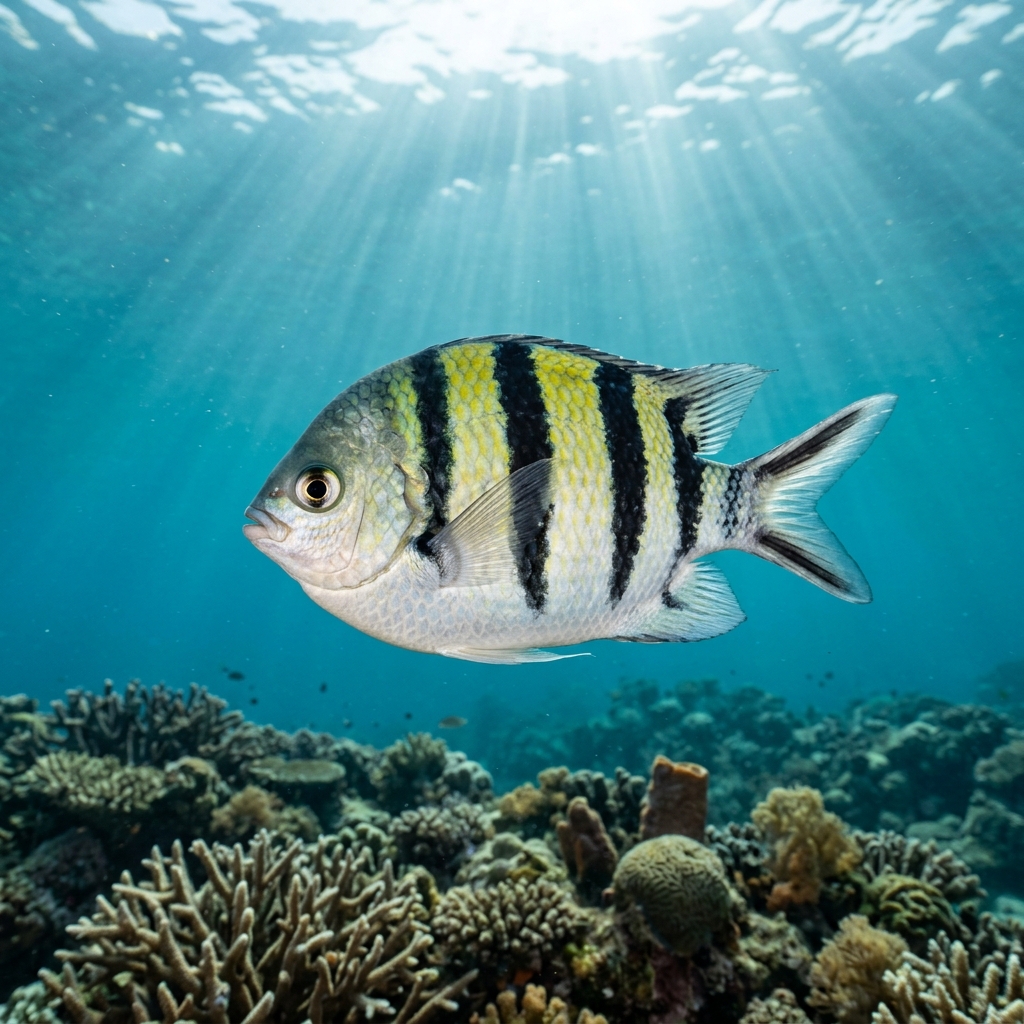
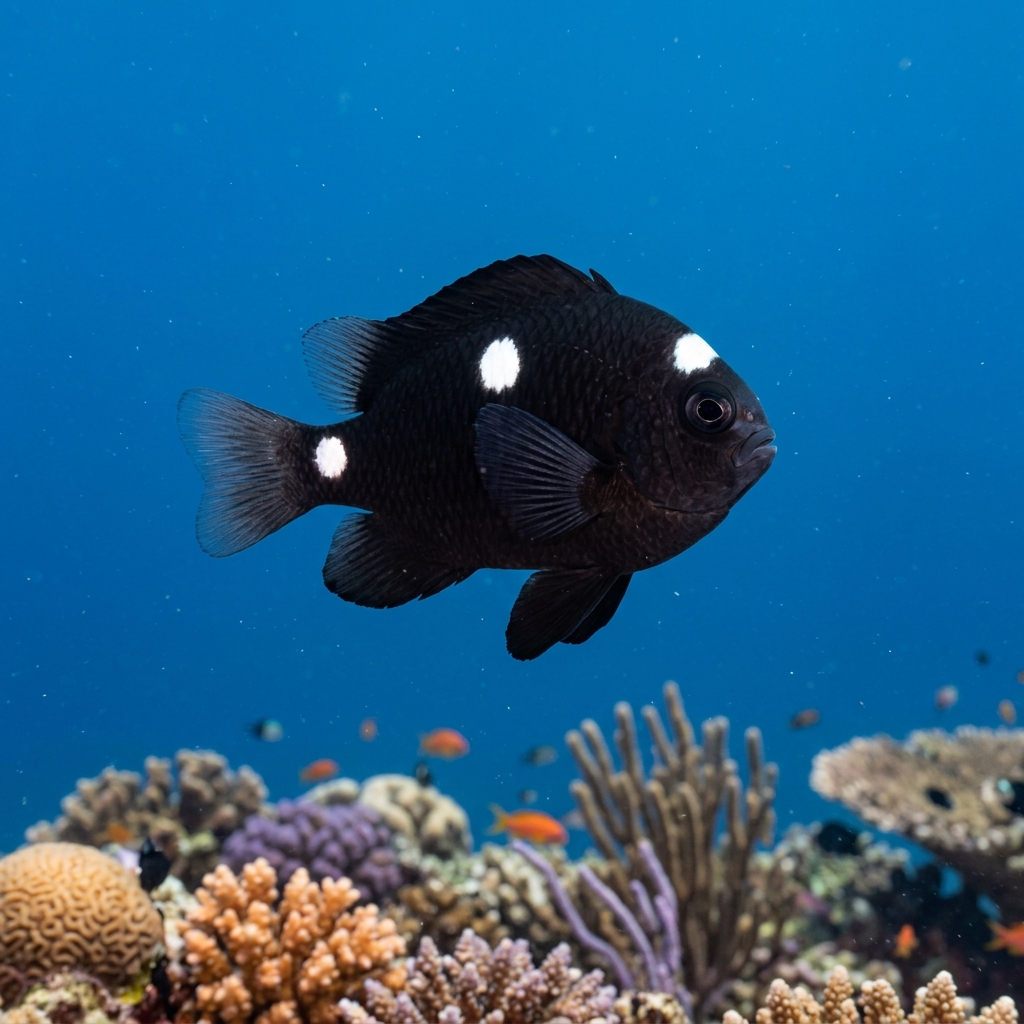
Reef neighbours a diver could mistake it for. Use the identification notes above to tell them apart.
Most reliably logged across the Visayas in the Philippines, which accounts for the bulk of sightings, with strong secondary populations around Taveuni in Fiji and off Dili in Timor-Leste. Smaller but consistent numbers turn up in Milne Bay and Tufi in Papua New Guinea, around Nouméa in New Caledonia, and in Raja Ampat, Indonesia. Most divers log it as an uncommon find worked into a wider reef dive rather than a specific target species.
Mapping where Blackbar Chromis is logged…
The Visayas region of the Philippines is the most consistent place to find it, with further sightings around Taveuni in Fiji, Dili in Timor-Leste, and Milne Bay in Papua New Guinea. It also shows up in smaller numbers off Nouméa in New Caledonia and in Raja Ampat, Indonesia.
There is no strong season in the sighting data, and its preferred water temperature of roughly 25 to 29°C holds across the year on the reefs where it lives. Time your trip around general diving conditions for the region rather than a specific month.
Look for a small pale blue-grey damselfish, about 4 cm long, with a dark vertical bar crossing the rear part of its body near the tail. It usually appears in loose groups hovering just above the reef rather than tucked into crevices.
They stay small, reaching only around 4 cm in length, typical for a reef-dwelling damselfish. You will usually spot them in groups rather than as single large fish.
No, they pose no risk to divers. They are small plankton feeders that keep their distance and have no defensive behaviour directed at people.
Site and sighting data is aggregated from diver logs, iNaturalist and GBIF. For taxonomy and conservation status:
Dascyllus
3,697 sites