Embiotoca jacksoni
A dusky, coppery-eyed reef fish logged at kelp and rocky sites across California, most often spotted uncommon to rare year-round in cool water.
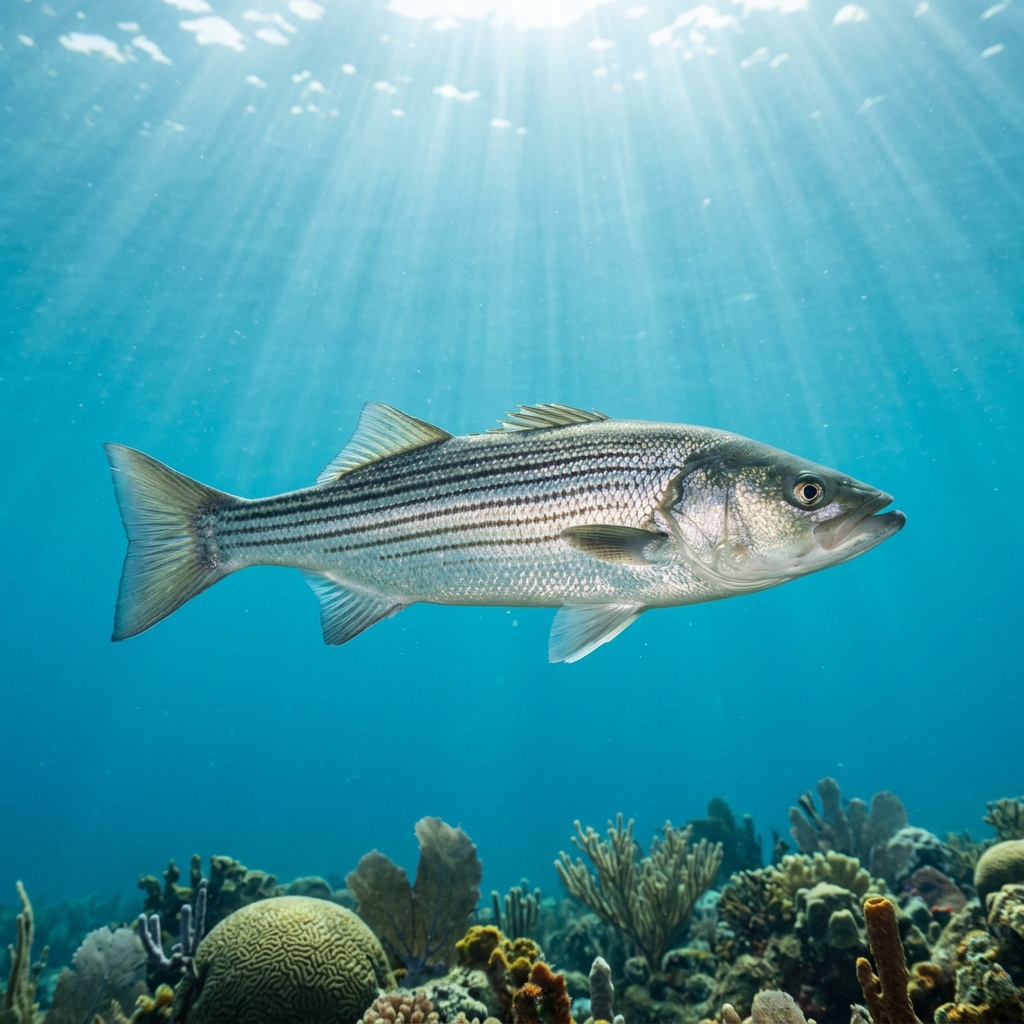
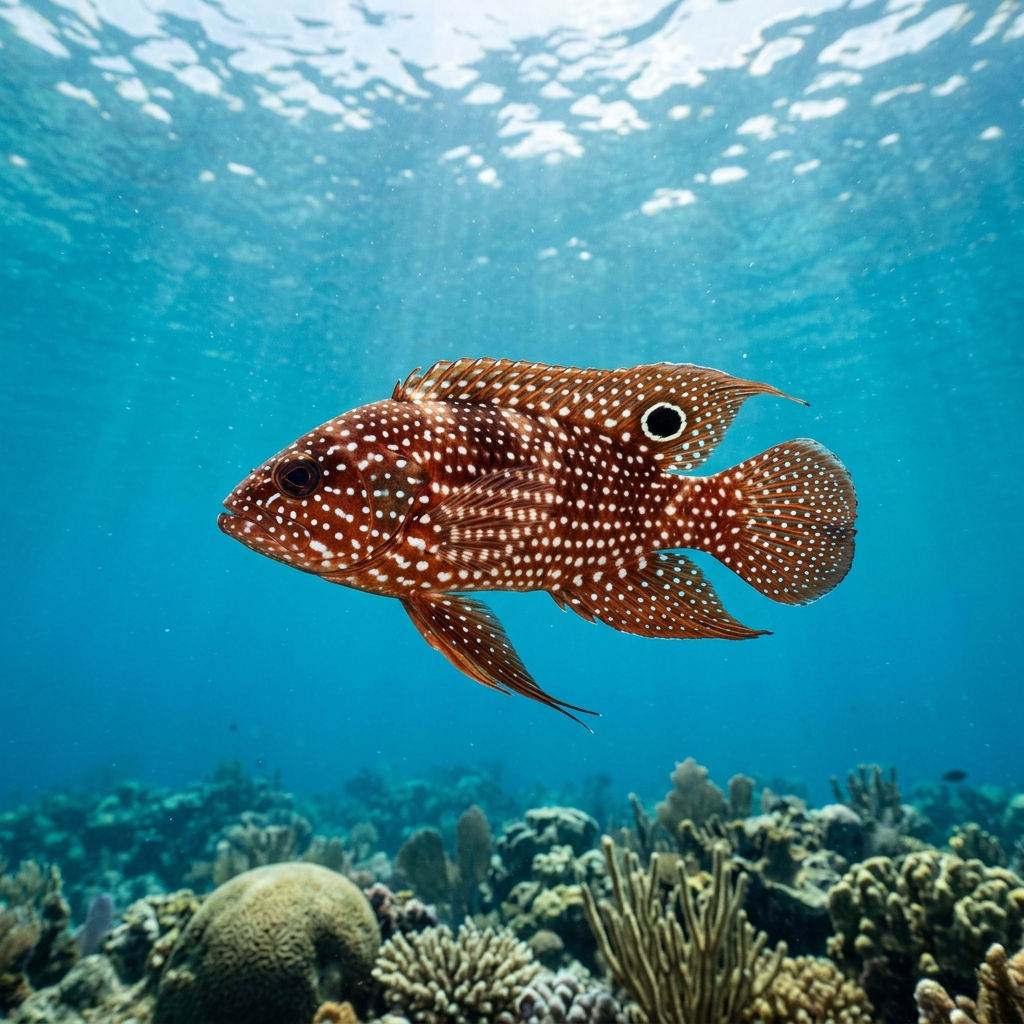
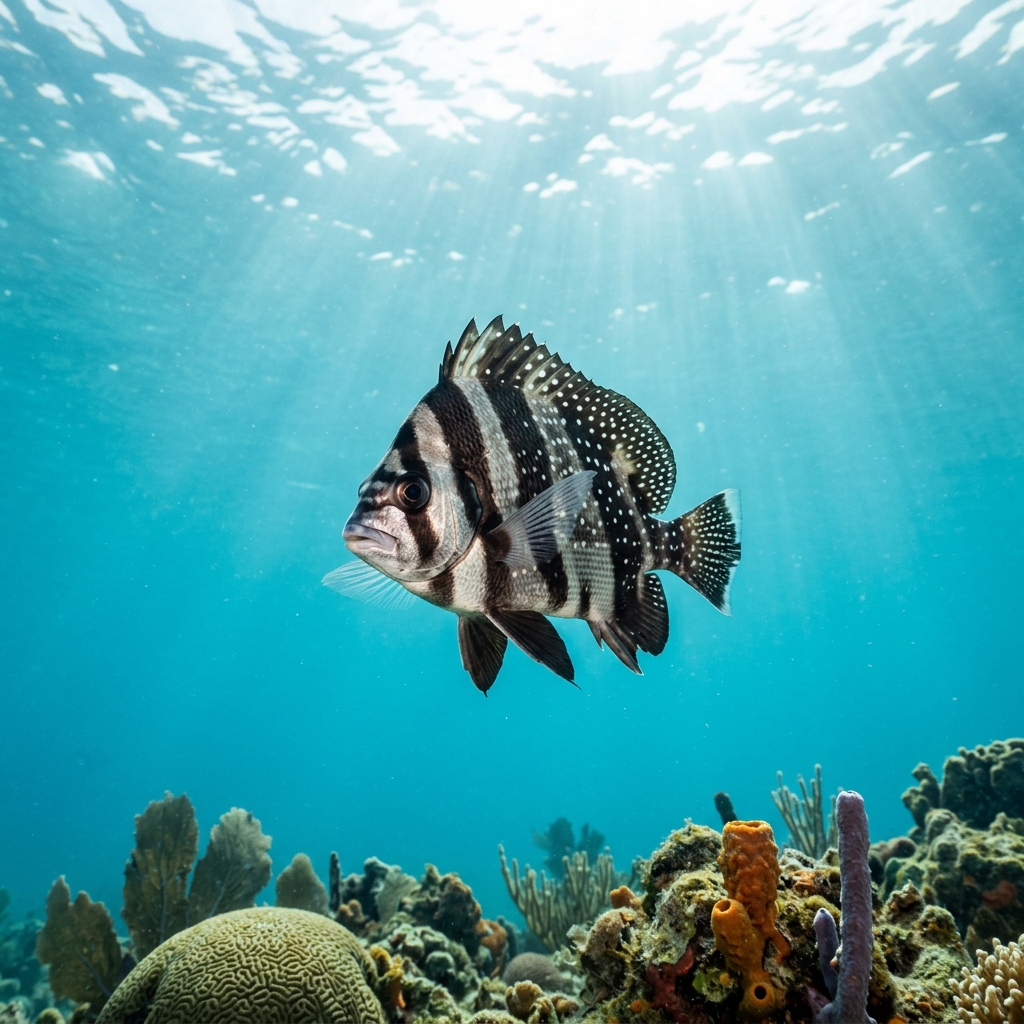
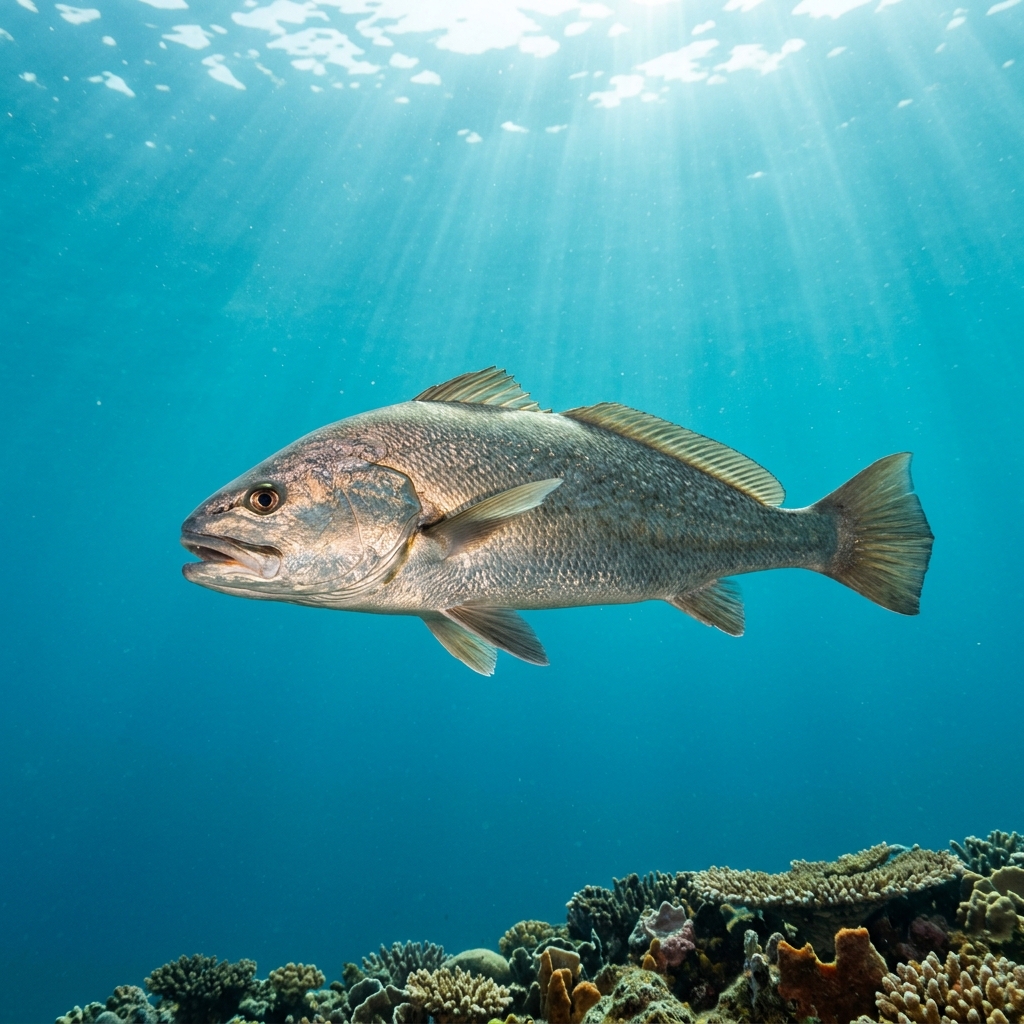
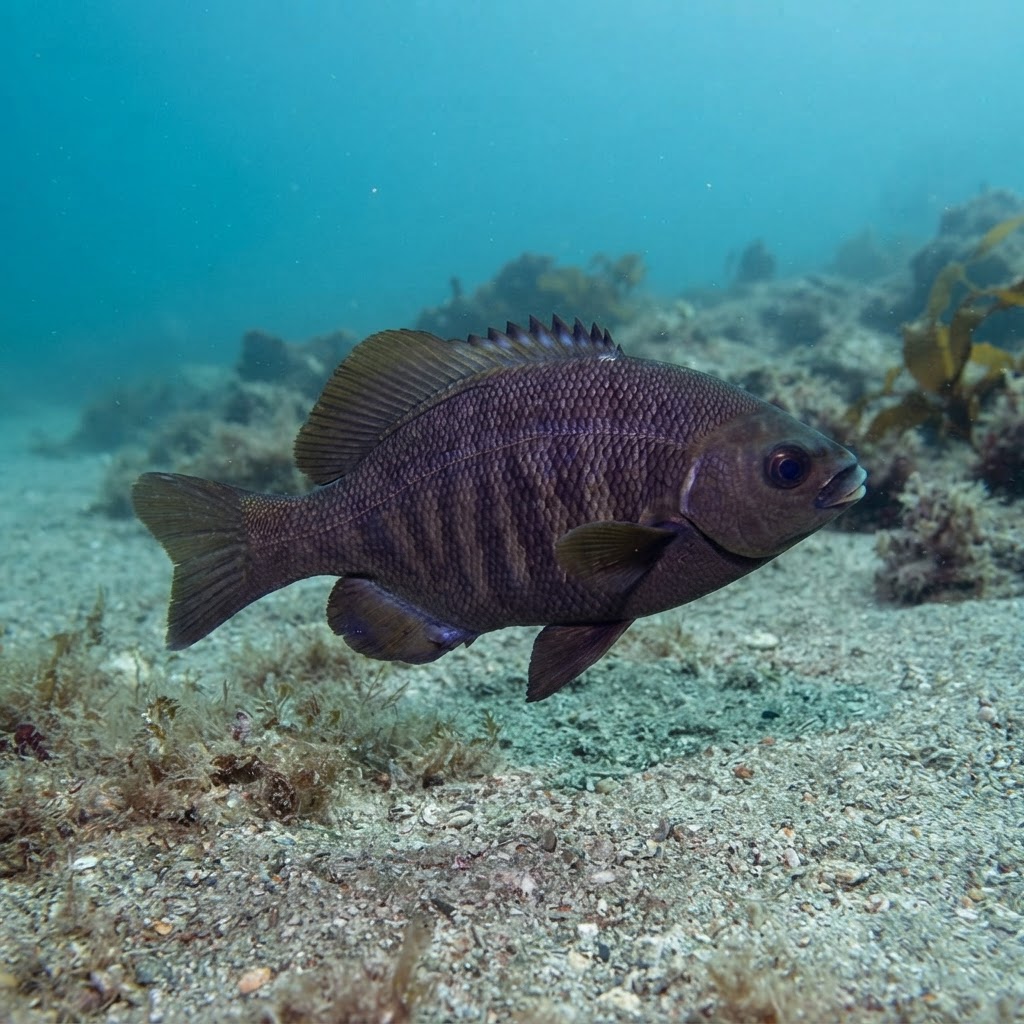
Deep-bodied and flattened side to side, growing to around 27 cm, with a dusky brown to almost black body that can show faint coppery or purplish tones depending on the light. Look for a small mouth set low on a blunt head and a single continuous dorsal fin running most of the length of the back. There's no dramatic pattern to key on, it's the overall dark, oval silhouette hanging near rock and kelp structure that gives it away.
Divers typically find it hovering or slowly cruising close to rocky reef structure and kelp holdfasts, picking at small invertebrates rather than schooling in open water. It tends to hold its ground rather than bolt, giving a reasonably good look before it eases back into a crevice or kelp stand. Most encounters happen at moderate depth on structure-rich reef, not in open sand or deep water.
Surfperches are livebearers, with females giving birth to fully formed young rather than laying eggs, which is unusual among reef fish divers commonly encounter.
Sightings are spread through the year with no clear seasonal spike, and the species is recorded across a 12.8 to 19.3 C range, which matches California's cool water for most of the year. Plan around visibility and swell rather than season, since temperature alone doesn't rule any month out.
This one is a California specialty, logged almost exclusively at rocky reef and kelp forest sites along the state's coast. It's most reliably found in and around California dive regions, where it turns up as an uncommon to rare sighting rather than a guaranteed one.
Mapping where Black Surfperch is logged…
California is the place to look, particularly rocky reef and kelp forest sites along the coast. It isn't found in the tropical reef systems most divers associate with colourful fish life, so don't expect it outside California's cooler waters.
There's no strong season in the sighting data, so it's effectively a year-round fish in the areas it inhabits. It's recorded across a 12.8 to 19.3 C range, consistent with California's cool coastal water through most months.
Look for a deep, flattened, dark brown to blackish body around 27 cm long, holding position close to rocky reef or kelp rather than swimming in open water. A small low-set mouth and a long single dorsal fin are the clearest structural clues once you're close.
They typically reach around 27 cm in length, making them a solid, chunky presence on the reef rather than a small darting fish.
No, they're harmless to divers and show no aggressive or defensive behaviour worth worrying about. They'll simply hold near structure and let you observe them at a comfortable distance.
Like other surfperches, females give birth to live young instead of laying eggs, a trait that sets the family apart from most reef fish divers encounter.
Site and sighting data is aggregated from diver logs, iNaturalist and GBIF. For taxonomy and conservation status:
Meagre
1,159 sites