Siganus spinus
Small olive-brown grazer common on reefs in the Visayas and Society Islands, spotted year-round in 24-29C water.
Safety warning
Its dorsal, anal and pelvic fin spines carry venom and can inflict a painful sting if the fish is handled or accidentally pinned against a diver. It poses no threat if left alone; the sensible approach is to look without touching and give it space if it flares its fins.
If you're stung
Venomous fin spinesGeneral first-aid guidance, not a substitute for professional medical care. In an emergency, call your local emergency number.
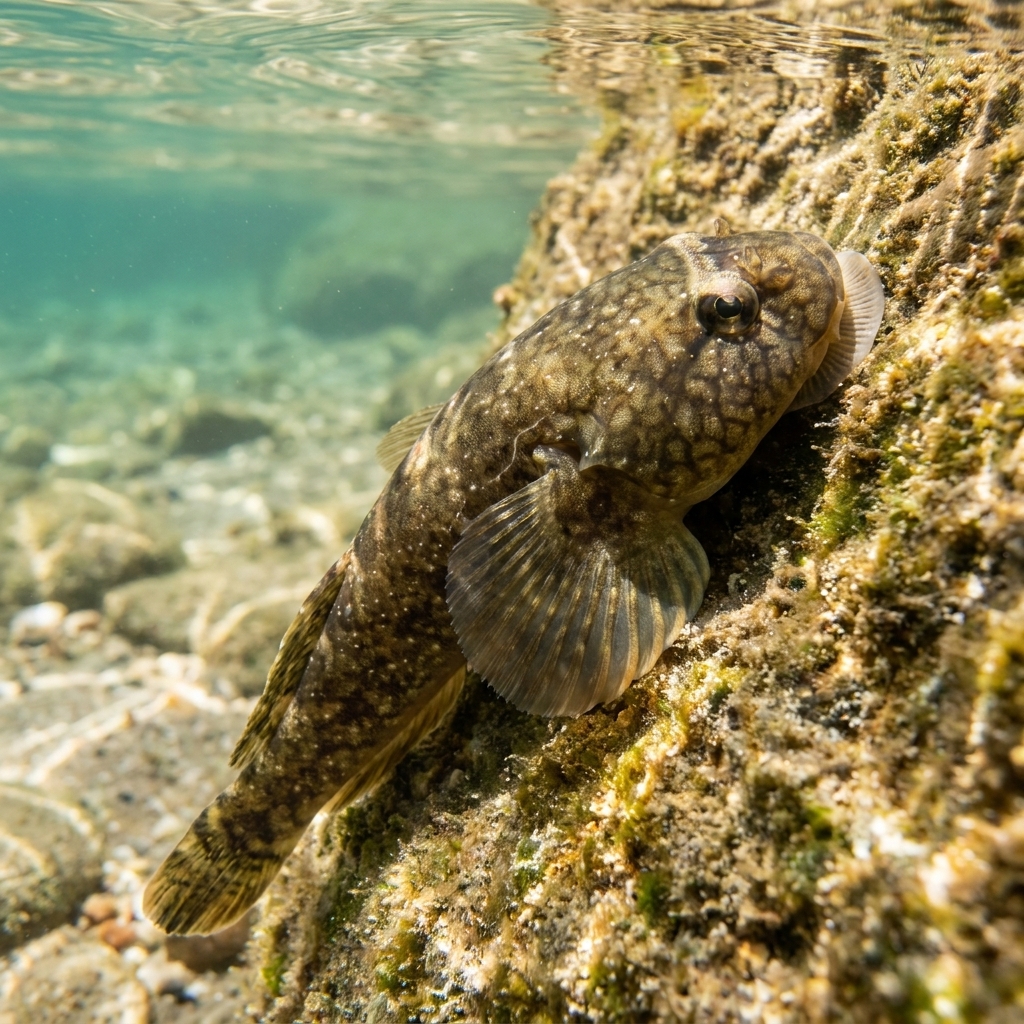
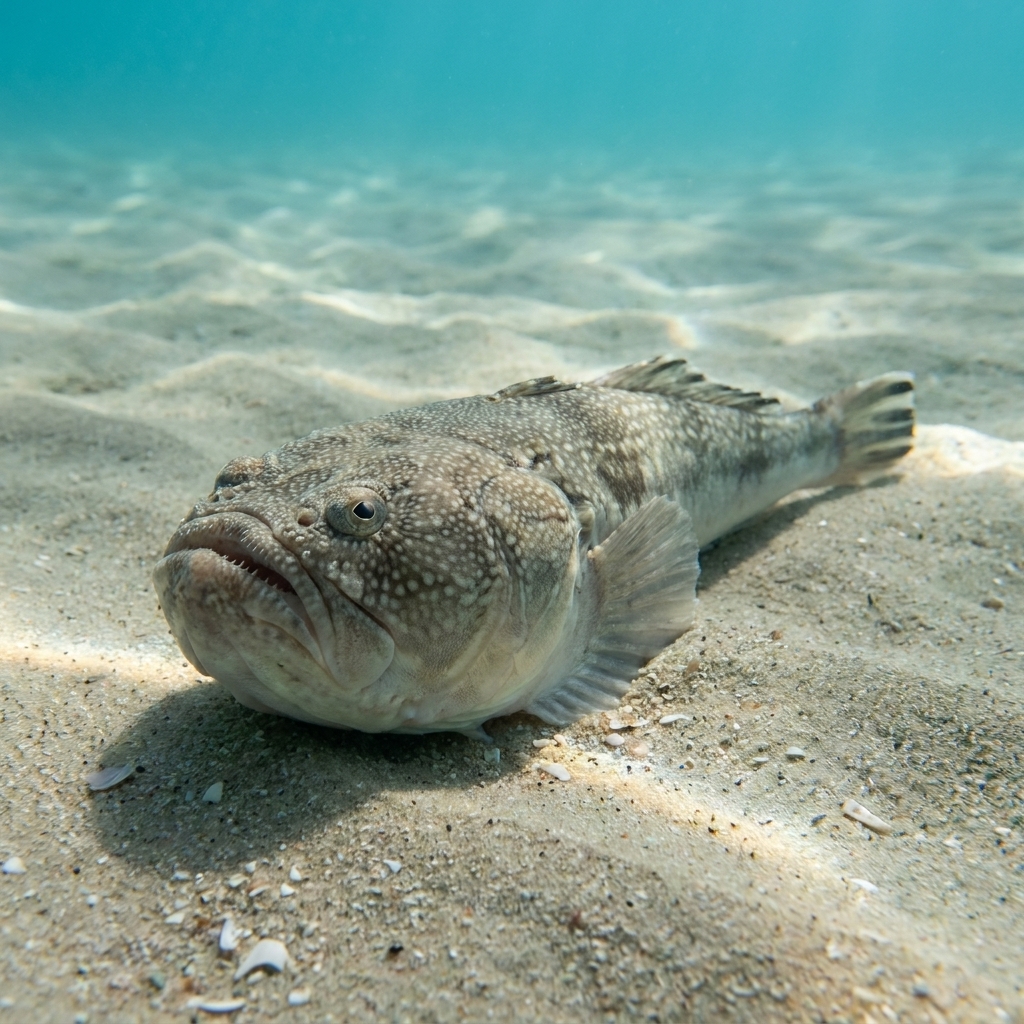
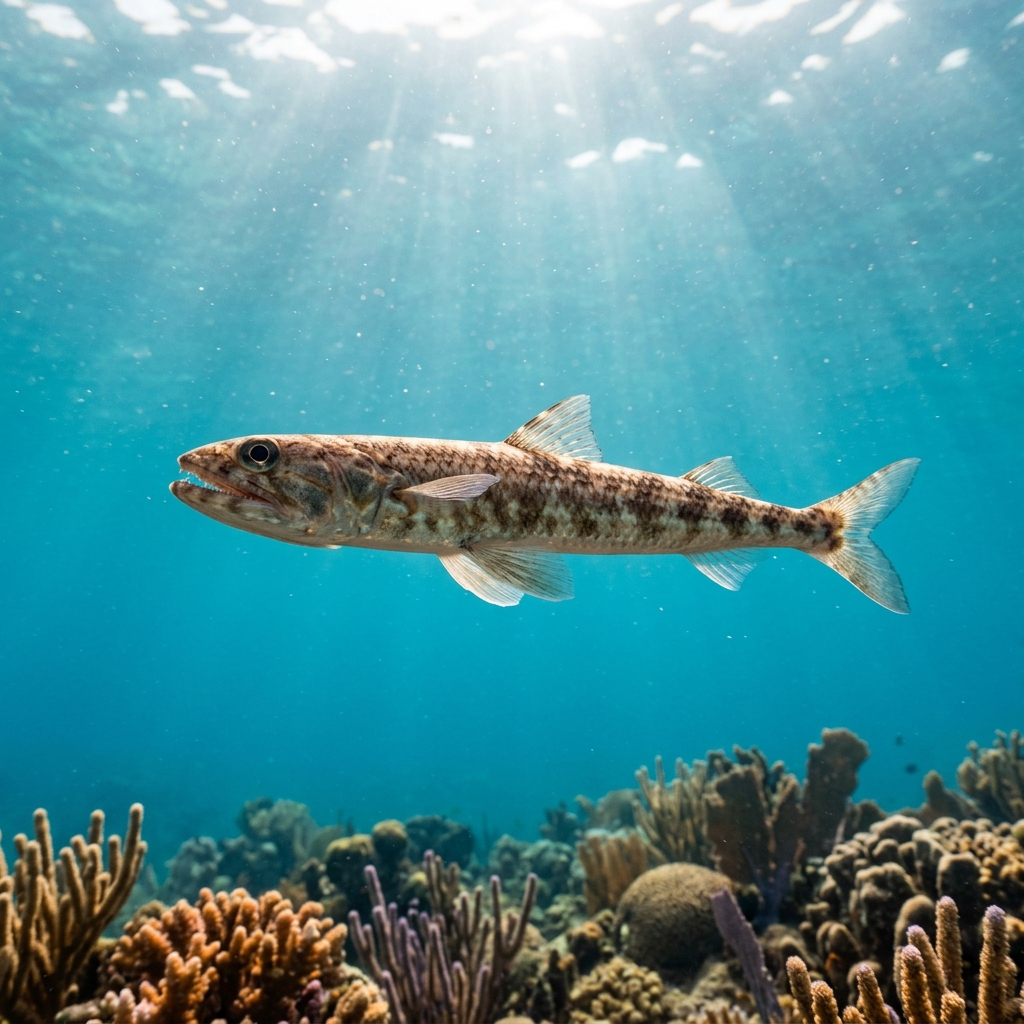
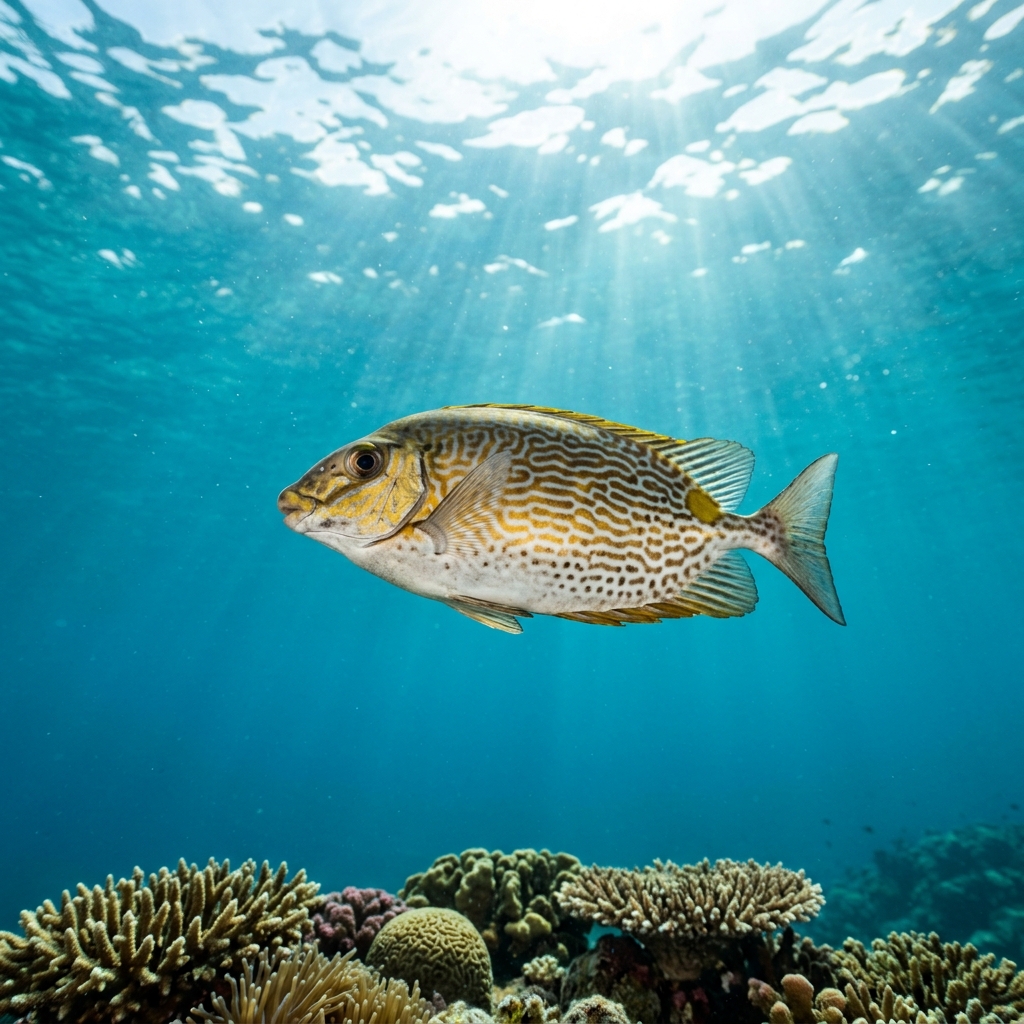
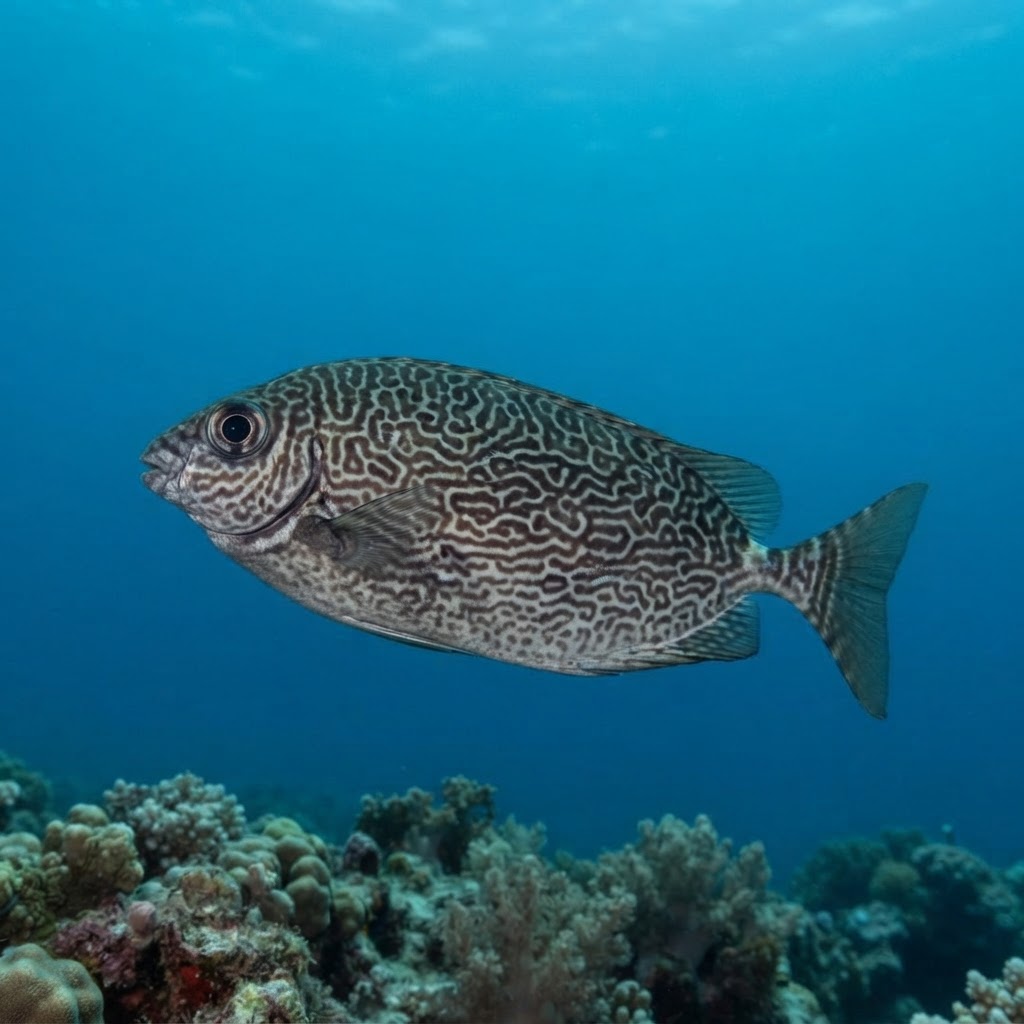
A compact, oval-bodied fish around 19cm, with a mottled olive-brown to greyish body covered in fine pale speckling that breaks up its outline against the reef. It has a small, pointed snout suited to picking algae off rock and rubble, and a slightly compressed, almost flattened profile when viewed head-on. Look for it grazing low over reef flats and rubble patches rather than out in open water.
Divers typically find it grazing alone or in loose small groups over shallow rubble and reef flats, nosing along the substrate for algae rather than schooling in open water. It tends to hold its ground or drift off at a steady, unhurried pace rather than bolting, making it an easy fish to approach slowly for a photo. Most sightings come from shallower depths within the 1-50m range it occupies, where light and algal growth are best.
Like other spinefoots, it can erect venomous spines along its dorsal and pelvic fins when threatened, a defence that has nothing to do with its otherwise unremarkable grazing habits.
No clear seasonal pattern shows up in the data, and with a comfortable range of 24.6 to 29.0C it's a year-round resident on the tropical reefs where it's found. Turn up on any dive in its range and you have a fair shot, though it's logged as uncommon more often than common, so don't expect guaranteed sightings.
Most reliably logged in the Philippines, especially across the Visayas and Mindanao, and in French Polynesia's Society Islands, where it turns up on shallow reef flats and lagoon edges. Good secondary populations show up in Okinawa and the Ryukyu Islands in Japan, plus Sulawesi in Indonesia, Fiji's Viti Levu and Mamanuca Islands, and reef sites in Queensland, Guam and Taiwan.
Mapping where Black Spinefoot is logged…
Best chances are in the Philippines, particularly the Visayas and Mindanao, and in French Polynesia's Society Islands. It also shows up reliably in Okinawa, Japan, Sulawesi in Indonesia, and around Fiji's Viti Levu and Mamanuca Islands.
There's no strong seasonal signal in sighting data, and it tolerates a wide 24.6 to 29.0C range, so it's present on tropical reefs throughout the year.
Yes, its fin spines are venomous and can cause a painful sting if handled or brushed against carelessly. It isn't aggressive though, and leaving it alone removes any risk.
Look for a small, oval-bodied fish around 19cm long with a mottled olive-brown body and fine pale speckling, grazing low over rubble or reef flats. Its pointed snout and flattened profile help separate it from similar-sized reef grazers.
They typically reach around 19cm in length, making them a small to medium reef fish that's easy to overlook among rubble and algae.
It can erect venomous spines in its dorsal, anal and pelvic fins as a defence mechanism, a trait shared across the spinefoot family despite its otherwise placid grazing behaviour.
Site and sighting data is aggregated from diver logs, iNaturalist and GBIF. For taxonomy and conservation status:
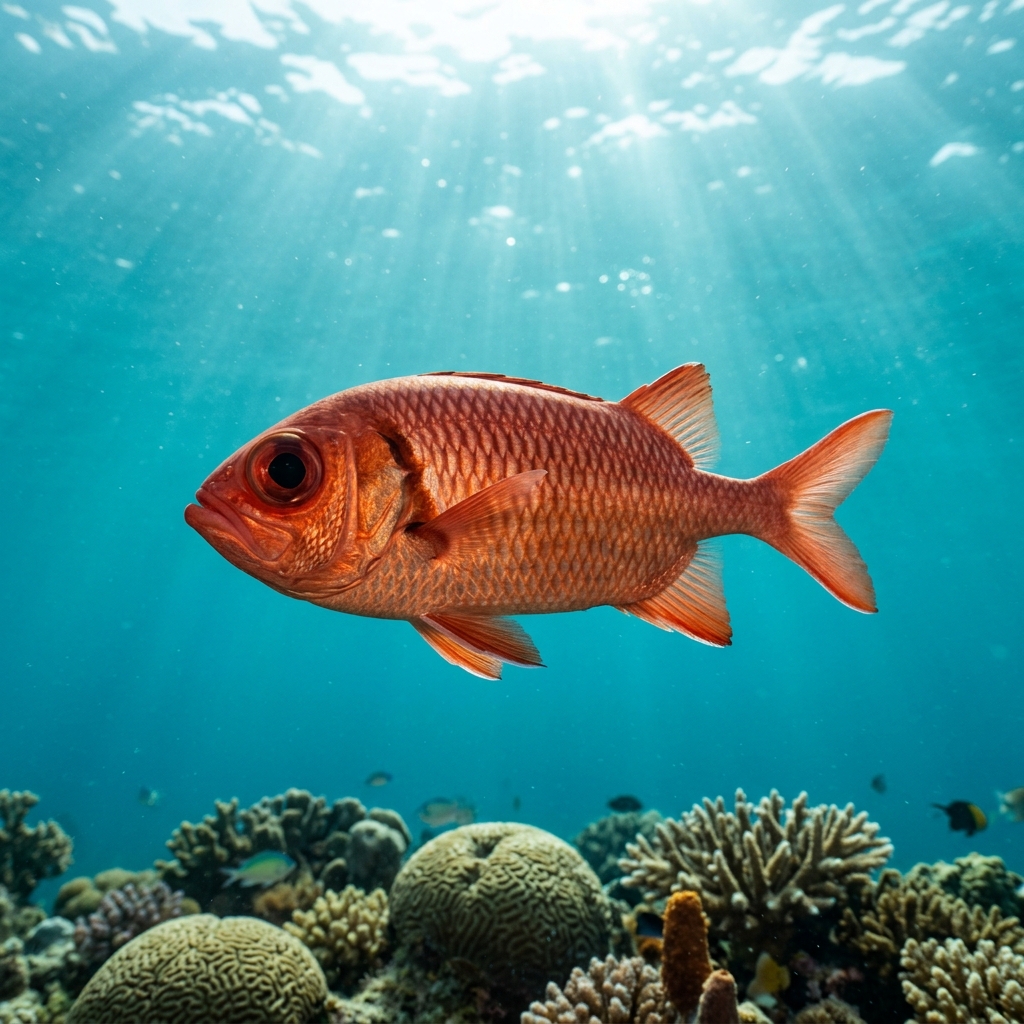
Soldierfish
3,612 sites