Xiphister atropurpureus
Rare, blenny-like find in California and British Columbia tide pools and shallow rocky reefs, comfortable in water as cold as 8.9 C year-round.
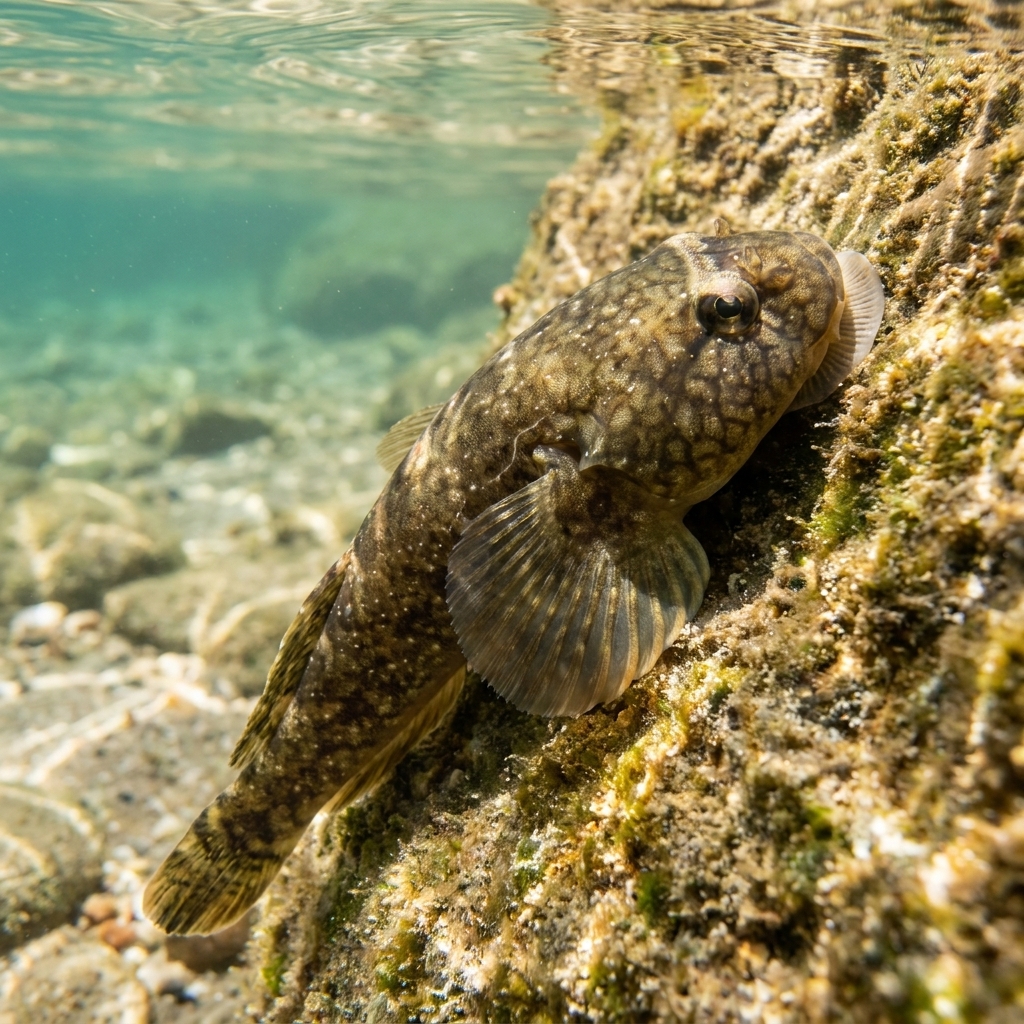
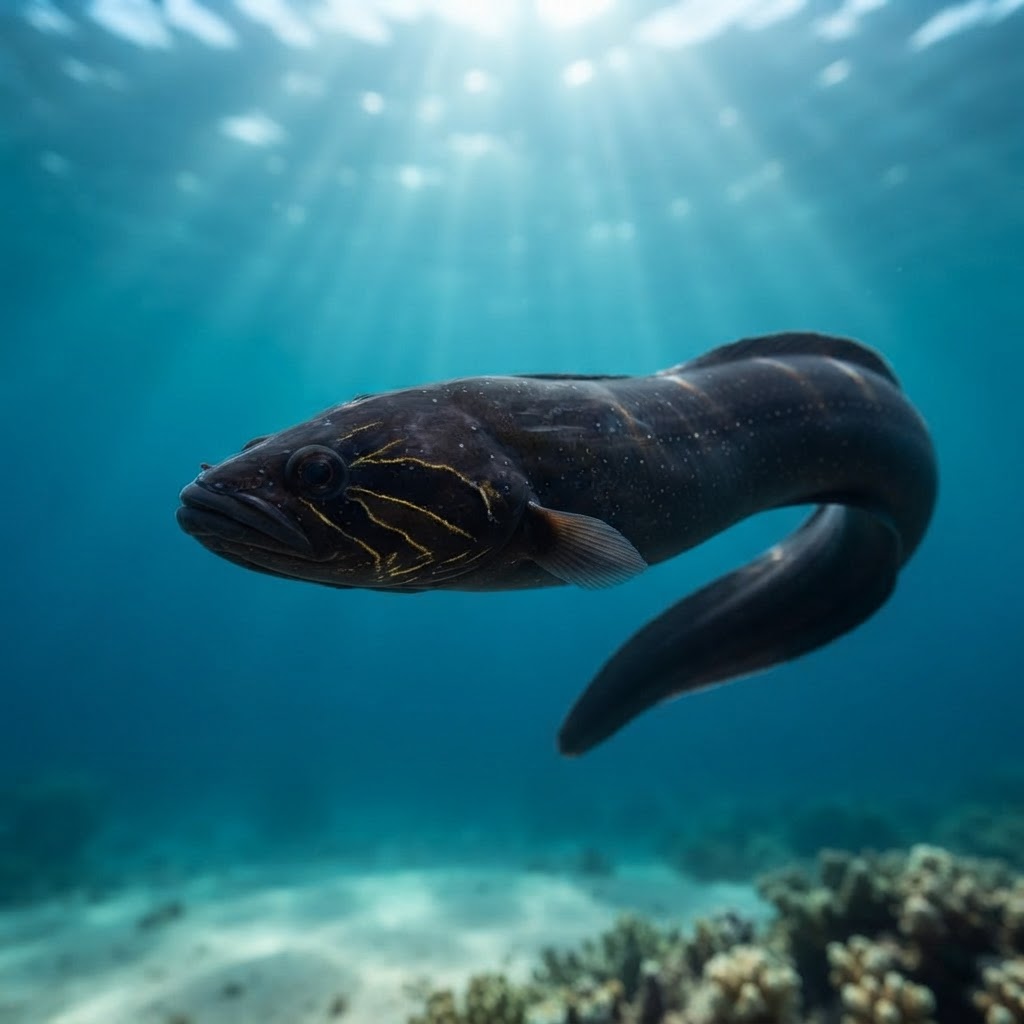
Long, eel-like body with a continuous dorsal fin running most of its length, topping out around 21 cm. Colour is dark brown to blackish-purple, often with faint pale barring along the flanks, which helps it disappear against rock and algae. Look for it tucked into crevices or lying flat against cobble rather than swimming openly in the water column.
Divers find it wedged into rocky crevices, under cobble, or hiding among algae rather than out in the open, staying close to the bottom at shallow, rocky sites. It reacts to divers by holding still or retreating deeper into a crevice rather than swimming off, which combined with its dark, mottled colouring makes it easy to swim right past.
Like other pricklebacks, it can survive brief exposure out of water in damp crevices at low tide, a trait that lets it live right at the rocky, wave-battered edge where few other fish bother.
No clear season shows up in the data, and its temperature niche of 8.9 to 14.0 C spans most of the year on this coastline, so it's a year-round possibility rather than a seasonal target.
Most divers log this one in the United States, especially rocky shallow sites in California, with additional records from the Pacific Northwest. British Columbia, Canada rounds out the known range, so cold-water sites along the North American west coast are your best bet.
Mapping where Black Prickleback is logged…
It's most reliably reported from rocky shallow sites in California, with further sightings in the Pacific Northwest and British Columbia, Canada. Look for rubble, cobble, and algae-covered rock rather than open sand or reef.
There's no strong seasonal pattern in the sightings, and its cold-water comfort zone of roughly 9 to 14 C holds through most of the year on the North American west coast, so it's a year-round possibility.
Look for a slim, eel-shaped fish under 25 cm, dark brown to blackish-purple, wedged into a rocky crevice or lying against cobble rather than swimming freely. A long dorsal fin running nearly the full body length is a good confirming feature.
They typically reach around 21 cm, making them a small, easy-to-overlook fish best spotted by scanning crevices and rubble closely rather than the open water.
Yes, at every site where it has been logged divers report it as a rare find, so seeing one is a real highlight rather than something you can count on.
Site and sighting data is aggregated from diver logs, iNaturalist and GBIF. For taxonomy and conservation status:
Soldierfish
3,612 sites