Tambja capensis
Deep purple-black nudibranch with orange gills, logged year-round in the cool, kelp-fringed reefs of South Africa's Western Cape.
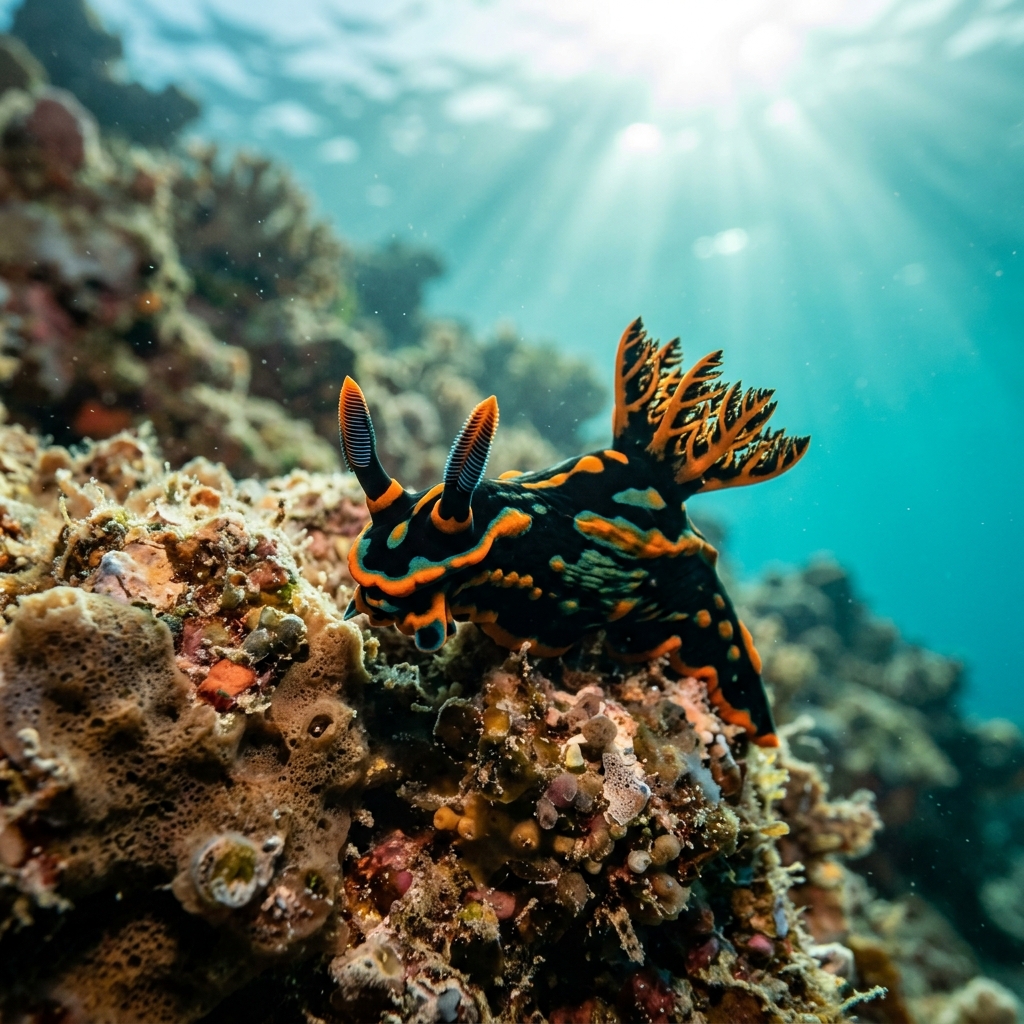
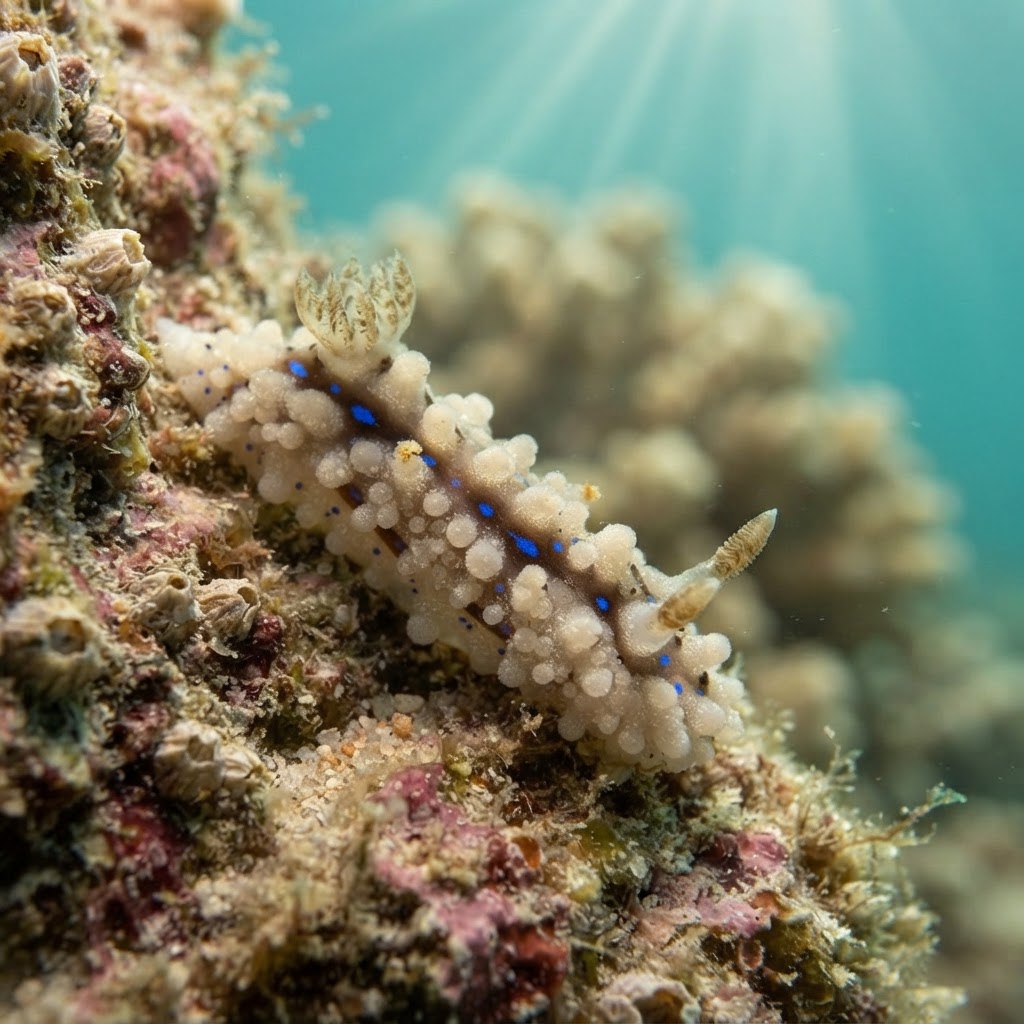
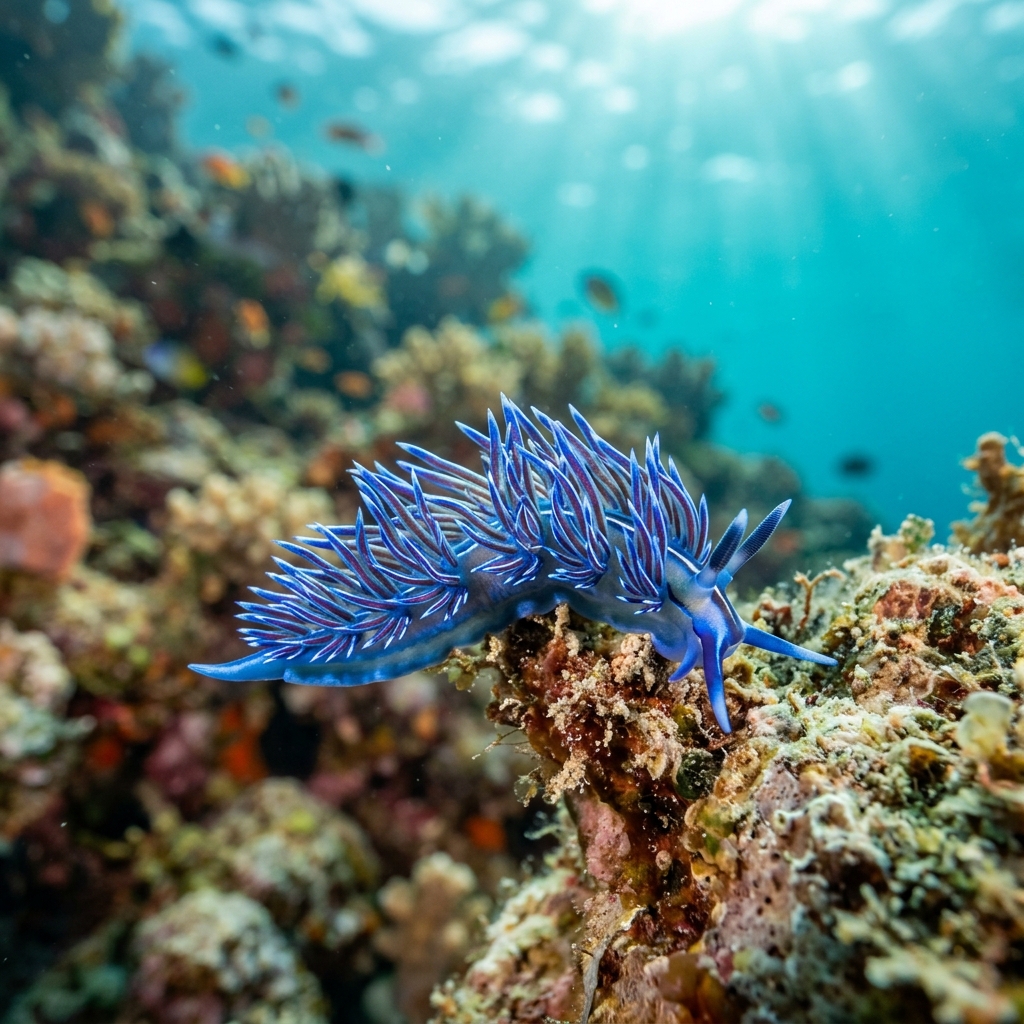
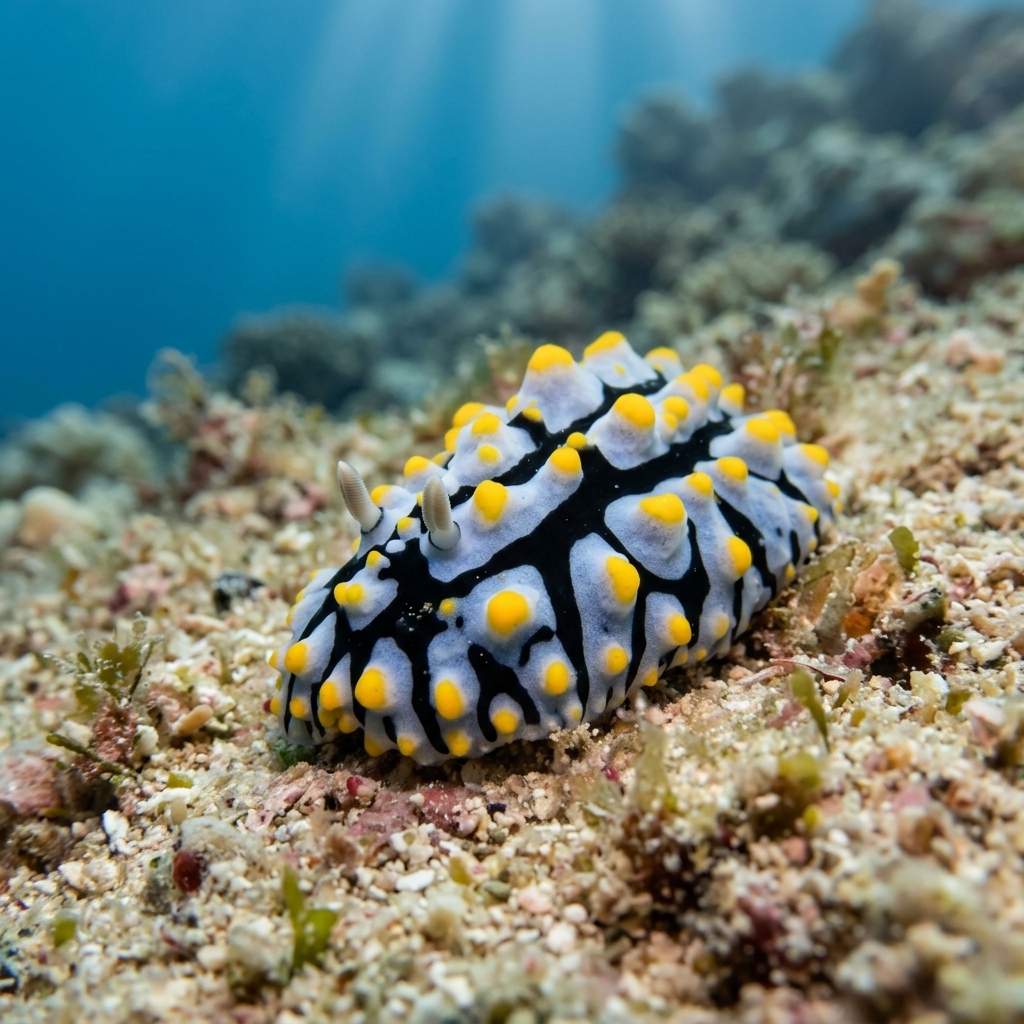
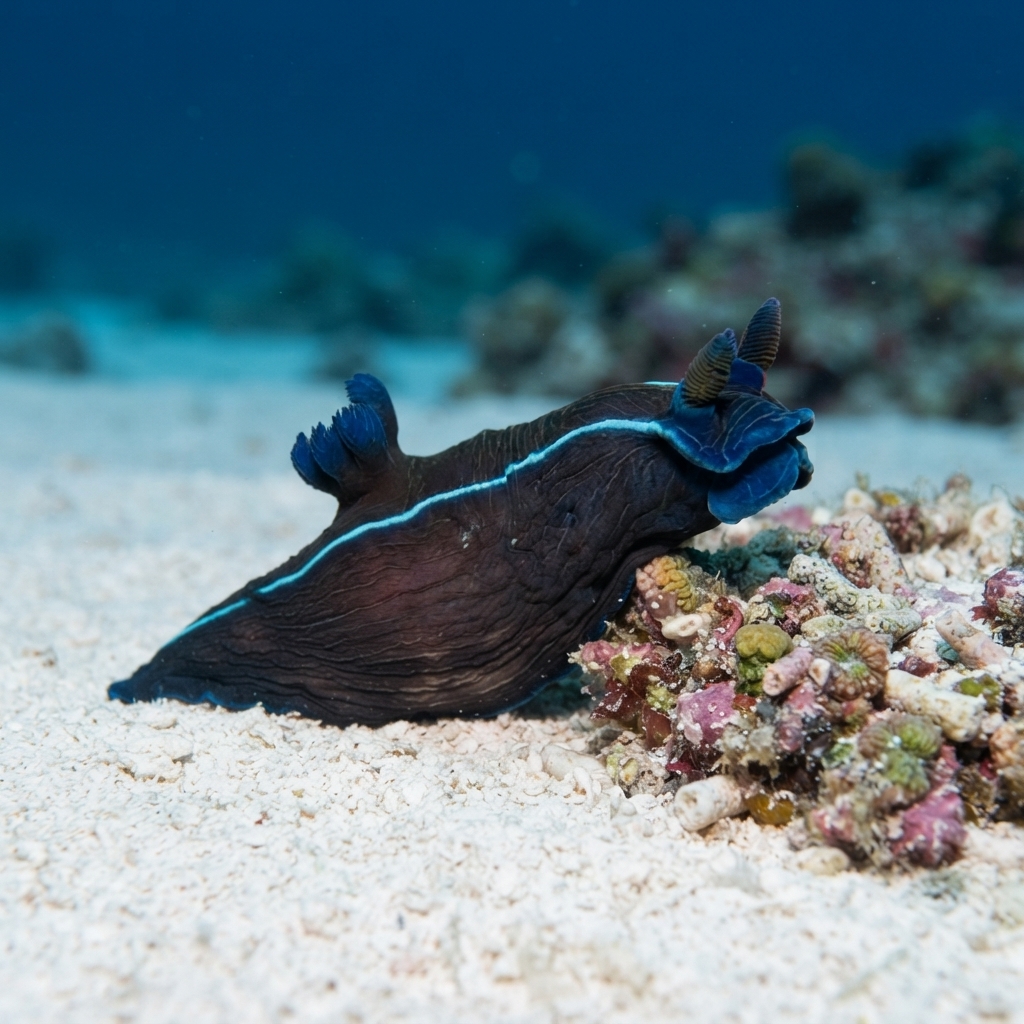
Look for a slender, dark purple-to-black body with contrasting orange or yellow tips on the gills (the feathery breathing tuft) and rhinophores (the paired sensory horns on the head) near the front. It moves slowly across rock and reef in a straight, unhurried glide, usually a few centimetres long. The near-black base colour combined with those bright gill and horn tips is the giveaway against the reef backdrop.
Divers find it grazing slowly across rock faces and reef structure, often tucked among invertebrate growth where it feeds. It pays no attention to divers and will not react to a slow, close approach, making it an easy macro subject for a patient look with a torch or lens.
Its colour is thought to come partly from its diet, since many nudibranchs in this family sequester pigments and even chemical defences from the soft-bodied invertebrates they graze on.
Sightings show no clear seasonal pattern, so it is considered a year-round find. It sits comfortably in the region's cool water, observed between about 13.7 and 19.7C, which covers the Western Cape's typical diving conditions through the year.
Reef neighbours a diver could mistake it for. Use the identification notes above to tell them apart.
This one is very much a Western Cape speciality: divers log it consistently across sites around Cape Town and along the surrounding South African coast, with no other country currently reporting it in any numbers. If you are diving the kelp forests and rocky reefs of the Western Cape, it is one of the more dependable nudibranch finds.
Mapping where Black Nudibranch is logged…
It is essentially a Western Cape, South Africa find, logged consistently at reef and kelp forest sites around the Cape Town area. It has not been reported in numbers from any other country.
There is no strong season in the sighting data, so it is considered a year-round sighting in the Western Cape. It tolerates the region's cool water, typically 13.7 to 19.7C, so it is not tied to a warm-water window.
Check for a dark purple-black body with orange or yellow tips on the gill tuft and the paired rhinophores on the head. It moves slowly over rock and reef, usually just a few centimetres long.
No. It has no venomous spines or stinging cells that pose a risk to divers, and it makes no attempt to react to a diver nearby.
Exact size data is not confirmed, but like most nudibranchs in the Polyceridae family it stays small, typically only a few centimetres in length, making it a macro-photography subject rather than something spotted from a distance.
Its bold colouring likely comes from its diet, as members of this family often absorb pigments, and sometimes chemical defences, from the soft-bodied invertebrates they graze on across the reef.
Site and sighting data is aggregated from diver logs, iNaturalist and GBIF. For taxonomy and conservation status:
Light-spotted Aegires
3,168 sites