Hypoplectrus nigricans
Sooty little reef fish common around Honduras' Bay Islands, best spotted year-round in warm 28C Caribbean water.
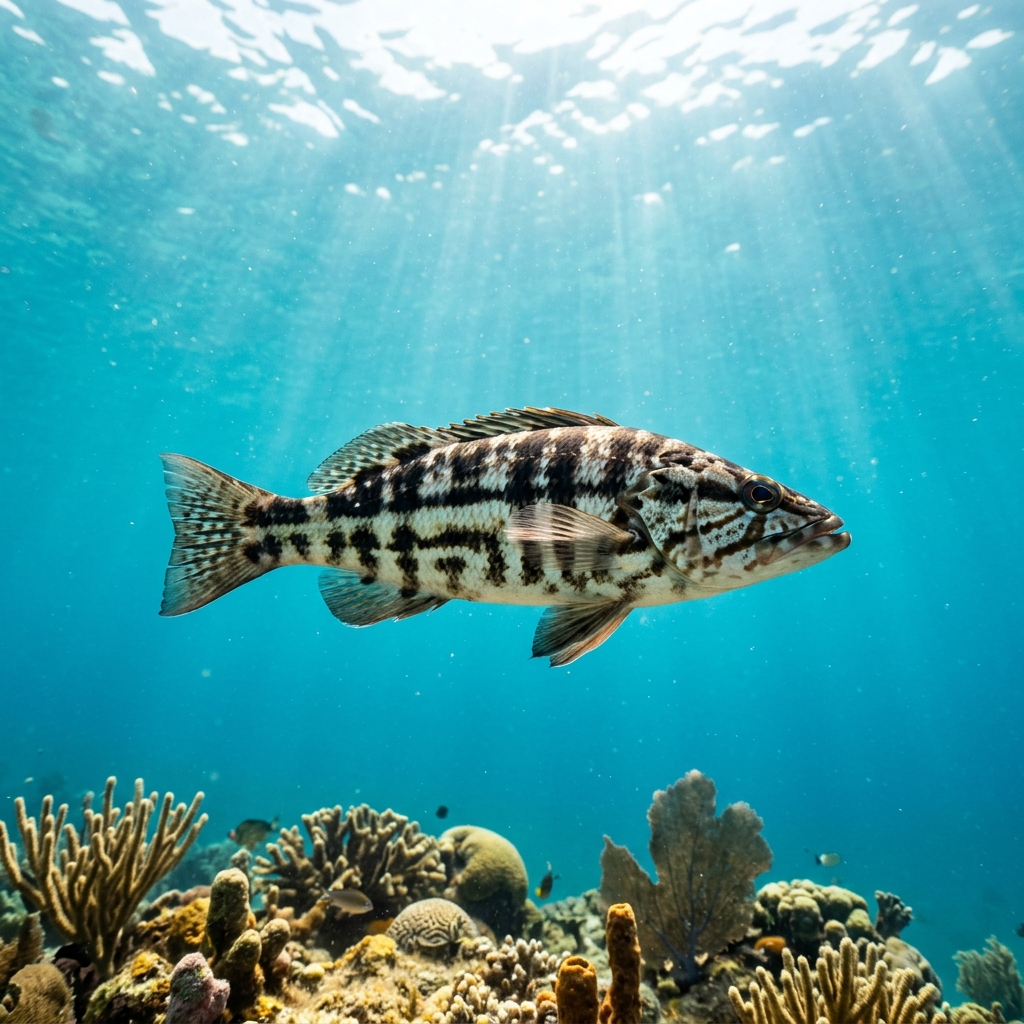
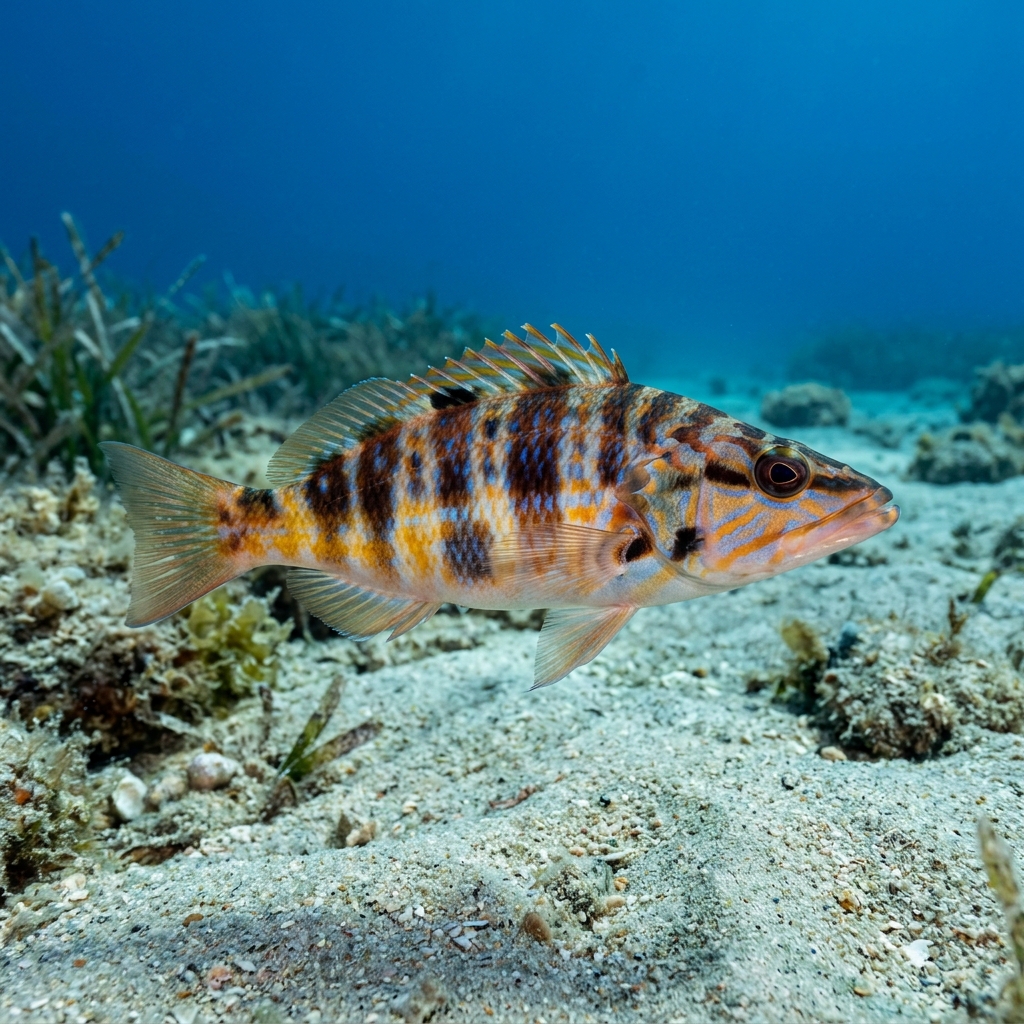
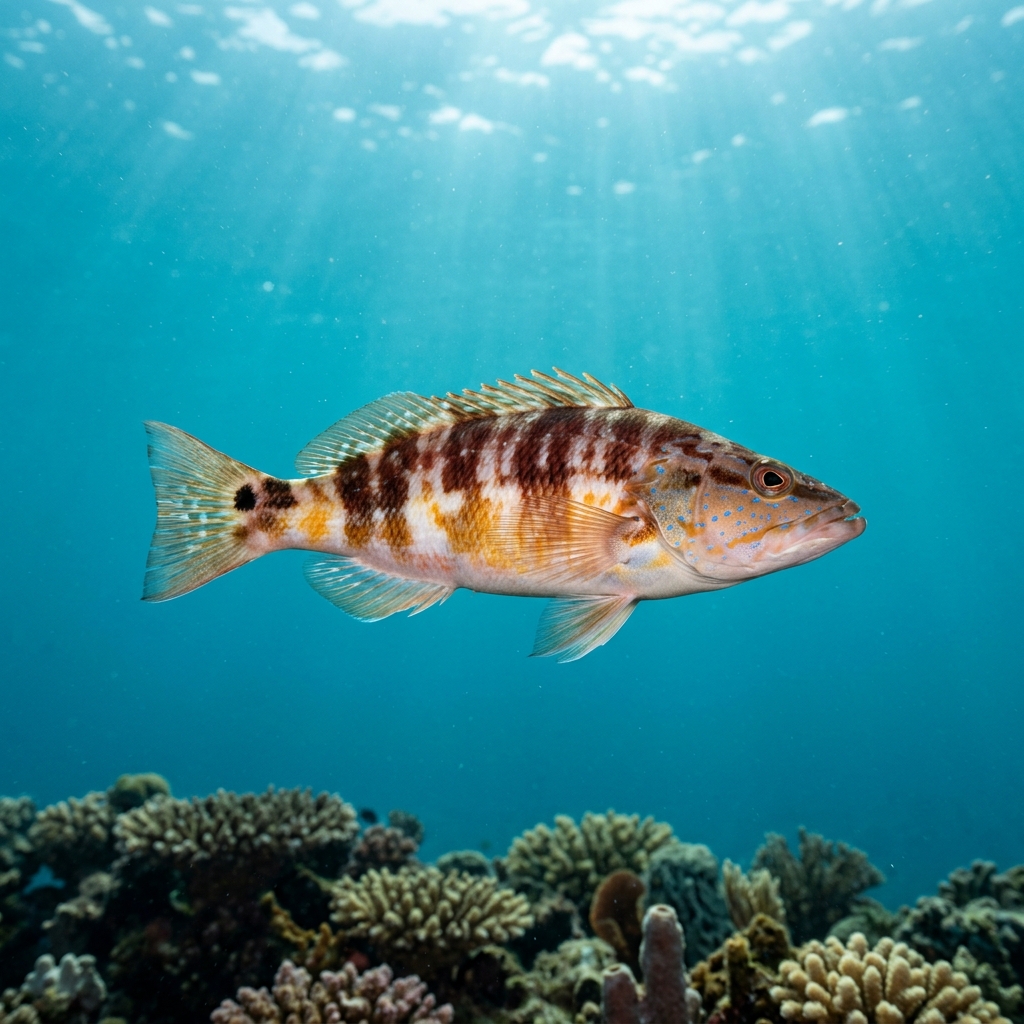
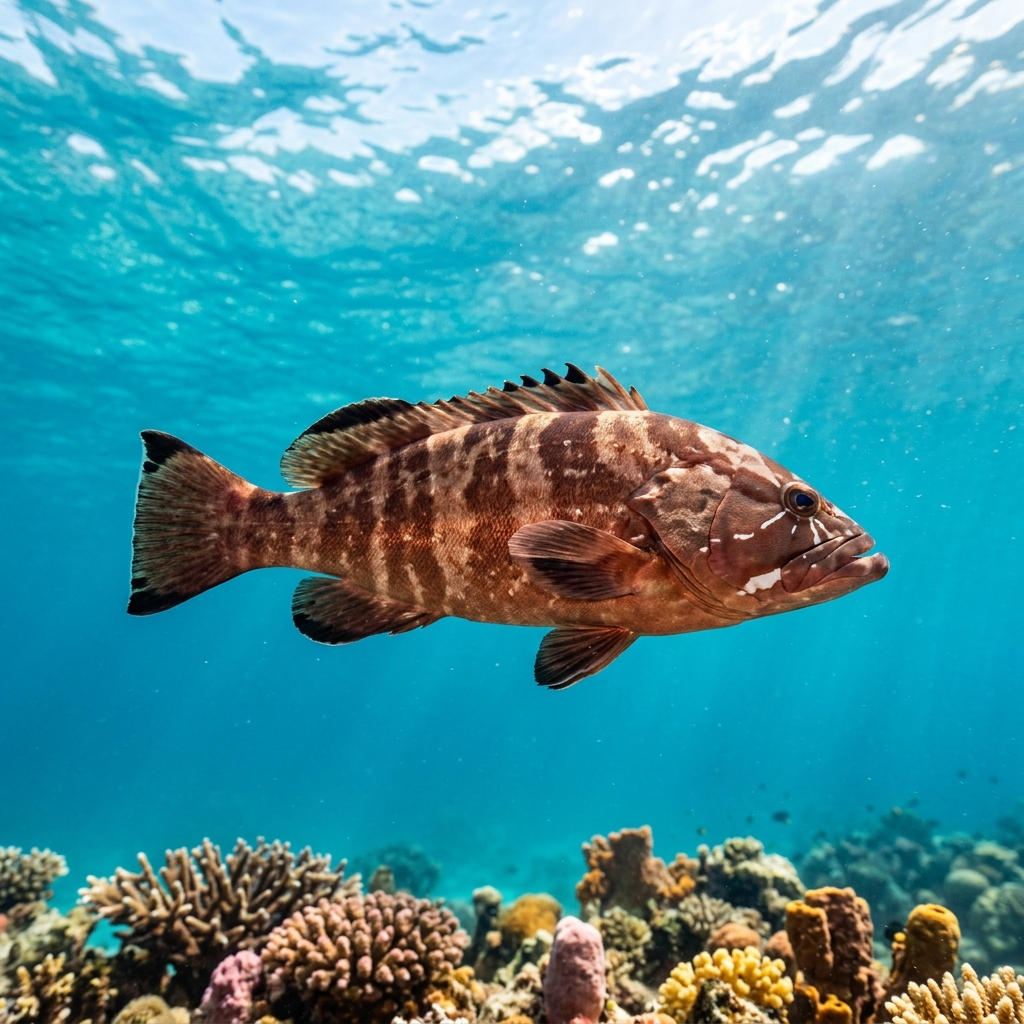
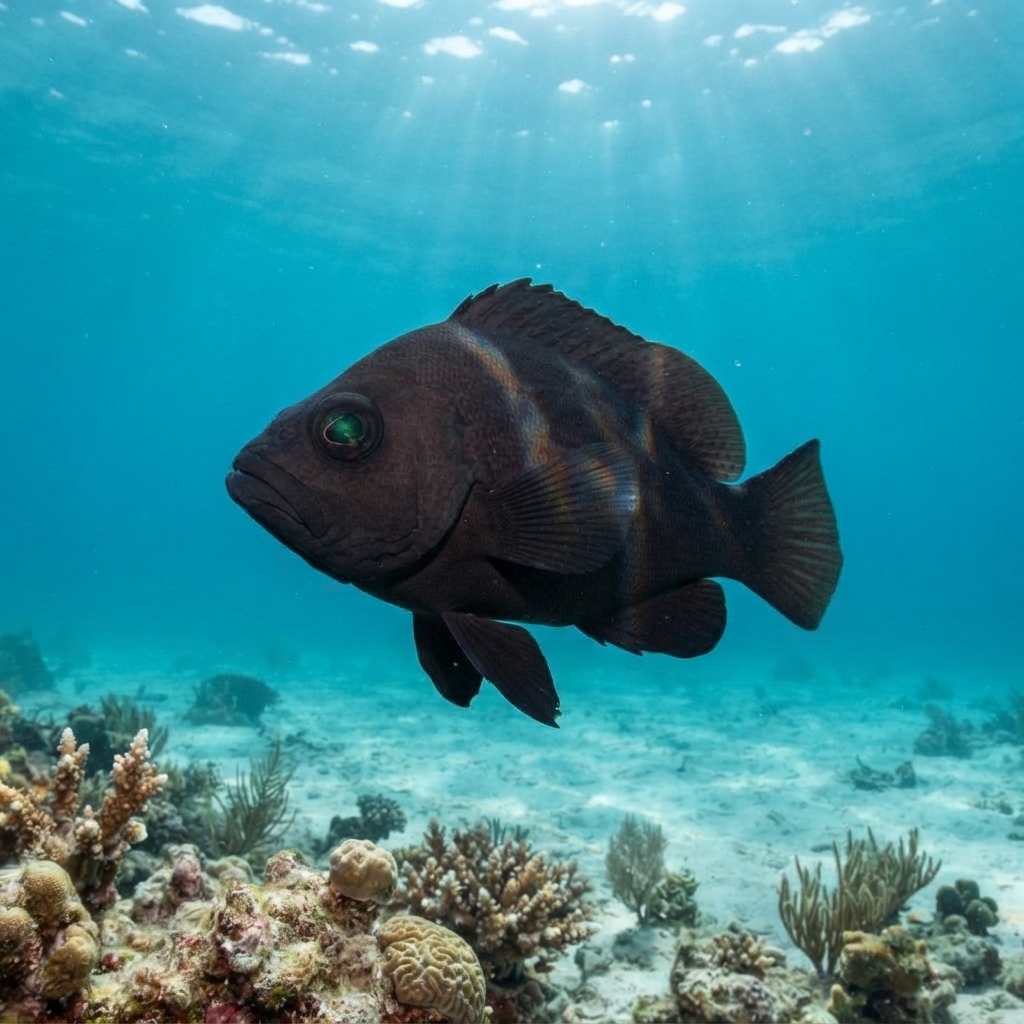
A small, deep-bodied fish that reads almost entirely dark charcoal to sooty black underwater, with no bold contrasting bars or blotches like many of its relatives. It sits around 10 cm, has the chunky, short-snouted profile typical of hamlets and basslets, and often hovers just off the reef rather than darting for cover. Look for a faint paler smudge near the base of the tail on some individuals, which is about the only break in the otherwise uniform dark colouring.
Usually seen alone or loosely spaced from others of its kind, hanging in the water column just above the reef rather than tucked into it. It's an unhurried fish, tolerant of divers at a normal approach distance, which makes it an easy one to get a good look at once you've spotted it. Most sightings come from divers working slowly along reef faces and rubble patches rather than open water.
Hamlets are simultaneous hermaphrodites, meaning each fish carries both male and female reproductive organs and pairs will take turns releasing eggs and sperm during spawning, swapping roles between passes.
No clear seasonal pattern shows up in the data, and with water sitting in the comfortable 27.9 to 28.5C band year-round across its Caribbean range, there's no particular month to plan around. Any time you're diving the Bay Islands or Panama's Caribbean coast is as good as any other.
Most reliably found around Honduras' Bay Islands, where the bulk of logged sightings come from, with a solid secondary population along Panama's Caribbean coast. A smaller number of divers have also logged it around Saint John in the US Virgin Islands, though it's a rarer find there than in Honduras or Panama.
Mapping where Black Hamlet is logged…
The strongest sightings come from Honduras' Bay Islands, with a good number also logged along Panama's Caribbean coast. It's a rarer, occasional find around Saint John in the US Virgin Islands.
There's no detected season for this fish, and it lives in consistently warm water around 28C year-round, so any time of year on Caribbean reefs in Honduras or Panama works.
Look for a small, deep-bodied fish, around 10 cm, that appears almost uniformly dark charcoal to sooty black with no strong bars or patches. It tends to hover just above the reef rather than hide in it.
They stay small, topping out around 10 cm, which is typical for hamlets and their basslet relatives.
No. They're a small, harmless reef fish that pose no risk to divers and will usually let you approach for a close look.
Like other hamlets, they're simultaneous hermaphrodites, carrying both male and female organs at once and alternating sexual roles with a partner during spawning.
Site and sighting data is aggregated from diver logs, iNaturalist and GBIF. For taxonomy and conservation status:
Blacktip Grouper
2,726 sites