Gobius niger
Sandy-bottomed and easy to overlook: Black Goby turns up year-round in Zeeland's cool waters and Lanzarote's volcanic bays, 8 to 19C.
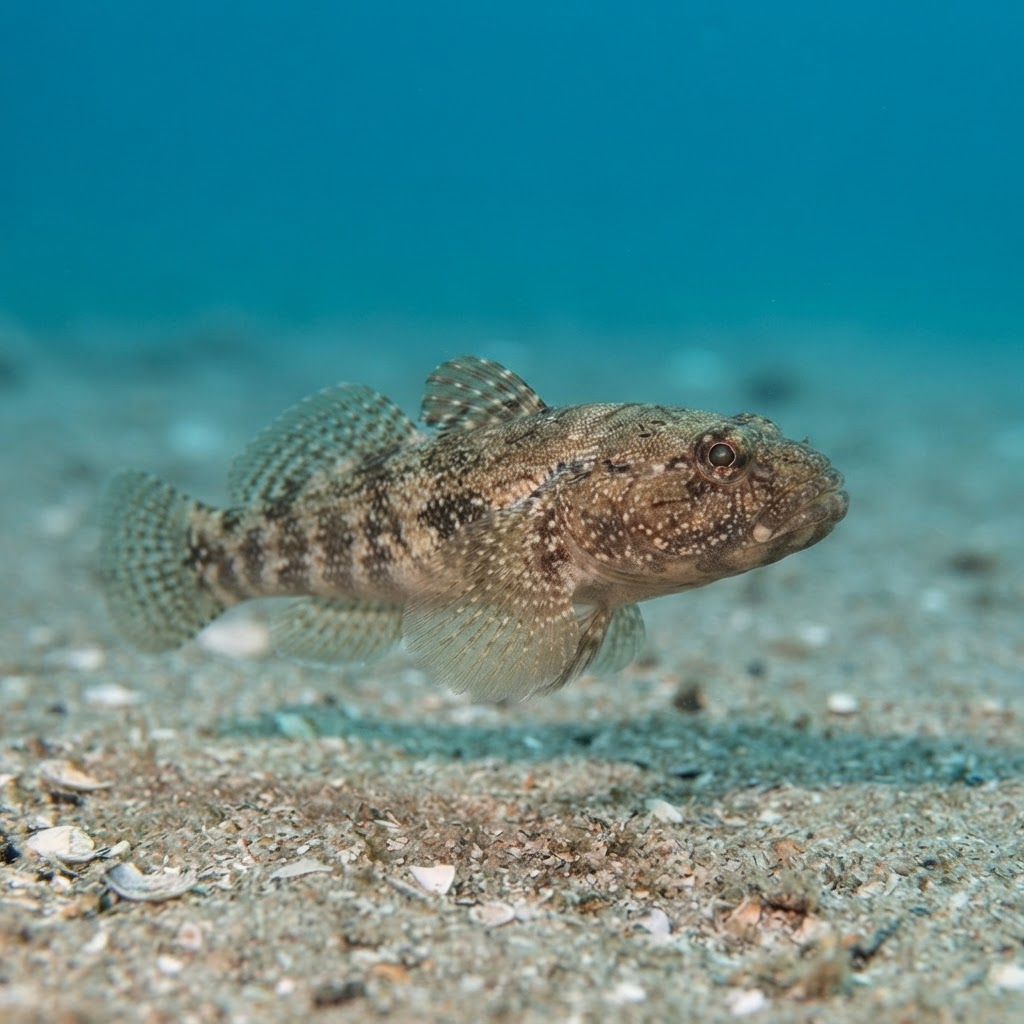
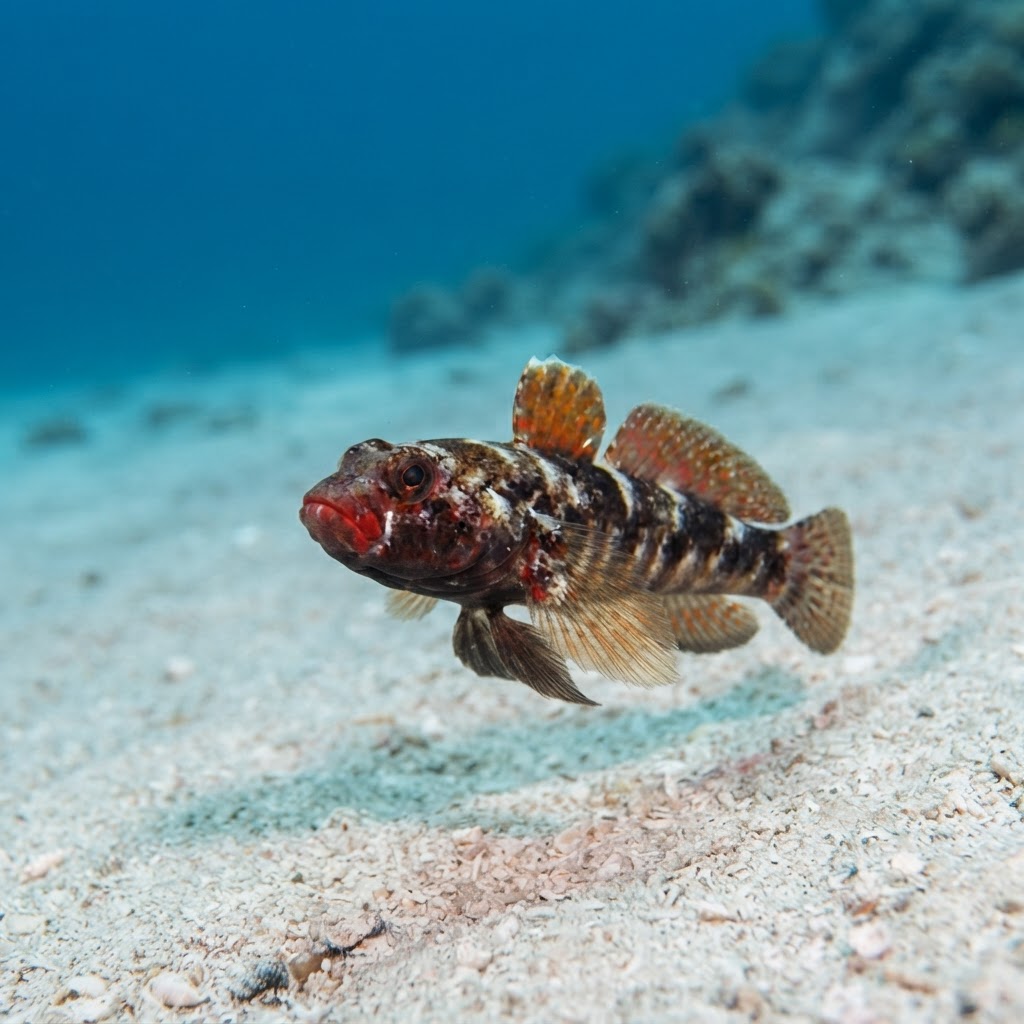
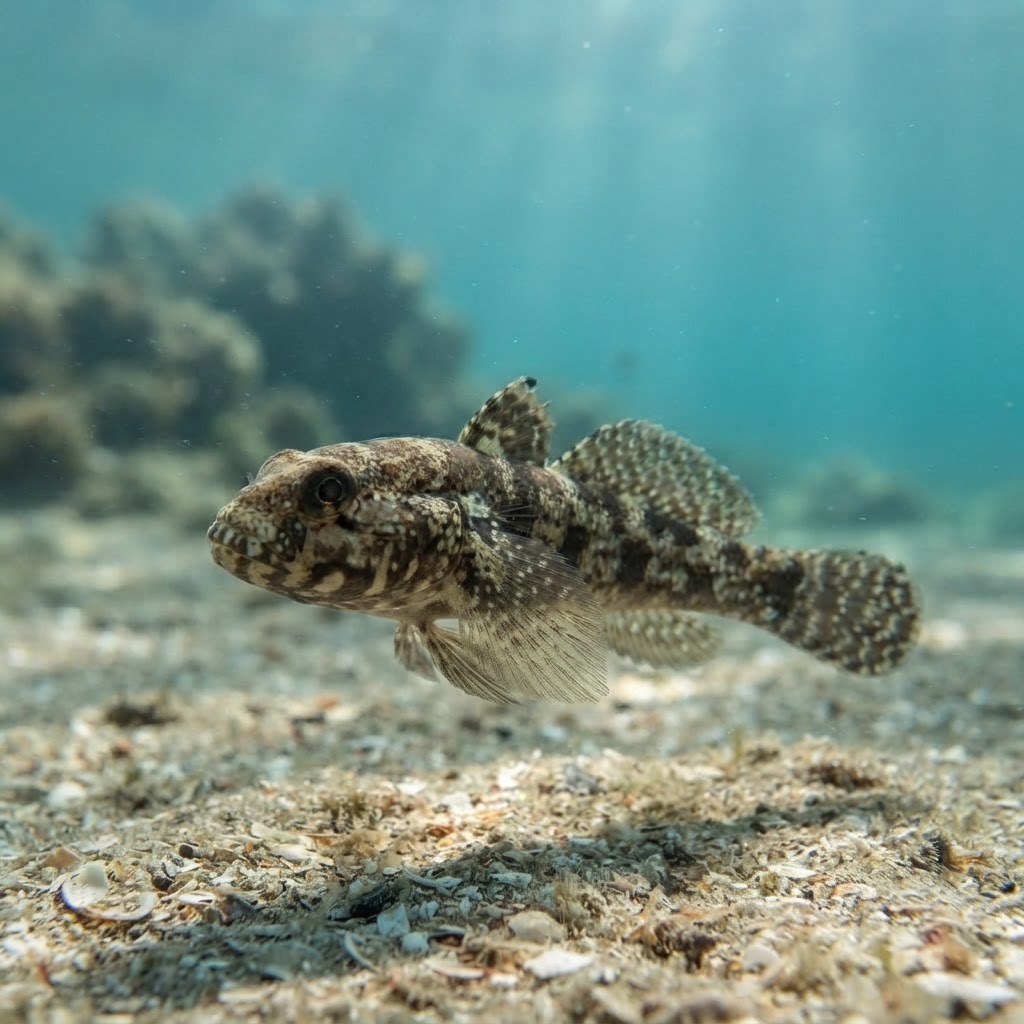
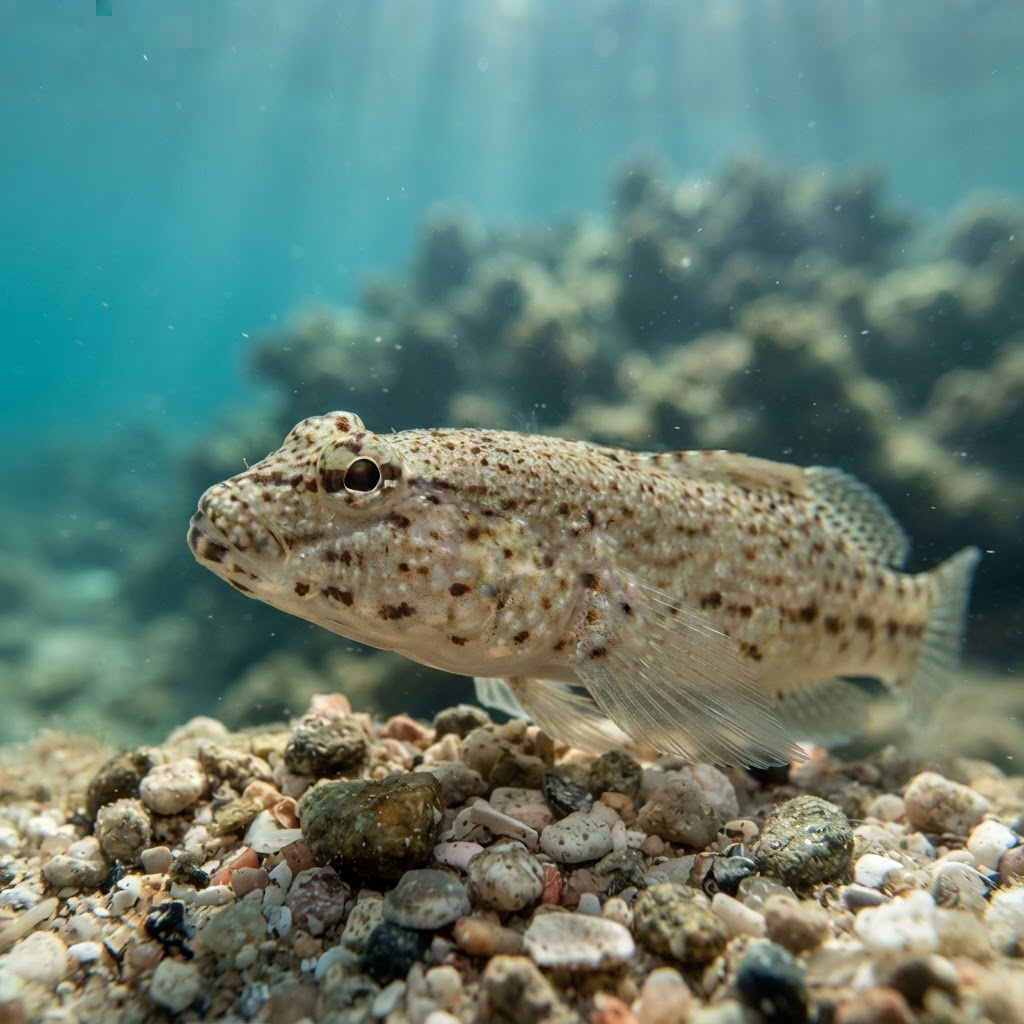
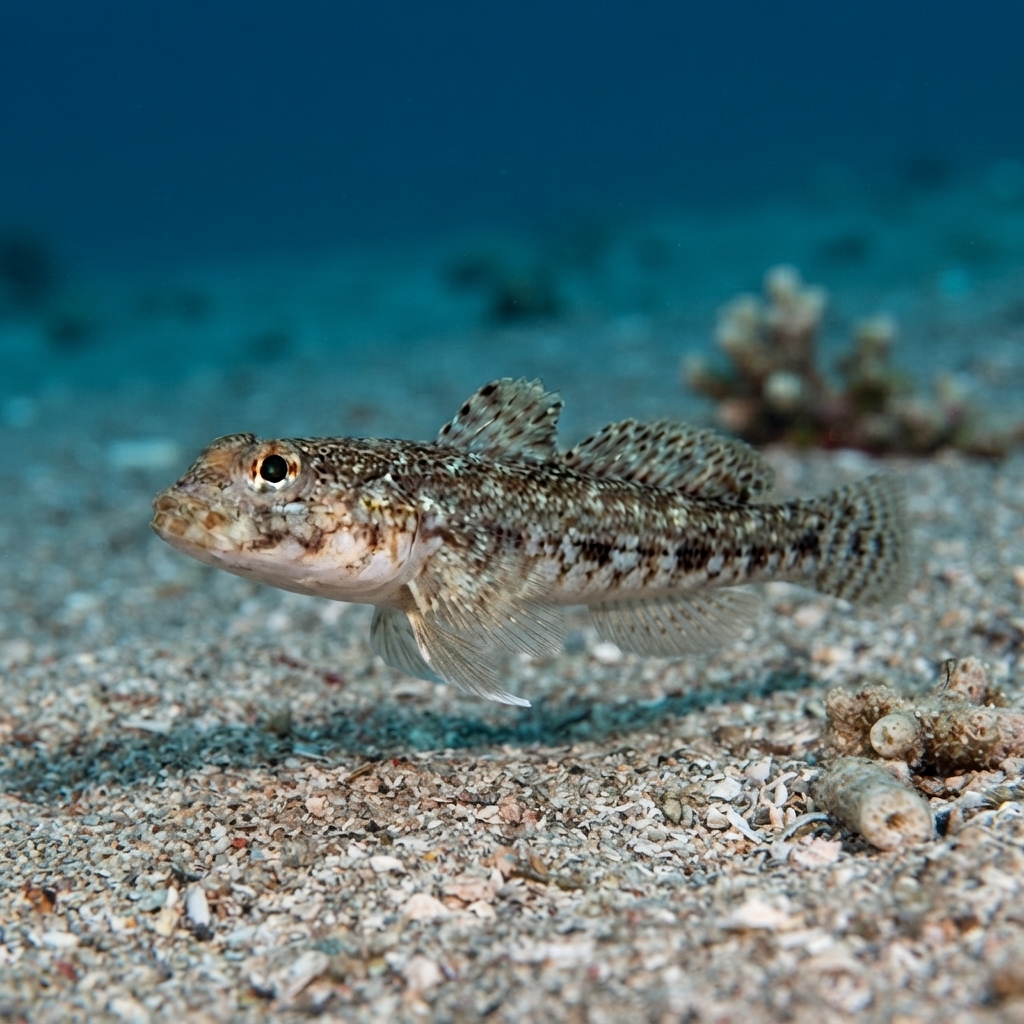
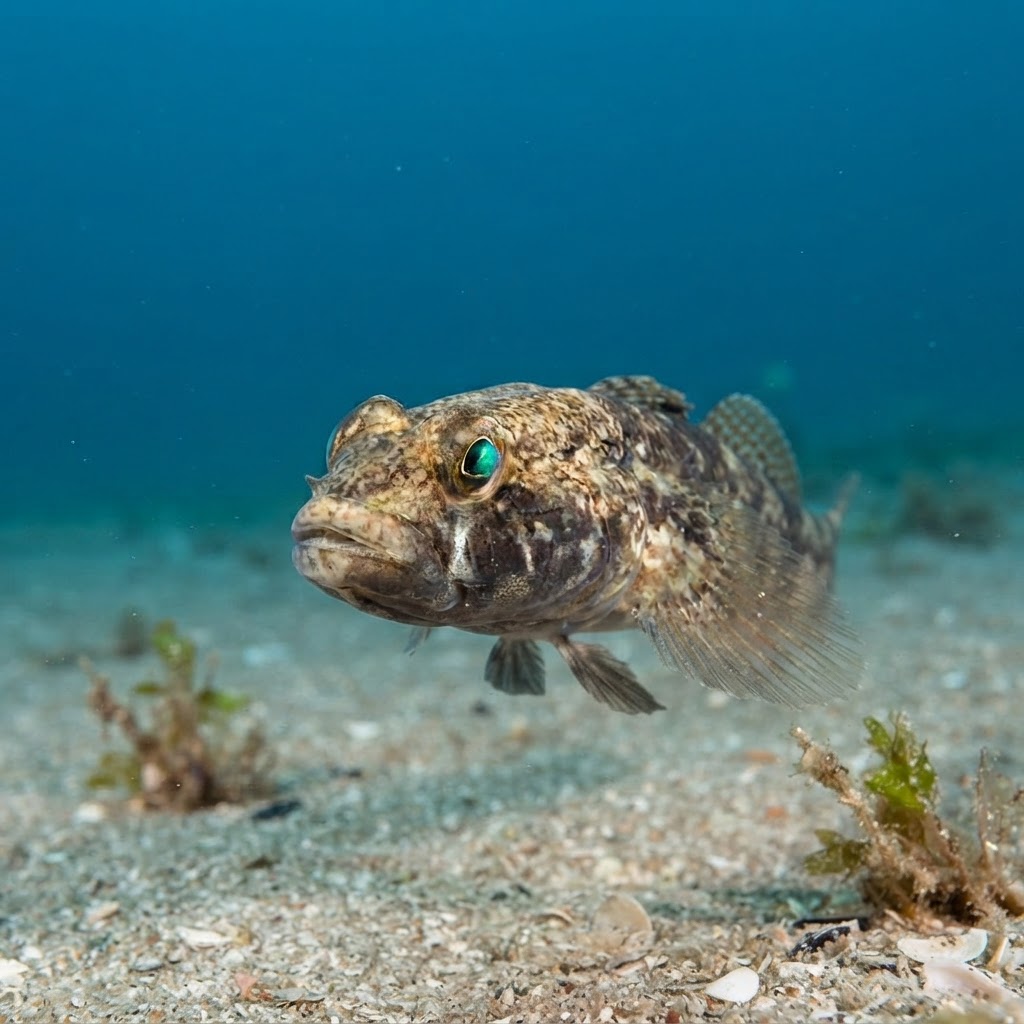
A stocky, bottom-hugging fish to about 17cm, usually dark grey to blackish-brown with mottled blotches that break up its outline against sand or silt. Look for the blunt head, large eyes set high on the skull, and the way it props itself on its pelvic fins fused into a small sucker disc rather than swimming freely. Breeding males often darken further and can show a more pronounced first dorsal fin, which is the easiest cue when a pale and a dark individual sit side by side.
Watch the sand, silt and low rocky patches close to the seabed rather than the open water above it: this is where it perches, propped on its front fins, often near a burrow or a sheltering ledge. It is not a fast swimmer and tends to hold its ground or make a short dart to the next patch of cover rather than fleeing outright, which makes it a manageable subject for a patient macro shot. Divers log it most often as an uncommon but dependable sighting rather than something that turns up in numbers.
Males guard the nest after spawning, often a shell, stone or crevice lined and defended until the eggs hatch, a fairly involved level of parental care for a fish this size.
No clear seasonal pattern shows up in the sightings, and its temperature range of 8.3 to 18.8C spans cool northern seas to warmer Mediterranean and Canary waters, so it is worth looking for on any dive, any month.
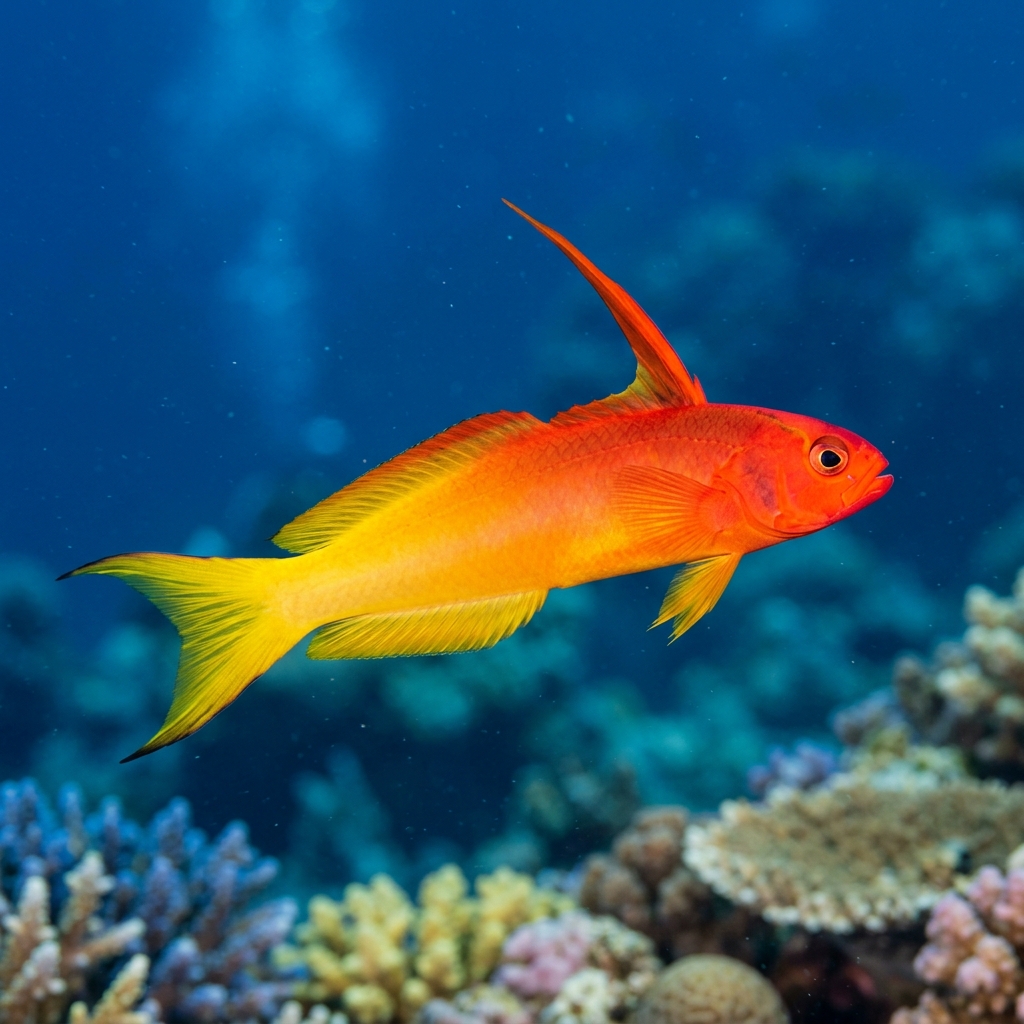
Reef neighbours a diver could mistake it for. Use the identification notes above to tell them apart.
Most reliably logged in Zeeland in the Netherlands, where sandy channels and harbour walls hold strong numbers, and it is also a steady find across the Canary Islands, especially Lanzarote, Fuerteventura and El Hierro. France turns it up widely too, from the Bay of Biscay to the French Riviera and Brittany, with further records in Denmark, Germany's Schleswig-Holstein, the UK and Sweden.
Mapping where Black Goby is logged…
Zeeland in the Netherlands is the strongest area for it, alongside the Canary Islands (Lanzarote, Fuerteventura, El Hierro) and French coasts from the Bay of Biscay to the Riviera. Smaller but steady numbers also show up in Denmark, Germany and the UK.
There is no strong season in the sightings, so it can be found year-round. Its comfort range of roughly 8 to 19C covers cool temperate seas through summer Mediterranean conditions.
Look for a stocky, dark mottled fish around 17cm resting on sand or rock rather than swimming in open water. The blunt head, high-set eyes and pelvic fins fused into a small sucker disc are the key underwater cues.
They typically reach about 17cm, making them a small, easily overlooked bottom-dweller rather than a fish you'll spot from a distance.
Males take on nest-guarding duty after spawning, defending eggs laid in a shell, stone or crevice until they hatch, a level of parental investment that is unusual among small demersal fish.
No, they pose no threat to divers and will simply hold still or dart to cover if approached too closely.
Site and sighting data is aggregated from diver logs, iNaturalist and GBIF. For taxonomy and conservation status:
Slender Goby
806 sites