Neoglyphidodon melas
Blackish, feisty and easy to miss: find Black Damselfish across Visayas, Palawan and Marsa Alam reefs in warm 25-29C water year-round.
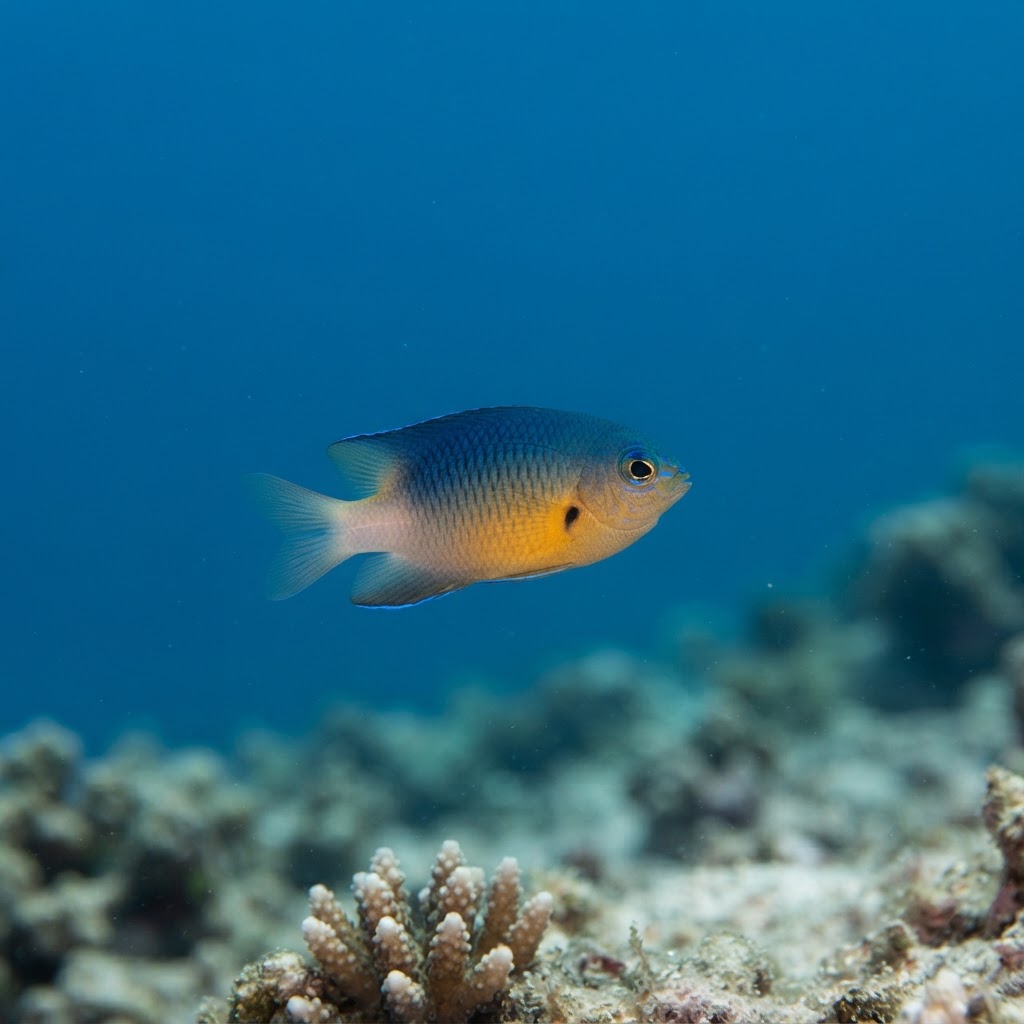
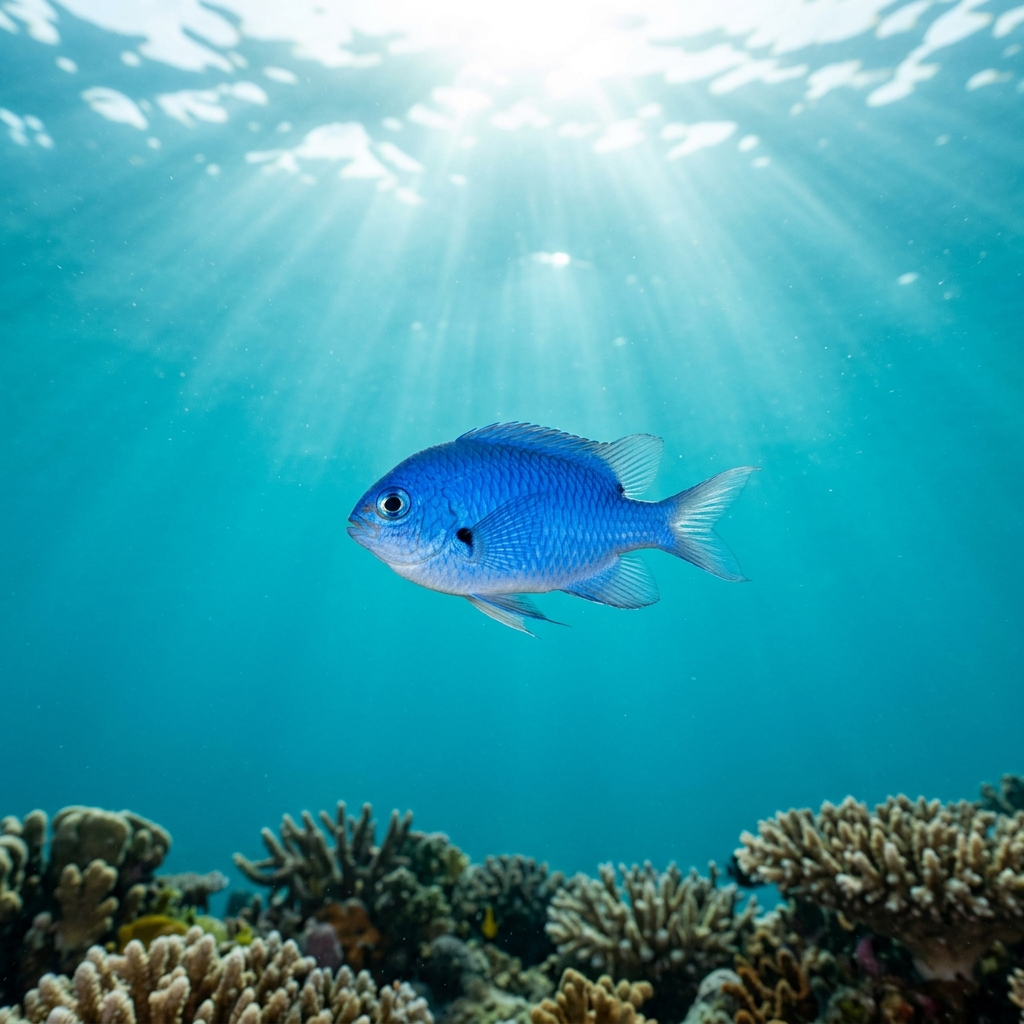
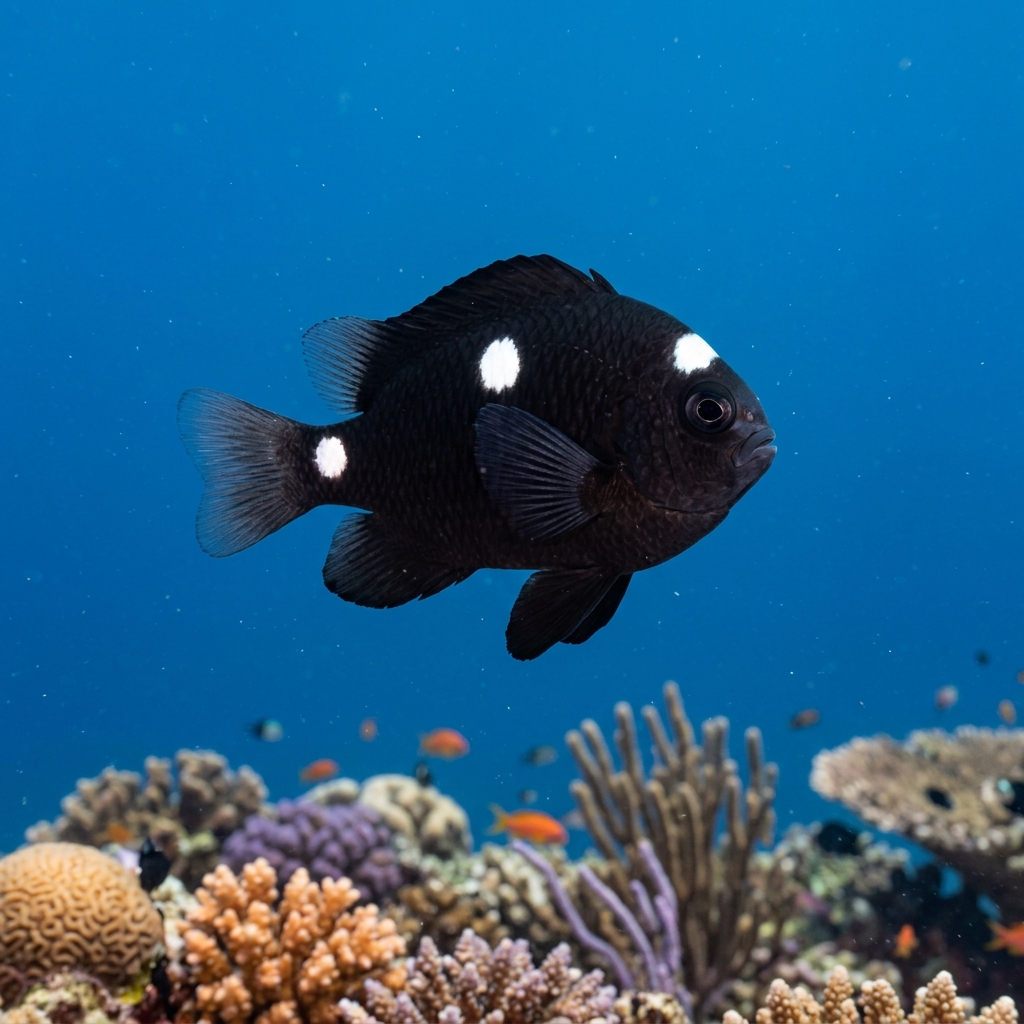
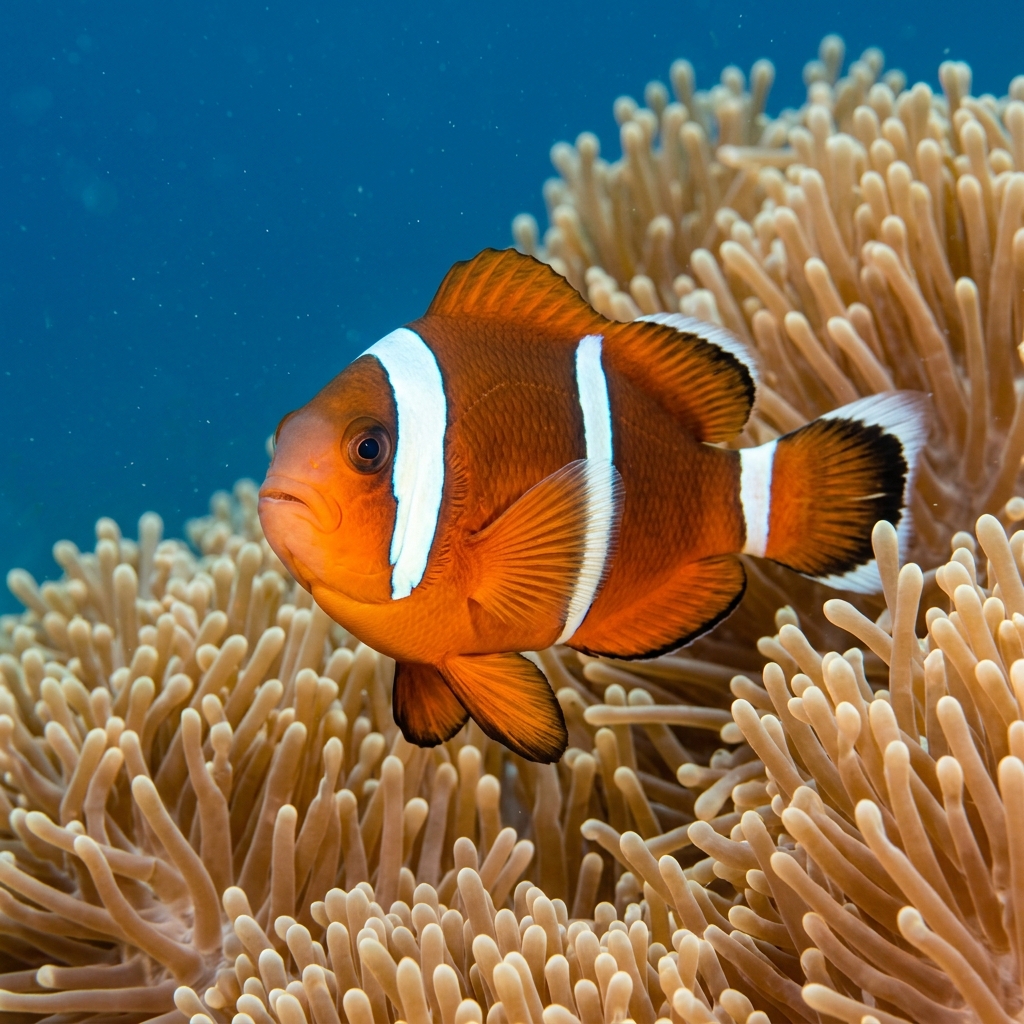
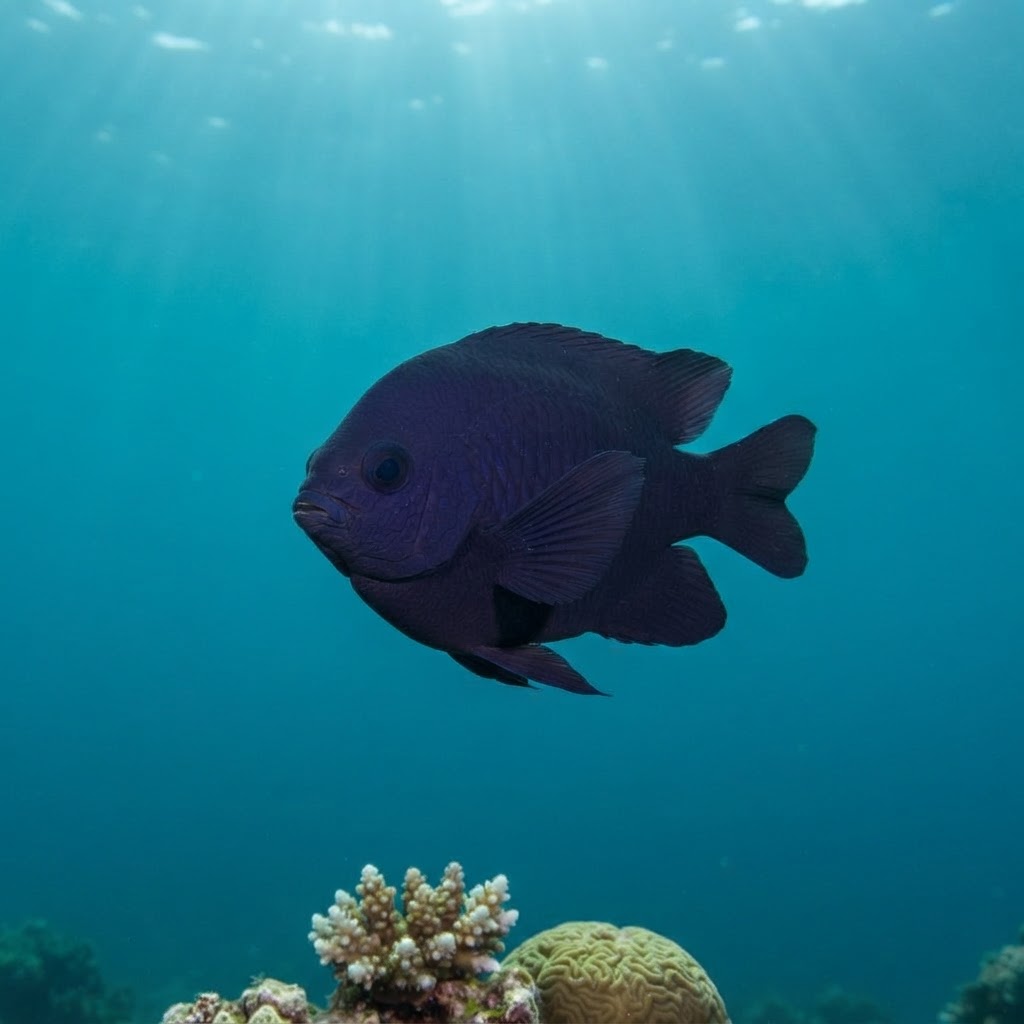
A compact, deep-bodied damselfish, dark brown to almost black all over with no bold stripes or spots to catch the eye. Adults reach only about 12 cm, and the tail often shows a faint paler edge that's easy to miss in low light. Juveniles look nothing like the adults, appearing bright yellow to orange with electric-blue lines along the head and back, so a solid-black fish and a vivid blue-and-yellow one at the same site can actually be the same species at different life stages.
Look for it hovering close to coral rubble, dead coral heads or reef rock in the shallows, rarely venturing far from a patch it seems to know well. It's territorial for its size and will dart at passing fish, though divers get more of a curious stare-down than any real aggression. Most sightings come from shallow, sheltered sections of reef rather than open water or deep drop-offs.
The dramatic switch from a yellow-and-blue juvenile to a near-black adult is one of the more extreme colour changes among reef damselfish, and both stages can turn up on the same reef at once.
No strong seasonal pattern shows up in the sightings, and with a comfortable range of roughly 25 to 29C it stays active on shallow reefs all year round. Plan around good visibility and calm shallow conditions at your chosen site rather than a particular month.
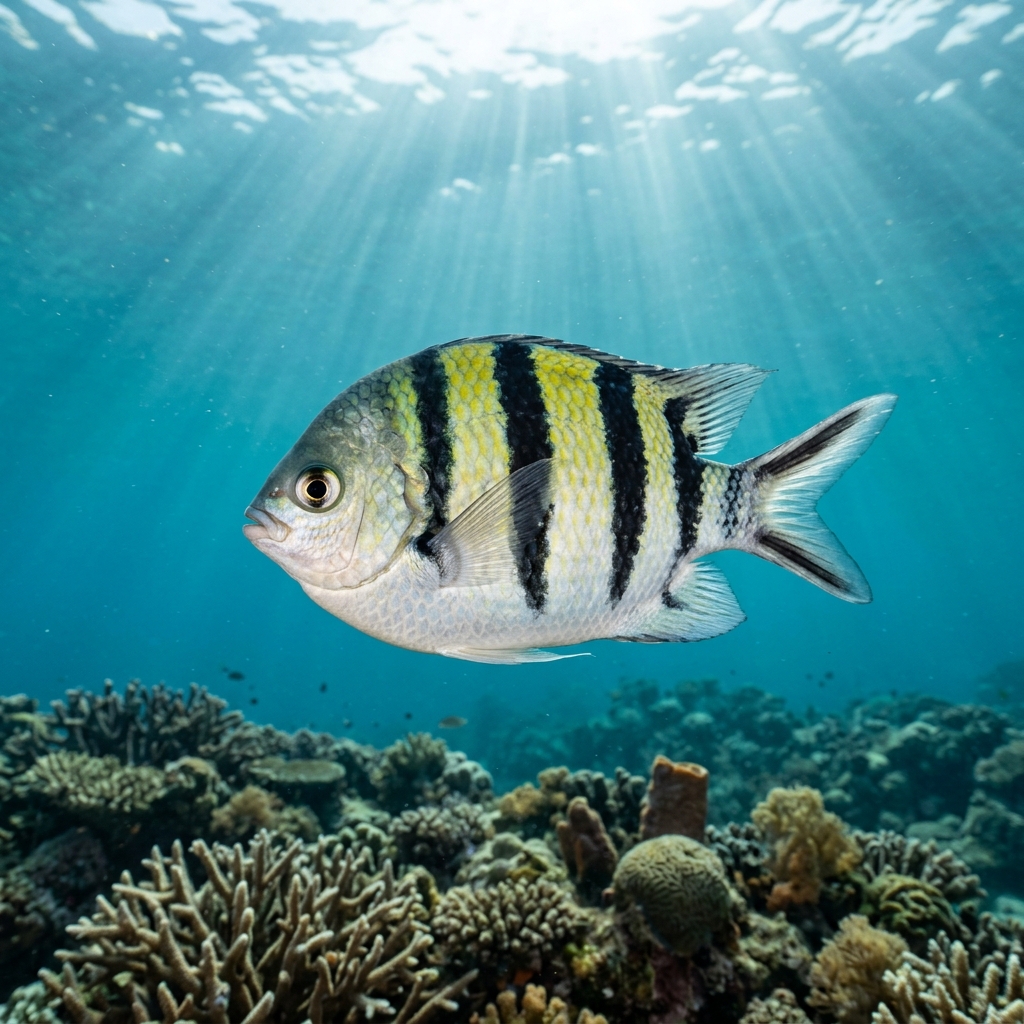
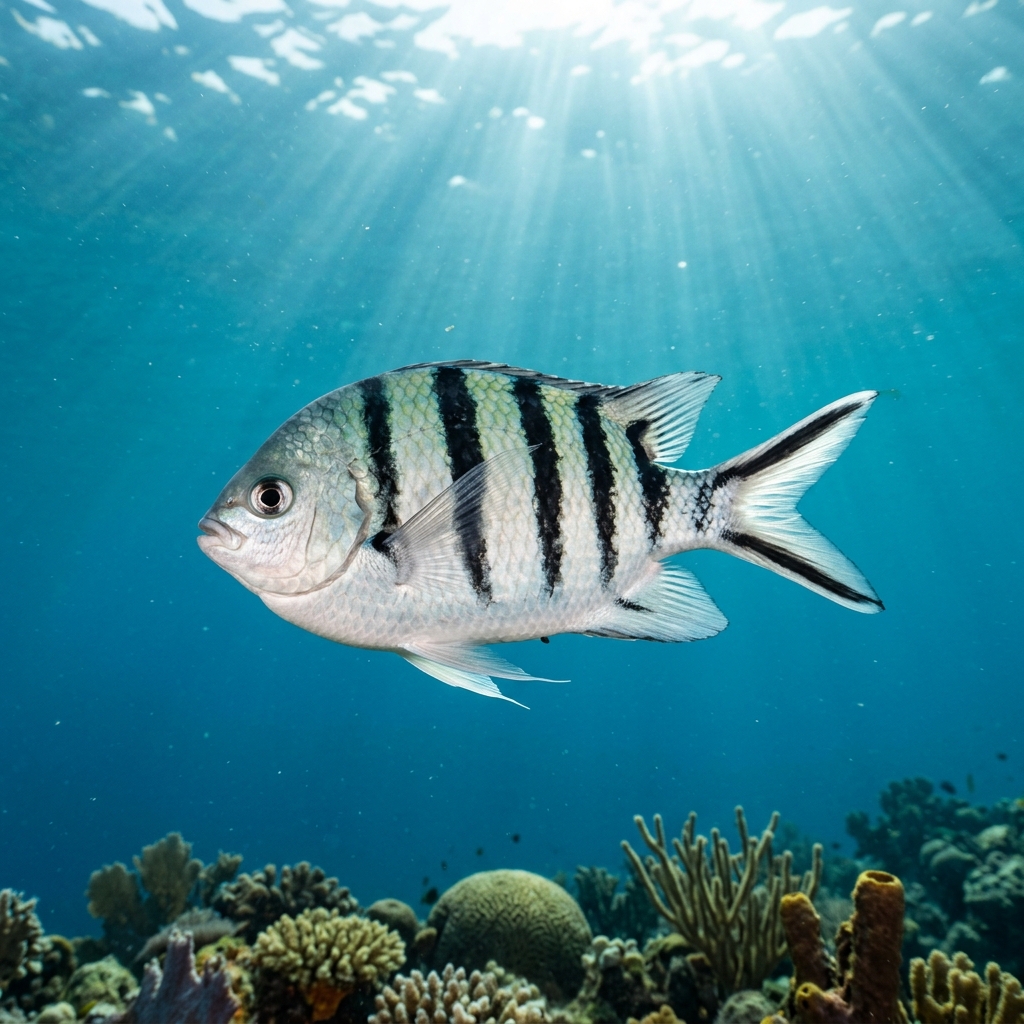
Reef neighbours a diver could mistake it for. Use the identification notes above to tell them apart.
Most commonly logged on reefs in the Philippines, especially Visayas and Palawan, with a reliable presence in Egypt's Marsa Alam and the Deep South and along Queensland in Australia. It's also a regular find at Koh Lipe in Thailand, Sabah in Malaysia, Aqaba in Jordan, and the Okinawa and Ryukyu Islands of Japan.
Mapping where Black Damselfish is logged…
Strongest sightings come from the Visayas and Palawan regions of the Philippines, plus Marsa Alam in Egypt and Queensland in Australia. Koh Lipe in Thailand and Sabah in Malaysia are other reliable spots.
There's no clear seasonal peak in the sightings data, and its comfortable temperature range of about 25 to 29C means it's present on tropical reefs throughout the year.
Adults are a plain dark brown to black, small and deep-bodied at around 12 cm, with no obvious stripes or spots. The main clue is the absence of pattern combined with a shallow reef habitat close to coral rubble.
They top out at around 12 cm, making them a small, easily overlooked reef fish rather than a showy centrepiece.
Juveniles are bright yellow to orange with blue lines on the head and back, a striking contrast to the plain dark adults. This colour shift happens as the fish matures and settles into a territory on the reef.
Site and sighting data is aggregated from diver logs, iNaturalist and GBIF. For taxonomy and conservation status:
Dascyllus
3,697 sites