Acanthopagrus butcheri
Deep-bodied and silvery-bronze, Black Bream turn up uncommonly across South Australia and Victoria in cool 15-21C water, year-round.
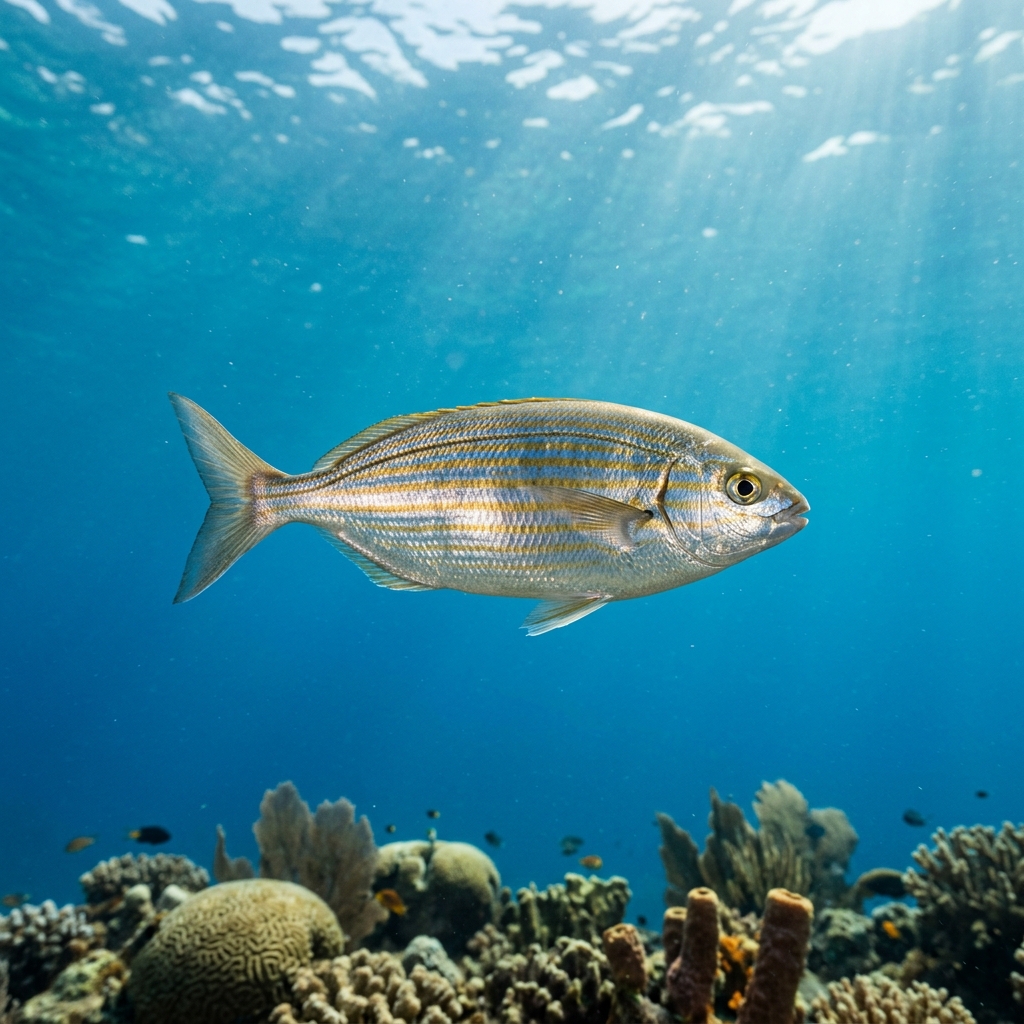
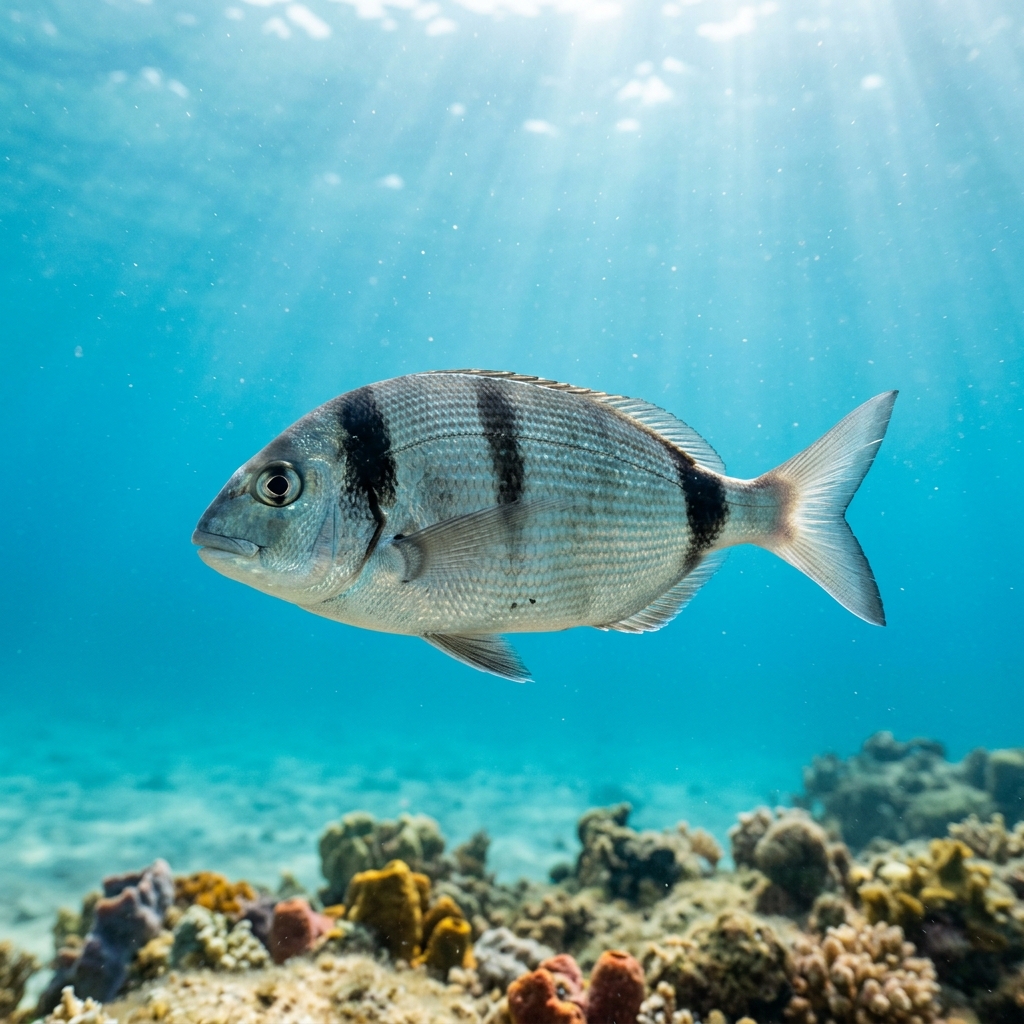
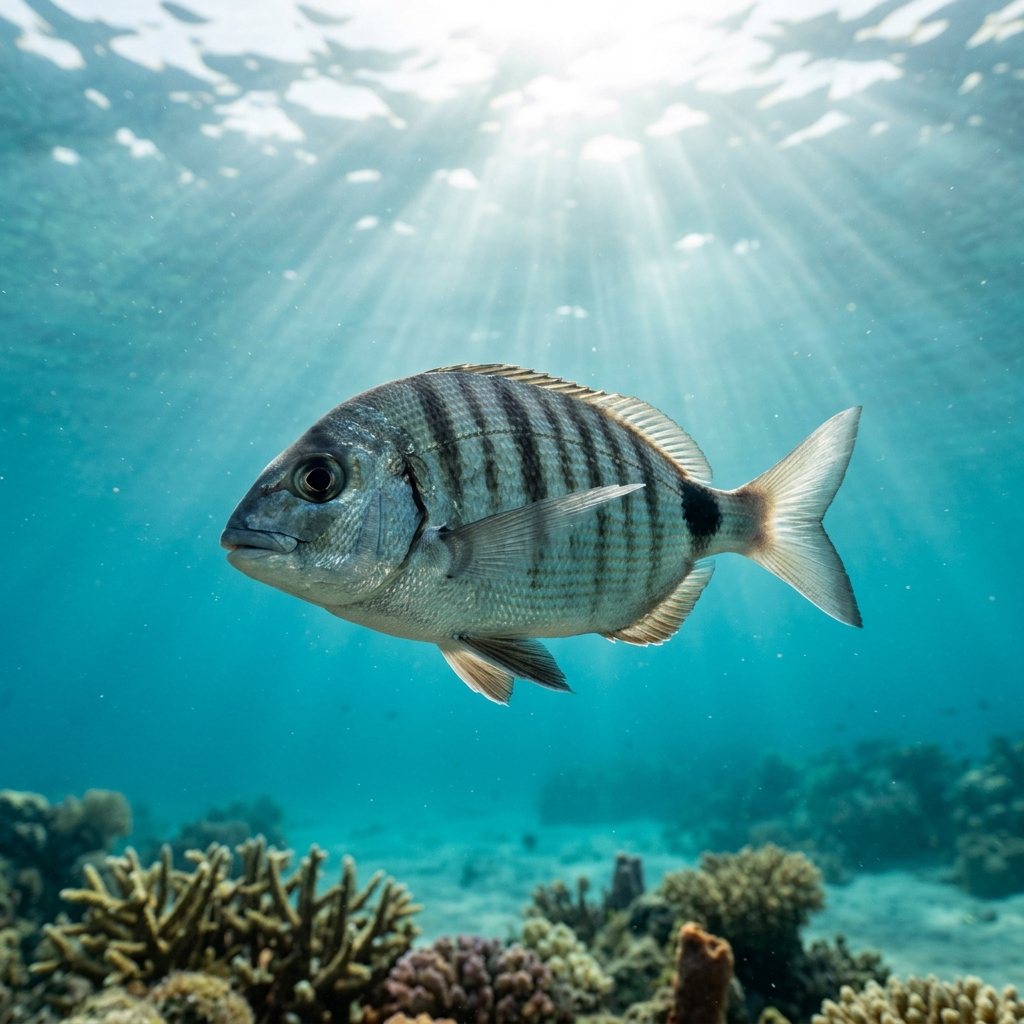
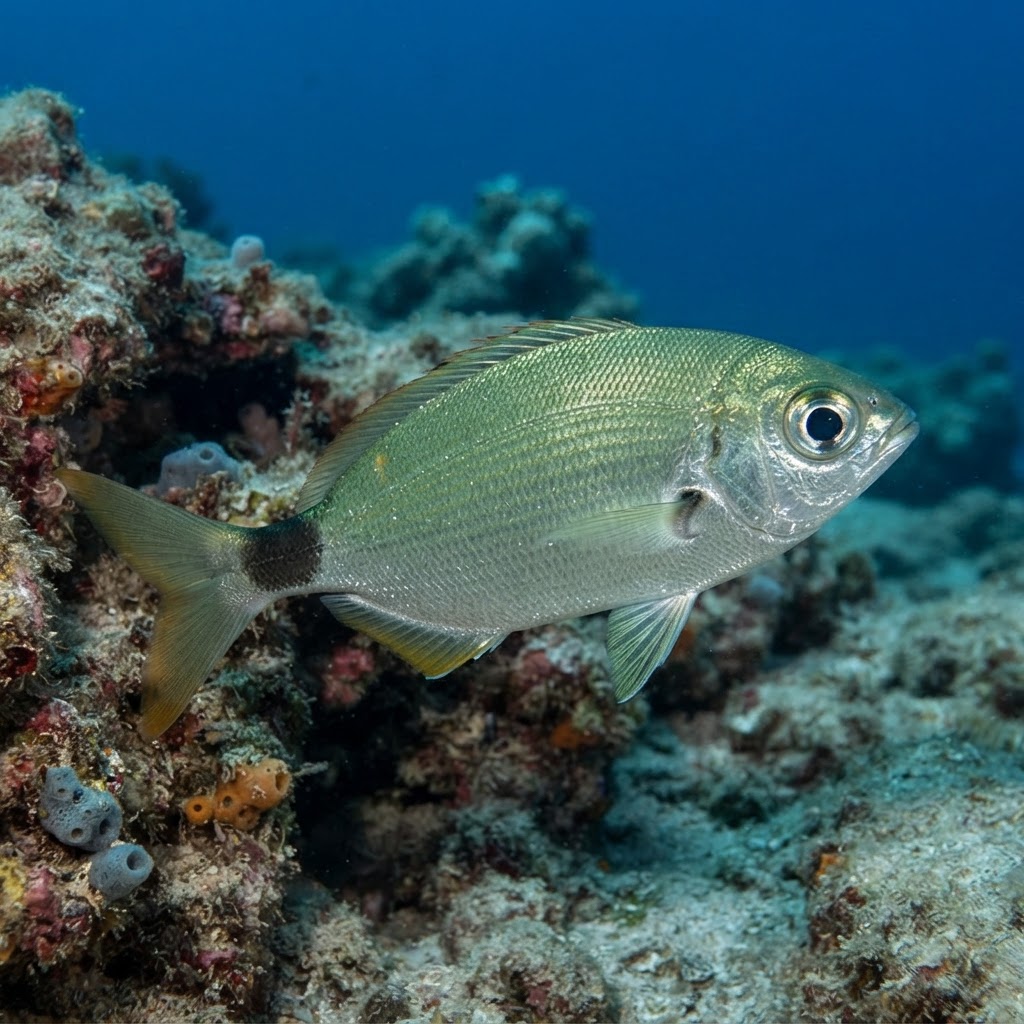
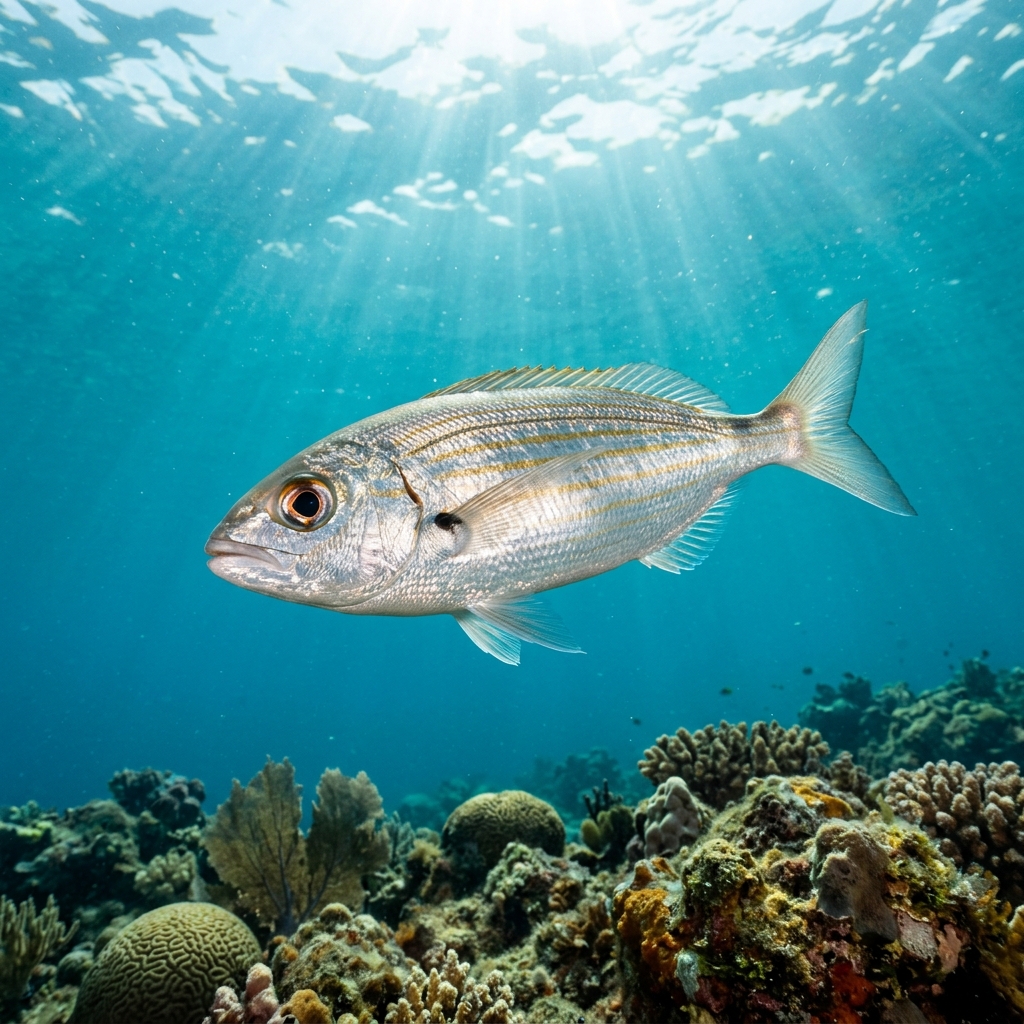
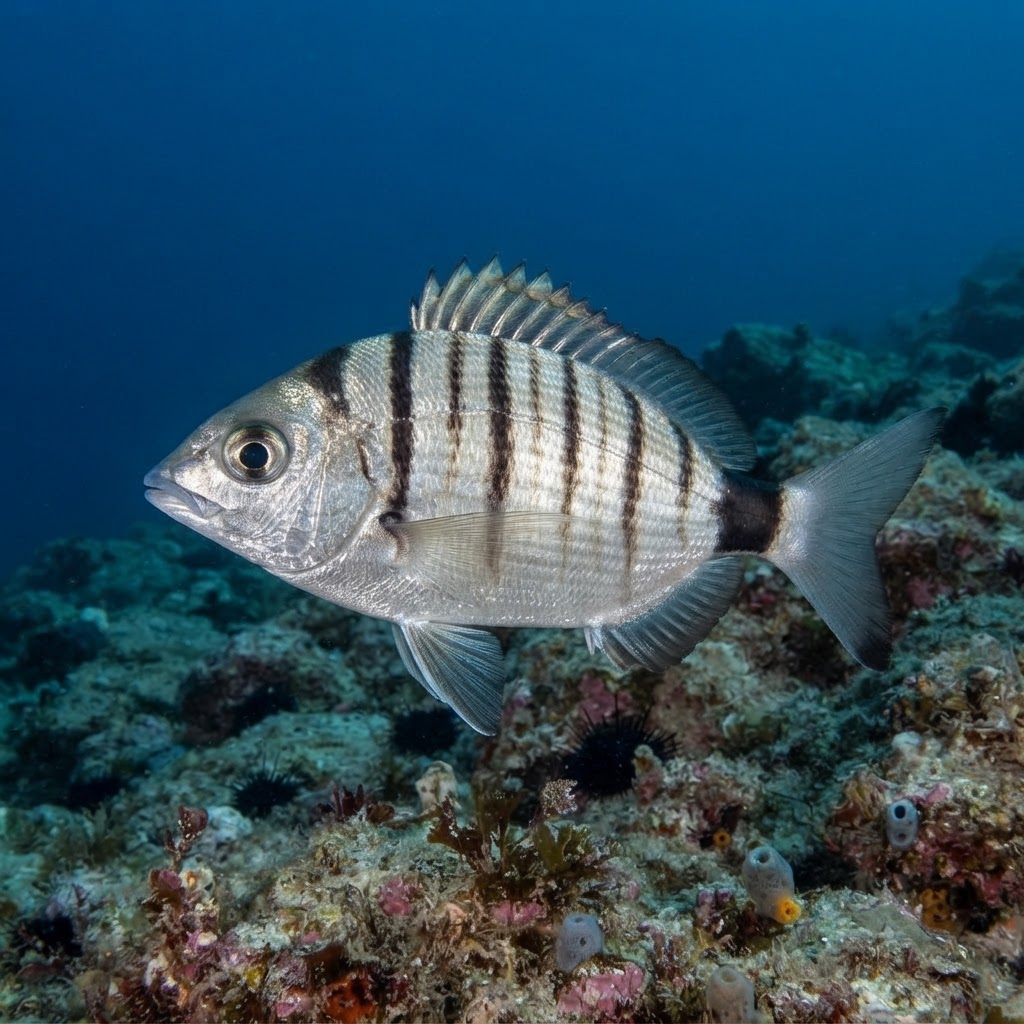
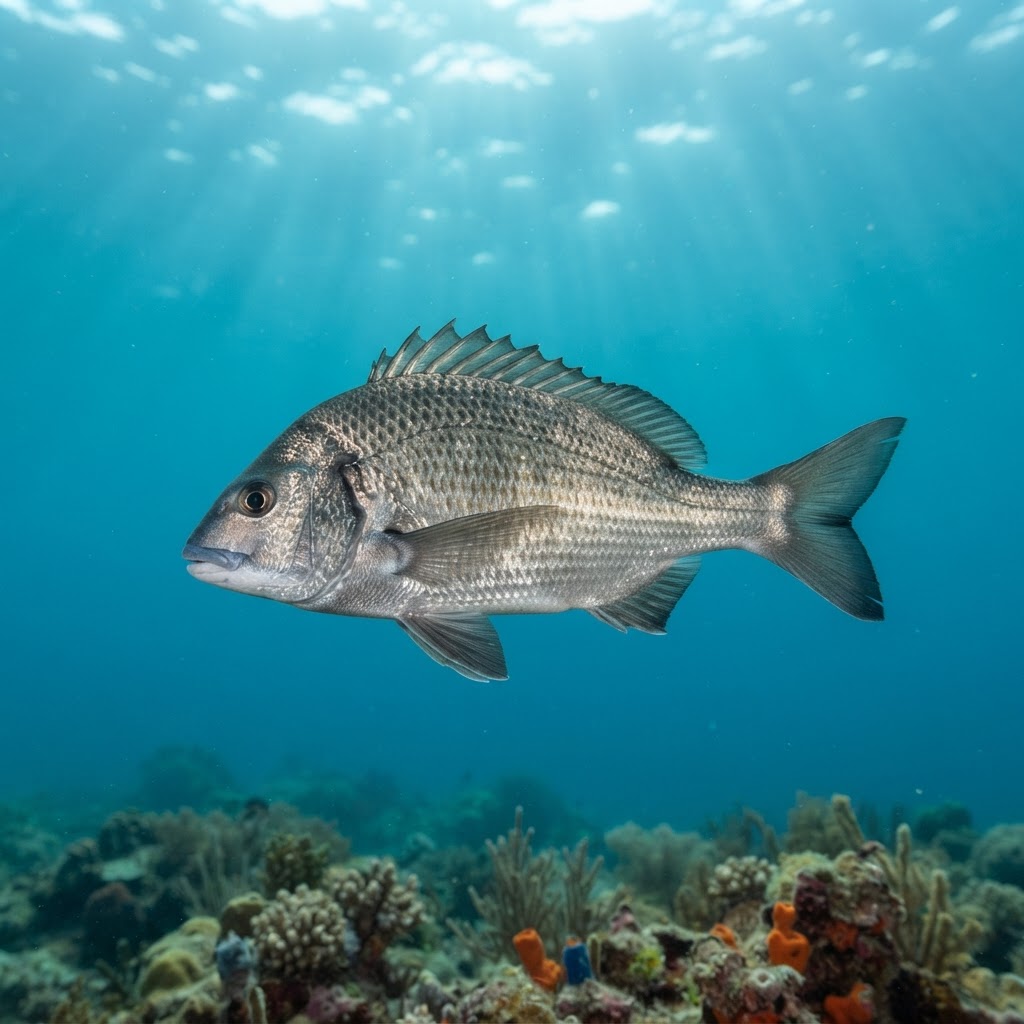
Deep, laterally compressed body with a bronze-to-olive back fading to silvery flanks, growing to around 42 cm in the water. Look for the dusky to blackish dorsal and pelvic fins that give the species its name, plus a blunt head profile typical of sea breams. There is no strong colour split between juveniles and adults that divers need to worry about; size and overall darkness of the fins are the main visual cues.
Usually seen cruising alone or in small loose groups over rocky reef and weedy structure rather than schooling tightly in open water. Divers report them as uncommon rather than bold, generally keeping a cautious distance and holding near cover instead of approaching. Expect sightings at any time of day on the reef rather than a clear dawn or dusk pattern.
Black Bream can live in a wide range of salinities, from full seawater out to brackish estuaries, which is part of why they turn up on rocky coastal reef as well as around river mouths in southern Australia.
No clear seasonal pattern shows up in the sighting data, and with a comfortable range of roughly 15 to 21C this species is present on southern Australian reefs year-round rather than tied to a particular month.
Most reliably logged in South Australia and Victoria, with additional sightings in Western Australia, making southern Australian temperate reefs and estuarine-influenced rocky sites the main places to find them. South Australia currently holds the strongest spread of logged sites, followed closely by Victoria.
Mapping where Black Bream is logged…
They are most often logged in South Australia and Victoria, with a smaller number of sightings in Western Australia. Rocky temperate reef sites in these regions give the best chance of a sighting.
There is no strong seasonal signal in the sighting data, and the species tolerates a fairly wide temperate range of about 15 to 21C, so it is worth looking for year-round on southern Australian reefs.
Look for a deep-bodied, laterally flattened fish around 40 cm with a bronze to olive back, silvery sides, and noticeably dark or dusky dorsal and pelvic fins. They are usually seen singly or in small loose groups near rocky structure rather than in tight schools.
They typically reach around 42 cm in length, making them a solid mid-sized reef fish rather than a small darter or a large pelagic species.
No, they pose no danger to divers and tend to keep their distance rather than approach closely.
They cope with a broad range of salinity, moving between full seawater rocky reef and brackish estuarine water, which lets them occupy habitats many other reef fish cannot use.
Site and sighting data is aggregated from diver logs, iNaturalist and GBIF. For taxonomy and conservation status:
Saddled Bream
3,846 sites