Hemiramphus far
Slender surface swimmer with a needle-like lower jaw, most often logged around Marsa Alam and Viti Levu in warm, 25-29C water.
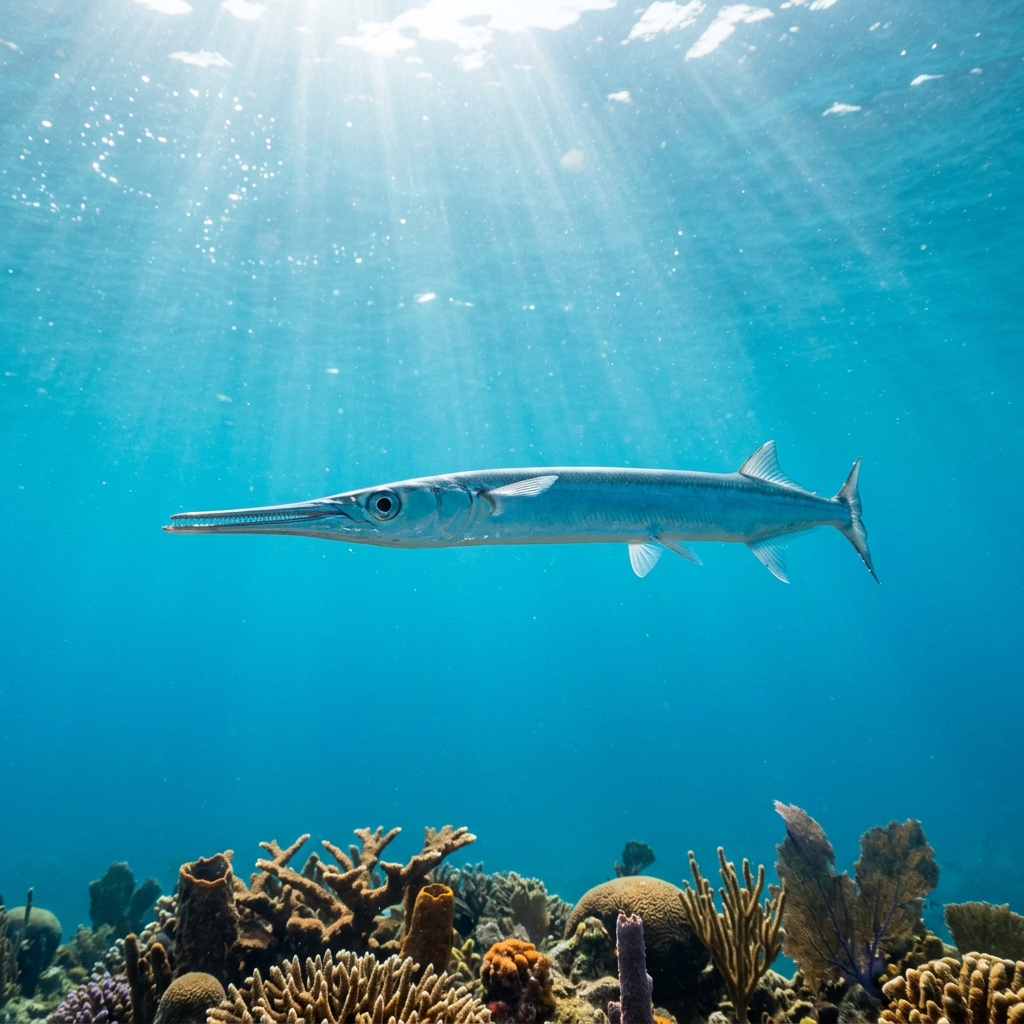
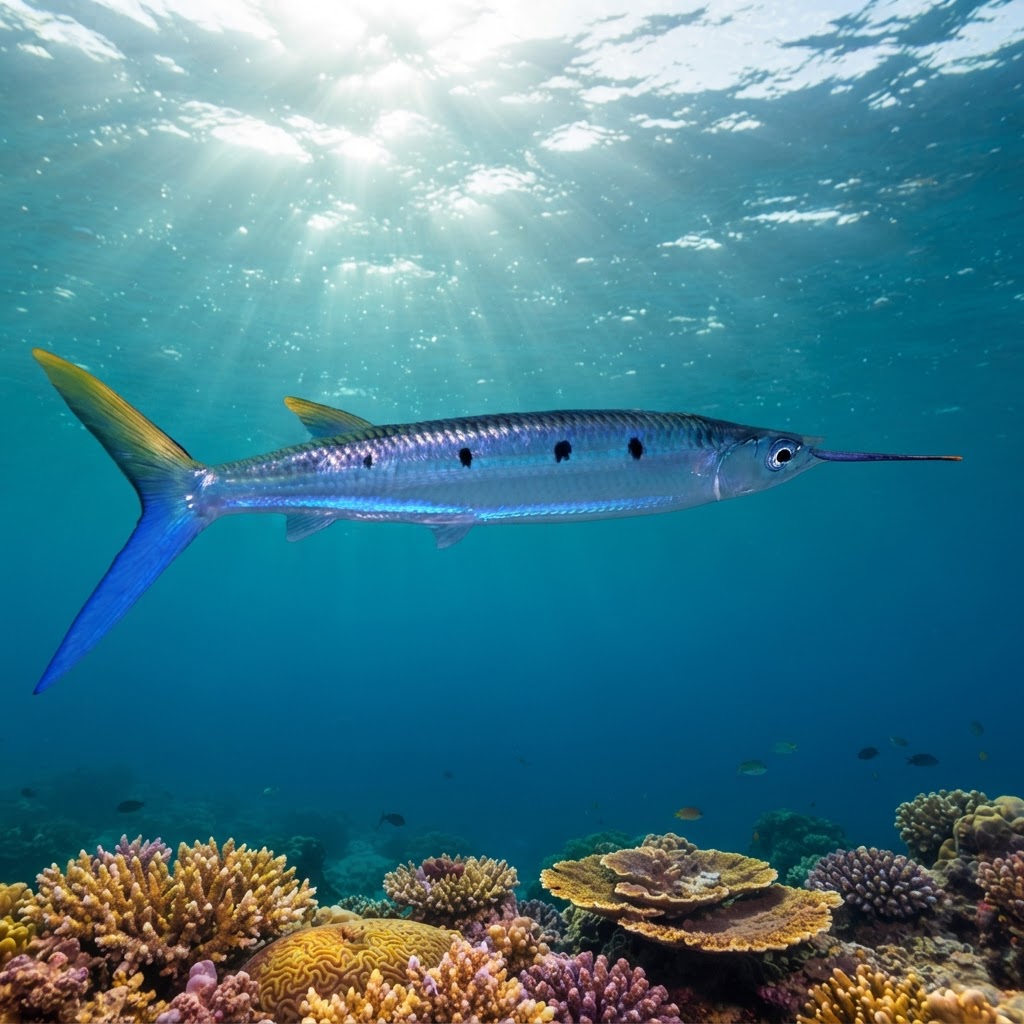
Look for a slim, silvery, torpedo-shaped fish cruising just under the surface, with an elongated lower jaw that sticks out well past a short upper jaw, like a beak. A dark stripe often runs along the flank, and a row of faint vertical bars gives the back half of the body its name. At around 31cm, it is usually seen in loose groups rather than alone, holding position just below the surface film rather than down on the reef.
Divers typically spot this fish skimming just beneath the surface in loose, loosely coordinated groups, often over shallow reef flats or the sunlit top few metres of a reef wall. It tends to keep a comfortable distance from bubbles and divers rather than approaching, drifting off calmly if you swim towards it. Most logs describe it as an uncommon but steady find rather than a schooling spectacle, so it is more a nice surprise on the way up or down than a dedicated target.
That extended lower jaw is not for defence or feeding on other fish, it is mainly used to help the fish skim and pick at surface-drifting algae and small plankton, which is why halfbeaks spend so much time hugging the water's surface layer.
Sightings are spread across the year with no clear peak season, which fits its comfort range of roughly 24.7 to 29.3C, a band that tropical reefs in Egypt, Fiji and New Caledonia sit in for most of the year. Plan around good surface visibility rather than a particular month.
Most reliably logged in Egypt, especially around Marsa Alam and the Deep South and the Red Sea Riviera, with a strong presence in Fiji around Viti Levu. Smaller numbers turn up around Nouméa in New Caledonia, so it is worth scanning the surface layer on reef dives across all three countries.
Mapping where Black-barred Halfbeak is logged…
Egypt is the strongest bet, particularly around Marsa Alam and the Deep South and the Red Sea Riviera, with Viti Levu in Fiji also a reliable spot. Smaller numbers are logged around Nouméa in New Caledonia.
There is no strong seasonal pattern in the sightings, so they are considered a year-round find on reefs sitting in the 24.7 to 29.3C range they favour.
Check for a slender silver body around 31cm long, a protruding lower jaw much longer than the upper one, and faint vertical bars towards the tail. It swims near the surface rather than down on the reef, often in small groups.
They typically reach around 31cm in length, giving them a slim, elongated profile in the water rather than a bulky one.
No, they pose no danger to divers and simply move away calmly if approached.
The extended lower jaw helps it skim and pick food from the surface layer of the water, mostly drifting algae and small planktonic prey, which explains why it spends so much time just under the surface film.
Site and sighting data is aggregated from diver logs, iNaturalist and GBIF. For taxonomy and conservation status:
Butterfish
1,423 sites