Amblypomacentrus breviceps
A small, striped reef damsel logged across West Papua, Luzon and Sulawesi, comfortable in warm 27-29 C water year-round.
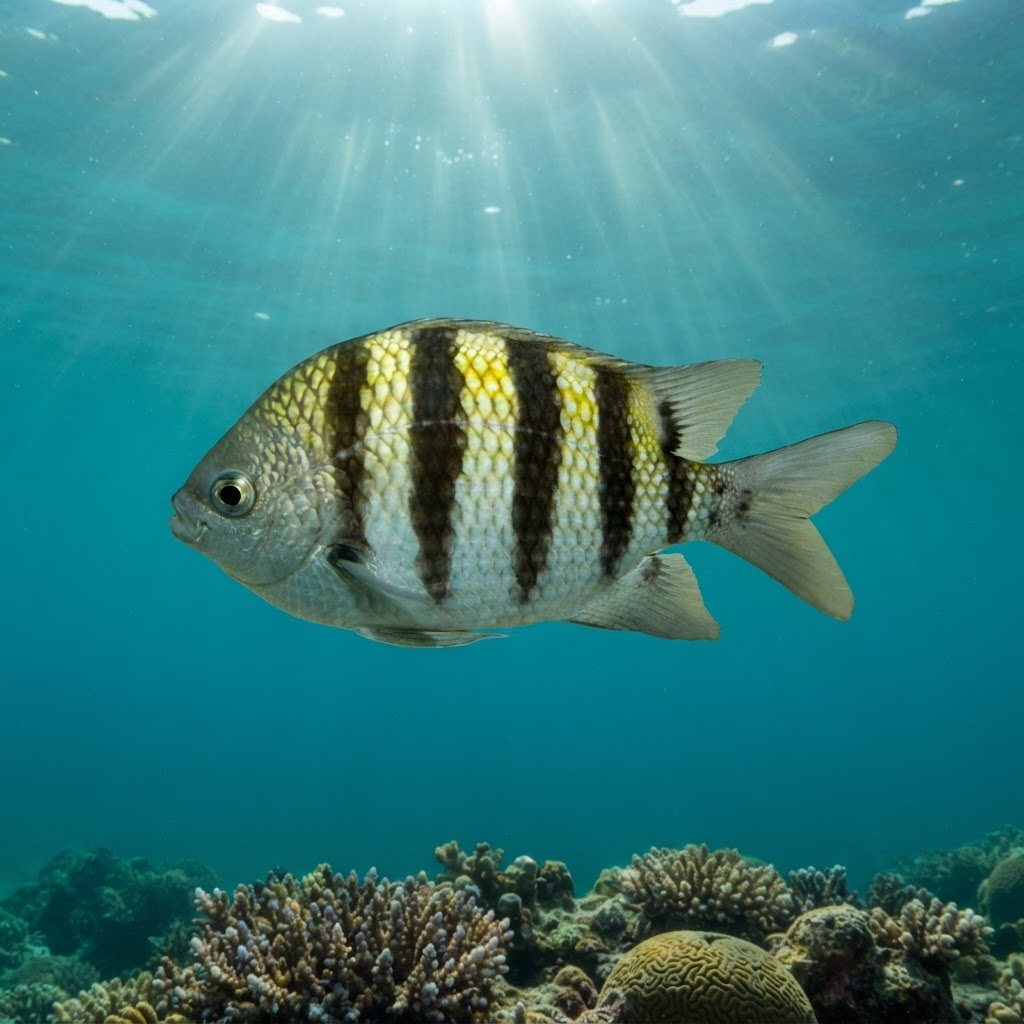
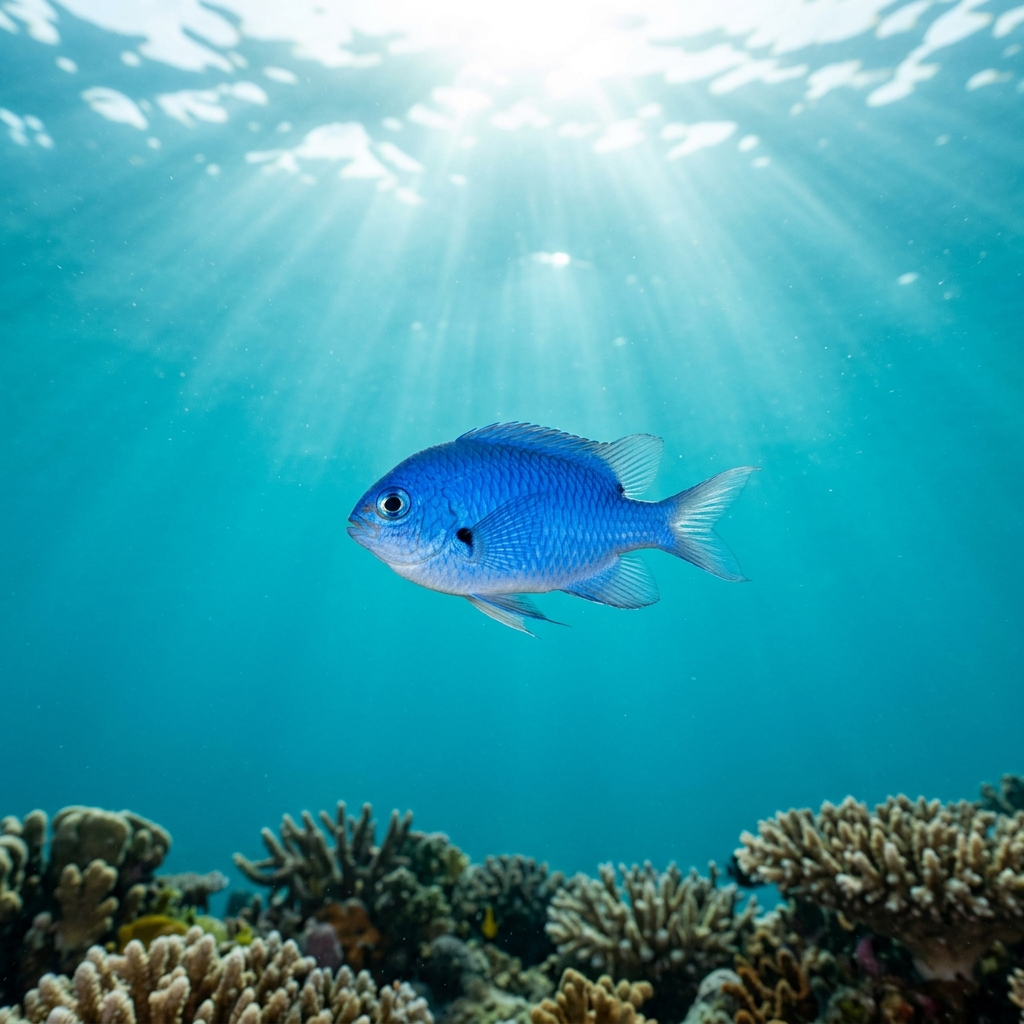
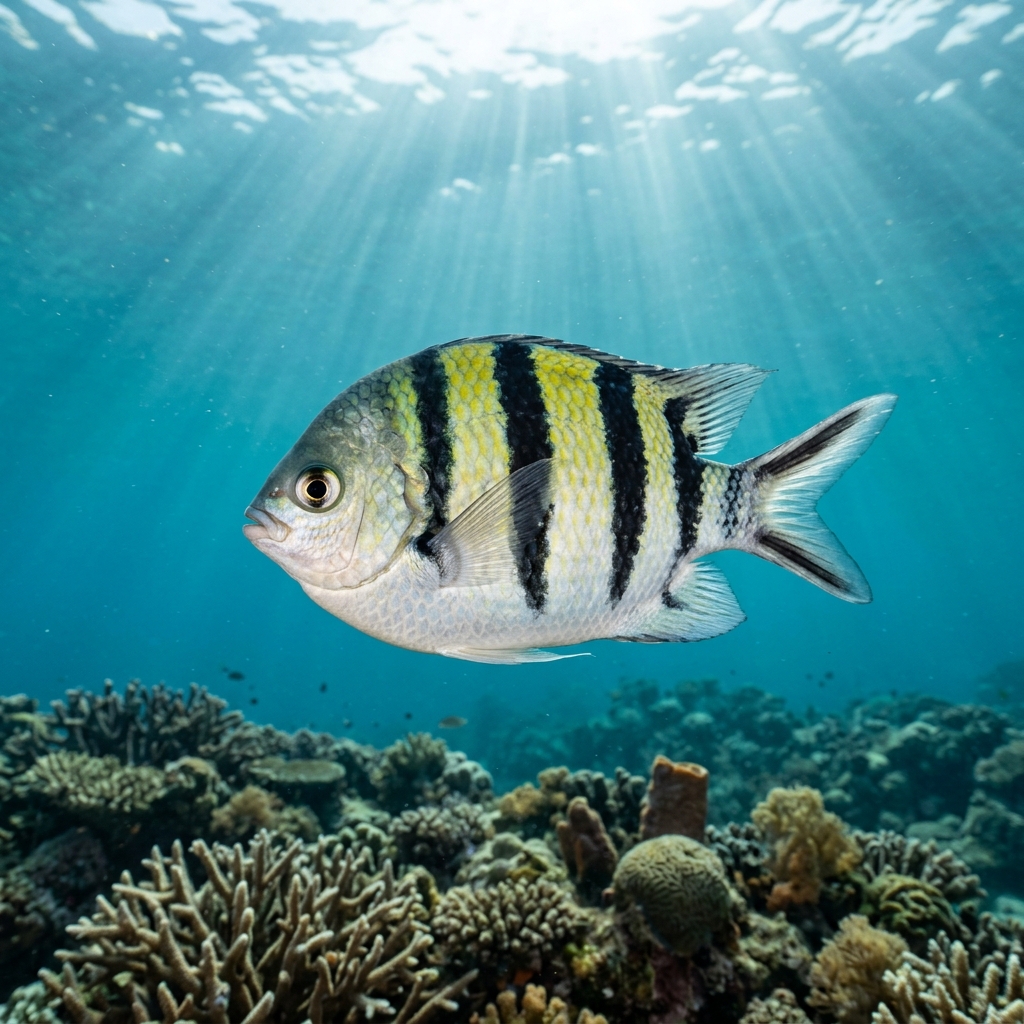
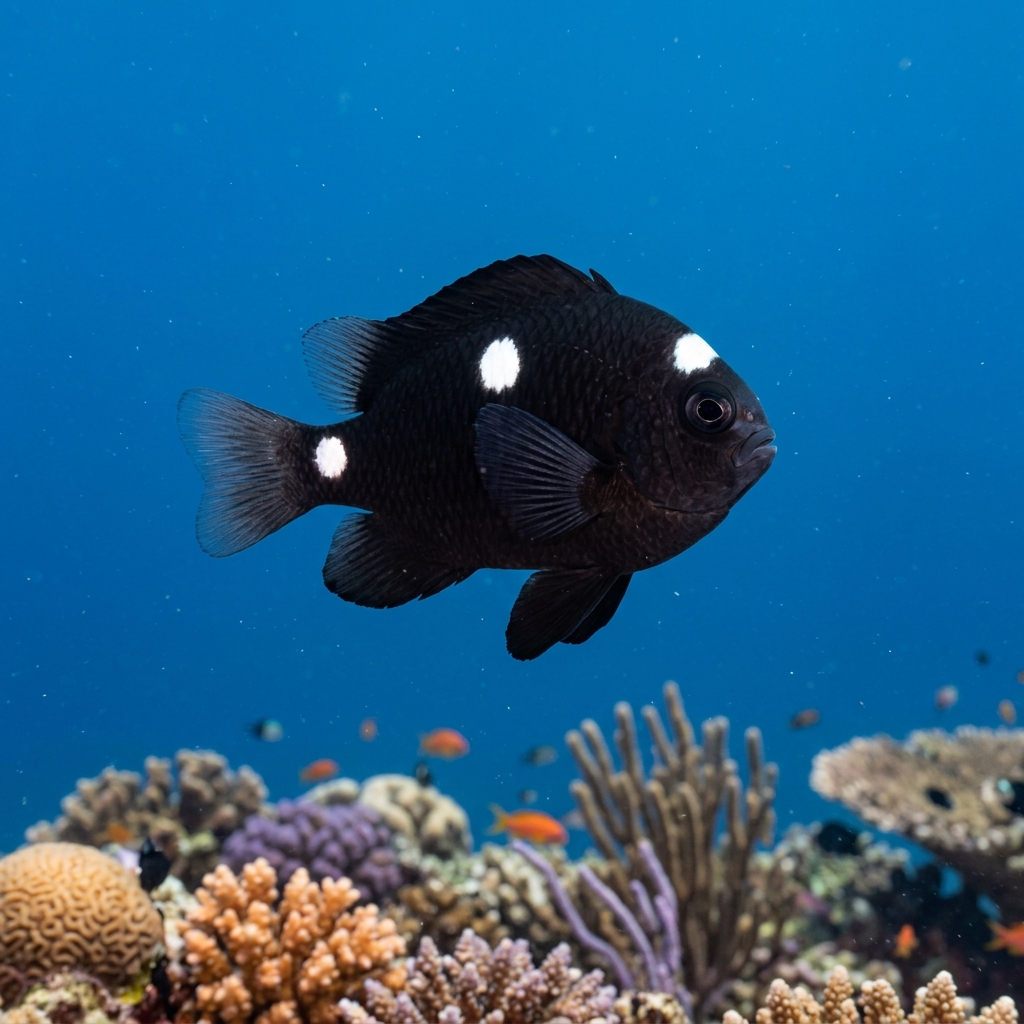
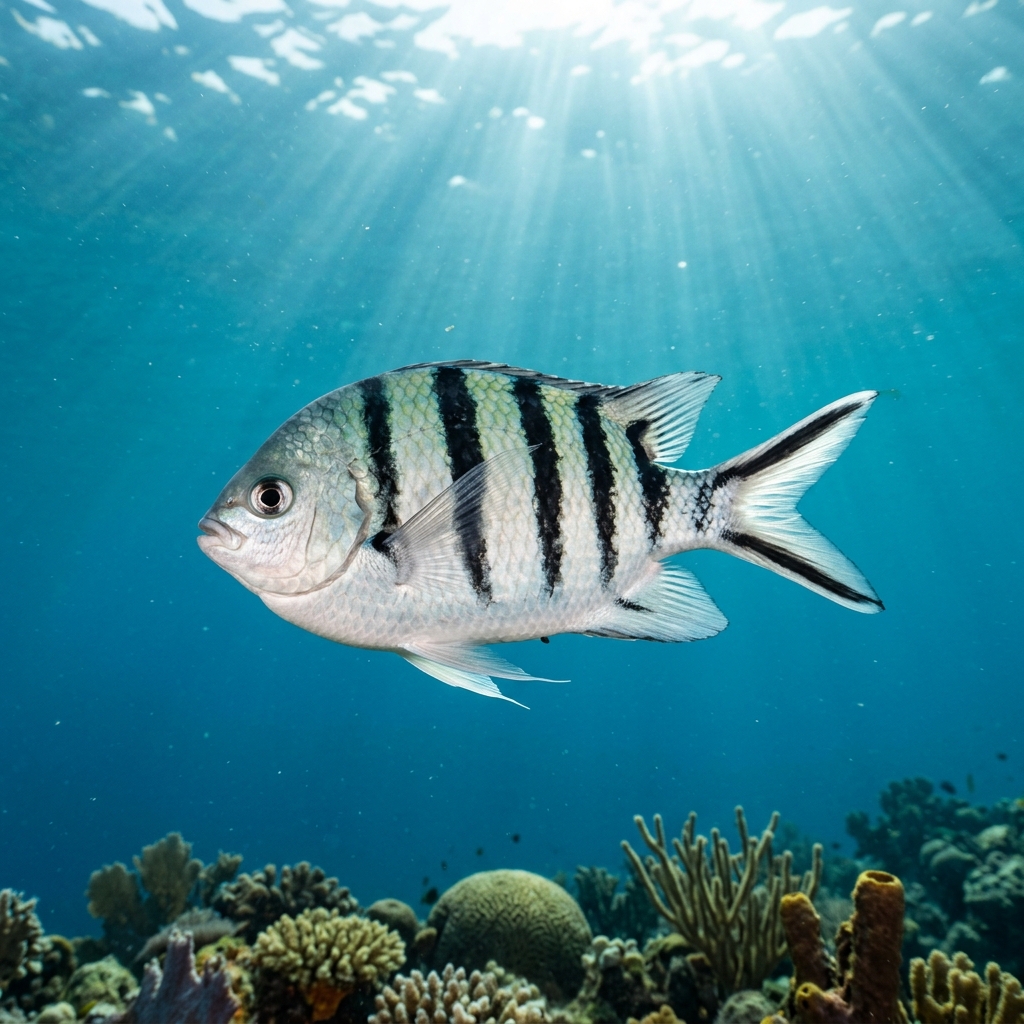
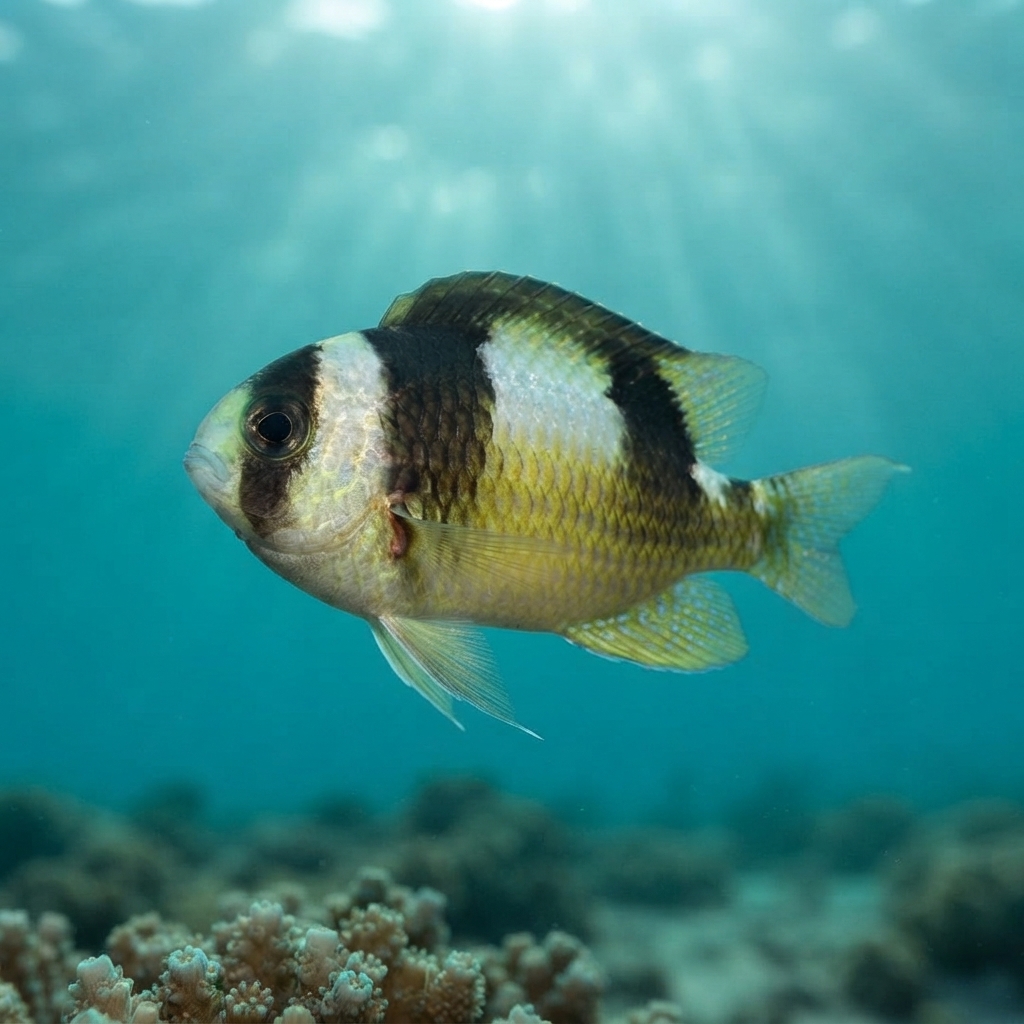
A small, elongated damselfish reaching about 6 cm, with a pale grey to white body crossed by two bold black bands, one through the eye and one across the mid-body. The blunt head and compact fins give it a slightly stockier look than many reef damsels. Look for it hovering low over rubble or sand patches rather than up in the water column, which along with the double-banded pattern is the quickest way to place it.
Divers typically find it low on the reef, sheltering close to rubble, sand, or the base of coral heads rather than swimming in open water. It tends to hold its ground or dart for cover when approached rather than fleeing far, and sightings are logged as uncommon, so a slow look over broken bottom and debris fields is usually what turns one up. It seems active through the day rather than tied to a specific dawn or dusk window in the data.
Like other pomacentrids, it likely guards a small patch of bottom and tends a cluster of eggs laid on hard substrate, with the male doing much of the defending until they hatch.
Sightings show no clear seasonal pattern, and with a comfortable niche of roughly 27.4 to 29.3 C, warm Indo-Pacific reefs suit it year-round. Plan around good visibility at your chosen site rather than a particular month.
Reef neighbours a diver could mistake it for. Use the identification notes above to tell them apart.
Most consistently logged in Indonesia, with strong sightings in West Papua and Sulawesi, and a reliable presence across the Philippines in Luzon and the Visayas. It also turns up on reefs around Dili in Timor-Leste, making this a species tied closely to the Coral Triangle.
Mapping where Black-banded Damselfish is logged…
It is most commonly logged in Indonesia, particularly West Papua and Sulawesi, and across the Philippines in Luzon and the Visayas. It also appears on reefs near Dili in Timor-Leste.
There is no strong seasonal pattern in the sighting data, and its preferred water temperature of roughly 27 to 29 C holds year-round on Coral Triangle reefs, so timing is flexible.
Look for a small, pale grey damselfish around 6 cm long with two dark bands crossing the body, one through the eye and one at mid-body. It sits low near rubble and sand rather than swimming in open water.
They stay small, reaching only about 6 cm as adults, which along with the low-to-the-bottom habit makes them easy to miss on a quick pass over the reef.
No, they pose no danger to divers. They are a small, non-aggressive reef fish that will simply retreat toward rubble or shelter if you get too close.
It is logged as uncommon at the dive sites where it occurs, so it is not a guaranteed sighting, but patient searching over rubble and sand patches in the Coral Triangle improves the odds.
Site and sighting data is aggregated from diver logs, iNaturalist and GBIF. For taxonomy and conservation status:
Dascyllus
3,697 sites