Chromis atripectoralis
Small blue-grey damselfish clouding reefs in Queensland and Sabah, comfortable in 25-29C water year-round.
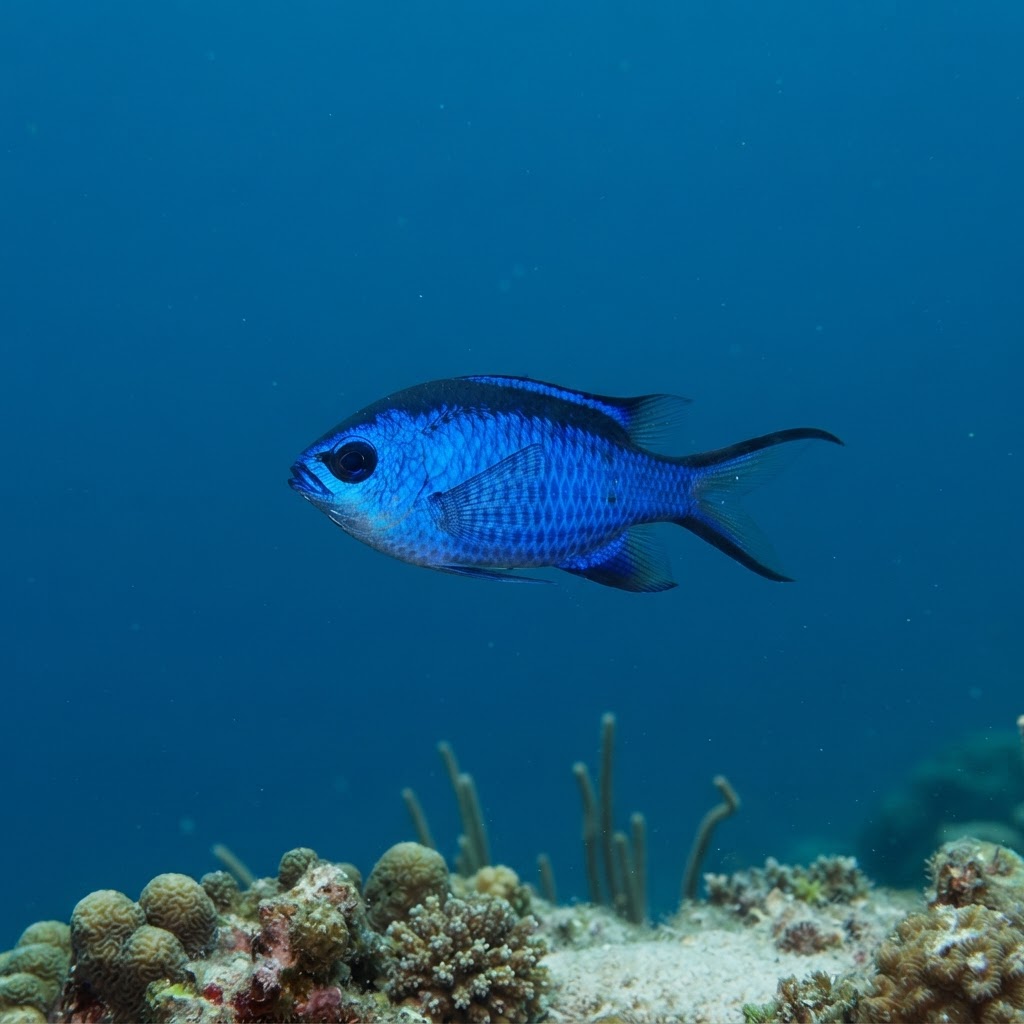
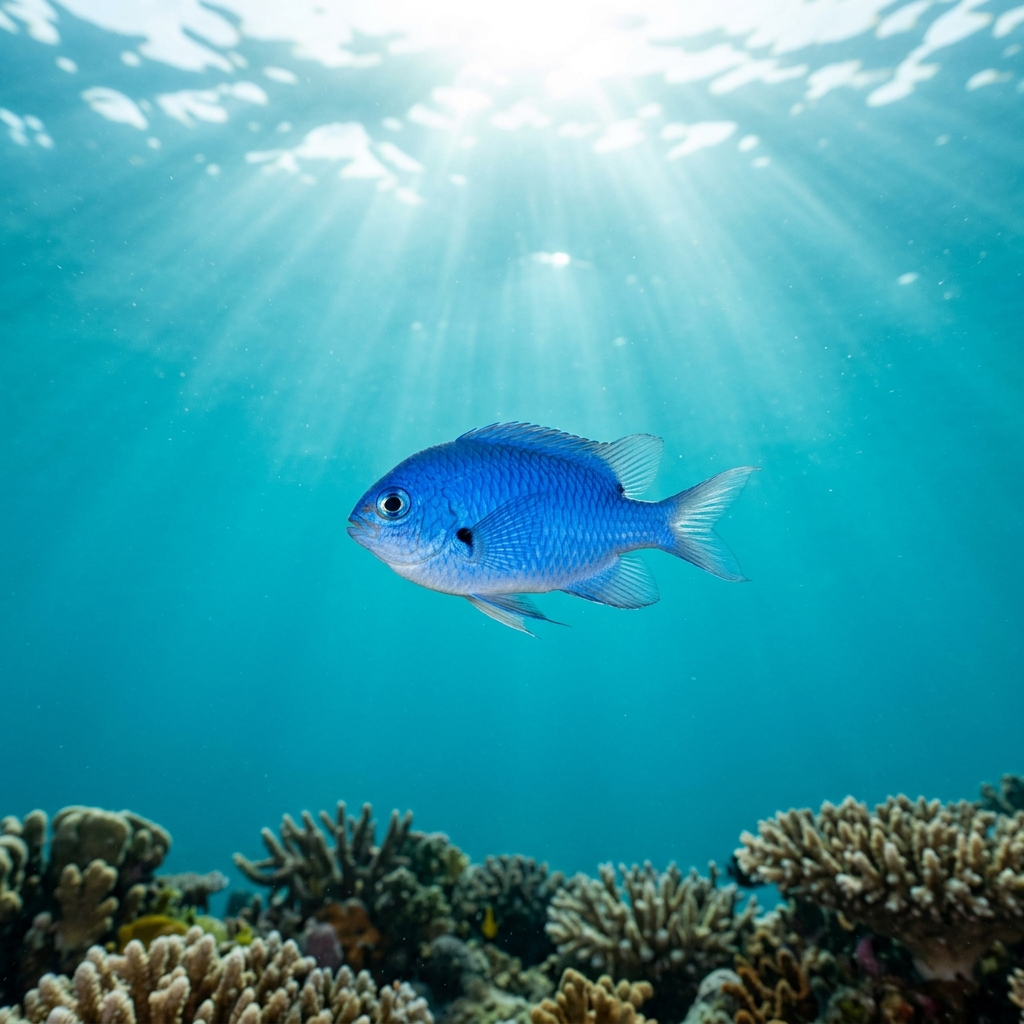
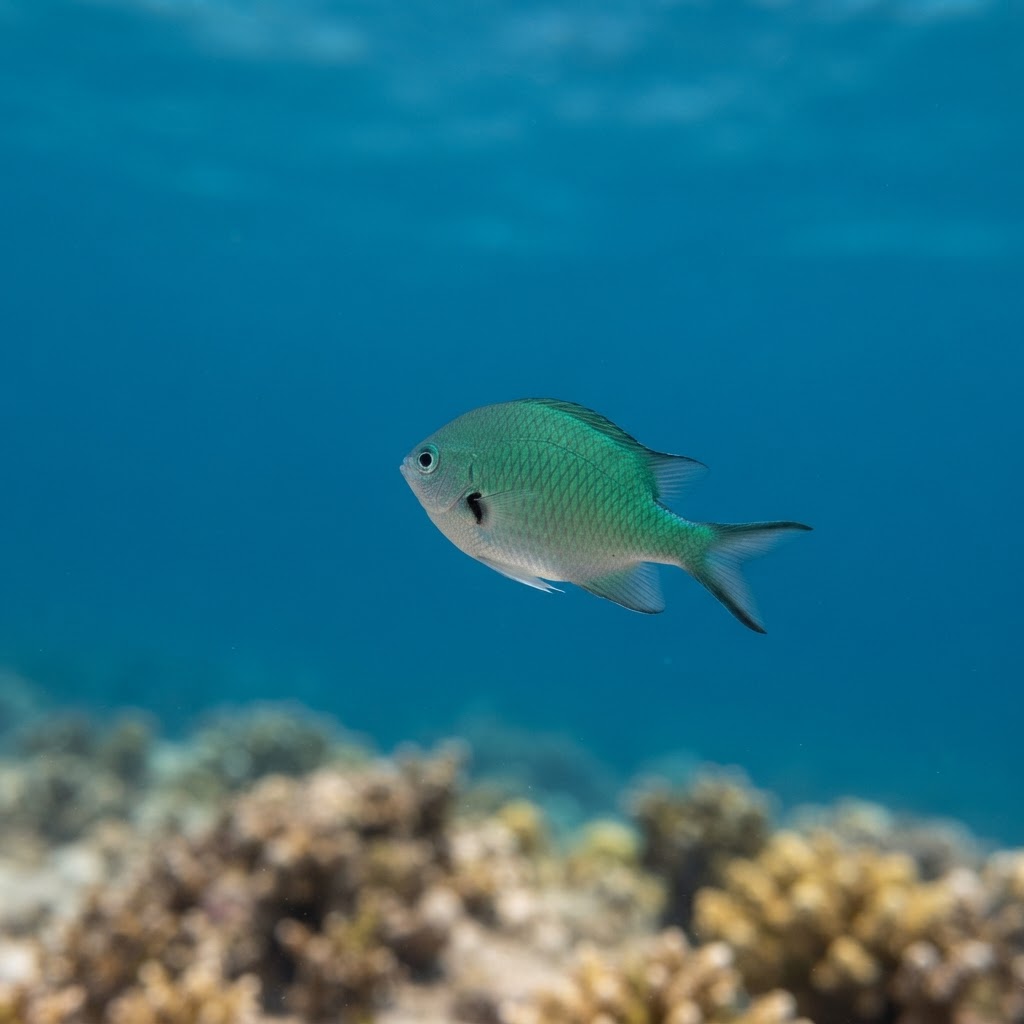
A small, disc-shaped damselfish around 8 cm, pale blue-grey overall with a forked tail and a distinctive dark smudge at the base of the pectoral fin (the 'axil' mark that gives it the name). Look for that dark patch tucked just behind and above the pectoral fin base, it is the cleanest way to separate it from similar pale chromis on the same reef. Usually seen in loose schools hovering just off the coral rather than as single fish.
Hovers in loose aggregations a metre or so above coral heads and rubble patches, picking plankton out of the water column and darting back to cover when a wave of current or a diver comes too close. Most divers log it as an uncommon background presence, a scatter of small blue-grey shapes over the reef rather than a dense bait-ball, though a few sites report it in noticeably thicker numbers. Active by day, it retreats into branching coral for shelter rather than territory-guarding aggressively like some of its damselfish relatives.
Its dark pectoral-axil spot is the field mark that separates it at a glance from several near-identical pale chromis species sharing the same reefs.
No clear seasonal pattern shows up in the sightings, and it sits comfortably in 25 to 29.3C water, so it is a year-round reef fixture wherever it is found rather than something tied to a particular month.
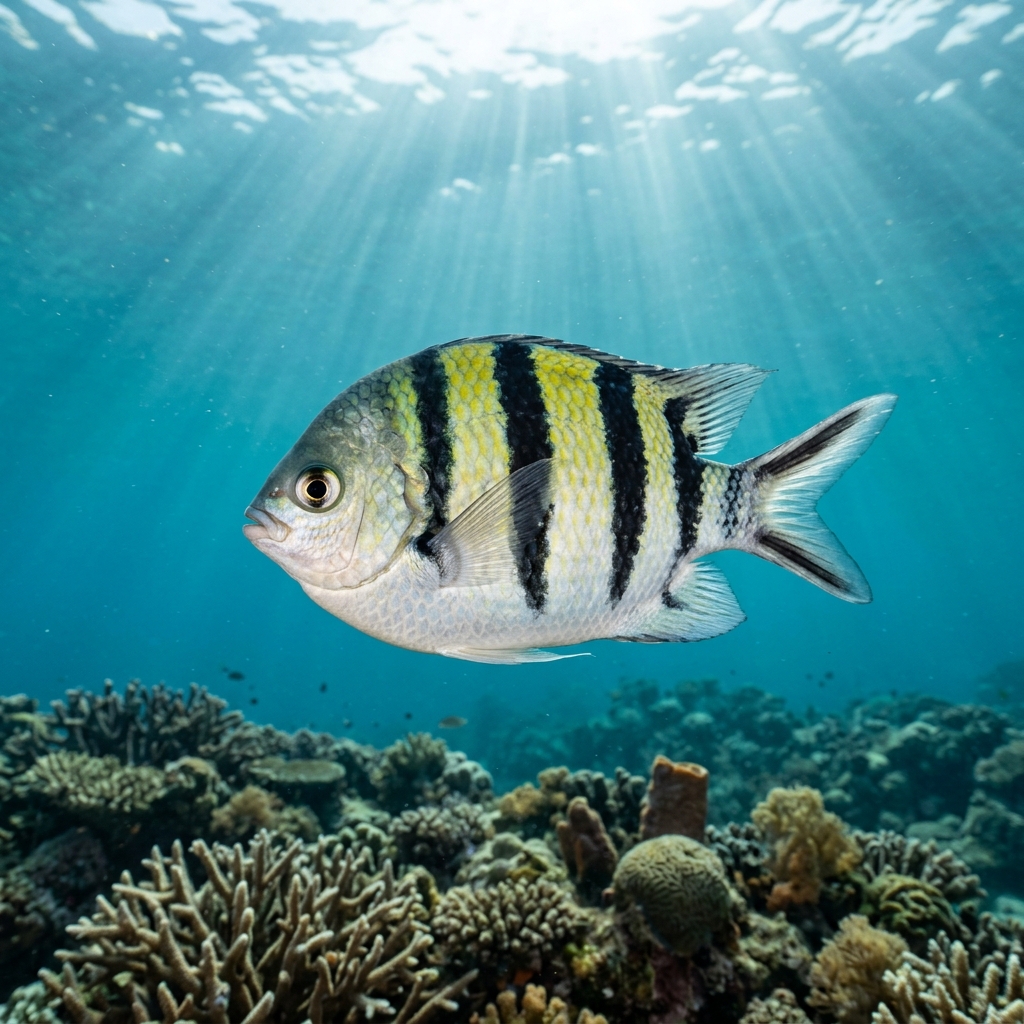
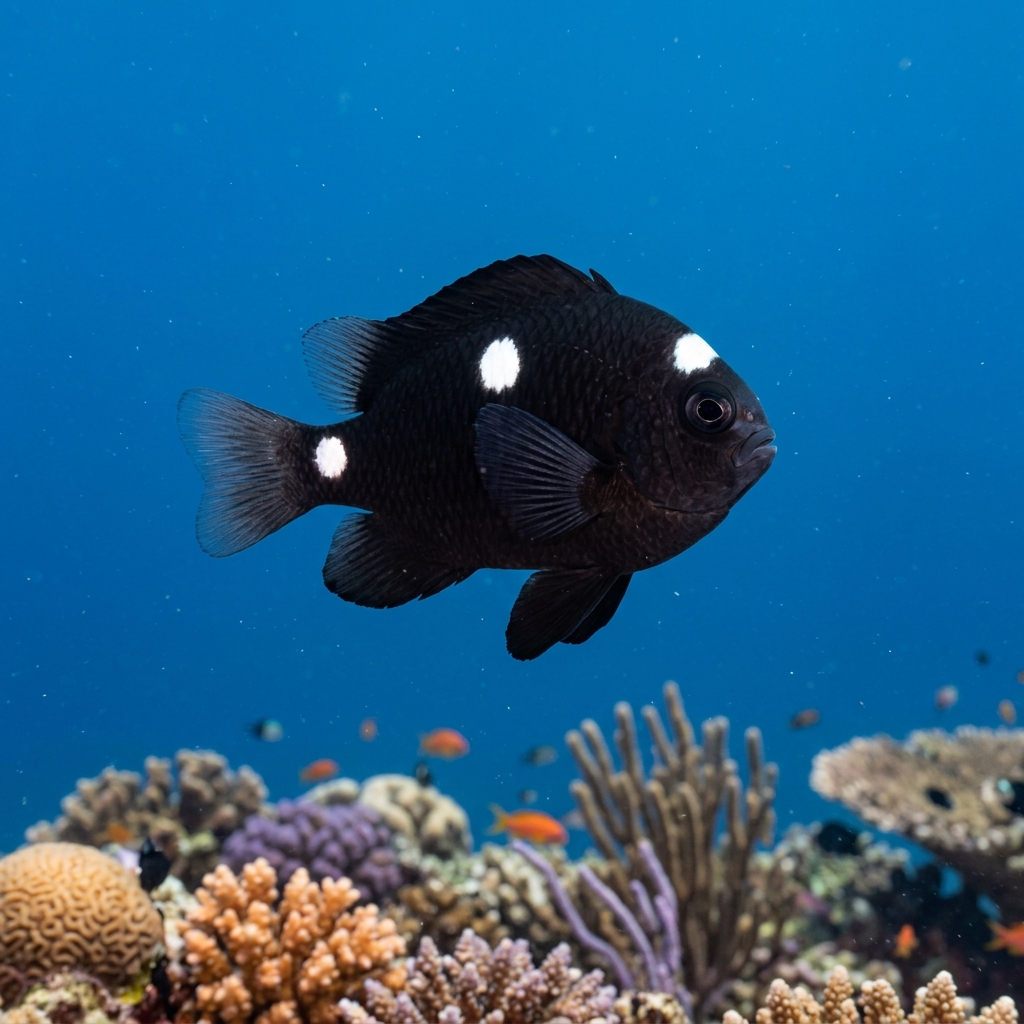
Reef neighbours a diver could mistake it for. Use the identification notes above to tell them apart.
Most reliably logged on reefs across Queensland, Australia, which dominates the sightings, plus solid numbers from Sabah in Malaysia, Khao Lak in Thailand, and Nusa Tenggara in Indonesia. Also turns up consistently around the Society Islands in French Polynesia and reef sites in Palawan and the Visayas in the Philippines, so it is a fixture on Indo-Pacific reef dives generally rather than a specialty of one spot.
Mapping where Black-axil Chromis is logged…
Queensland in Australia has by far the strongest record of sightings, with further reliable populations in Sabah (Malaysia), Khao Lak (Thailand), Nusa Tenggara (Indonesia), and the Society Islands of French Polynesia. It is a common background fish on Indo-Pacific reef dives rather than a single-destination species.
There is no strong seasonal pattern in the data, and it tolerates a warm 25 to 29.3C range, so it is present on tropical reefs year-round.
Look for a small, pale blue-grey damselfish around 8cm with a forked tail, schooling loosely just above the reef. The giveaway is a dark smudge at the base of the pectoral fin, which most similar chromis lack in that exact spot.
They top out at around 8cm, making them one of the smaller reef damselfish divers will spot hovering over coral in loose schools.
No. They are small plankton-feeders with no venom or aggressive territorial behaviour towards divers, and will simply scatter into the coral if you approach too closely.
Site and sighting data is aggregated from diver logs, iNaturalist and GBIF. For taxonomy and conservation status:
Dascyllus
3,697 sites