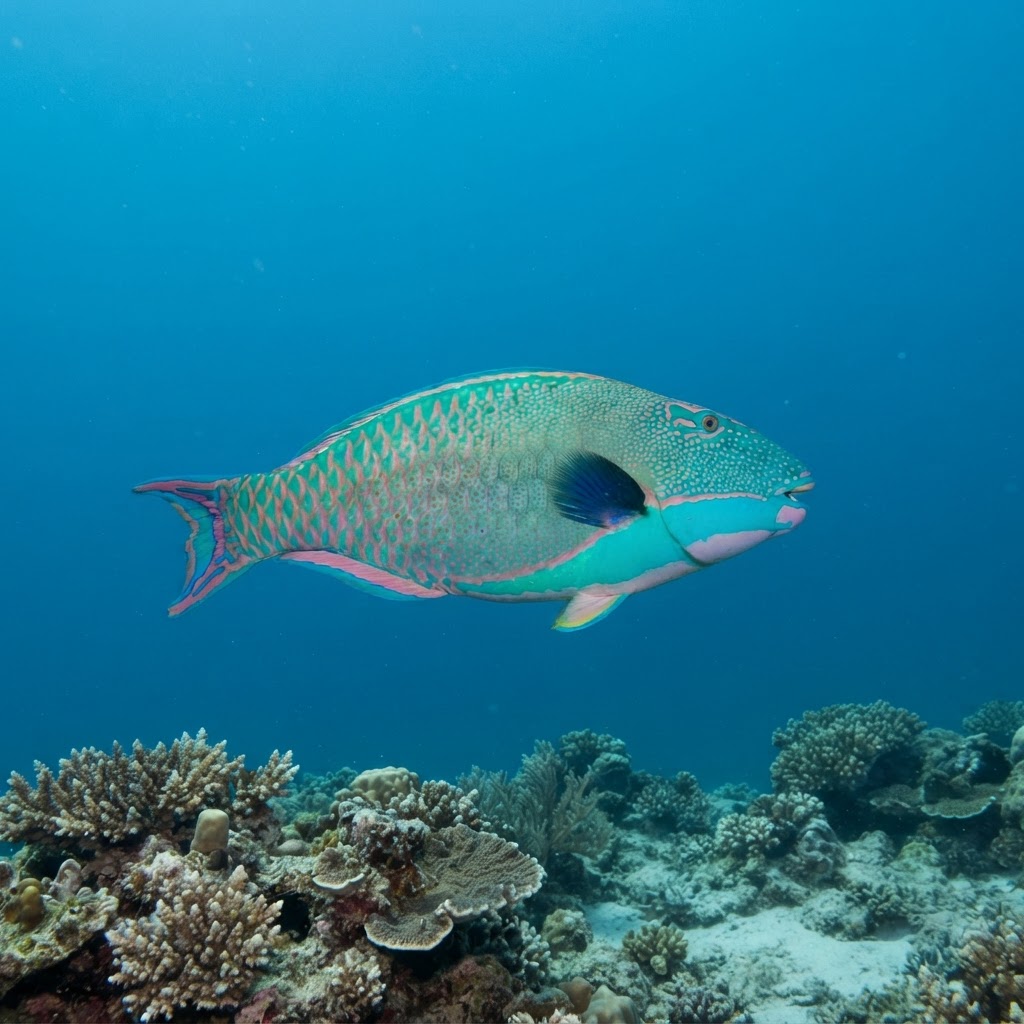
Cetoscarus ocellatus
A reliable find in the Maldives' Central Atolls, this bulky parrotfish grazes reefs in 24.6-29.3C water year-round.
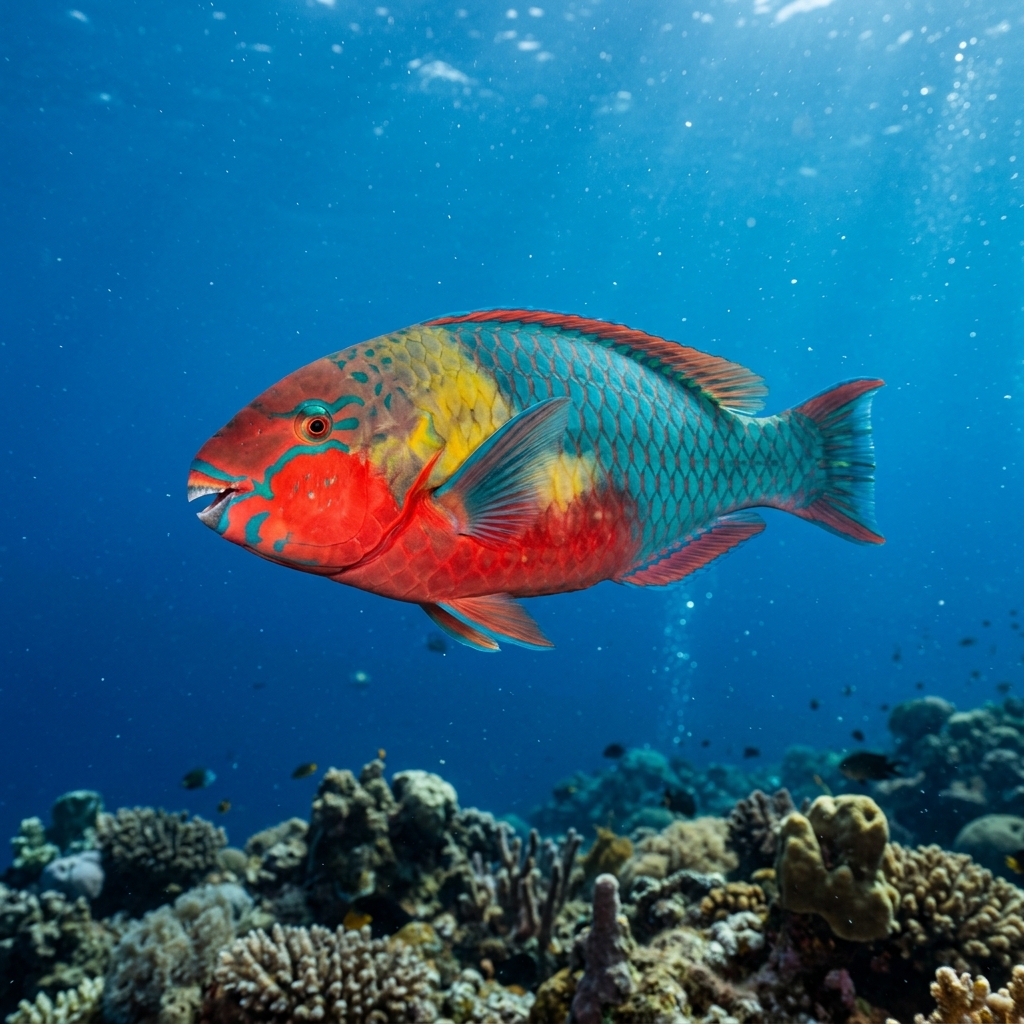
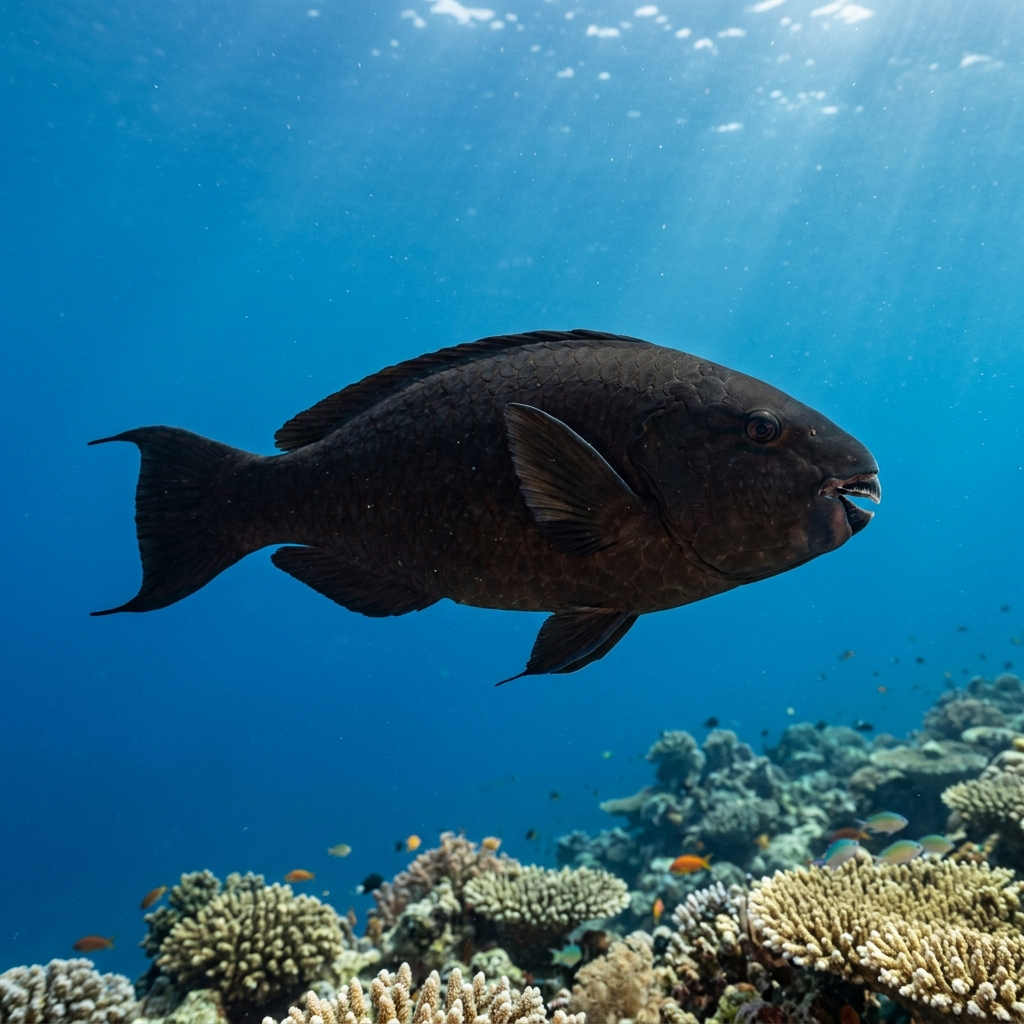
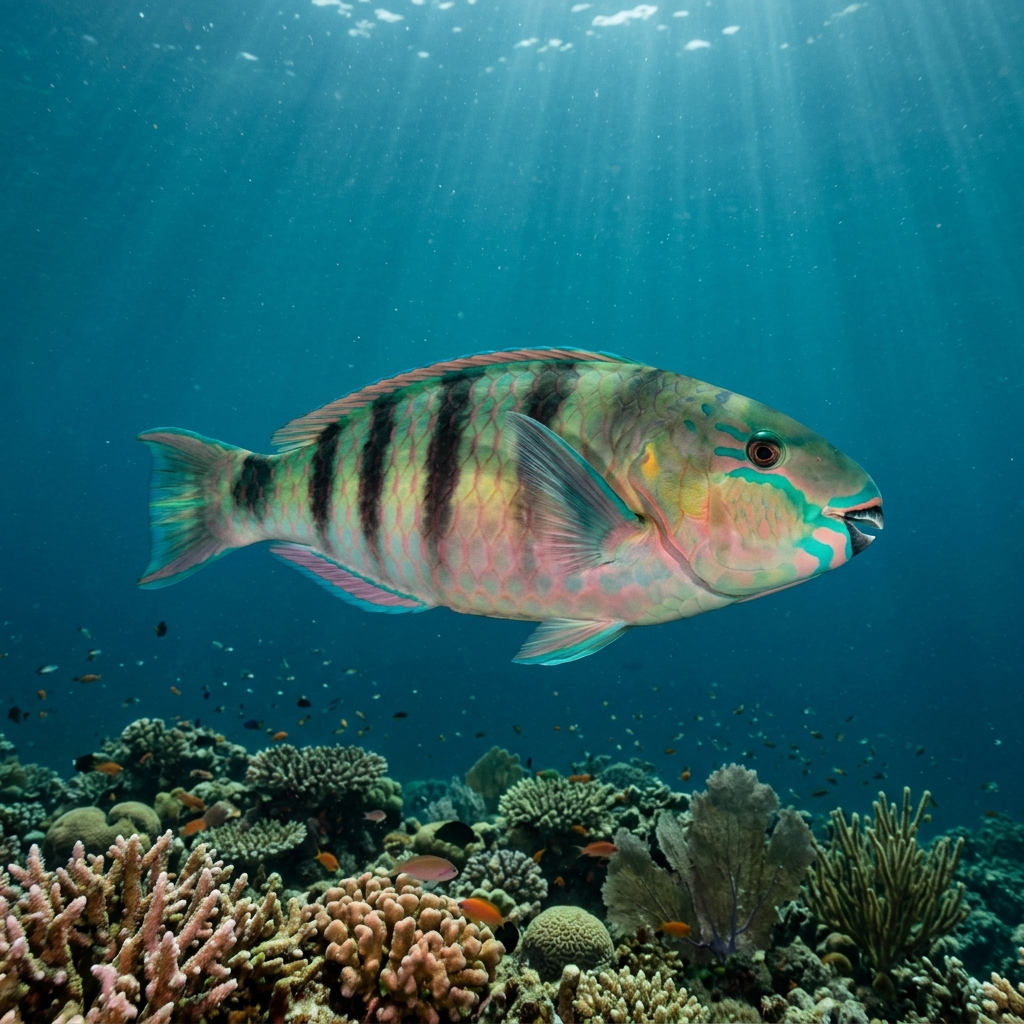
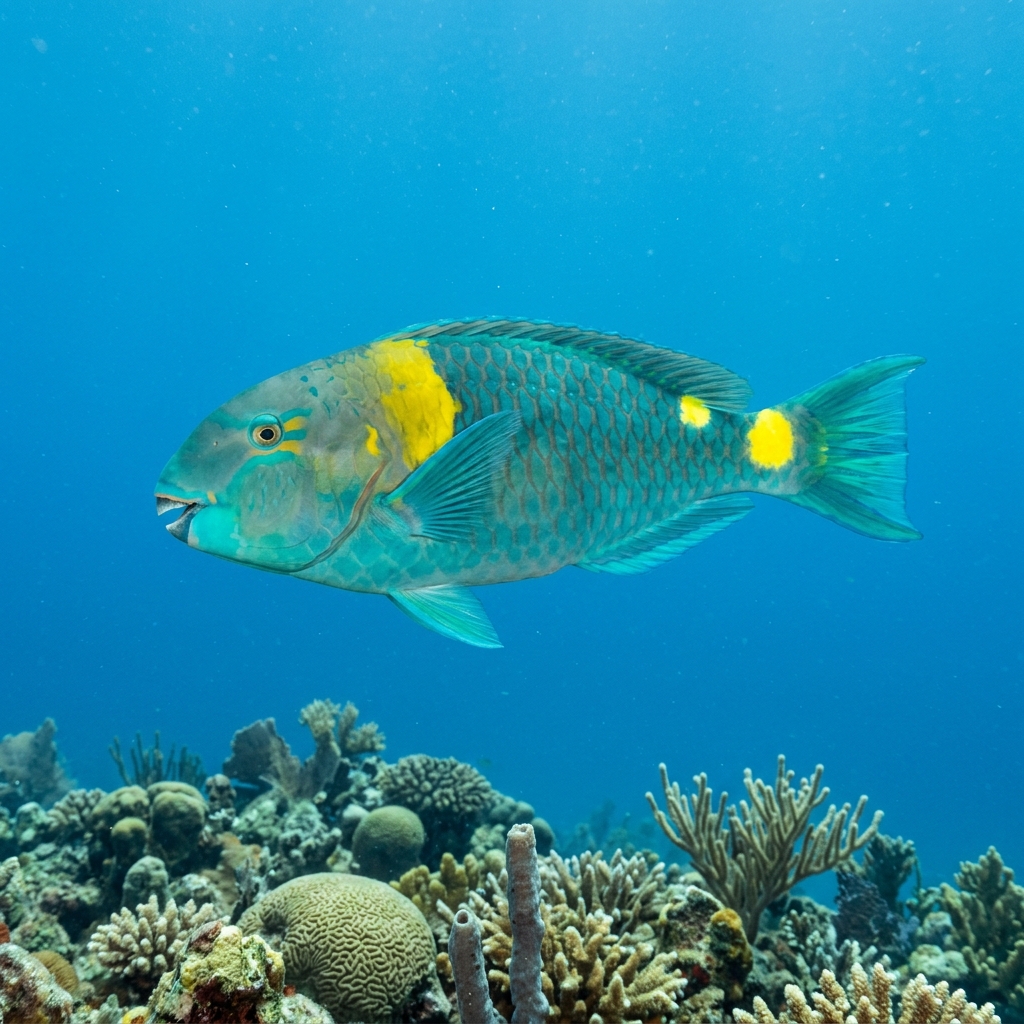
A big, blunt-nosed parrotfish reaching over half a metre, with a noticeably bulging forehead that becomes more pronounced with age. Adults show a two-tone split: a dark bluish-green head and front half against a much paler, often whitish or pink-tinged rear half and tail, which is where the common name comes from. The beak-like fused teeth used for scraping algae off coral are visible up close and are a giveaway for the whole parrotfish group.
Usually seen alone or loosely associating with other reef fish, grinding away at coral and rocky substrate with its fused beak to graze algae, a behaviour that leaves visible bite scars on the reef. It tends to keep a comfortable distance from divers rather than approaching, and is most often spotted cruising over reef flats and slopes during the day. Logged as uncommon at most sites where it appears, so a sighting is a nice bonus rather than a given.
Like other large parrotfish, it can change sex and colour pattern as it matures, so the bicolor pattern described here is the terminal adult phase rather than how every individual looks throughout its life.
No clear seasonal pattern shows up in the sightings, and with a comfortable range of roughly 24.6 to 29.3C, this fish is on the reef year-round across its tropical range. Plan around good visibility and calm conditions at your chosen site rather than a particular month.
Most reliably logged in the Maldives, especially the Central Atolls and Northern Atolls, which together account for the bulk of sightings in the data. It also turns up with good regularity in Indonesia (notably Raja Ampat and Sulawesi), Queensland in Australia, French Polynesia's Tuamotu Islands, Palau, Madagascar's Nosy Be, and Khao Lak in Thailand.
Mapping where Spotted Parrotfish is logged…
The Maldives is the standout location, particularly the Central and Northern Atolls, with further good chances in Raja Ampat and Sulawesi in Indonesia, Queensland in Australia, and the Tuamotu Islands in French Polynesia.
There's no strong seasonal signal in the sightings, and warm reef water year-round keeps this species present on tropical reefs at any time of year.
Look for a large parrotfish with a bulging forehead, a dark green-blue front half, and a much paler rear half and tail. Its size, often past half a metre, and the fused parrot-like beak also help confirm the ID.
Adults typically reach around 56 cm, making them one of the larger parrotfish species divers encounter on tropical reefs.
Yes. Juveniles start out orange-red with white blotches, a completely different look from the two-tone dark-and-pale adult pattern, and the species can also change colour phase and sex as it matures.
Site and sighting data is aggregated from diver logs, iNaturalist and GBIF. For taxonomy and conservation status:
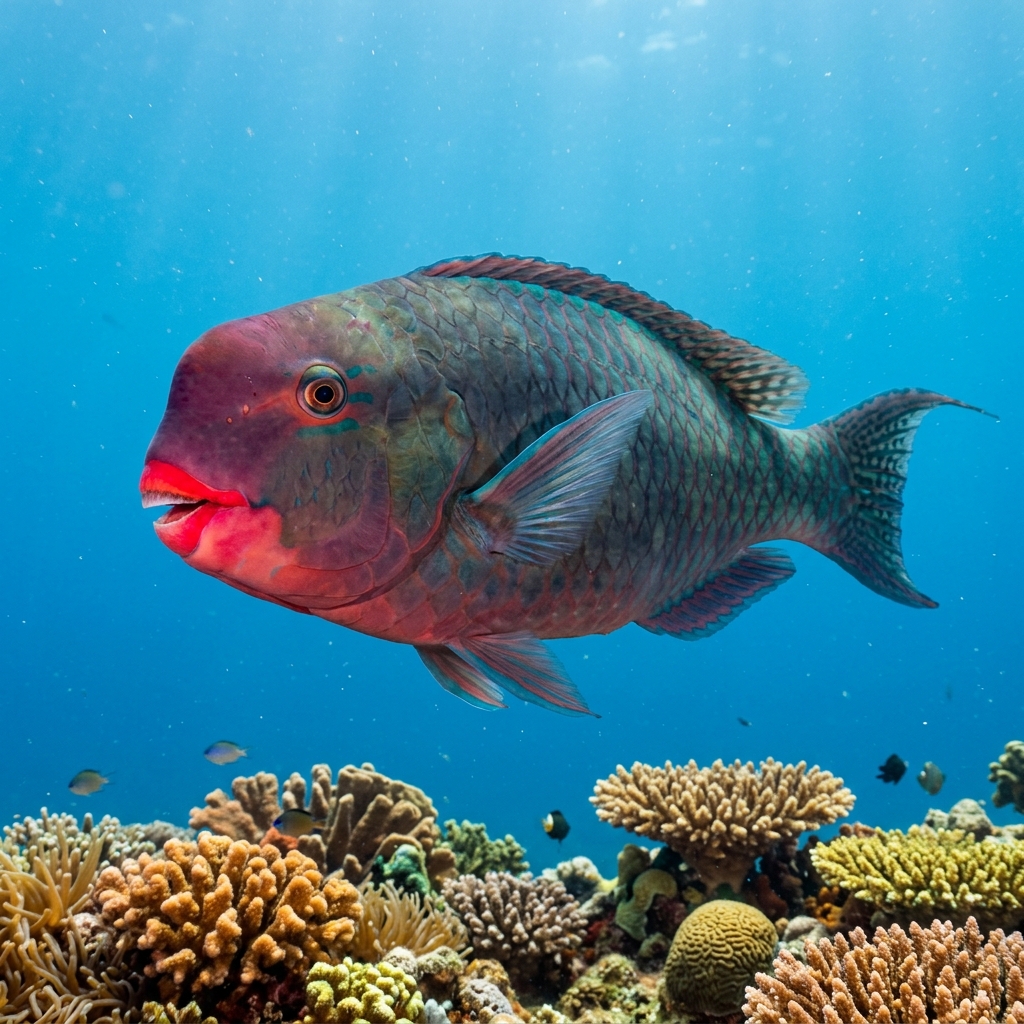
Redlip Parrotfish
2,789 sites