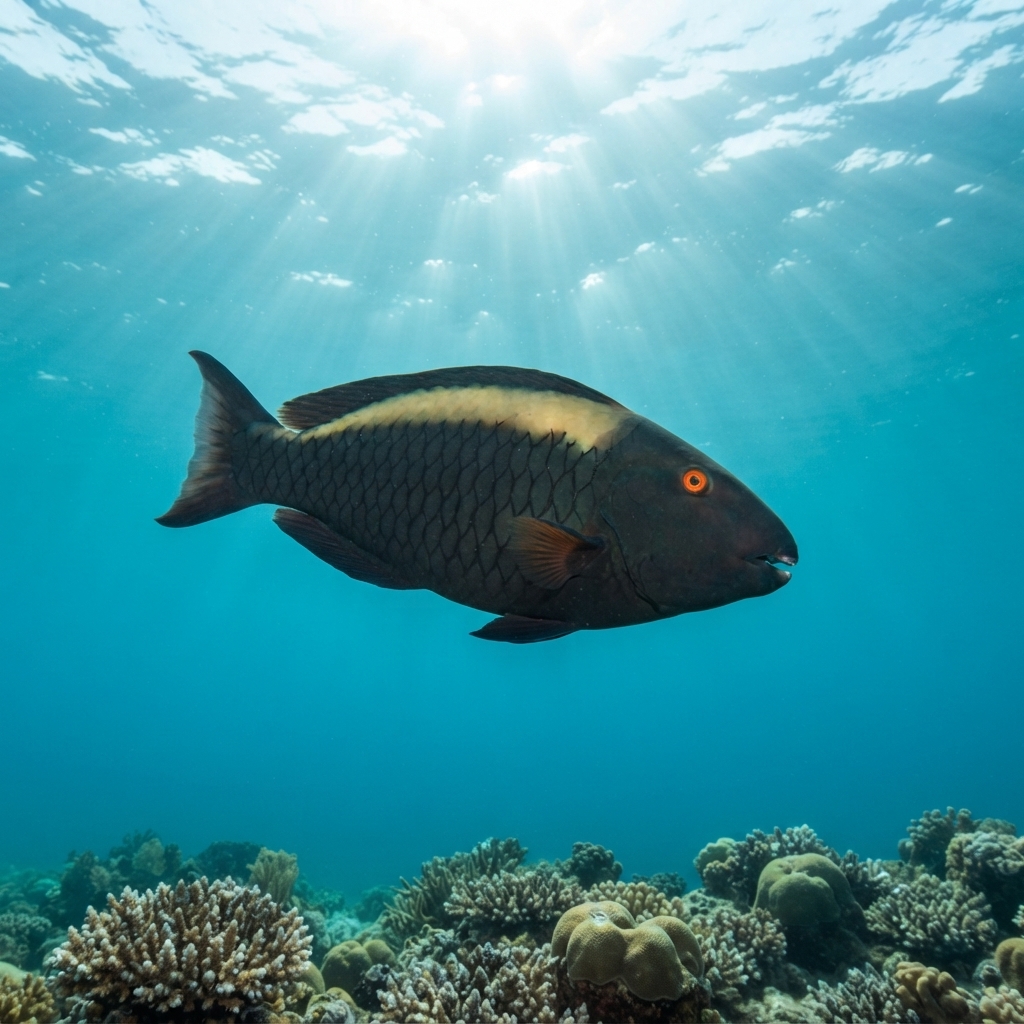
Cetoscarus bicolor
A Red Sea regular, most reliably found around South Sinai and Marsa Alam in 25-29C water, year-round.
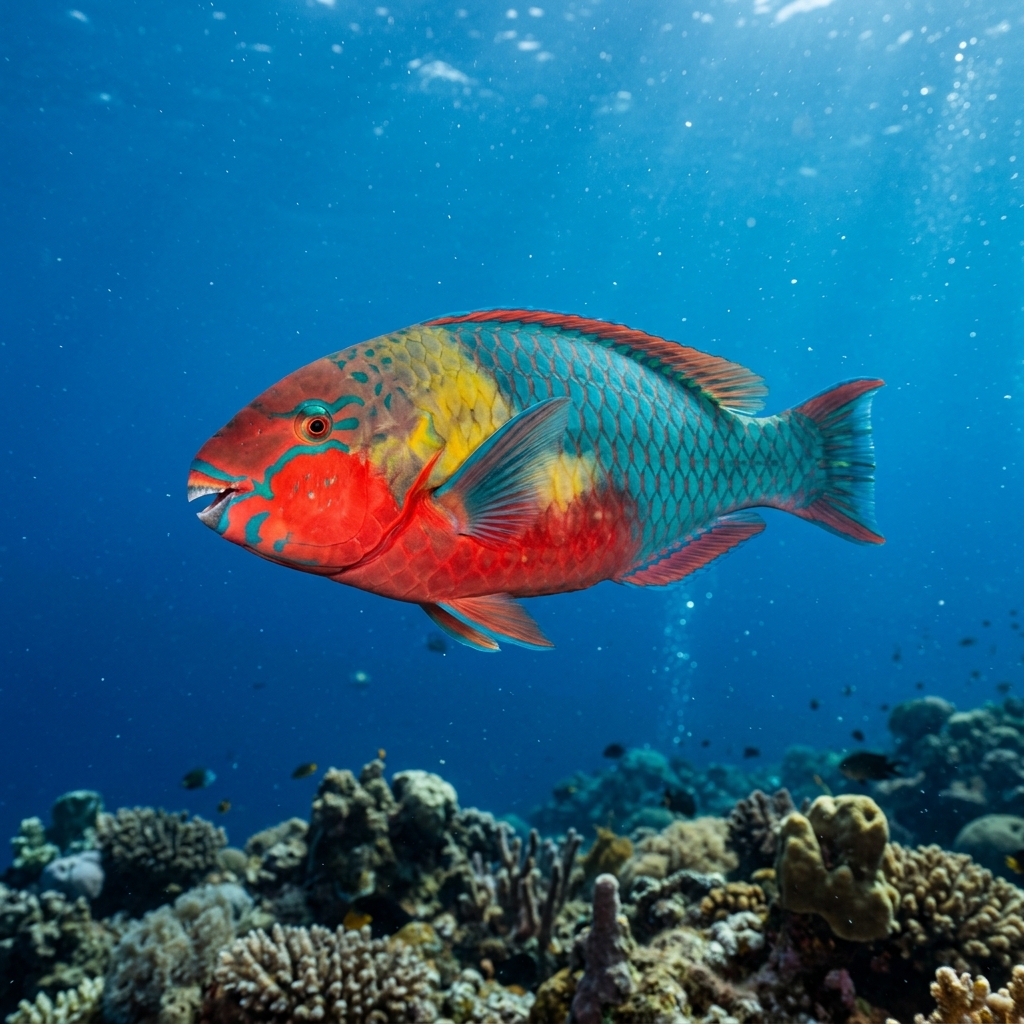
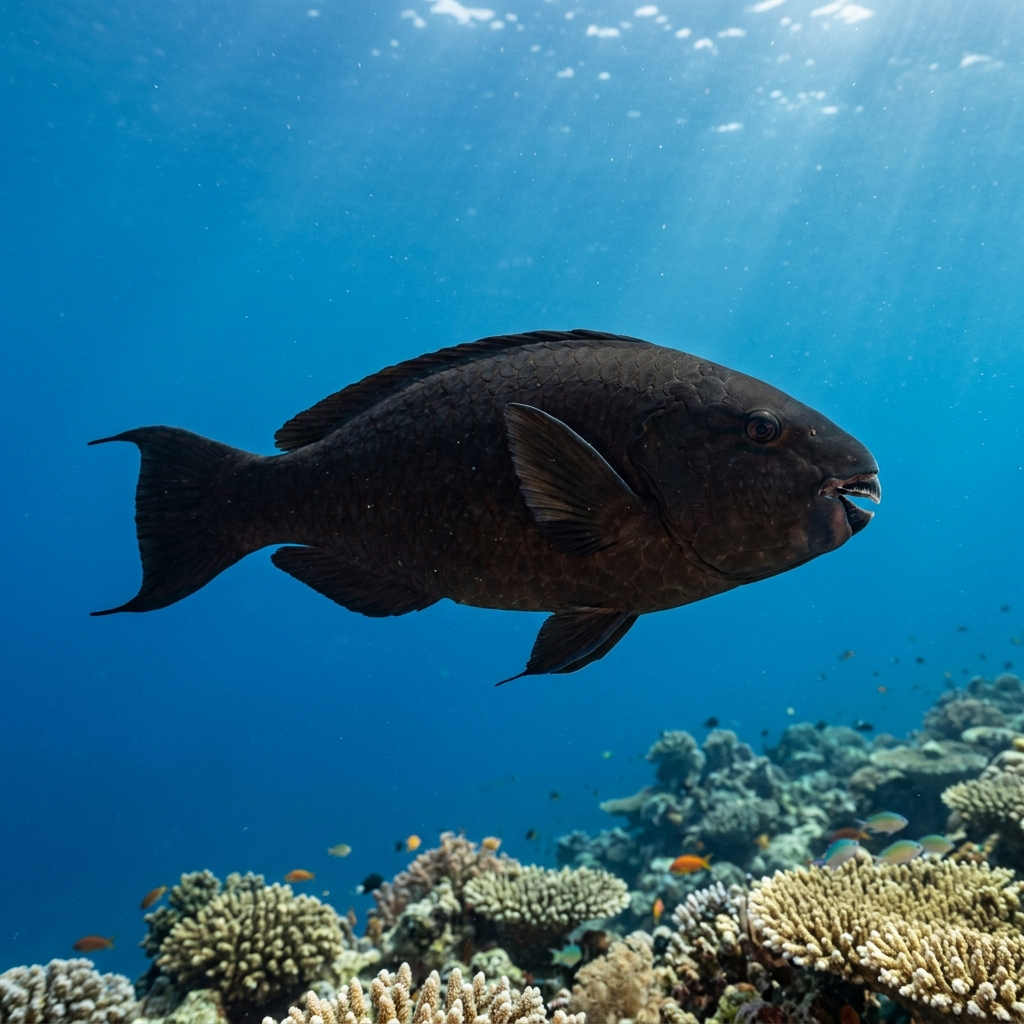
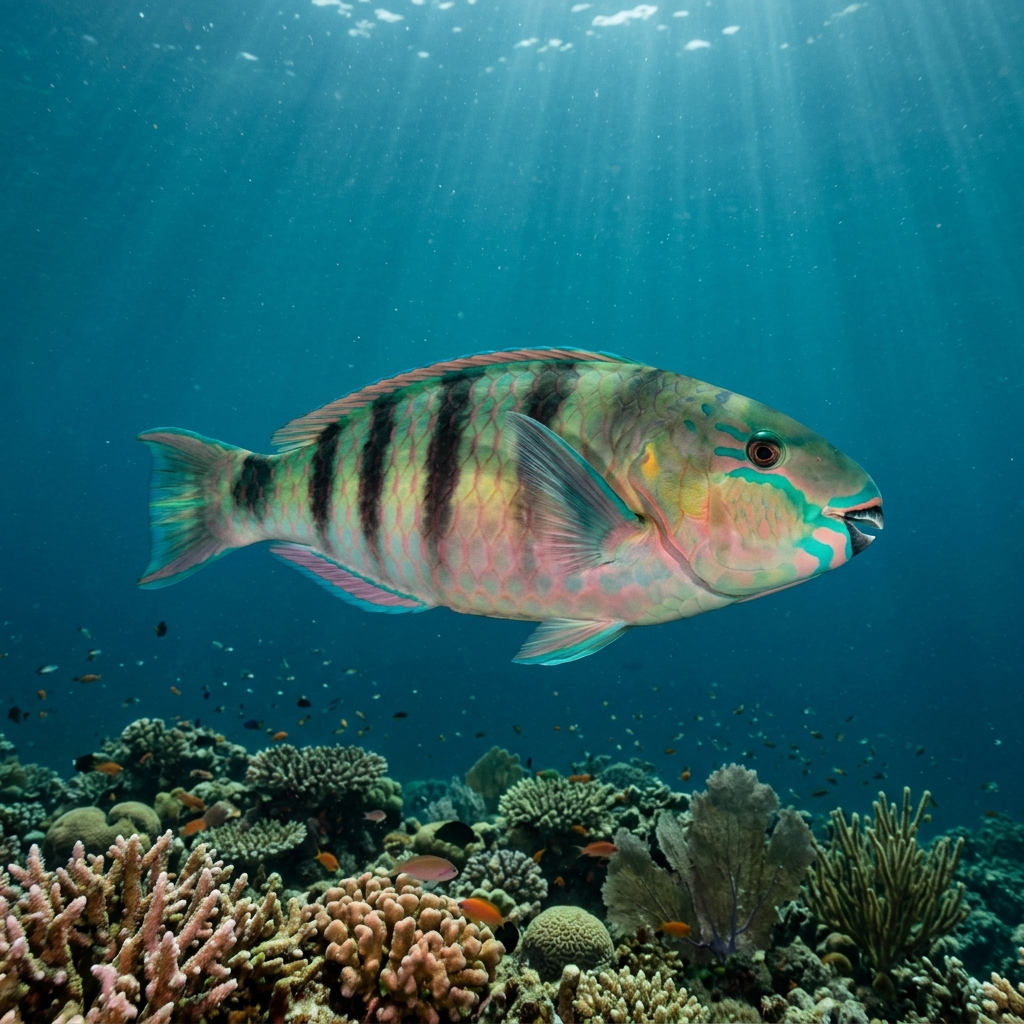
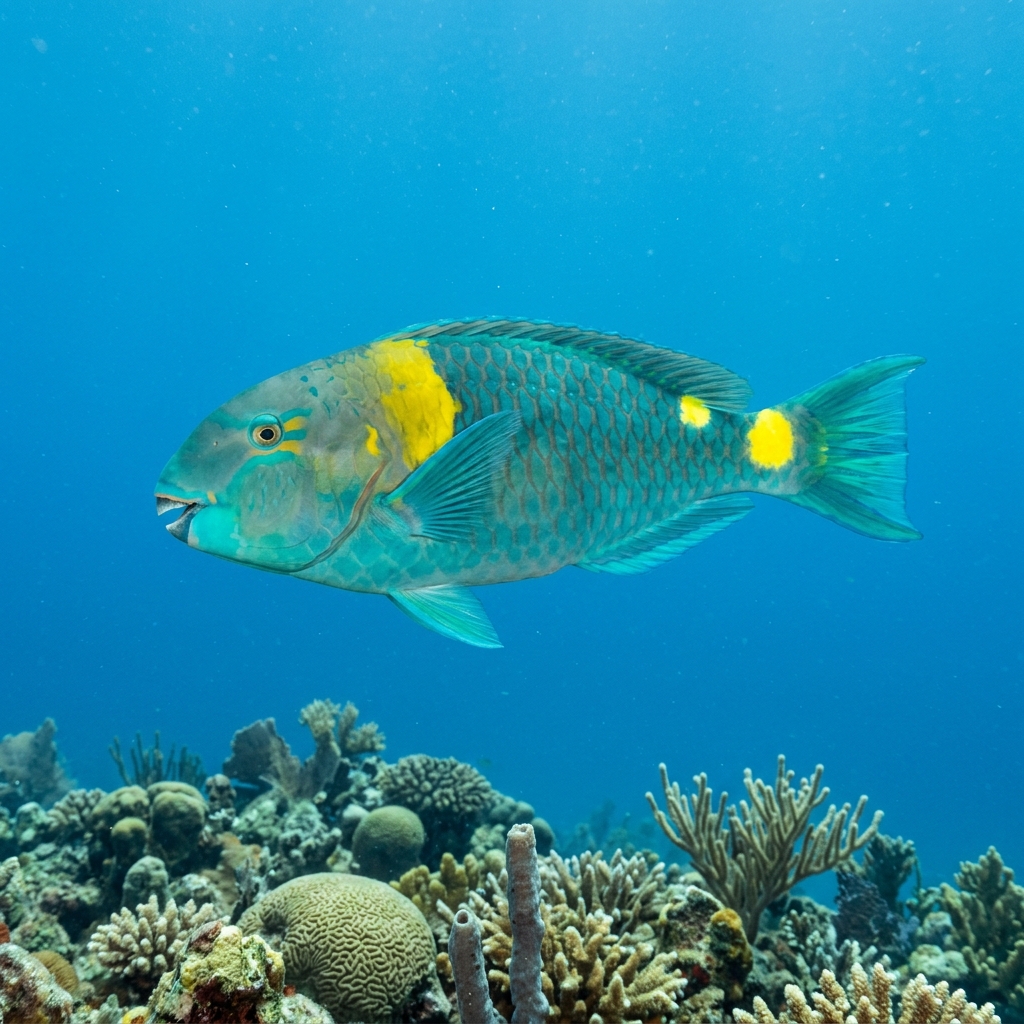
Grown males are chunky and blunt-headed, with a bulging forehead, a mostly bluish-green body and a bright orange-yellow patch wrapping the snout and lips. Females and initial-phase fish look completely different: dark reddish-brown to black with a white or pale saddle on the upper body, giving them almost no resemblance to the adult male. At up to 35 cm it is a solidly built parrotfish, and the fused beak-like teeth used for scraping algae off the reef are visible up close.
Look for it grazing over reef flats and rubble zones by day, using its fused beak to scrape algae from dead coral, usually solo or loosely paired rather than in big schools. It tends to keep a comfortable distance from divers rather than fleeing outright, so slow, level approaches give the best look before it moves off to the next patch of reef.
That bulging-forehead male is actually a sex-changed female: bicolor parrotfish start out drab and female, and some later transform into the bright green, big-headed terminal-phase males divers most associate with the species.
No real seasonal pattern shows up in the sightings, and with a comfortable range of roughly 25 to 29C it's present on Red Sea reefs year-round. Most sites log it as an uncommon but steady find any month you dive.
Egypt is by far the strongest bet, especially South Sinai and Marsa Alam & the Deep South, with further sightings along the Red Sea Riviera and offshore Red Sea sites. It also turns up along the Saudi Arabian Red Sea coast and has been logged at Central Reefs in Sudan, though far less often.
Mapping where Bicolour Parrotfish is logged…
Egypt's Red Sea is the reliable spot, particularly South Sinai and Marsa Alam & the Deep South, with more sightings along the Red Sea Riviera. It also appears along Saudi Arabia's Red Sea coast and occasionally in Sudan.
There's no strong season in the data. Water stays in a comfortable 25 to 29C range year-round on Red Sea reefs, so sightings are spread evenly across the year rather than clustered in specific months.
Adult males have a bluish-green body, a bulging forehead and an orange-yellow patch around the snout, reaching up to 35 cm. Females look nothing like them: dark brown to black with a pale saddle across the back.
They reach around 35 cm, making them one of the larger parrotfish you'll see cruising Red Sea reef flats.
Yes. This species changes sex as it grows, and the drab brownish-black female form can transform into the bright green, big-headed male form divers usually photograph.
No. They're grazing fish that scrape algae off the reef and pose no threat to divers, generally keeping a comfortable distance rather than approaching.
Site and sighting data is aggregated from diver logs, iNaturalist and GBIF. For taxonomy and conservation status:
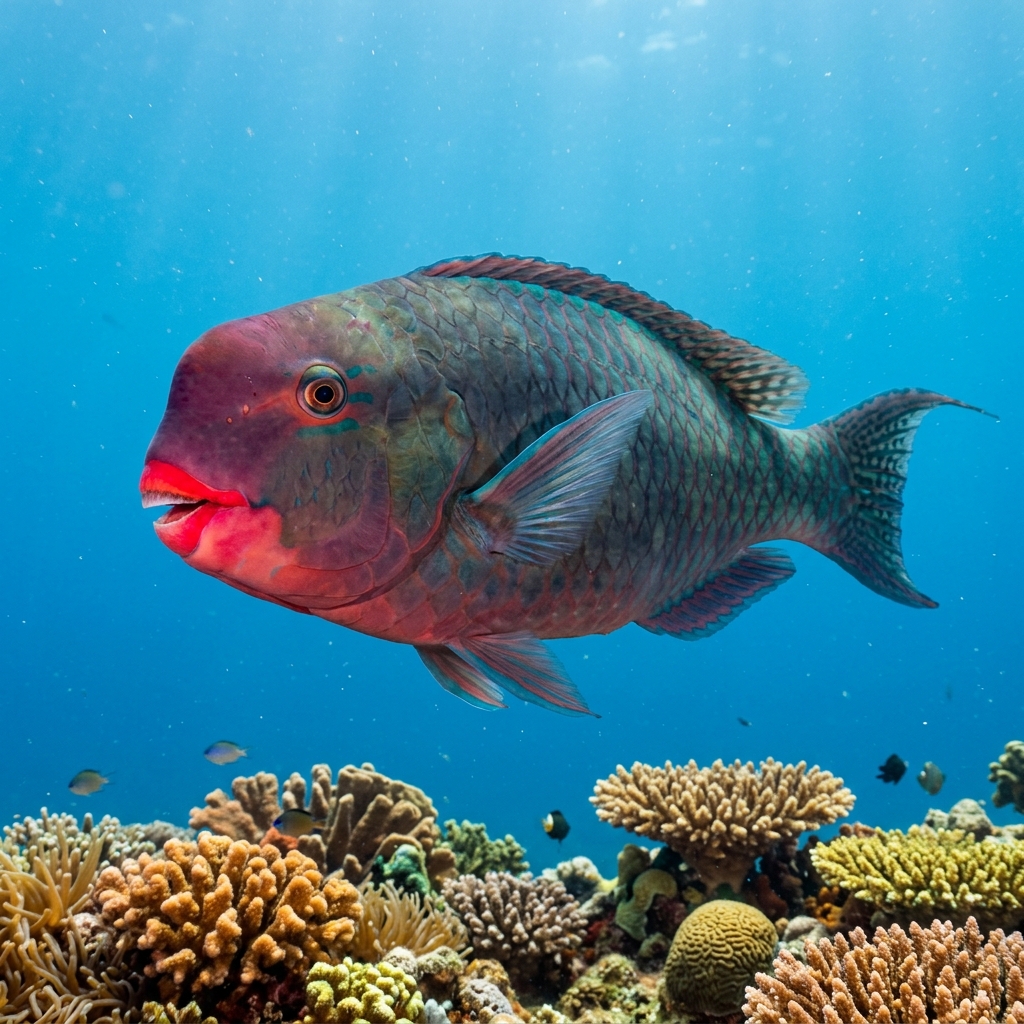
Redlip Parrotfish
2,789 sites