Labroides bicolor
Yellow-tailed cleaner wrasse working reef cleaning stations in the Maldives and French Polynesia, in 25-29C water year-round.
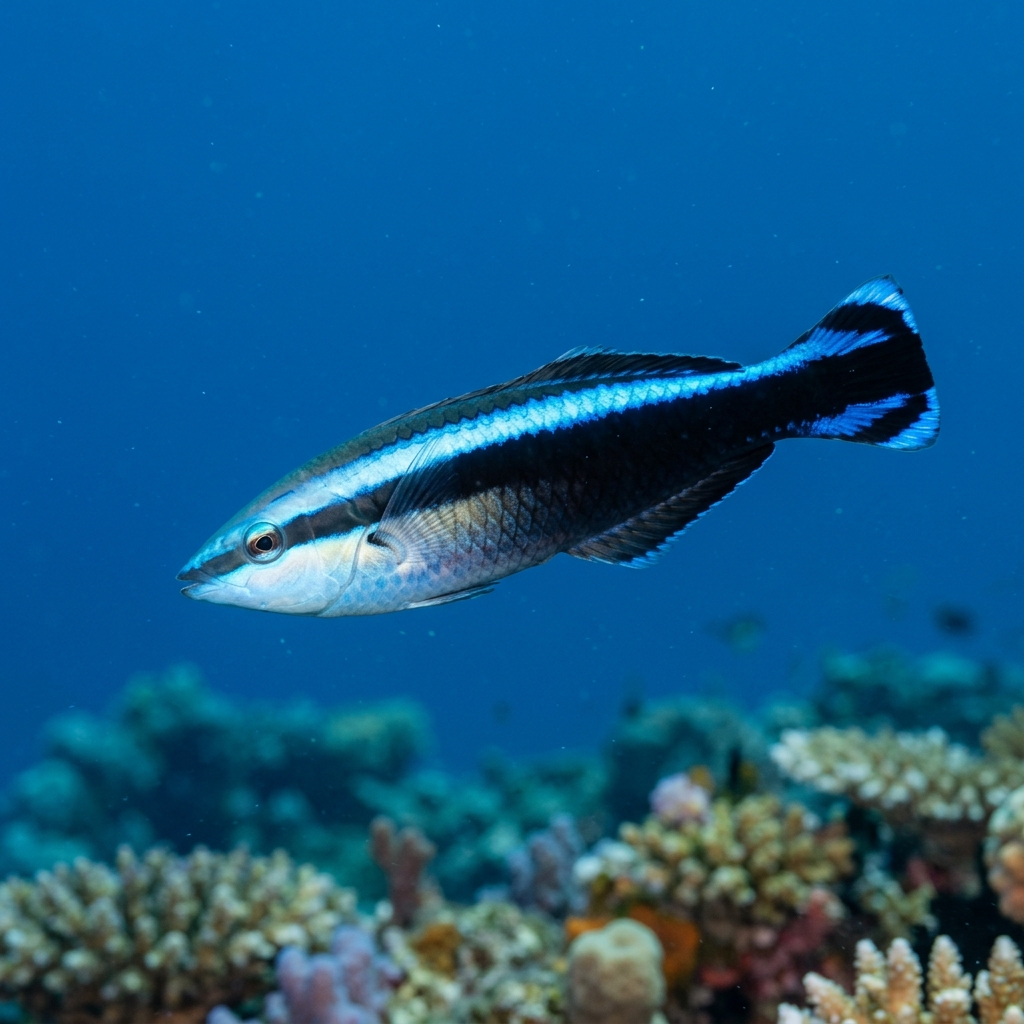
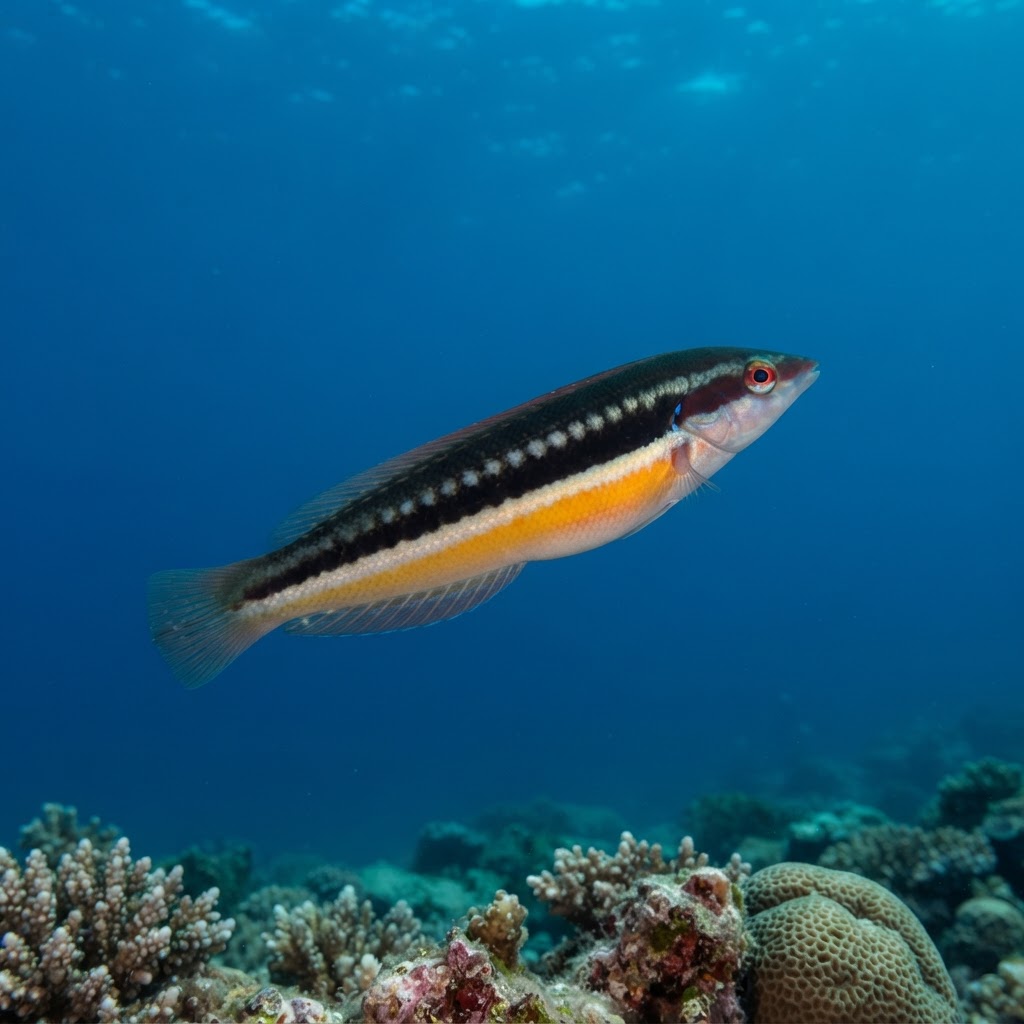
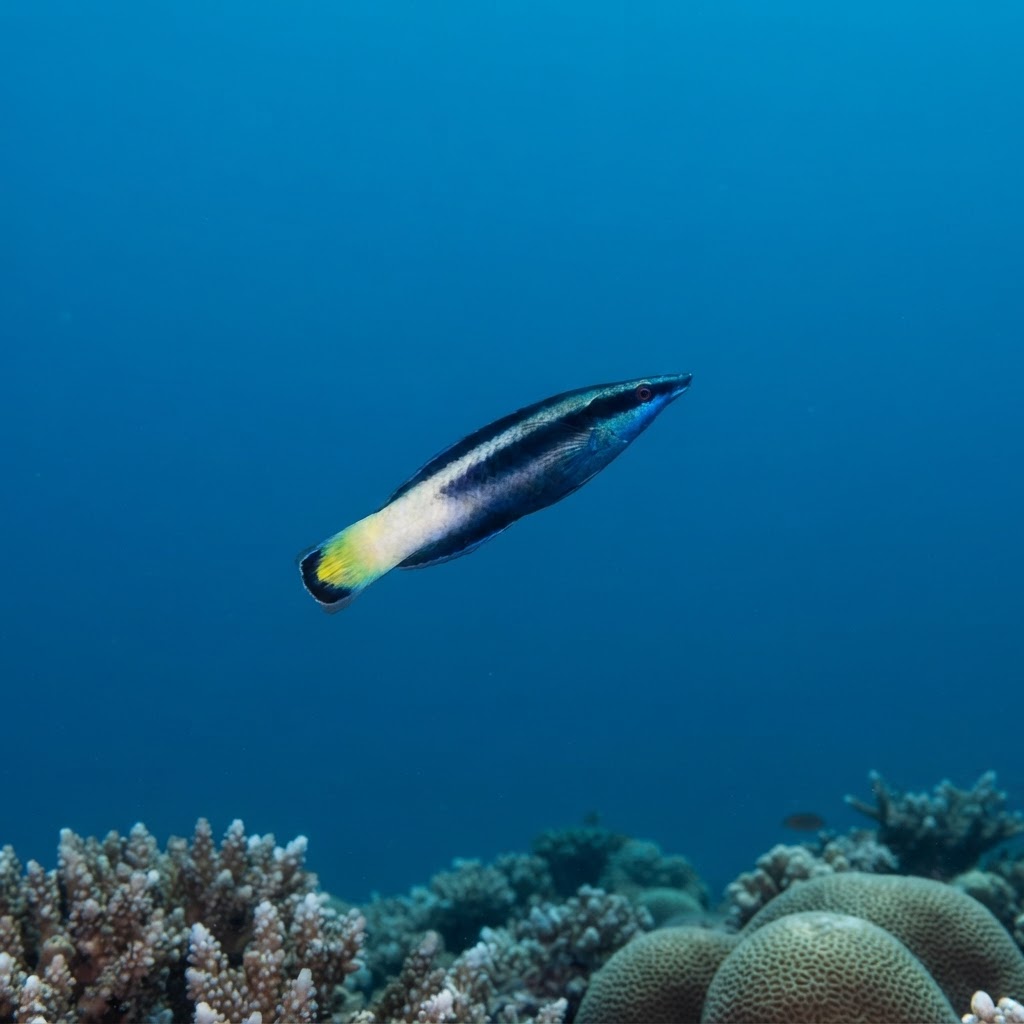
Slim, torpedo-shaped body around 10 cm long, dark blue to near-black along most of the body with a sharply contrasting yellow band across the tail and rear third. Swims with a distinctive hovering, almost stationary wiggle as it works a patch of reef, unlike the darting swim of most small wrasses. Juveniles are more uniformly dark with a thin blue stripe and lack the strong yellow tail patch seen on adults.
Spend most of the dive tending a fixed patch of reef, hovering over coral or rubble and inspecting passing fish for parasites and dead skin to pick off. Usually logged as an uncommon sighting rather than something you'll see on every dive, so look closely at cleaning stations on bommies and reef slopes rather than expecting one to swim past in open water. Generally unbothered by divers who keep a respectful distance and don't crowd the station.
Runs cleaning stations where client fish, sometimes much larger predators, queue up and adopt still, open-mouthed postures to signal they want a clean rather than a meal.
Comfortable across a narrow tropical band of roughly 25 to 29C, so it turns up on reefs year-round with no strong seasonal pattern in the data. Plan around the best conditions for the destination itself rather than chasing a season for this fish.
Reef neighbours a diver could mistake it for. Use the identification notes above to tell them apart.
Most reliably logged in the Maldives, particularly the Central and Southern Atolls, and across French Polynesia's Society Islands. Also a solid find on reefs at Khao Lak in Thailand, Flic-en-Flac in Mauritius, and around Alofi in Niue, with smaller but steady sightings in Queensland and off Taiwan's Orchid Island.
Mapping where Bicolor Cleaner Wrasse is logged…
Best logged in the Maldives (both Central and Southern Atolls), across French Polynesia's Society Islands, and at Khao Lak in Thailand. Mauritius, Niue, Queensland and Taiwan's Orchid Island also produce regular sightings.
No strong season shows up in sighting data. It stays on tropical reefs year-round thanks to a comfortable water temperature range of roughly 25 to 29C, so any time you're diving these regions works.
Look for a small, slender fish around 10 cm, dark blue-black body, and a bright yellow patch covering the tail end. It hovers and works patches of reef with a wriggling swim rather than darting about.
They reach around 10 cm, making them one of the smaller reef fish you'll spot at a cleaning station rather than something that stands out from a distance.
They run cleaning stations on the reef, picking parasites and dead tissue off other fish, including large predators that queue up and hold still to be serviced rather than treating the wrasse as prey.
Site and sighting data is aggregated from diver logs, iNaturalist and GBIF. For taxonomy and conservation status:
Bird Wrasses
3,632 sites