Trapania benni
A small, rarely-logged nudibranch found mostly around Western Australia in water from 14.8 to 22C. Here's how to spot one on the reef.
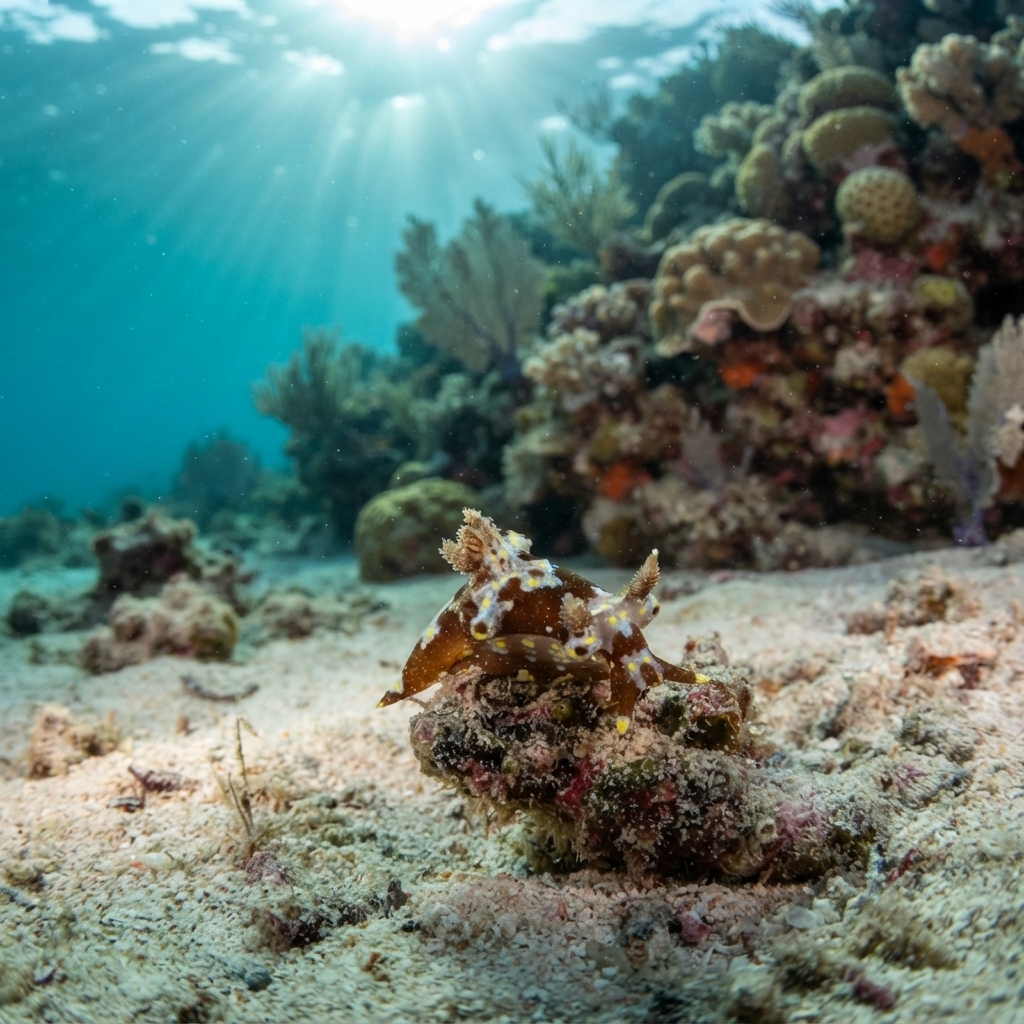
A small nudibranch (sea slug) best picked out by its slender body and the fine, finger-like projections (papillae) along its sides and tail that separate it from smoother-bodied dorids. Colouration tends toward pale tones with contrasting tips on those papillae, which is the detail most divers key on when scanning rubble and sponge-covered rock. It moves slowly across the substrate, so expect a small, easily overlooked animal rather than anything that stands out at a glance.
Found grazing slowly over rubble, sponge and encrusting growth where it feeds, moving little and reacting to divers mainly by staying put rather than fleeing. Its small size and muted colouring mean most sightings come from divers doing deliberate, slow macro searches rather than spotting it in open water. Logged as uncommon at most sites and rare at others, so patience and a careful eye on the substrate pay off more than luck.
Like other Trapania species, it likely feeds on bryozoans (small colonial invertebrates encrusting rock and rubble), which explains why divers find it grazing close to these growths rather than out in open sand.
No clear seasonal pattern shows up in the sightings, and with observed water temperatures spanning 14.8 to 22C, it seems to turn up across the cooler-to-mild range typical of southern Australian diving year-round.
Reef neighbours a diver could mistake it for. Use the identification notes above to tell them apart.
Almost every logged sighting comes from Australia, with Western Australia the clear stronghold and a single record from Victoria. Divers hunting this species should focus their search on Western Australian sites, treating any sighting elsewhere as a bonus rather than the norm.
Mapping where Benn's Trapania is logged…
Sightings are concentrated in Western Australia, with a single record from Victoria. It is not reported outside Australia in current dive logs, so Western Australian sites are the reliable bet.
There's no detected seasonal pattern, and it has been recorded across a wide temperature range from 14.8 to 22C, suggesting it can be found year-round rather than during a specific window.
Look for a small, slender nudibranch with fine, finger-like papillae along its sides and tail, often with contrasting tips. It moves slowly over rubble and sponge, so a close, patient look at the substrate is usually needed to spot it.
Exact size data isn't available, but like other Trapania species it is a small nudibranch, generally in the centimetre range rather than anything large or conspicuous.
It's logged as uncommon at most sites where it's found and rare at others, so it's not a guaranteed sighting even in its Western Australian stronghold. Slow, deliberate macro searches over rubble and sponge give the best odds.
Site and sighting data is aggregated from diver logs, iNaturalist and GBIF. For taxonomy and conservation status:
Light-spotted Aegires
3,168 sites