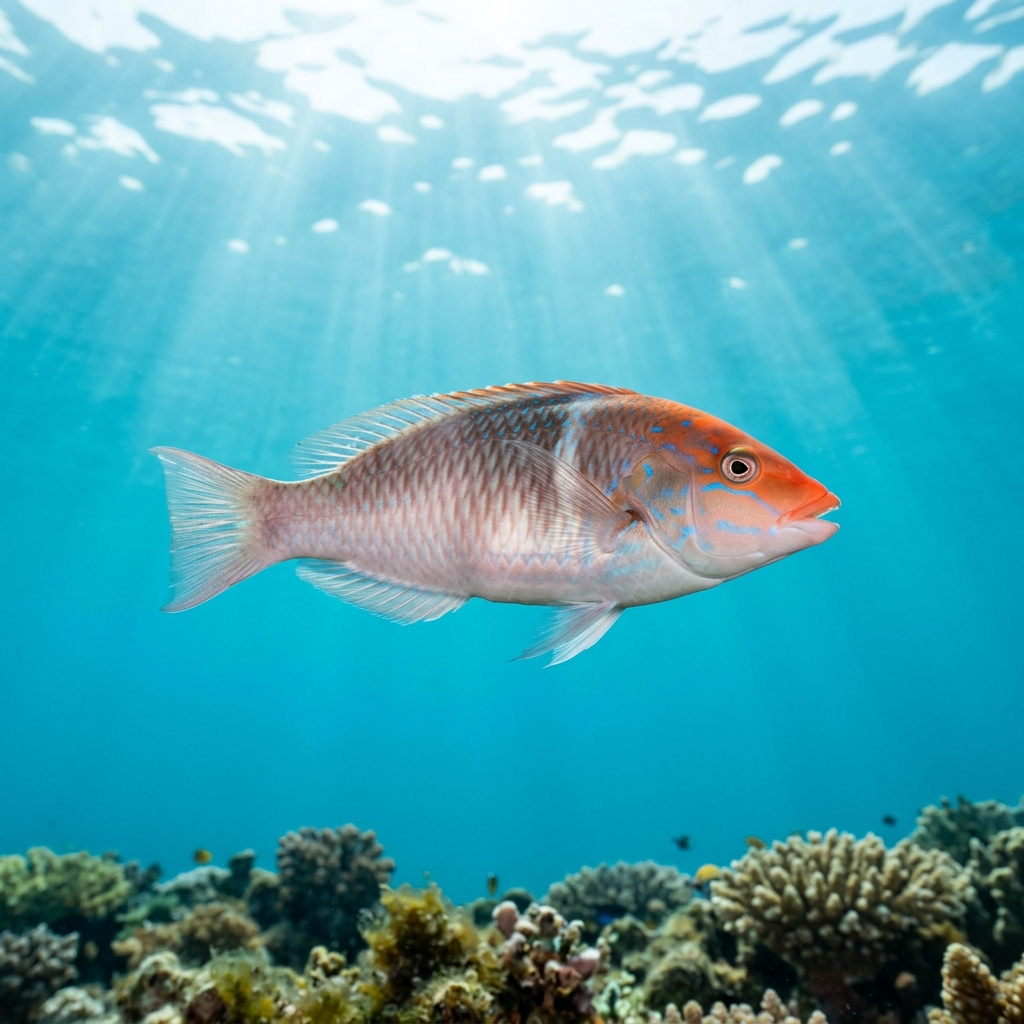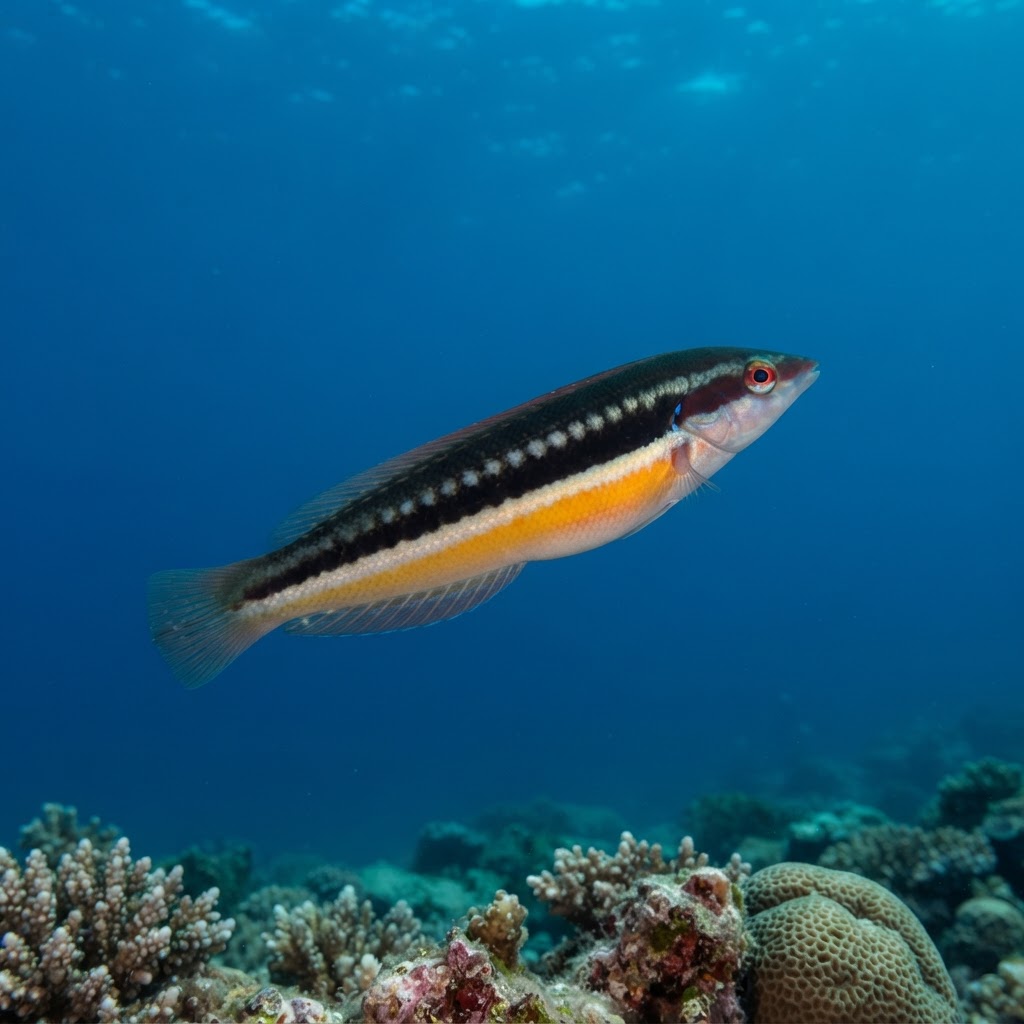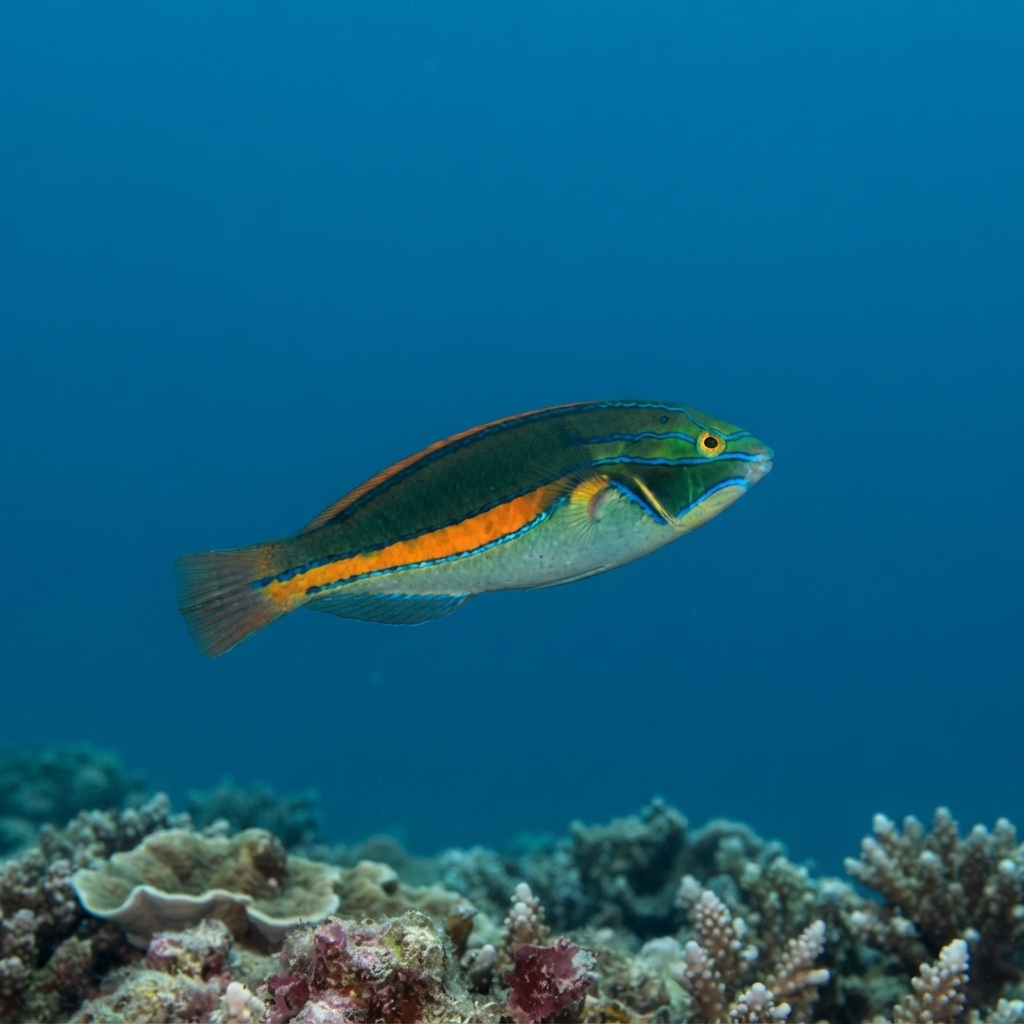
Stethojulis balteata
A common little wrasse on Hawaii's reefs, most often logged as uncommon in waters around 25 to 29 C year-round.
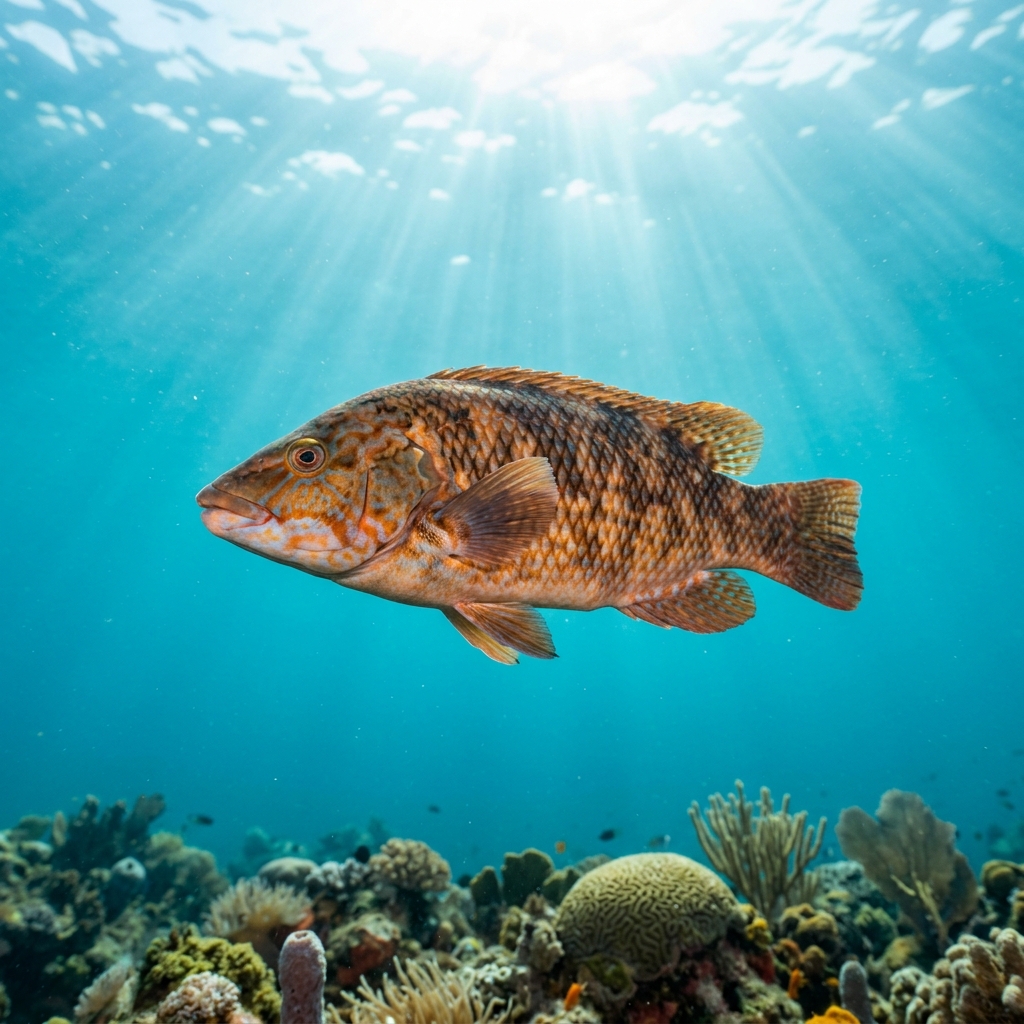
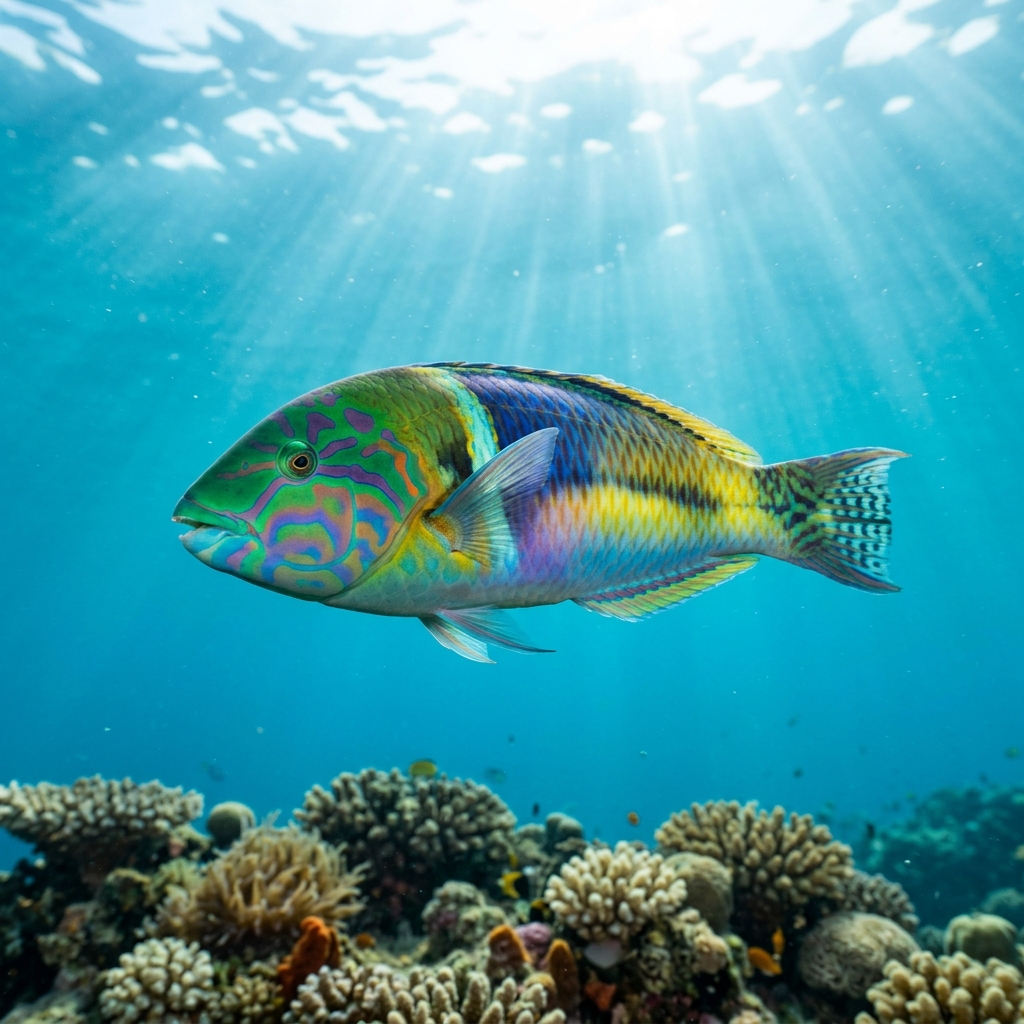
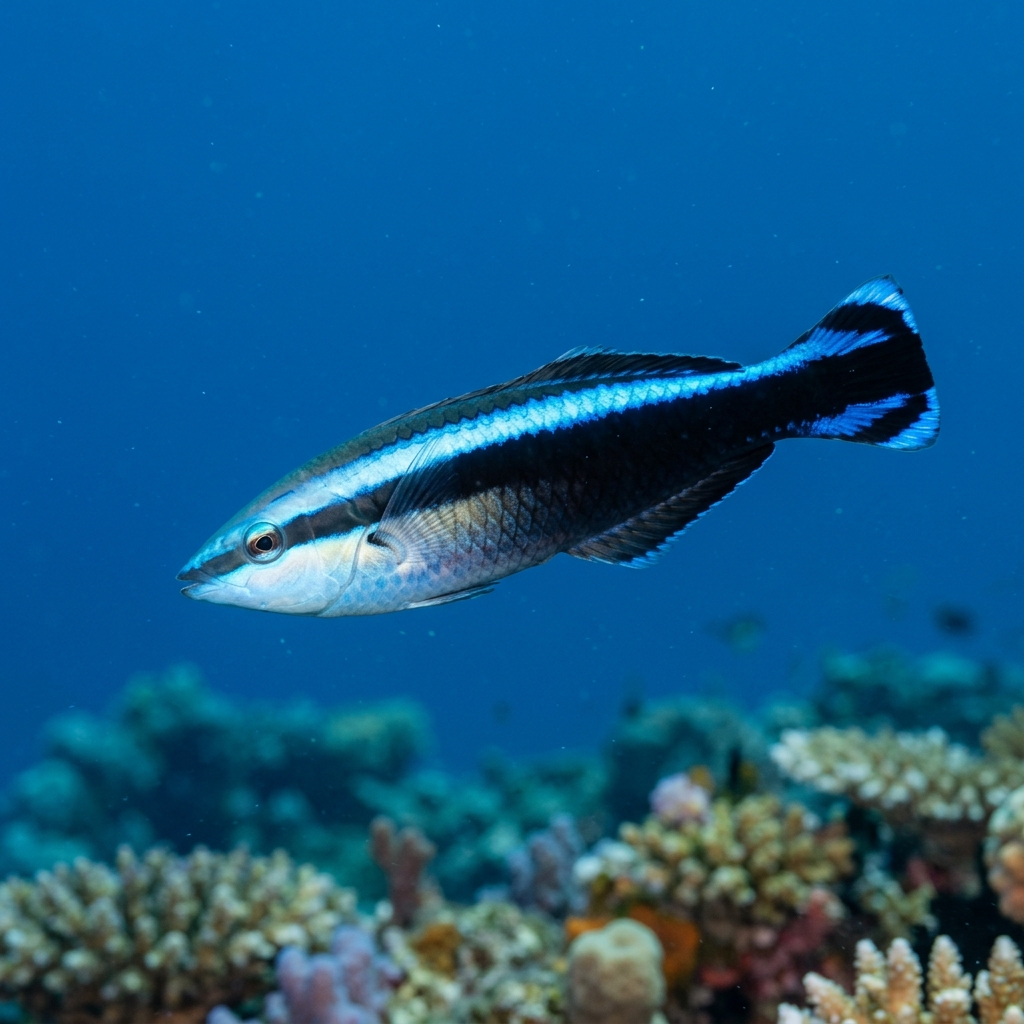
A small, torpedo-shaped wrasse topping out around 10 cm, so it reads as a quick, low-profile flick of colour rather than a showpiece fish. Look for a dark blue-green body cut by a pale, broken white stripe running along the mid-flank, which gives it the 'belted' look. It stays close to the reef structure rather than out in open water, making it easy to miss unless you slow down and scan the rubble and coral heads at close range.
Divers most often see it picking around low reef structure and rubble, darting between cover rather than holding still for a photo. It is not shy exactly, but it keeps a low profile and tends to stay close to the substrate, so a slow, patient approach gets you a better look than chasing it. Sightings lean toward uncommon rather than a guaranteed find, so treat it as a nice bonus spot on a Hawaiian reef dive rather than the main event.
It is one of the reef fish endemic to Hawaii's waters, so seeing one is a distinctly local Hawaiian reef experience rather than something you will cross paths with on reefs elsewhere in the Pacific.
There is no detected seasonal pattern, and with observed water temperatures running a comfortable 24.6 to 29.3 C, it is a year-round sighting on Hawaiian reefs.
This one is a Hawaii speciality: every logged sighting in the data comes from Hawaii, United States, where it turns up on reef sites across the islands. If you are diving or snorkelling Hawaiian reefs, keep an eye on rubble patches and low coral structure, since that is where most divers pick it out.
Mapping where Belted Wrasse is logged…
Belted wrasse are a Hawaii speciality, logged across reef sites throughout the islands. Outside Hawaii, they are not part of the typical reef fish list, so this is very much a local sighting.
No clear season shows up in diver logs. With water temperatures comfortably between 24.6 and 29.3 C year-round, Hawaiian reefs hold them in any month.
Look for a small, slim wrasse around 10 cm long with a dark blue-green body and a pale, broken white stripe running along its side. It stays low over rubble and reef structure rather than swimming in open water.
They are a small reef fish, typically reaching around 10 cm in length, so they are easy to overlook against busier reef scenery.
No. They pose no threat to divers and simply go about picking food off the reef structure while you pass by.
Site and sighting data is aggregated from diver logs, iNaturalist and GBIF. For taxonomy and conservation status:
Bird Wrasse
3,632 sites