Carpilius corallinus
Reef-dwelling crab found tucked into coral in Carriacou, Grenada and Fernando de Noronha, Brazil, active year-round in warm 25-30C water.
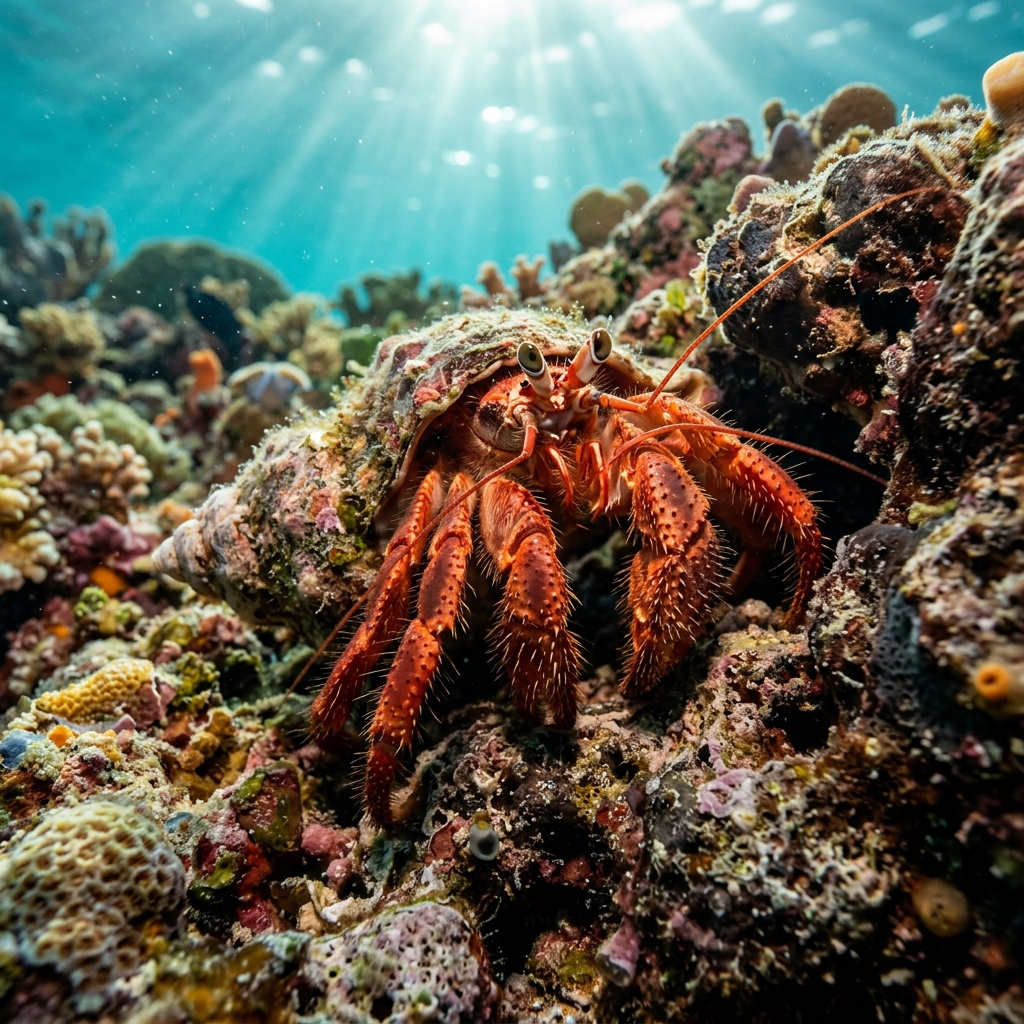
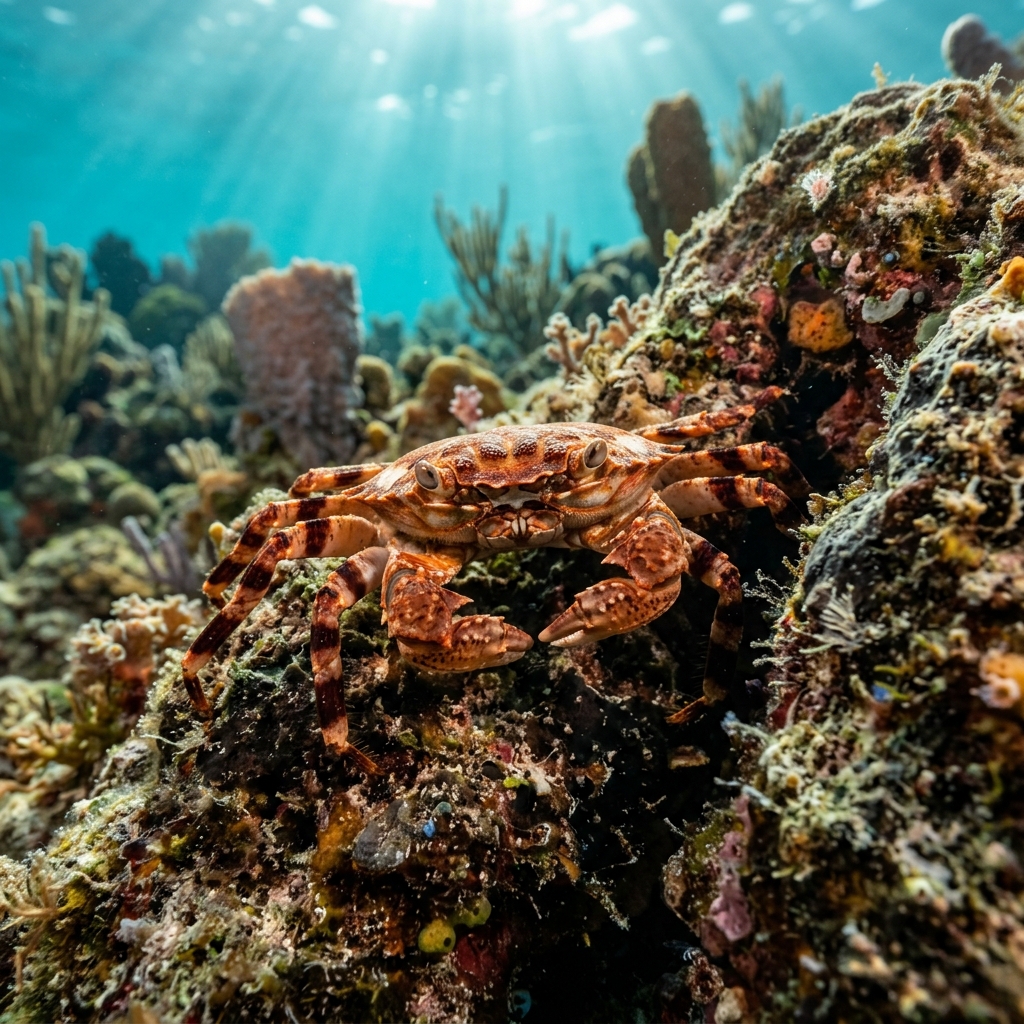
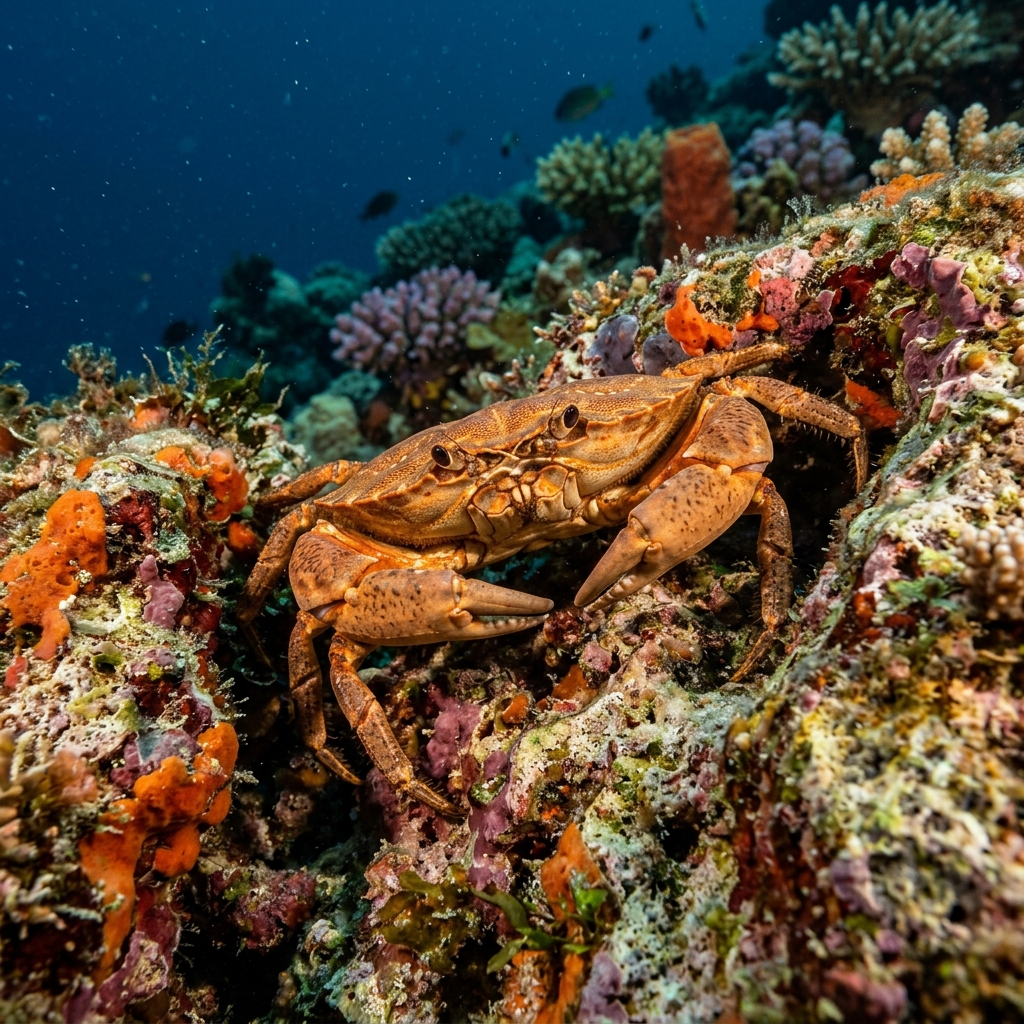
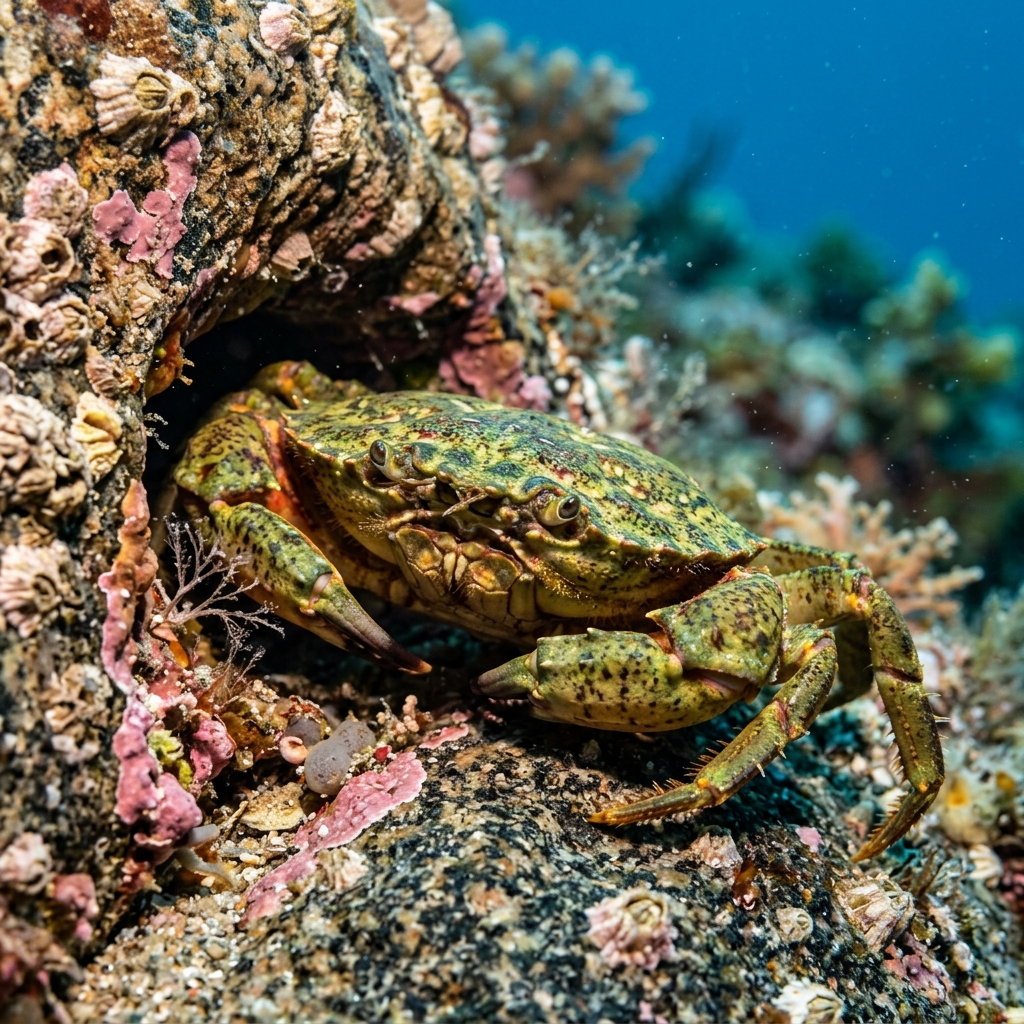
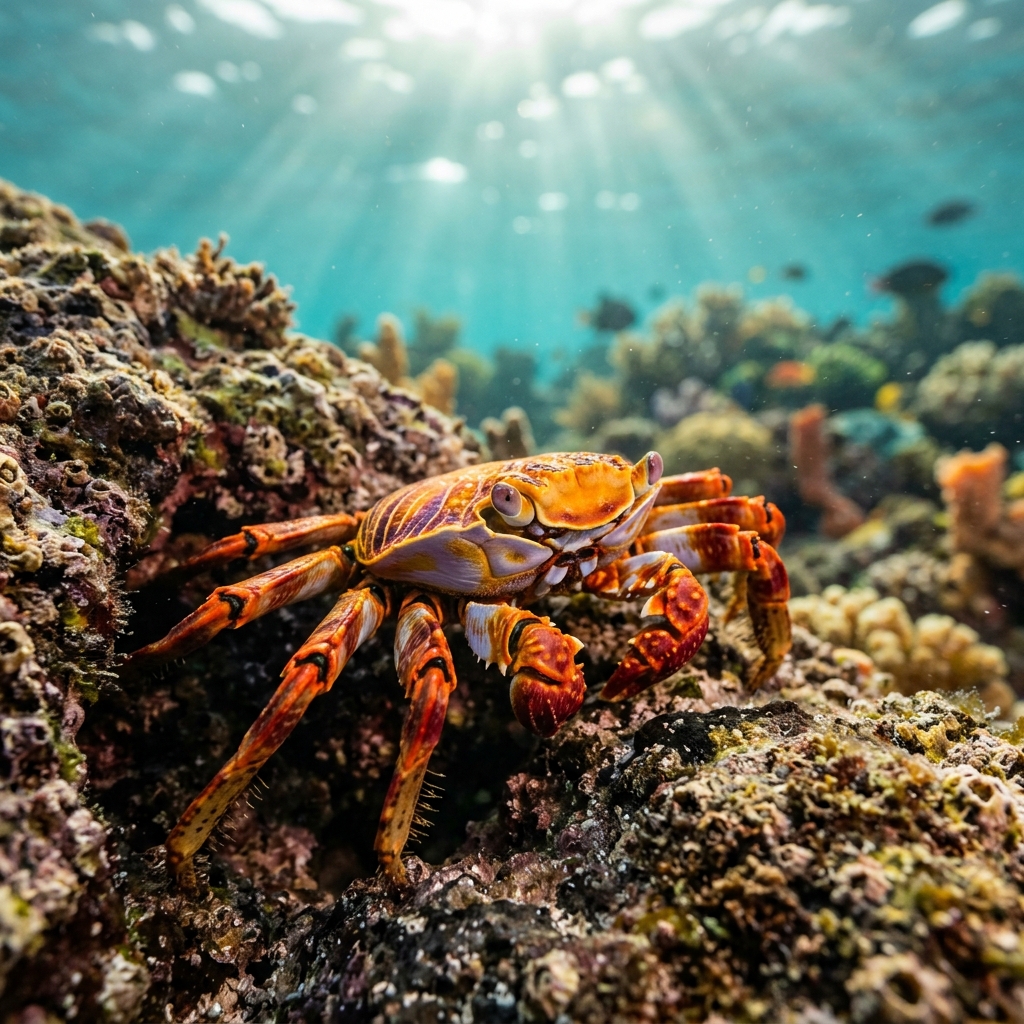
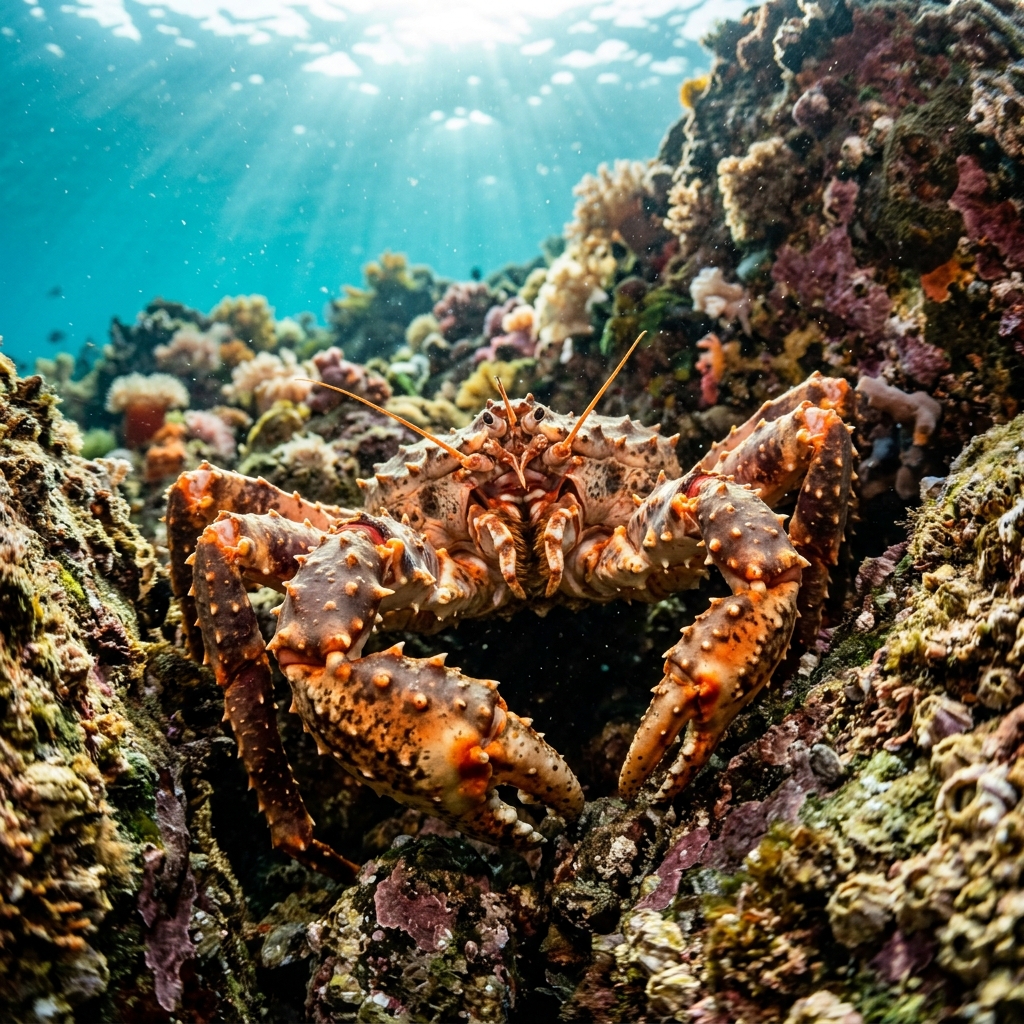
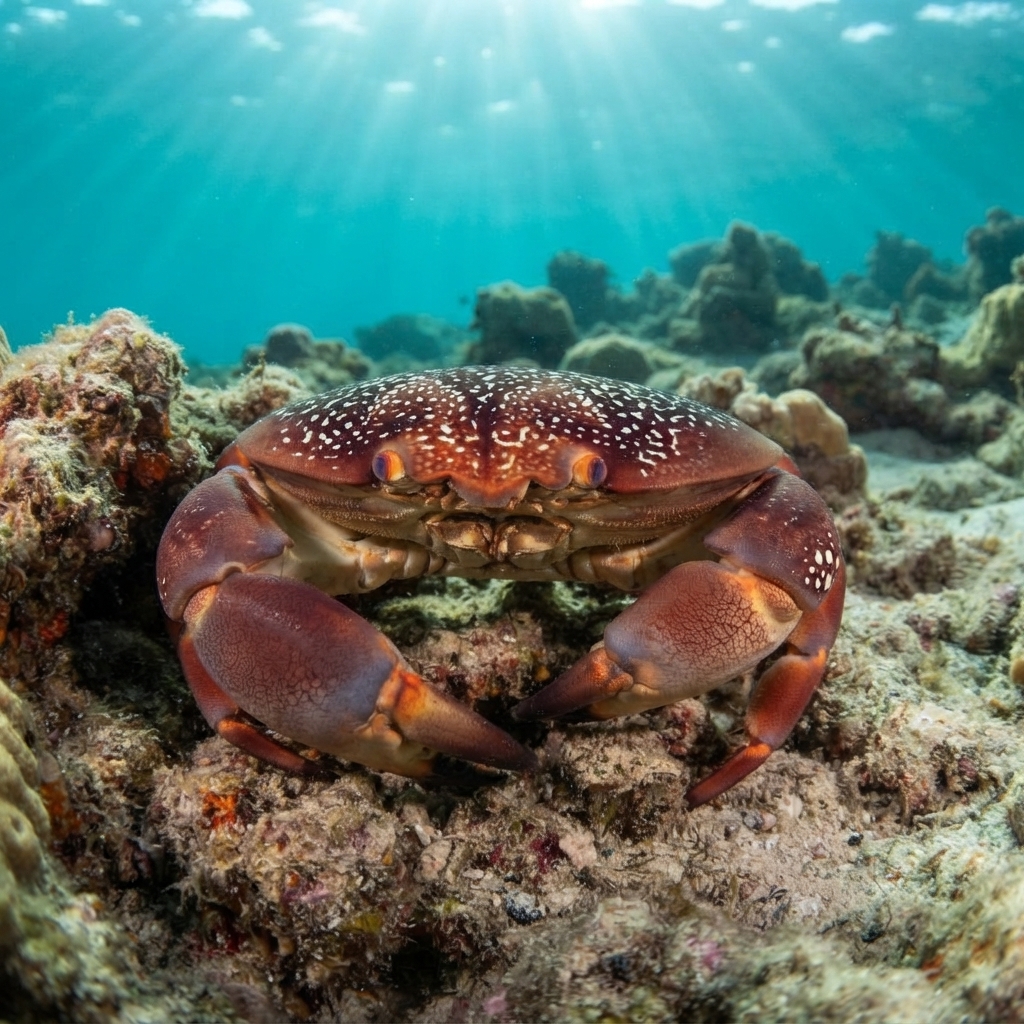
Look for a rounded, smooth-shelled crab about the size of your palm, coloured in mottled shades of orange-red to brownish-purple with a pattern that breaks up its outline against coral. The shell has a domed, almost polished look rather than the spiny texture of many reef crabs, and the claws are stout and rounded rather than long and spindly. It sits low and wedged into crevices rather than perched out in the open, so the giveaway is often just the shell's smooth curve peeking from a coral hole.
Divers typically find it wedged into coral crevices or tucked under ledges during the day, staying put rather than scuttling about in the open. It is not a fast mover and tends to hold its ground or retreat deeper into its hiding spot if you get close, rather than bolt across open reef. Most sightings come from slow, careful looking into holes and under coral heads rather than spotting it cruising the reef.
Its rounded, thick-shelled body and strong claws are built for cracking hard-shelled reef invertebrates like snails and hermit crabs, giving it a role as one of the reef's more capable small predators.
No clear seasonal pattern shows up in the data, and with a comfortable temperature range of roughly 24.6 to 30.6 C, it is a year-round find on Caribbean and Brazilian reefs rather than a seasonal target.
Most reliably logged in Carriacou, Grenada, which accounts for the bulk of sightings, followed by Fernando de Noronha in Brazil and Saint Croix in the US Virgin Islands. Smaller but consistent numbers come from Bonaire's Leeward Coast, with occasional logs from Saba's Pinnacles.
Mapping where Batwing Coral Crab is logged…
The strongest sightings come from Carriacou in Grenada, with good numbers also logged around Fernando de Noronha in Brazil and Saint Croix in the US Virgin Islands. Bonaire's Leeward Coast turns up sightings too, making the wider Caribbean the best bet.
There is no strong seasonal signal in the data, and it tolerates a wide warm-water range of about 24.6 to 30.6 C, so it is worth looking for year-round rather than on a specific month.
Look for a smooth-shelled, rounded crab around 10cm across, mottled in reddish-orange to purplish-brown, usually wedged into a coral crevice rather than out in the open. Its rounded claws and domed shell distinguish it from spinier or long-legged reef crabs.
They typically reach around 10cm across the shell, making them a medium-sized reef crab that fits neatly into coral crevices and under ledges.
No, they pose no danger to divers. They are shy, slow-moving crabs that retreat into crevices rather than confront anything nearby.
Their strong, rounded claws are built for crushing hard-shelled prey such as snails and small hermit crabs, making them effective predators of other reef invertebrates.
Site and sighting data is aggregated from diver logs, iNaturalist and GBIF. For taxonomy and conservation status:
European Green Crab
2,469 sites