Coris batuensis
A small, easily overlooked wrasse best hunted for on sandy patches around Koh Lipe, Thailand, in warm 25-29C water year-round.
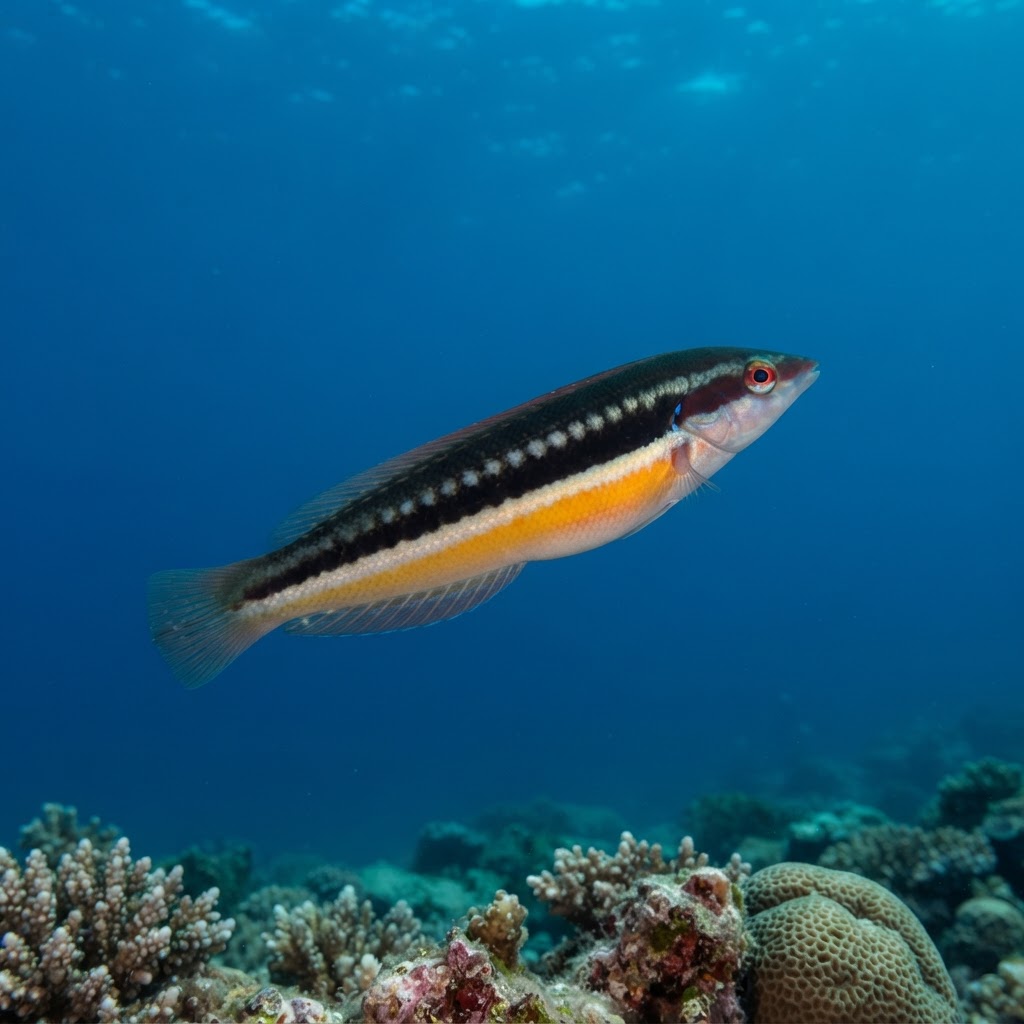
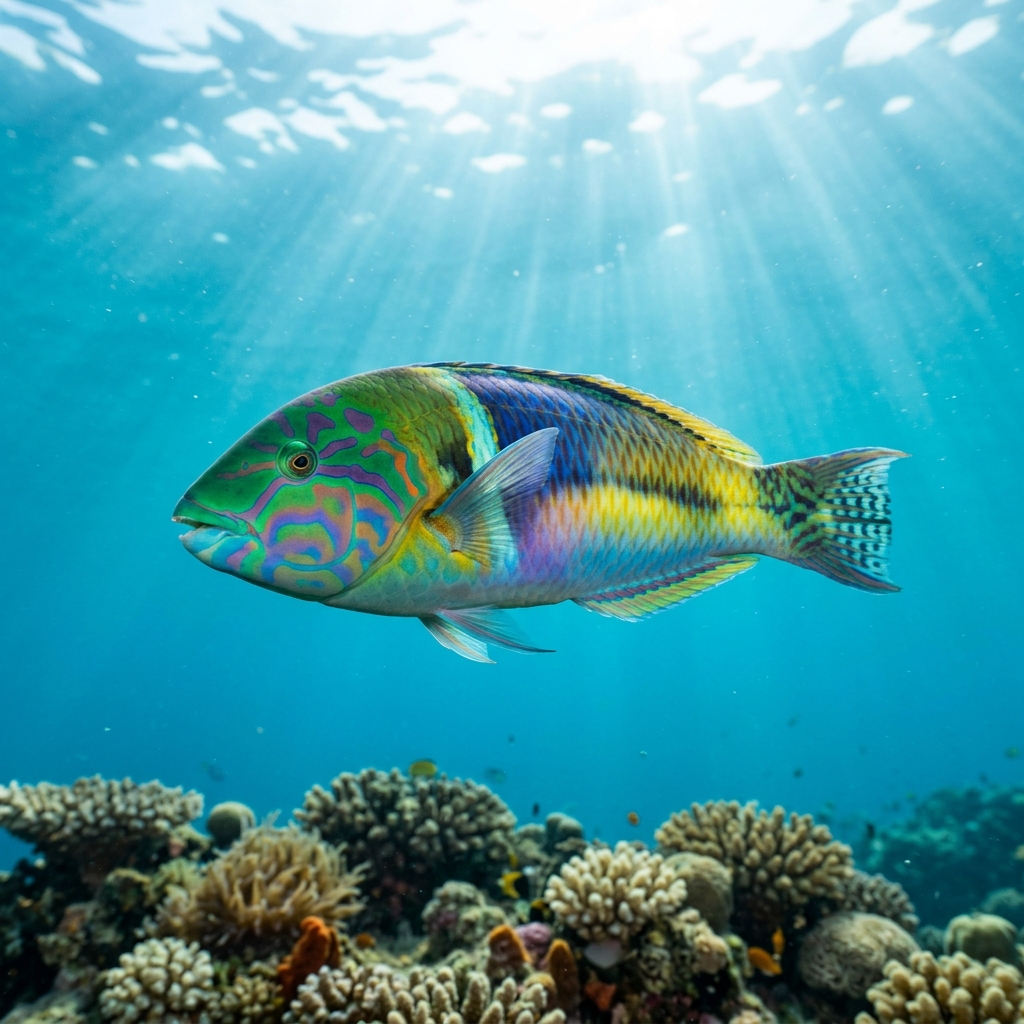
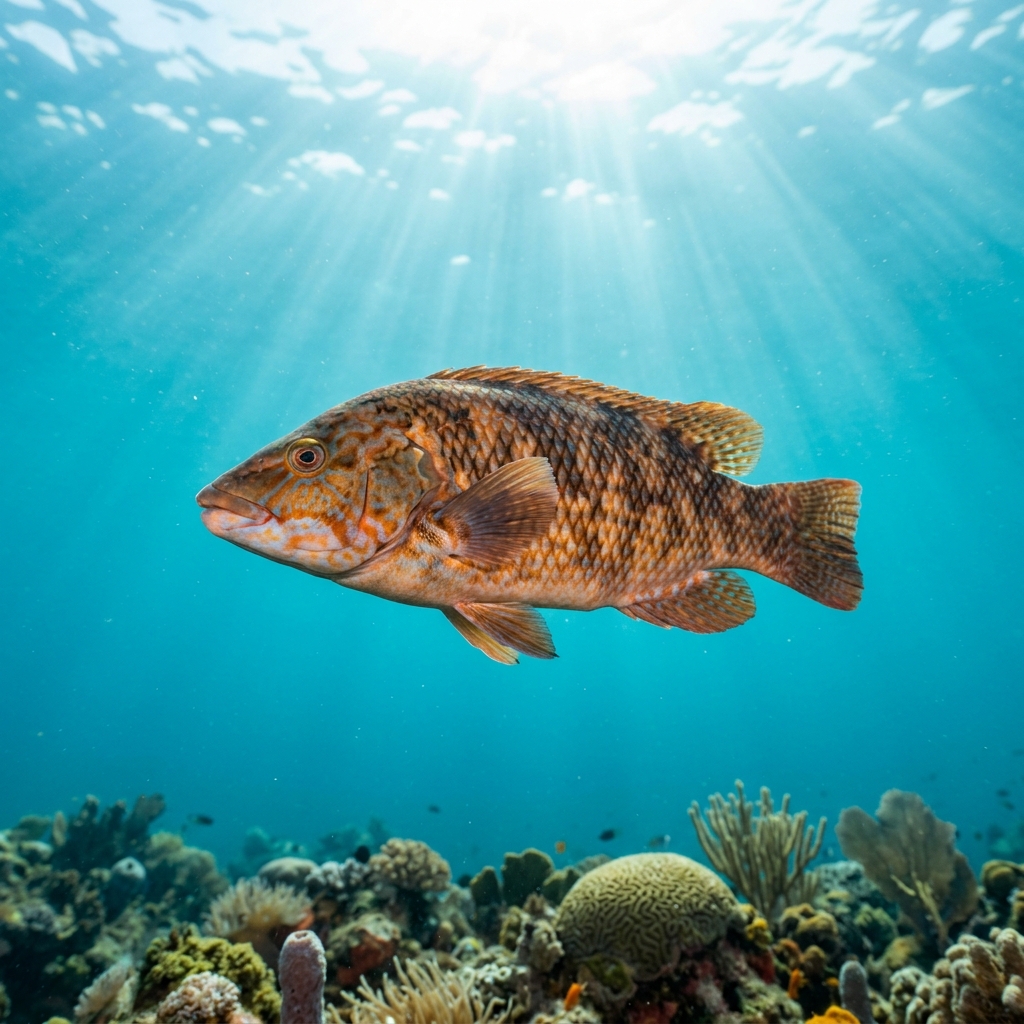
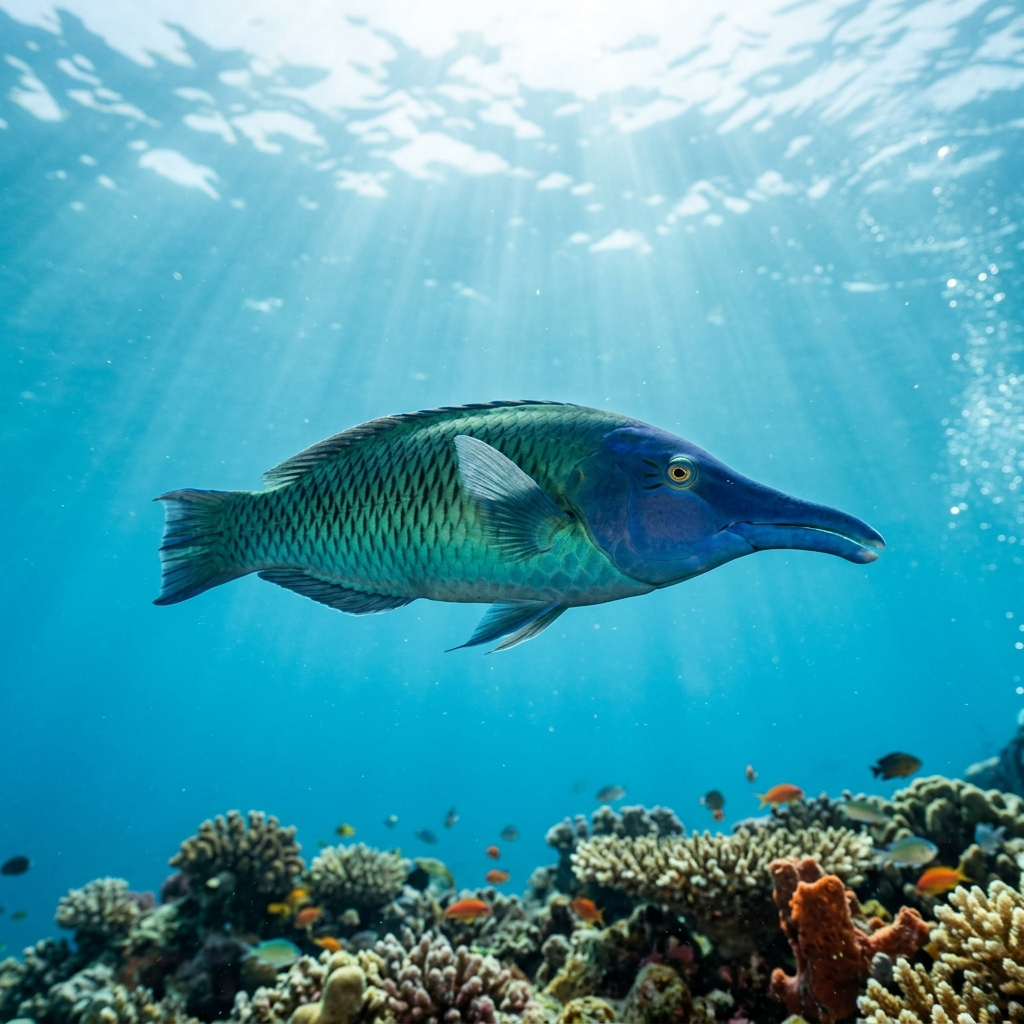
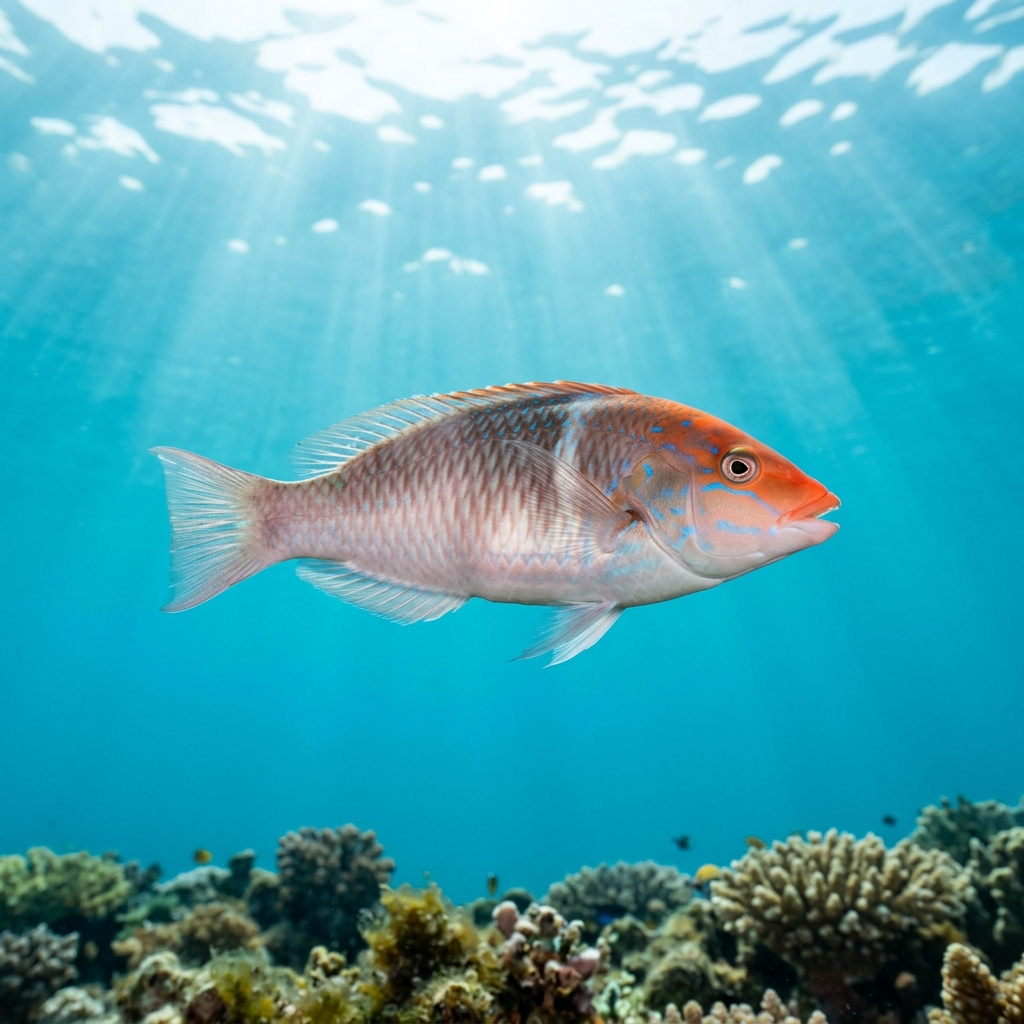
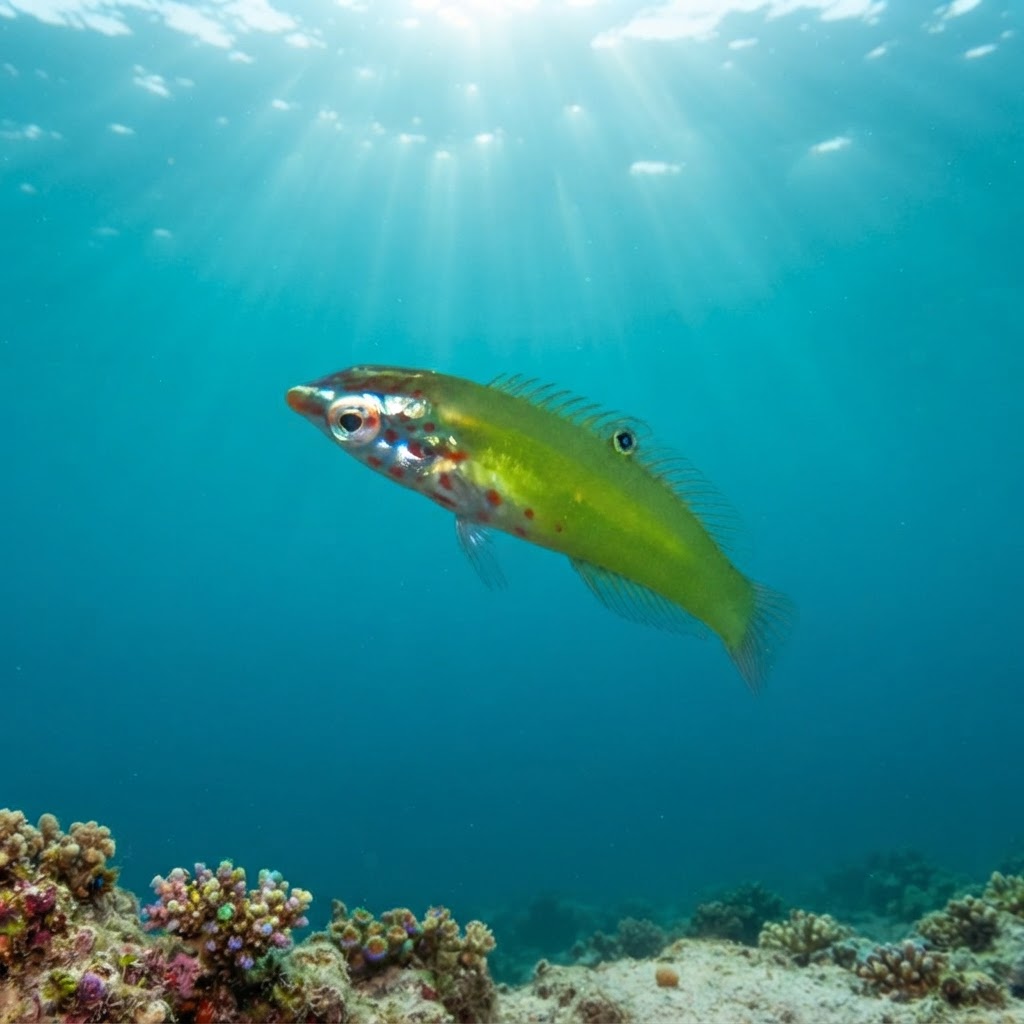
A small, slender wrasse topping out around 12 cm, so easy to miss among bigger reef fish. Look for a torpedo-shaped body in muted brown or olive tones with darker horizontal striping running along the flank, and a pointed snout typical of Coris wrasses. It tends to hug sand patches and rubble rather than open water, darting rather than gliding.
Expect quick, low-key darting over sand patches and rubble rather than any showy reef-top display. It stays close to the bottom, often near small holes or debris it can dash into, and doesn't pay divers much attention as long as you keep your distance and let it go about its business. Logged as uncommon even at sites where it's been recorded, so don't expect it on every dive.
Like many small Coris wrasses, it likely buries itself in sand at night and when startled, a defensive trick shared across the genus that makes it vanish instantly if spooked.
No clear seasonal pattern shows up in the data, and with water sitting comfortably between 25 and 29.3C year-round, this is a fish you can look for on any dive in the region.
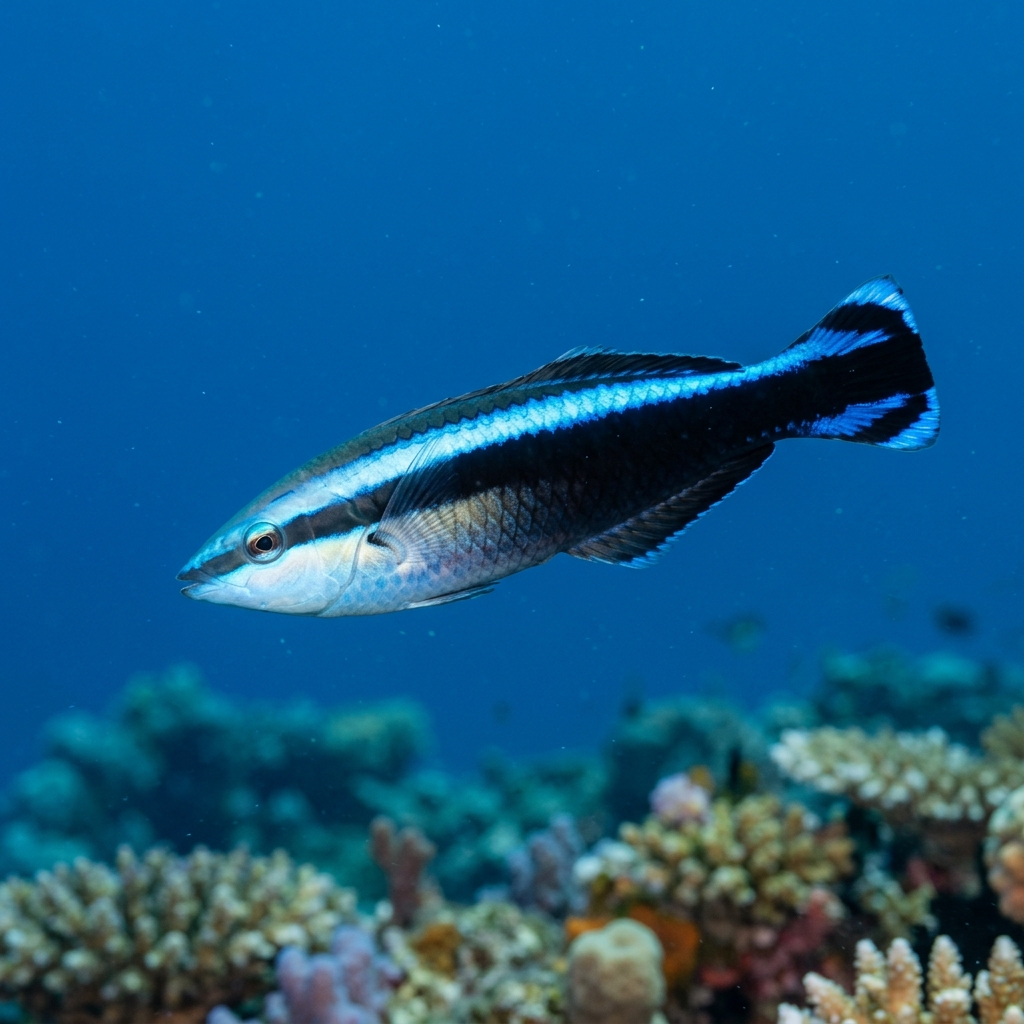
Reef neighbours a diver could mistake it for. Use the identification notes above to tell them apart.
Thailand is the place to look for this one, with Koh Lipe standing out as by far the most reliable spot for sightings. Phuket and Koh Phi Phi also turn up sightings, so it's worth scanning sandy edges and rubble zones on dive sites across southern Thailand.
Mapping where Batu Coris is logged…
Thailand is the main hotspot, with Koh Lipe the most consistent location for sightings, followed by Phuket and Koh Phi Phi.
There's no strong seasonal pattern, and warm water year-round means it can turn up on any dive in southern Thailand at any time of year.
Look for a small, slender wrasse around 12 cm long with a brown-olive body and darker horizontal stripes, usually darting low over sand or rubble rather than swimming in open water.
They're a small wrasse, typically reaching around 12 cm, so they're easy to overlook among larger reef fish.
They're logged as uncommon even at the sites where divers do find them, so spotting one takes a bit of patient scanning of sandy patches and rubble.
Site and sighting data is aggregated from diver logs, iNaturalist and GBIF. For taxonomy and conservation status:
Bird Wrasses
3,632 sites