Cetorhinus maximus
Uncommon but real sightings in Quebec, Canada, in cold water down to 5.4C. Here's how to identify this giant plankton feeder underwater.
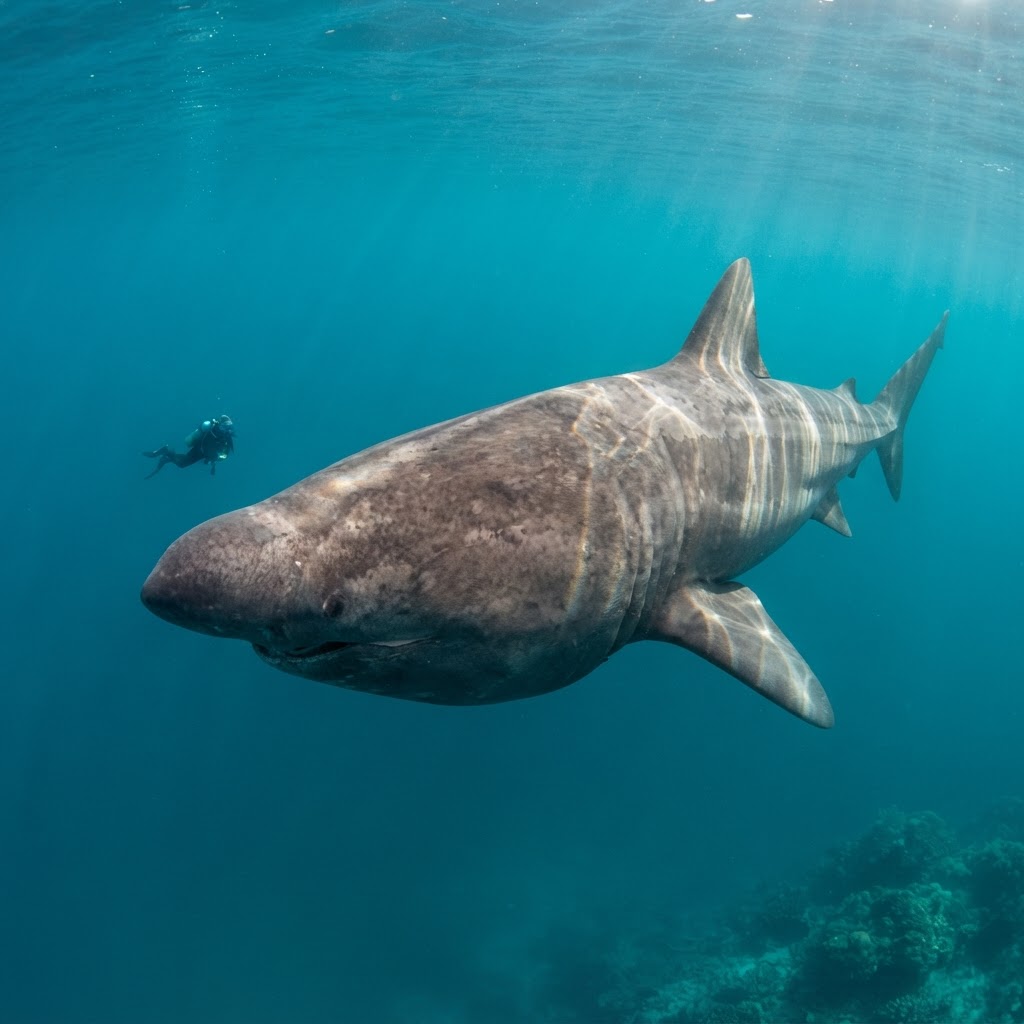
Look for a massive grey to brown body that can stretch well over 10 metres, with a wide conical snout and a cavernous mouth held open while feeding. The dorsal fin is tall and triangular, often the first thing you spot break the surface before you see the rest of the animal underwater. Gill slits are enormous and wrap almost around the head, a giveaway that separates it from anything else you'll meet in cold water.
When divers do encounter one, it's usually cruising slowly near the surface with its mouth agape, filtering plankton rather than showing any interest in people nearby. Sightings logged at these sites are uncommon rather than routine, so most encounters are a matter of being in the right patch of water at the right moment. They tend to ignore divers entirely, unbothered and unhurried, more interested in the water column than anything happening near it.
Despite its size, it feeds only on plankton and small fish eggs, sieving huge volumes of water through modified gill rakers rather than hunting anything a diver would need to worry about.
There isn't enough monthly data yet to pin down a clear season, so treat encounters as possible year-round rather than tied to a specific window. Given the observed water temperature range of 5.4 to 22.7C, this is a shark comfortable in cold to mild water, which fits a species that follows plankton blooms rather than a fixed calendar.
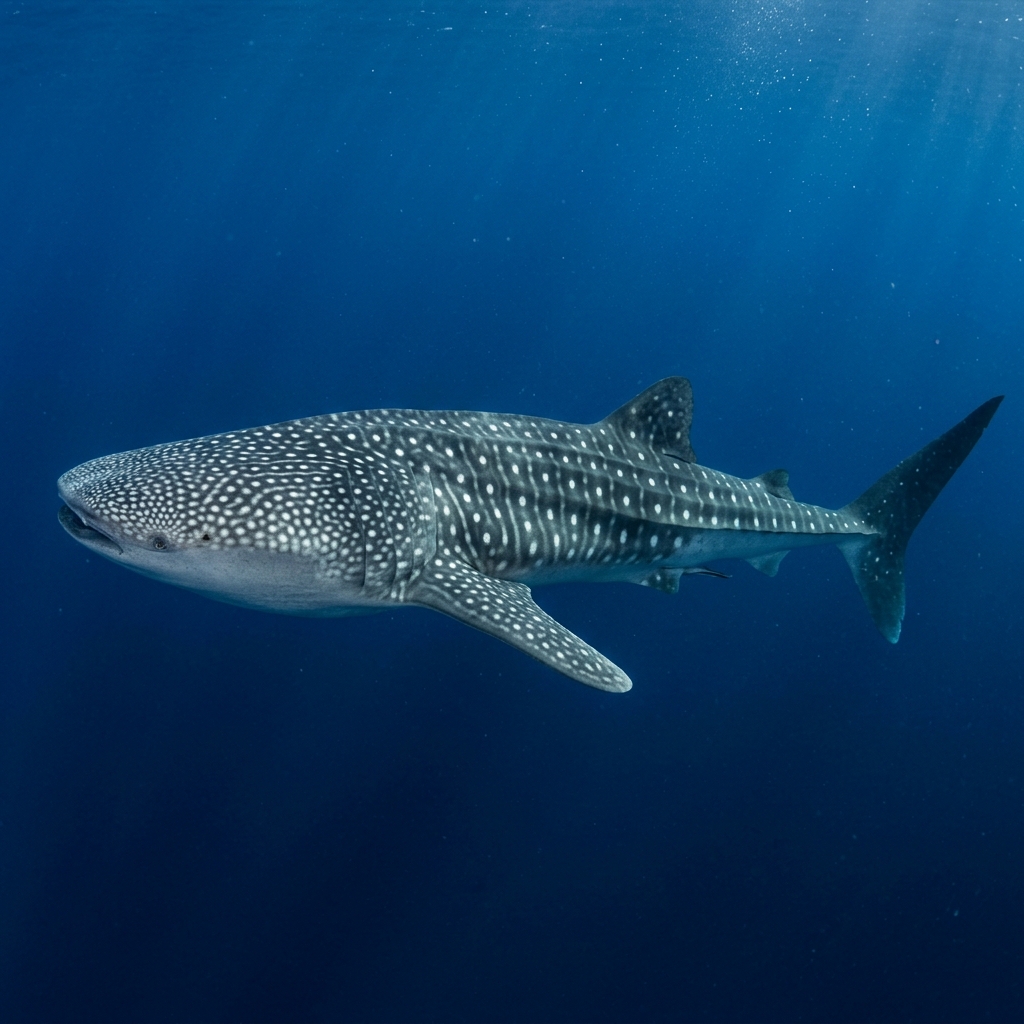
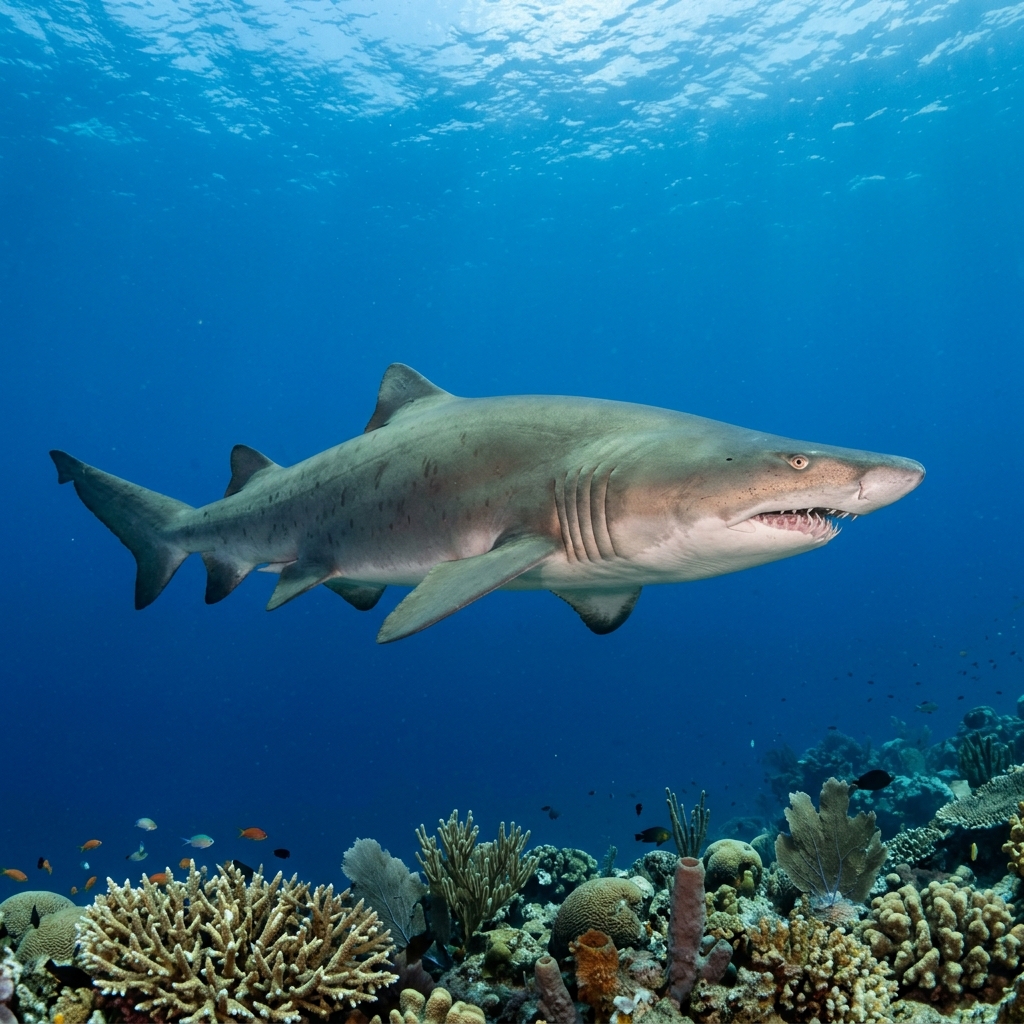
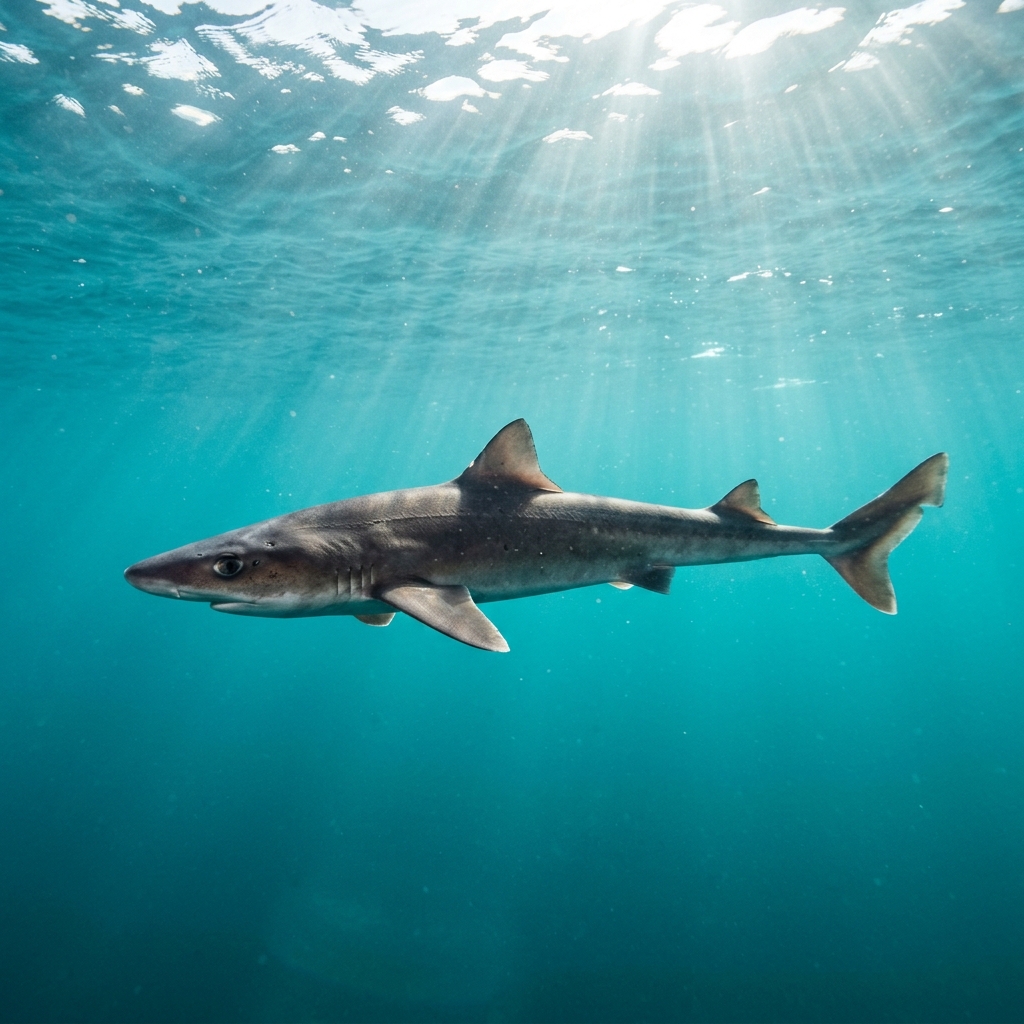
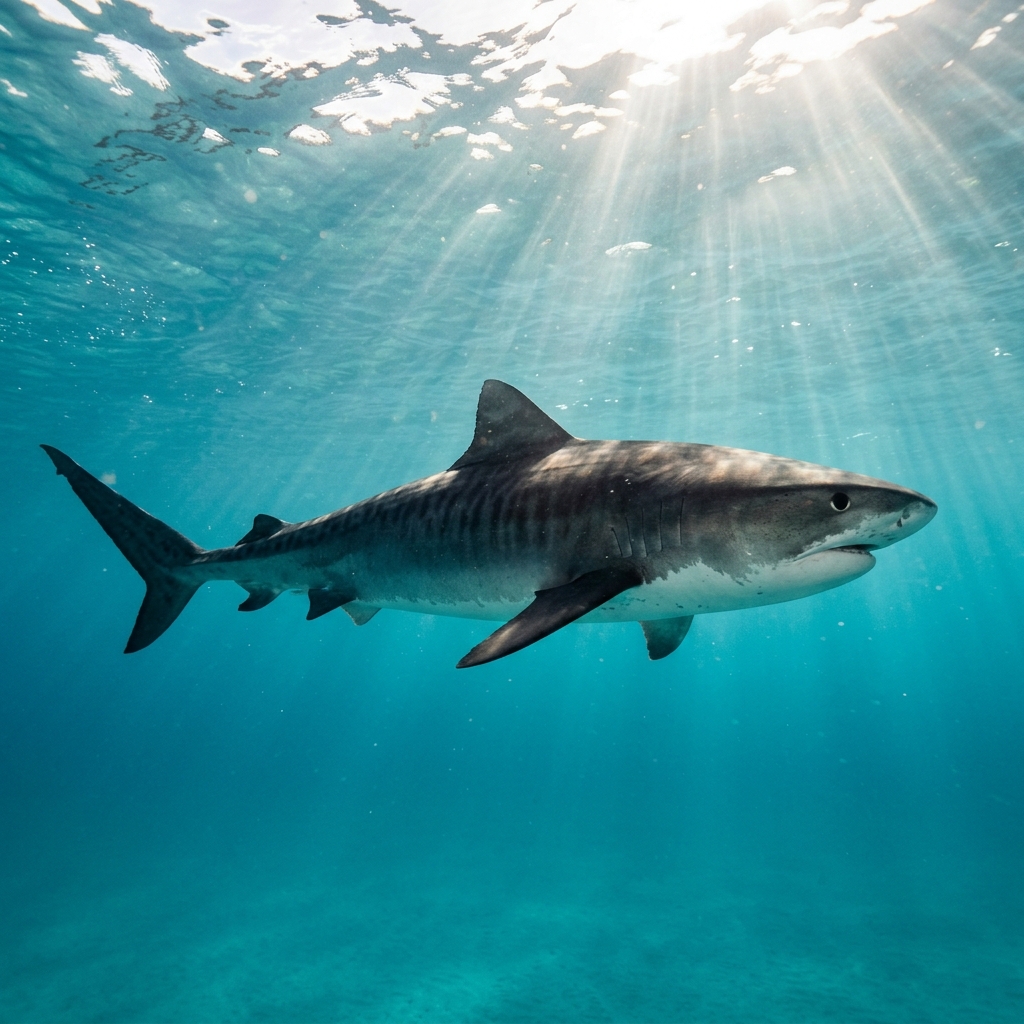
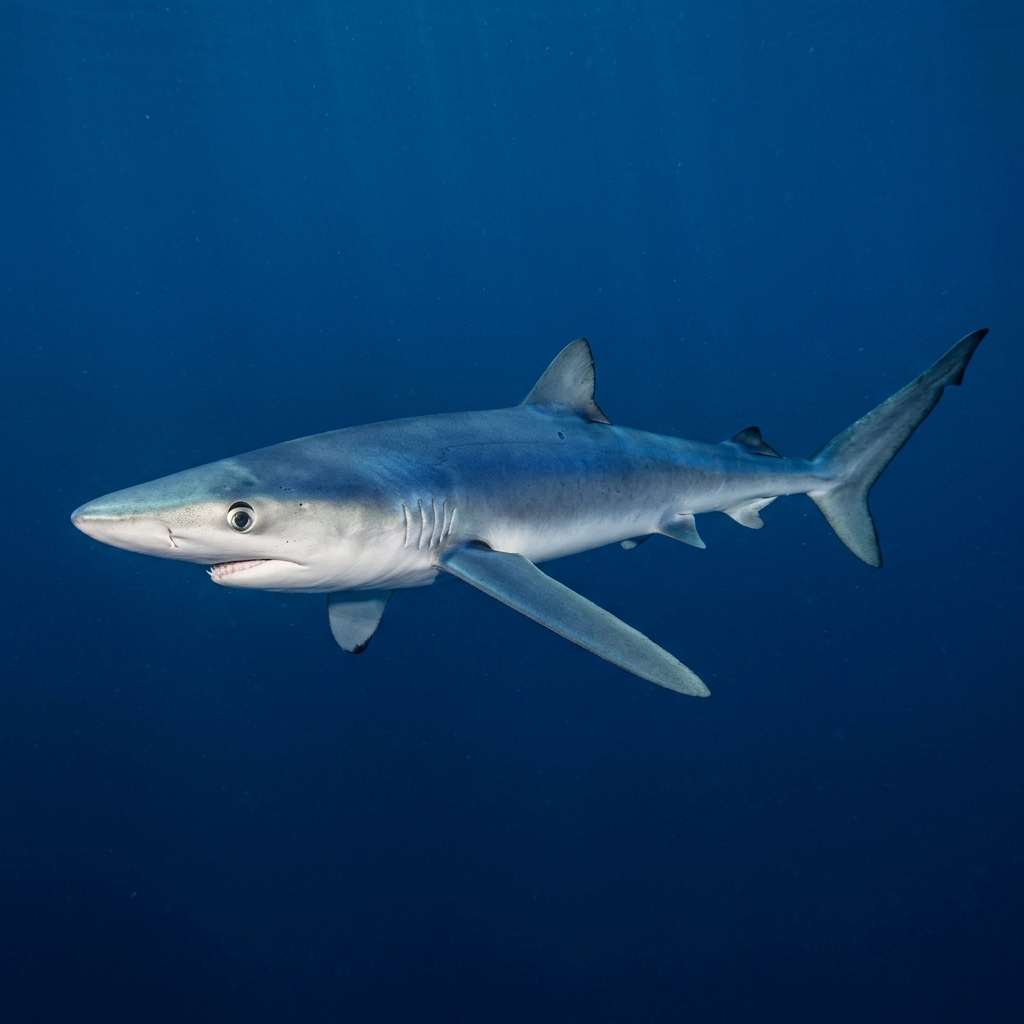
Reef neighbours a diver could mistake it for. Use the identification notes above to tell them apart.
Sightings logged for this species are concentrated in Canada, with Quebec standing out as the region where divers and snorkellers have recorded it most. Outside that stretch of water, logged encounters are sparse, so Quebec is currently the most reliable place to have a shot at one.
Mapping where Basking Shark is logged…
Logged sightings for this species are concentrated in Canada, especially around Quebec, which is currently the most reliable region to look. Records elsewhere are too sparse to call a hotspot yet.
There isn't a clear seasonal pattern in the data, so sightings are treated as possible year-round. It's recorded in water from about 5.4 to 22.7C, so cold water alone won't rule out an encounter.
Look for a huge grey-brown body over 10 metres long, a wide gaping mouth used for filter feeding, and gill slits that nearly encircle the head. The tall dorsal fin is often visible breaking the surface before the rest of the animal comes into view.
They typically reach over 10 metres in length, making them one of the largest fish in the ocean, second only to the whale shark.
They're filter feeders that swim with their mouths wide open, straining plankton and small fish eggs from the water through modified gill rakers rather than hunting prey.
Site and sighting data is aggregated from diver logs, iNaturalist and GBIF. For taxonomy and conservation status:
Tiger Shark
1,616 sites