Hemigymnus fasciatus
A chunky reef wrasse with bold vertical bars, most reliably logged in the Maldives' Central Atolls and the Philippines' Visayas year-round.
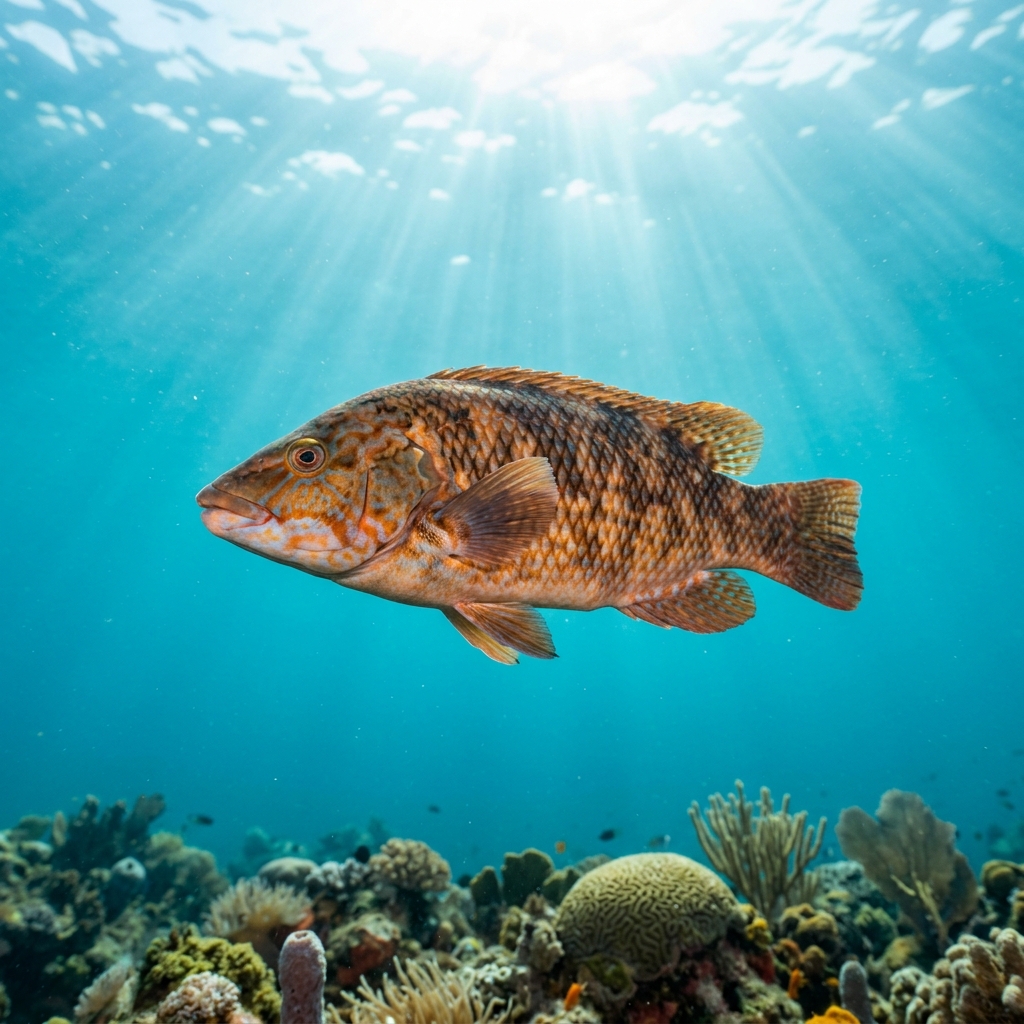
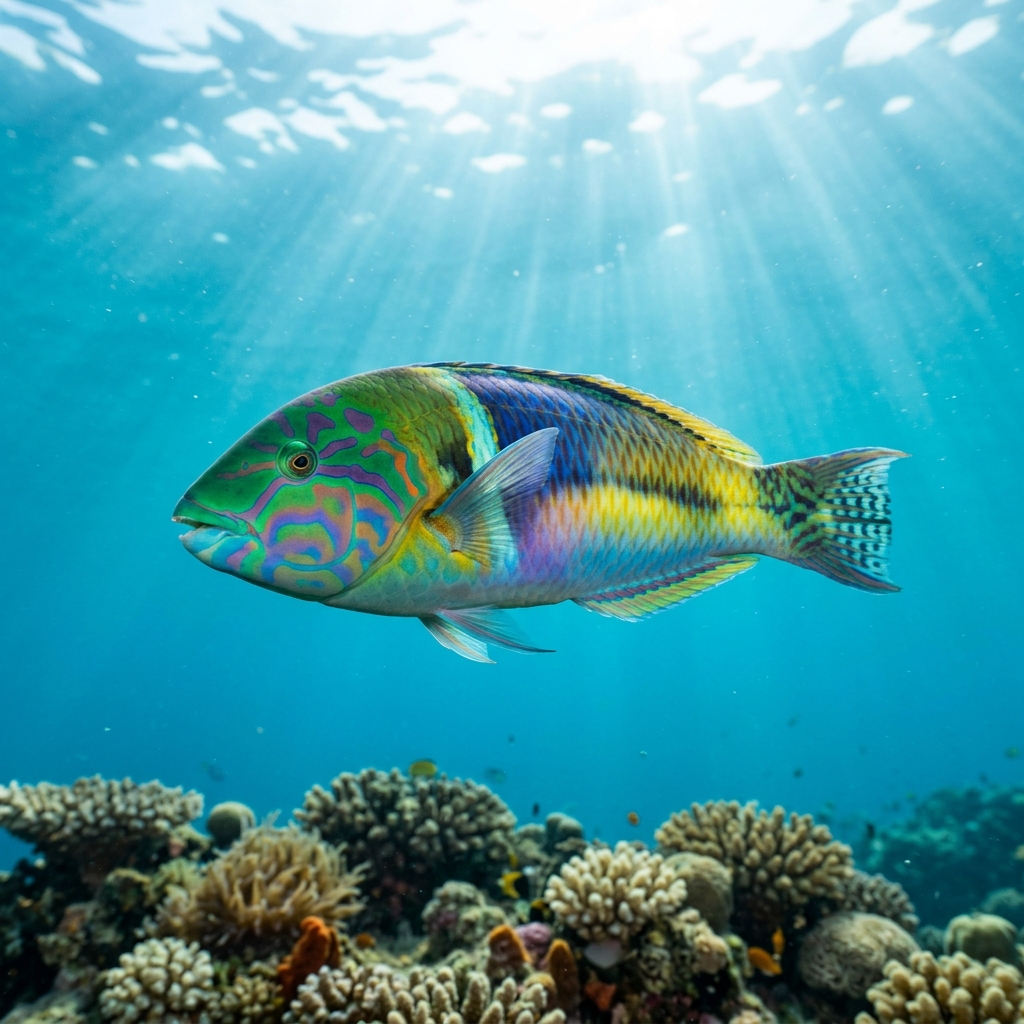
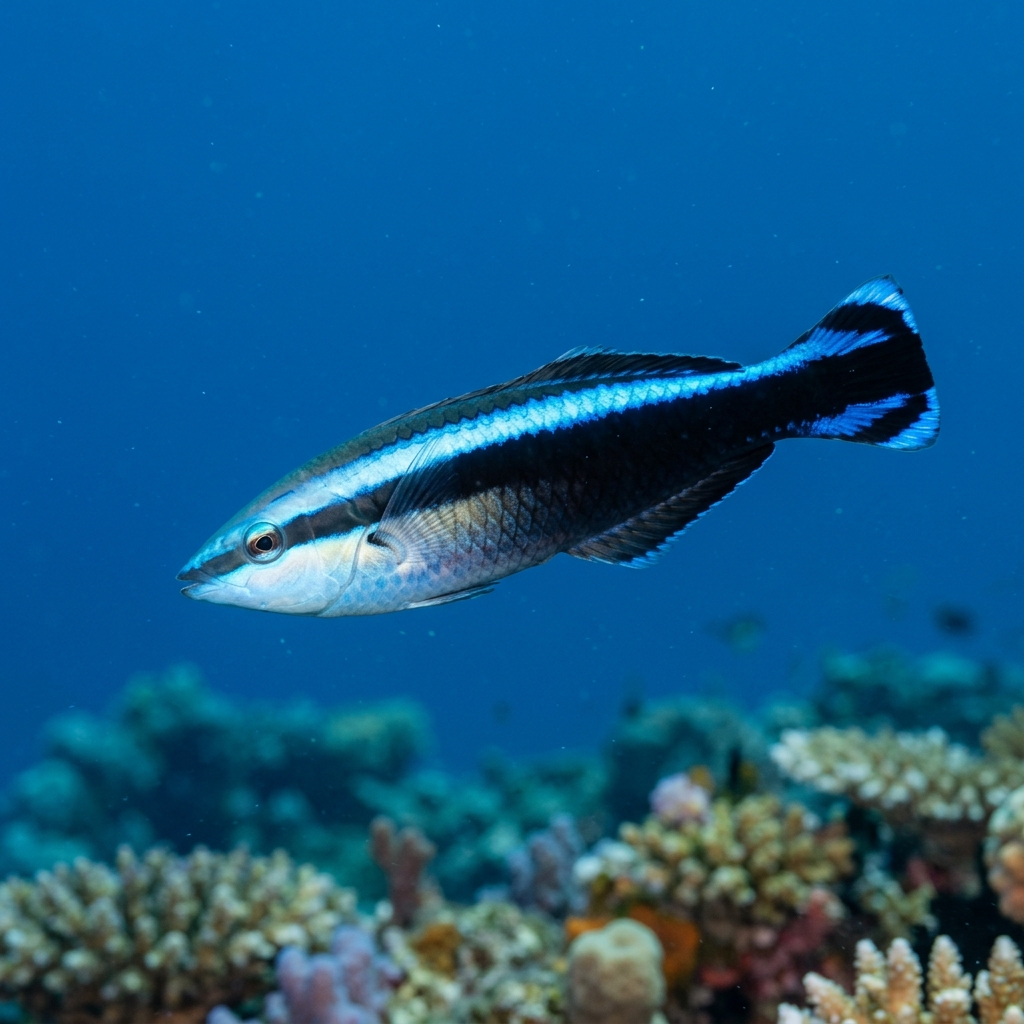
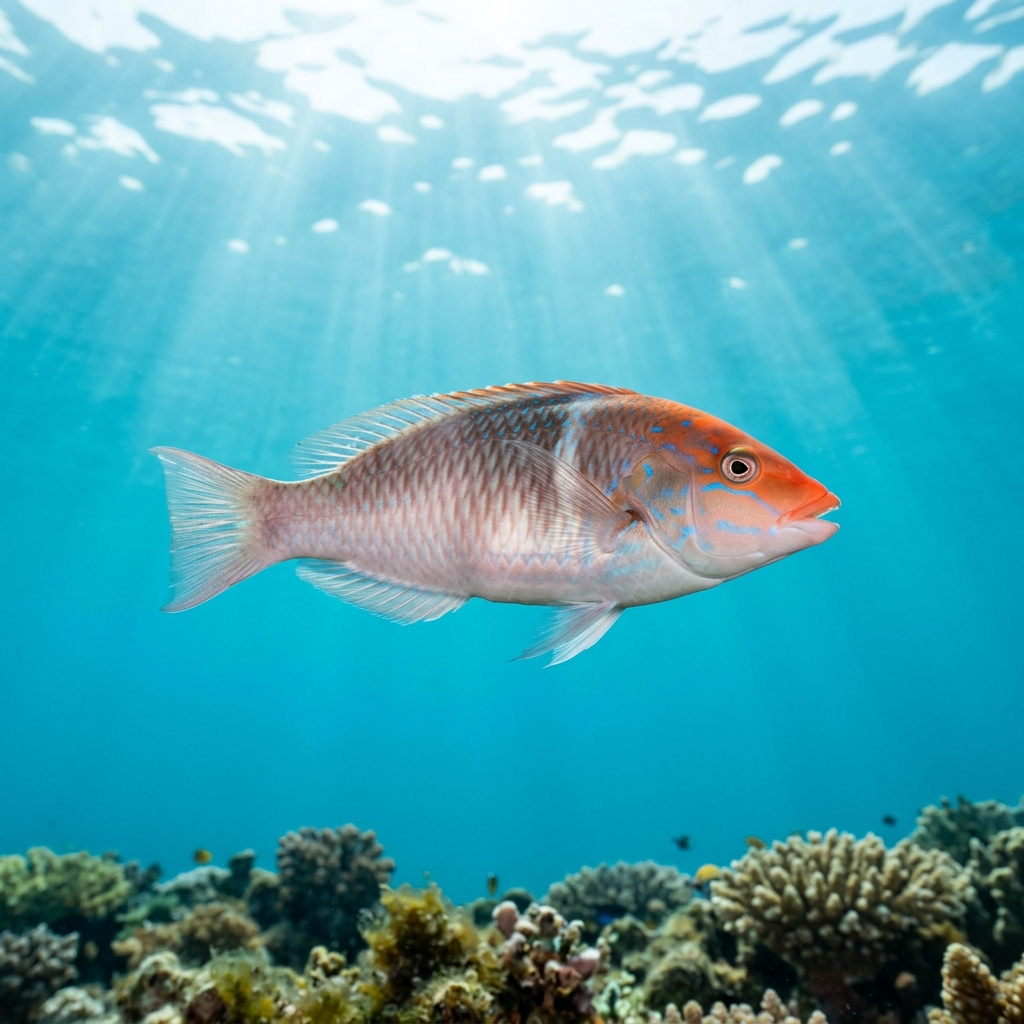
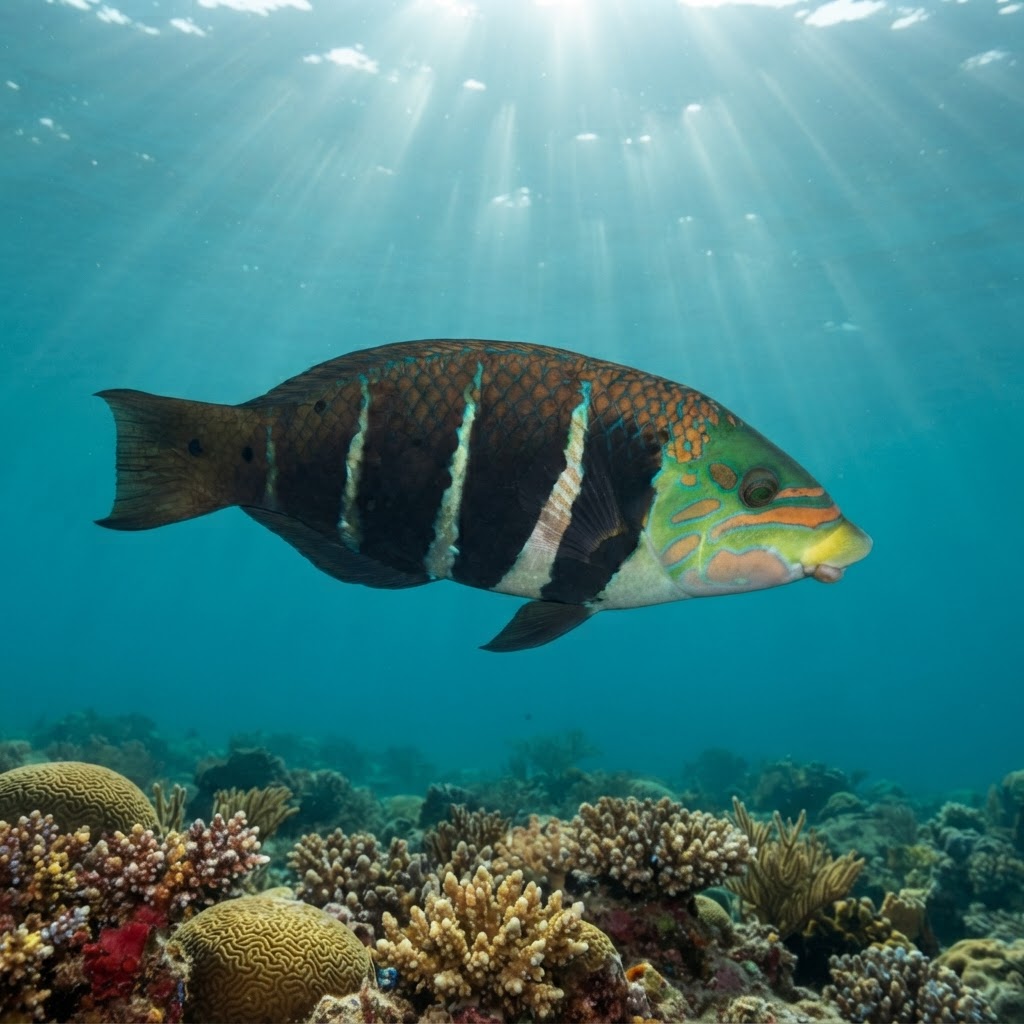
Chunky, torpedo-shaped wrasse to around 21 cm with a thick-lipped mouth and a body carrying broad dark vertical bars against a paler green-white background. The barring is strongest toward the head and tail, giving it a boxy, half-striped look that's easy to pick out against plain sand or rubble. It swims with slow, deliberate strokes low over the reef rather than darting like smaller wrasses.
Usually seen working slowly over sand patches, rubble, and reef edges, nosing into the substrate to flip small invertebrates out for a meal. It tends to be unhurried and only mildly wary of divers, holding its ground or drifting off at a steady pace rather than bolting. Most sightings are during daylight hours on the lower reef slope rather than up in the water column.
Its thick lips and blunt snout are built for rooting through sand and rubble to crush and extract hidden molluscs and crustaceans, a feeding style that also stirs up smaller reef fish looking to snatch scraps.
No clear seasonal pattern shows in the data, and with a comfortable range of roughly 25 to 29 C it's present on tropical reefs year-round, so any month works for a sighting.
Most reliably logged in the Maldives, especially the Central Atolls, and a strong sighting across the Visayas in the Philippines and the Inner Islands of Seychelles. Also well recorded in Okinawa and the Ryukyu Islands of Japan, Bali in Indonesia, Queensland in Australia, and Orchid Island in Taiwan, making it a widespread but consistently uncommon find across Indo-Pacific reefs.
Mapping where Barred Thicklip is logged…
Best odds are in the Maldives, particularly the Central Atolls, and the Visayas region of the Philippines. It also turns up reliably in the Seychelles' Inner Islands, Okinawa in Japan, Bali, and Queensland.
There's no strong season in the sighting data. It favours warm water between about 25 and 29 C, so it's a year-round find on tropical Indo-Pacific reefs.
Look for a stocky, thick-lipped wrasse around 20 cm long with bold dark vertical bars over a pale green-white body. It moves slowly and low over sand and rubble rather than darting about.
They typically reach about 21 cm, a solid mid-sized reef wrasse rather than a small darting species.
They're logged mostly as uncommon at dive sites rather than common or rare, so it's a species you'll spot from time to time rather than on every dive, but it's found across a wide spread of Indo-Pacific reefs.
Site and sighting data is aggregated from diver logs, iNaturalist and GBIF. For taxonomy and conservation status:
Bird Wrasses
3,632 sites