Serranus psittacinus
Small reef fish with a two-tone body, logged from Guanacaste to the Galápagos, comfortable in 20 to 29 C water year-round.
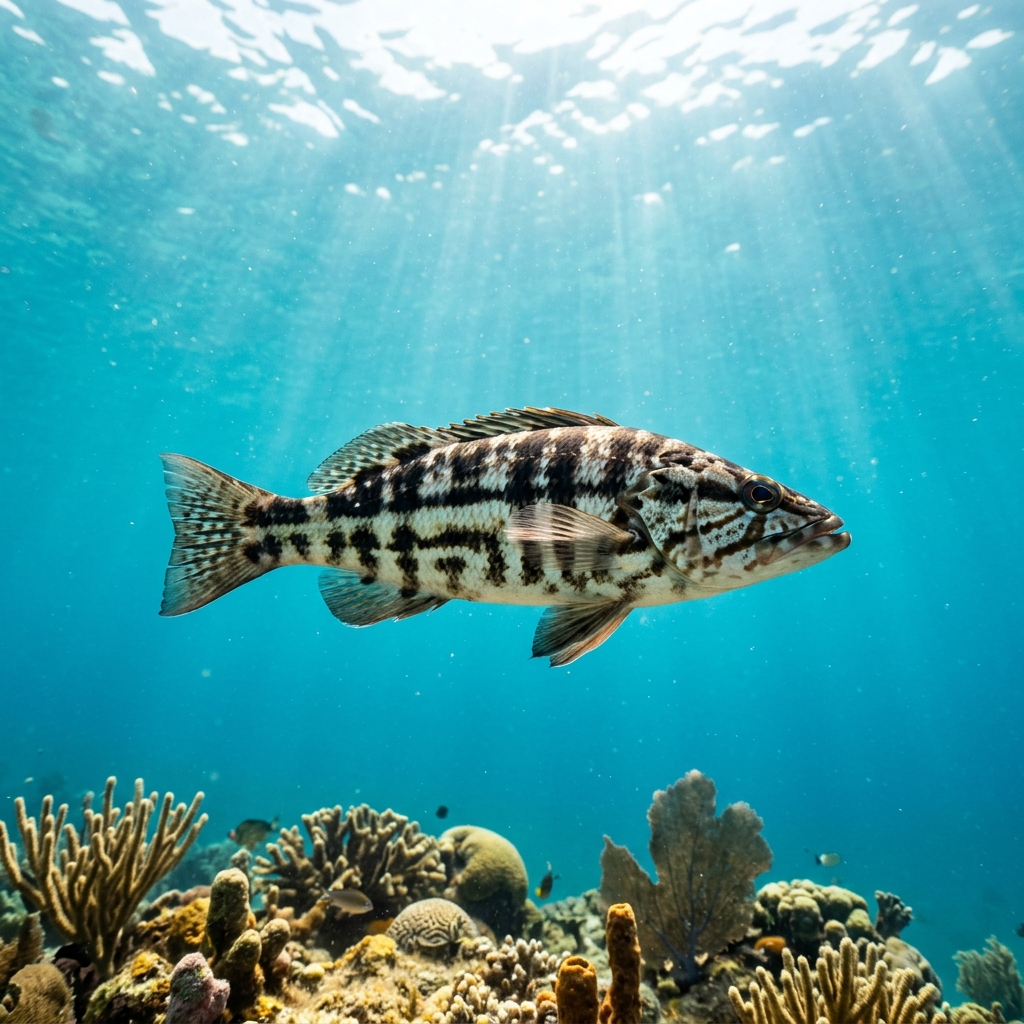
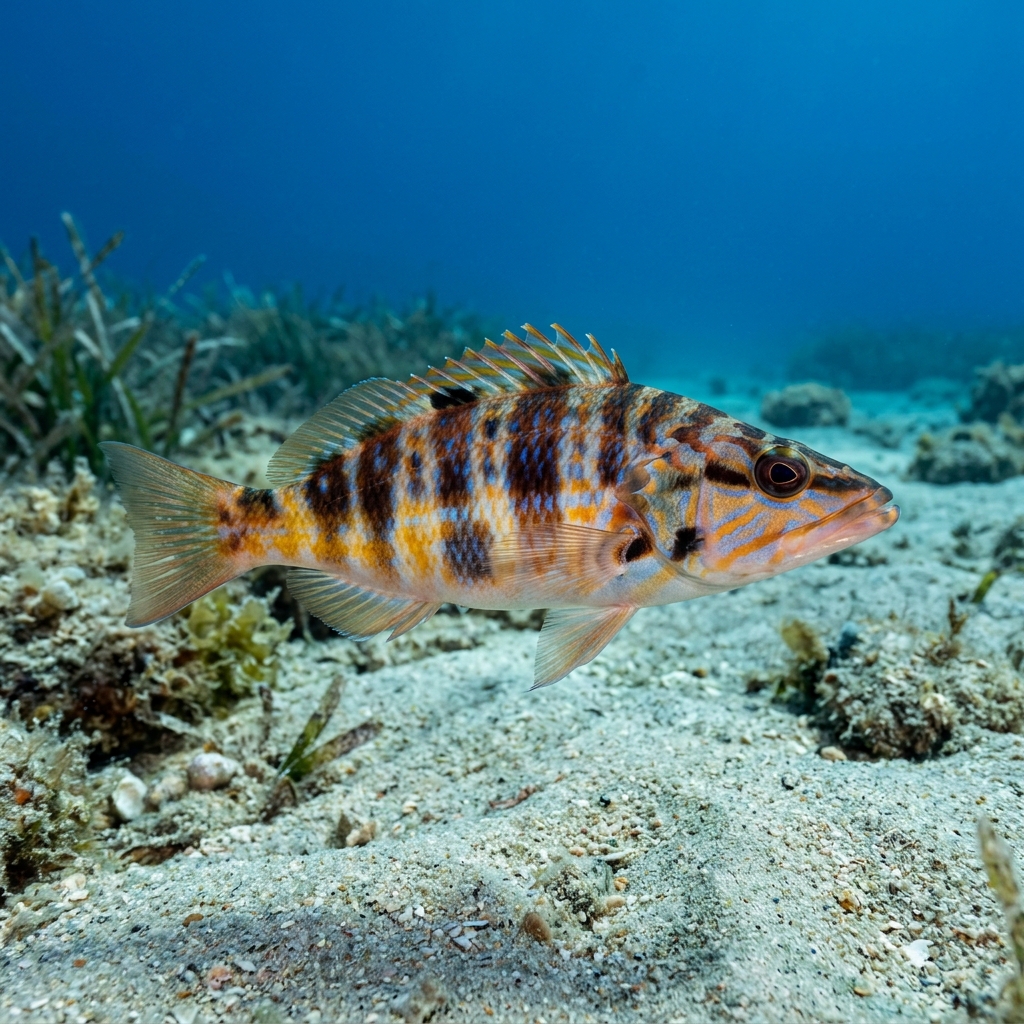
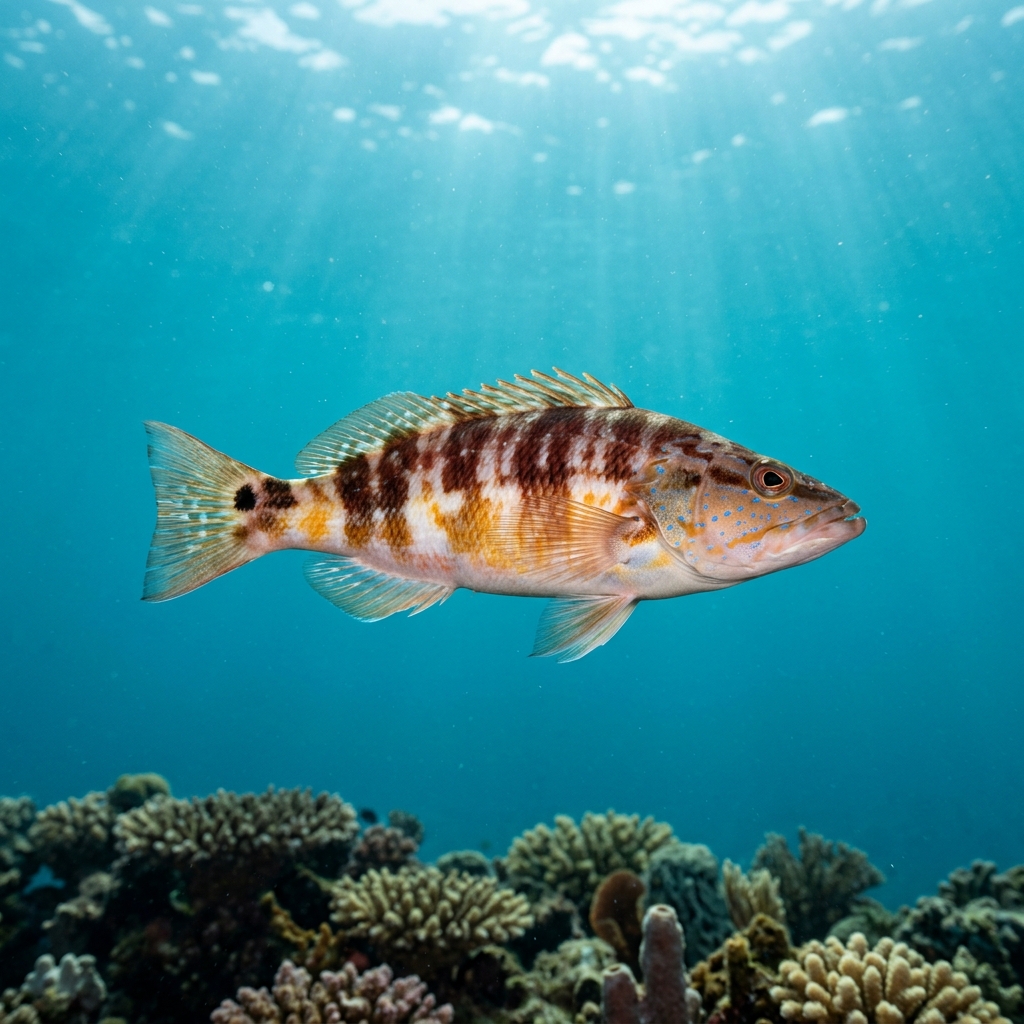
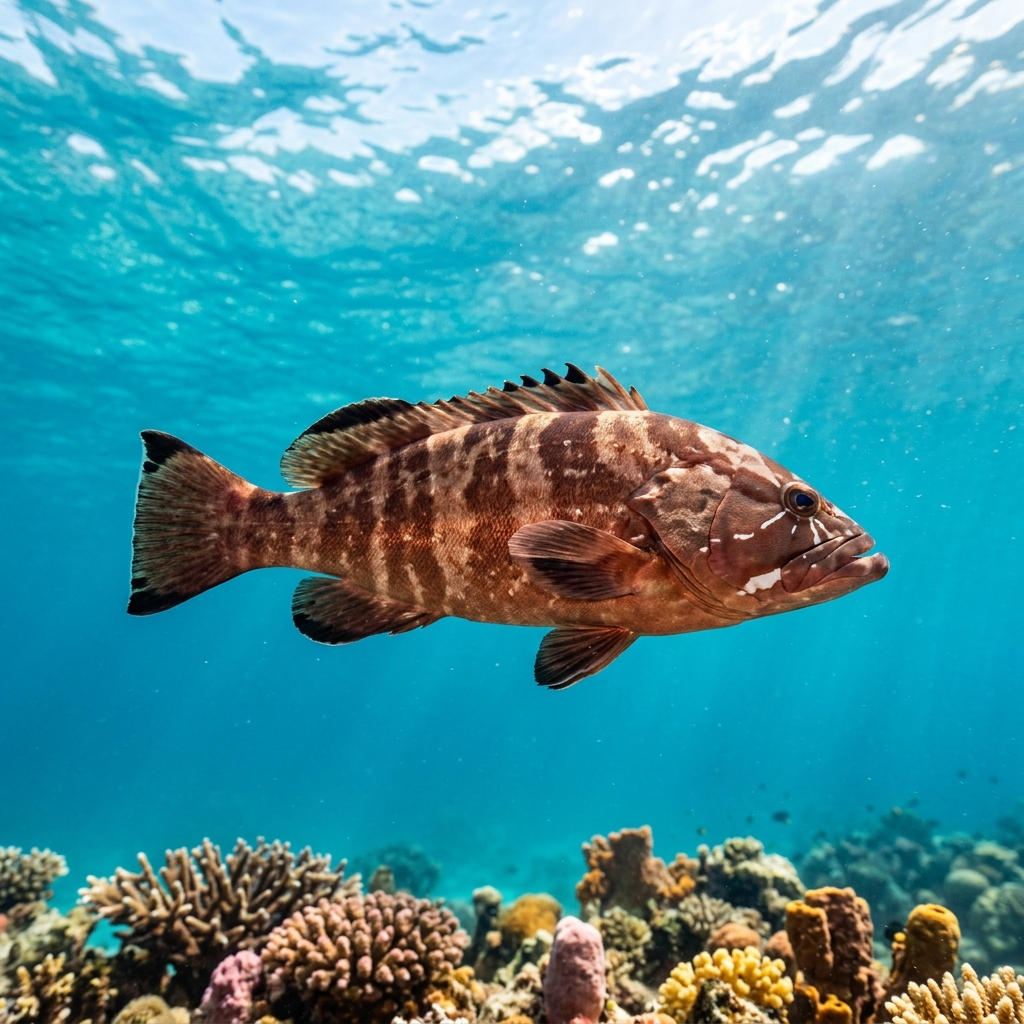
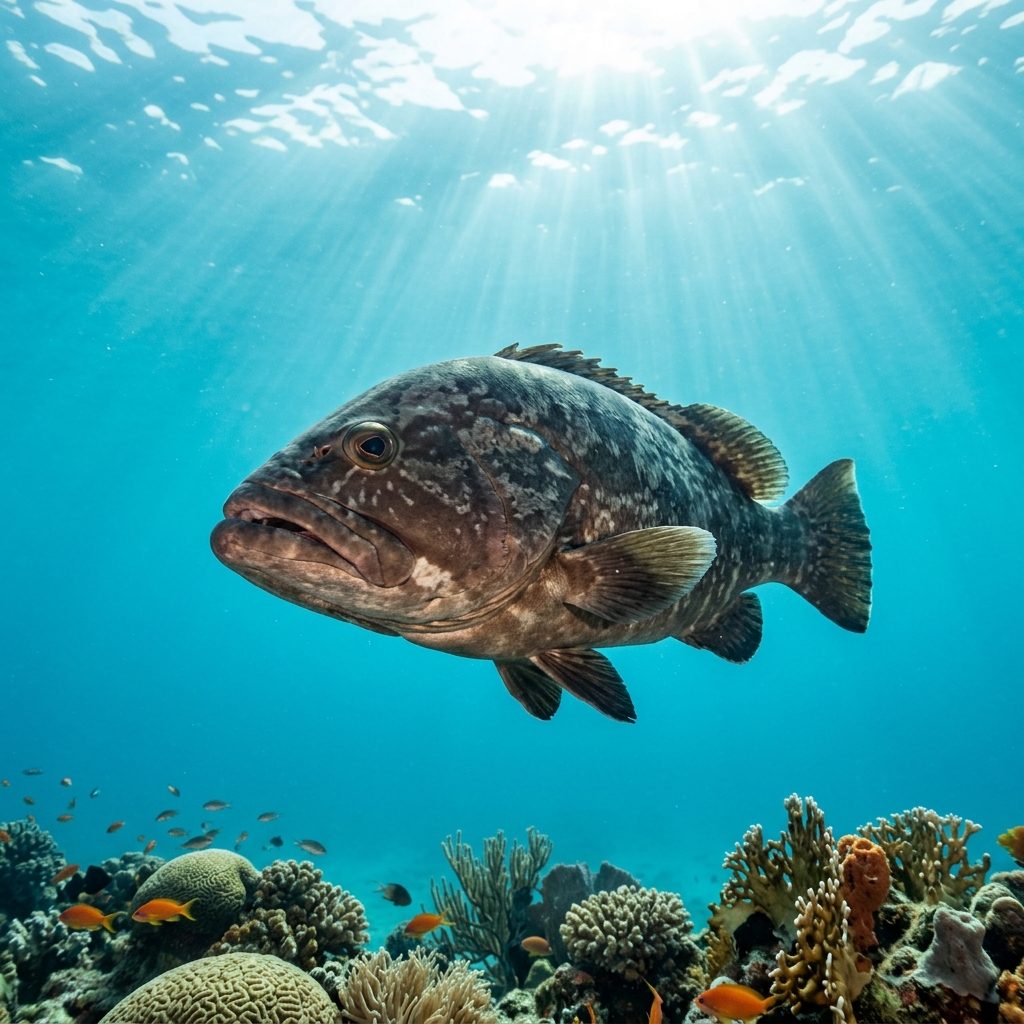
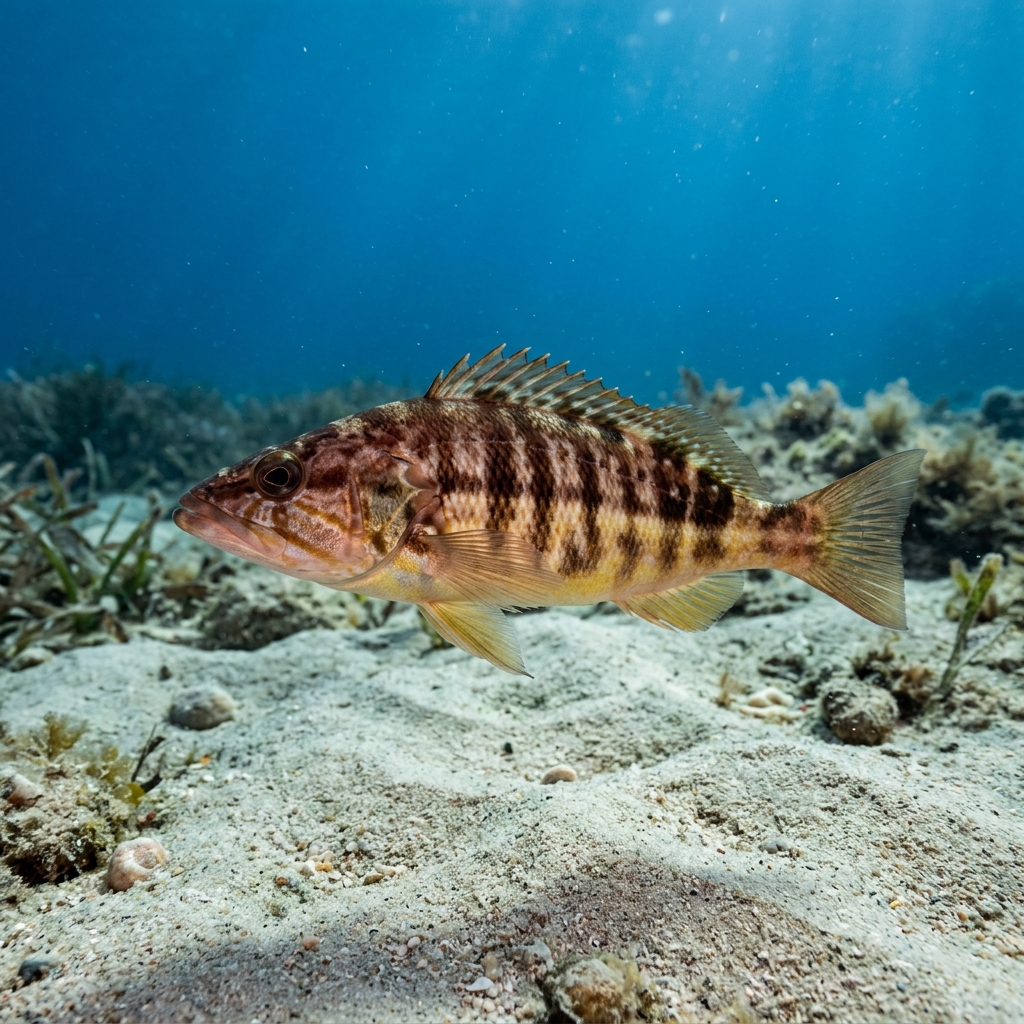
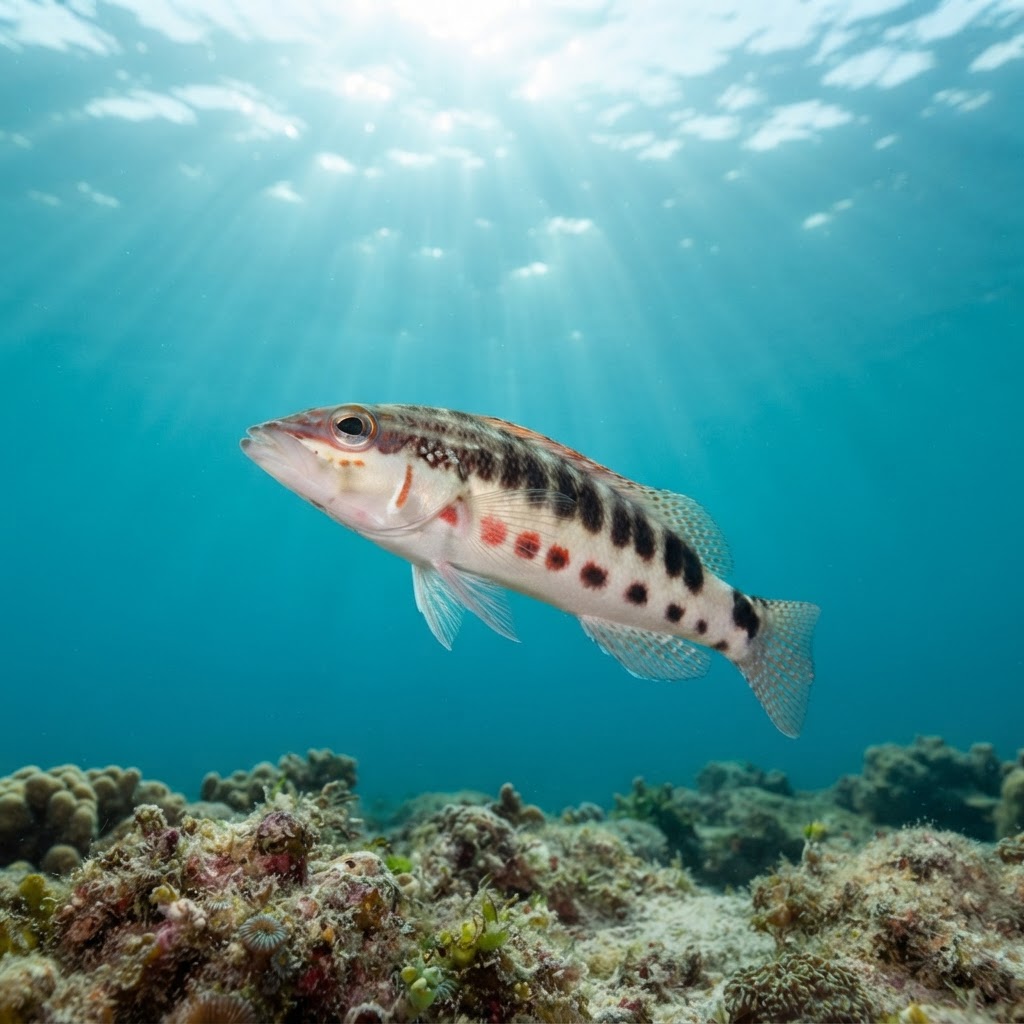
A small, elongated fish, around 13 cm, that shows a distinct two-tone body: the front half is dark, often blackish or deep olive, while the rear half is pale cream or white, sometimes with faint vertical bars across it. It perches close to rock or rubble rather than swimming in open water, propped on its pelvic fins like other members of the grouper family. The sharp colour split down the middle of the body is the main thing to key on underwater.
Look for it perched motionless on rock ledges, rubble, or the sandy edges of reef, propped up on its lower fins rather than cruising the water column. It's a sit-and-wait predator, watching for small prey to pass close by, and generally ignores divers unless you get right up on it. Most sightings are on the reef itself rather than in open water, and it tends to hold its position rather than bolt when approached slowly.
Like many serranids, this species is a simultaneous hermaphrodite, meaning individuals carry both male and female reproductive tissue and can swap roles during mating rather than being fixed as one sex for life.
Sightings show no clear seasonal pattern, so treat it as a year-round find. It's been logged in water from 20.3 to 28.8 C, a range that covers most of the eastern Pacific diving calendar in these regions.
Most reliably logged in Guanacaste, Costa Rica and Baja California, Mexico, with strong numbers also coming out of the Galápagos Islands, Ecuador and the Pacific coast of Panama. It turns up across the eastern Pacific on rocky reef and boulder terrain rather than being tied to one specific site type.
Mapping where Barred Serrano is logged…
It's most commonly logged in Guanacaste, Costa Rica and Baja California, Mexico, with good numbers in the Galápagos Islands, Ecuador and along Panama's Pacific coast. It favours rocky reef and boulder habitat across the eastern Pacific.
There's no strong seasonal pattern in the sightings, so it's a year-round encounter. It's been recorded in water from about 20 to 29 C, which spans most of the diving season across its range.
Look for a small fish, around 13 cm, with a sharp colour split: dark front half, pale rear half, sometimes with faint bars on the tail end. It's usually seen resting still on rock or rubble rather than swimming freely.
They stay small, typically around 13 cm long, making them one of the smaller fish you'll spot on eastern Pacific rocky reefs.
No, it poses no threat to divers. It's a small, non-aggressive reef fish that simply holds its position on the rock as you pass.
It's a simultaneous hermaphrodite, carrying both male and female reproductive tissue at once and able to switch roles during mating, a trait shared with several other small groupers.
Site and sighting data is aggregated from diver logs, iNaturalist and GBIF. For taxonomy and conservation status:
Blacktip Grouper
2,726 sites