Siganus doliatus
Blue-striped reef fish common on Queensland's reefs and Palau's lagoons, comfortable year-round in warm tropical water.
Safety warning
Barred rabbitfish carry venomous spines in their dorsal, anal and pelvic fins as a defence against predators, and a spine can deliver a painful sting if the fish is grabbed or accidentally pinned against the reef. Give them normal reef space and avoid handling them; they are not aggressive and will not approach divers.
If you're stung
Venomous fin spinesGeneral first-aid guidance, not a substitute for professional medical care. In an emergency, call your local emergency number.
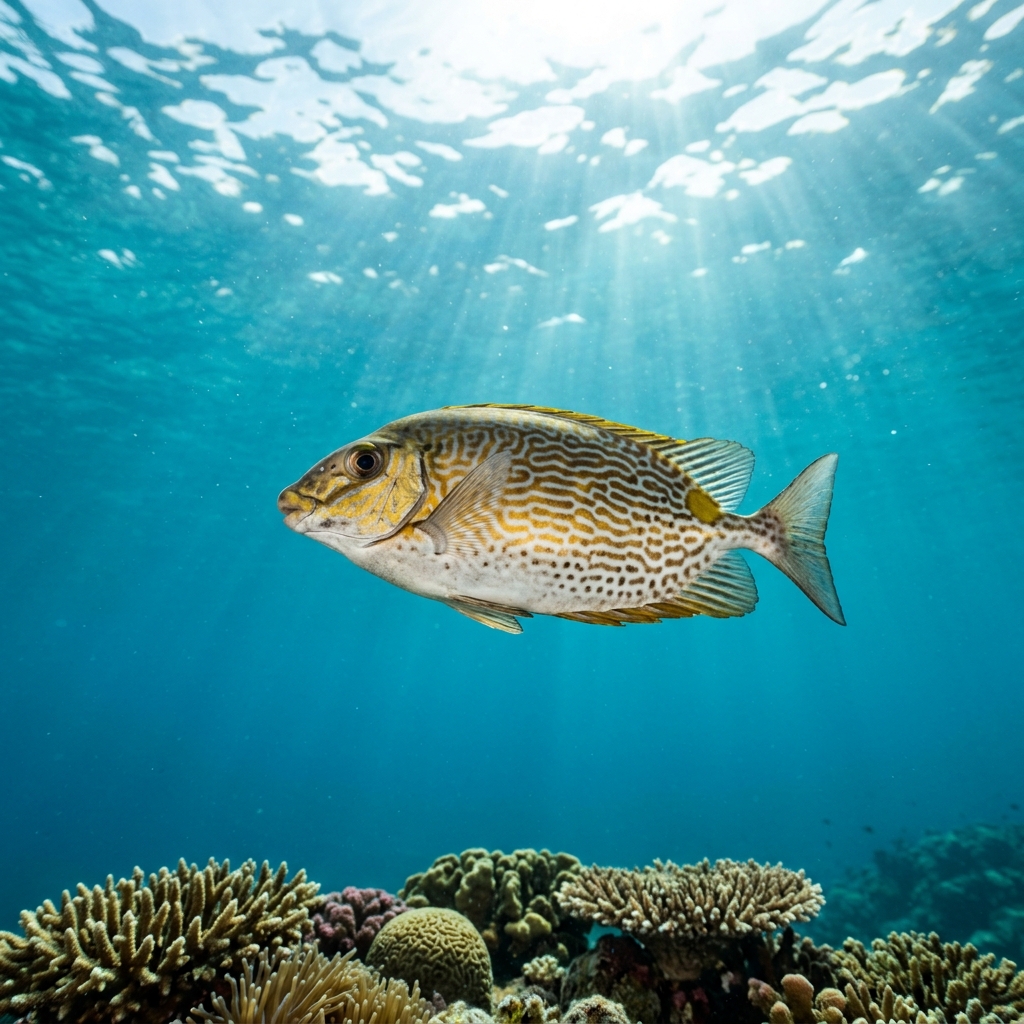
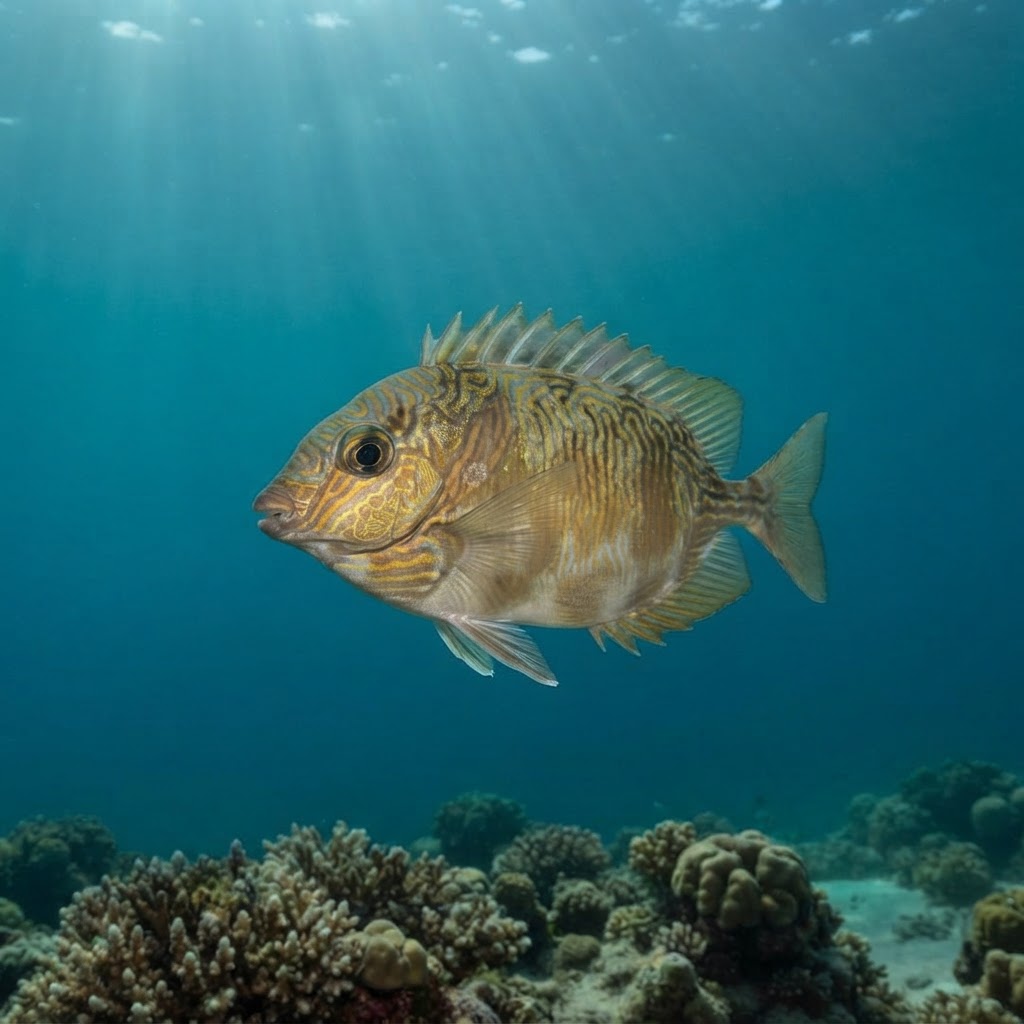
Small, oval-bodied fish around 17 cm with a pale grey-blue body crossed by dark diagonal bars along the upper flanks. Look for the yellow patch near the tail base and the fine electric-blue lines tracing the head and dorsal fin. They often swim in tight pairs, moving with quick, slightly nervous darts close to the reef rather than cruising in the open.
Divers usually spot them grazing algae off coral rubble and reef flats in shallow water, often in bonded pairs that stick close together as they move. They tend to keep some distance from divers, drifting off into the reef structure if approached too fast rather than holding a station like some reef fish.
Rabbitfish get their name from the way pairs graze steadily and skittishly, browsing algae much like rabbits crop grass, and many species including this one form monogamous pairs that stay together across the reef.
No clear seasonal pattern shows up in the data, and with a comfortable range of 25.5 to 29.3 C, these fish sit on tropical reefs year-round. Plan around good reef conditions generally rather than a particular month.
Most reliably logged on Queensland's reefs, which account for the bulk of sightings, followed by Koror and Malakal in Palau. Raja Ampat and Sulawesi in Indonesia, Viti Levu and the Yasawa Islands in Fiji, and Nouméa in New Caledonia all produce steady sightings too, usually rated uncommon to common rather than guaranteed.
Mapping where Barred Rabbitfish is logged…
Queensland's reefs in Australia produce the most sightings by far, with Koror and Malakal in Palau a strong second spot. Raja Ampat and Sulawesi in Indonesia, Fiji's Viti Levu, and Nouméa in New Caledonia also see them regularly.
There's no strong seasonal signal in sighting data, and they're comfortable in water from about 25.5 to 29.3 C, so they turn up on tropical reefs throughout the year.
They carry venomous spines in their fins that can sting painfully if the fish is handled or pressed against, but they're not aggressive and simply swim off if divers keep their distance.
Look for a small pale grey-blue fish around 17 cm long with dark diagonal bars across the upper body, a yellow patch near the tail, and fine blue lines on the head. They're usually seen grazing in close pairs near the reef bottom.
They typically reach about 17 cm in length, making them one of the smaller reef-associated fish divers log on tropical dives.
They form tight, apparently monogamous pairs that graze algae together across the reef, staying close to one partner rather than schooling loosely like many reef herbivores.
Site and sighting data is aggregated from diver logs, iNaturalist and GBIF. For taxonomy and conservation status:
Soldierfish
3,612 sites