Kuhlia mugil
Silvery schools with black-tipped tails, most often logged around the Maldives' Central Atolls and Mozambique's Ponta do Ouro reefs.
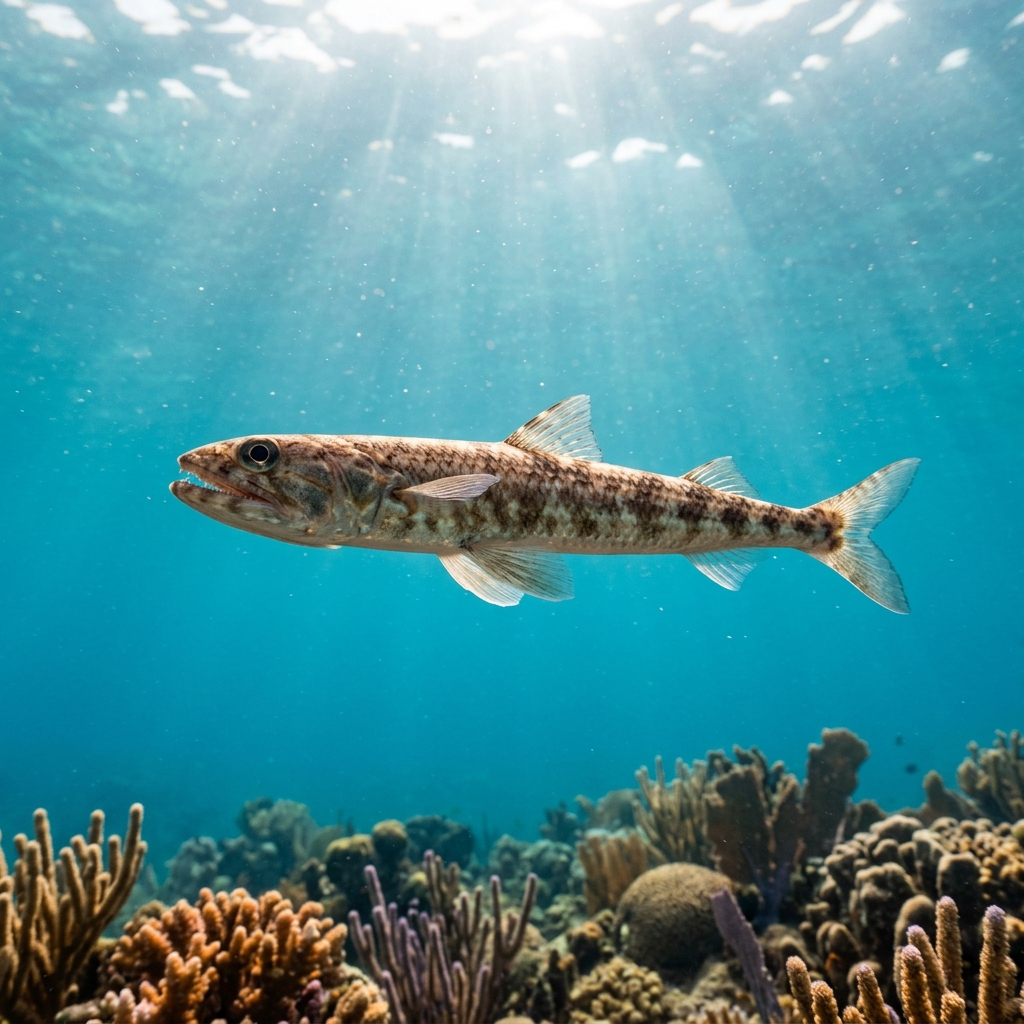
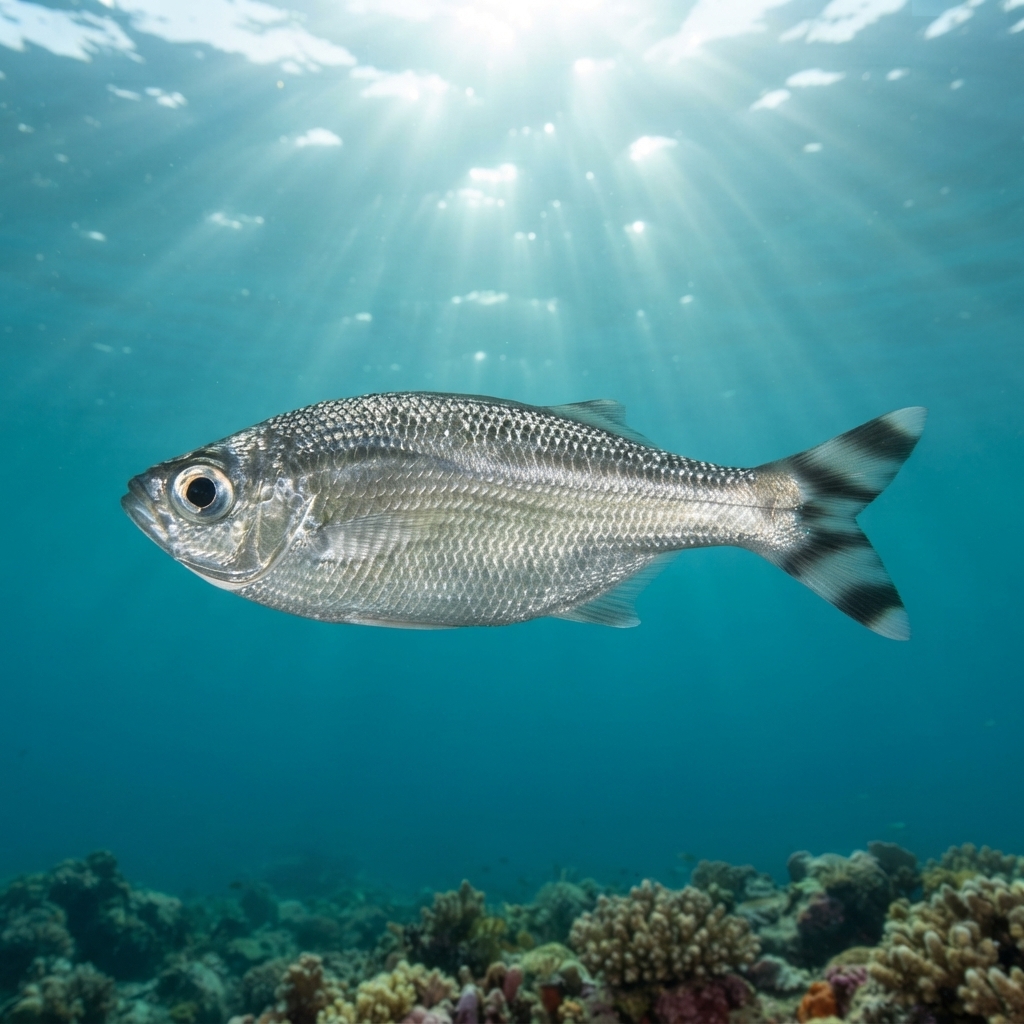
A slim, silvery fish reaching around 28 cm, easiest to pick out by the sharply forked tail edged in black bands, which is where the common name comes from. It often shows faint dark bars along the upper body and travels in loose schools rather than alone. Look for it hovering in the surge zone or just off the reef edge rather than buried in coral structure.
Divers typically find it schooling loosely in the shallows, around reef edges, drop-offs, or surge channels where there is some current or wave action to feed in. It tends to hold its distance rather than approach divers closely, moving as a group when disturbed rather than scattering individually. Most logs describe it as uncommon rather than abundant, so a sighting is usually a handful of fish rather than a large shoal.
Its forked, black-banded tail is thought to help confuse predators about the direction it will dart in when startled, a useful trick for a fish that spends time in exposed, current-swept shallows.
Sightings show no clear seasonal pattern, and with a comfort range of roughly 24.5 to 29.3 C it stays on these reefs year-round rather than showing up for a single season. Plan around general dive conditions at each site rather than a particular month.
This is a reliable sighting across the Maldives, especially the Central Atolls, and turns up steadily along Mozambique's Ponta do Ouro coast and South Africa's KwaZulu-Natal reefs. Smaller but consistent populations are logged around Mauritius (Coin de Mire and Grand Baie), Queensland in Australia, Taiwan's Xiaoliuqiu, and French Polynesia's Society Islands.
Mapping where Barred Flagtail is logged…
The strongest sightings come from the Maldives, particularly the Central Atolls, and from Mozambique's Ponta do Ouro region. It also shows up reliably in KwaZulu-Natal, South Africa, and around Mauritius, Queensland, Taiwan, and French Polynesia.
There is no strong seasonal pattern in the sighting data, and its comfortable temperature range of about 24.5 to 29.3 C keeps it on tropical and subtropical reefs throughout the year.
Look for a silvery, spindle-shaped fish around 28 cm with a deeply forked tail marked with black bands. It usually moves in small, loose schools near reef edges or shallow surge zones rather than sitting still in one spot.
They typically reach around 28 cm in length, making them a medium-sized reef fish rather than a giant or a tiny schooling species.
Its black-banded, forked tail is thought to work as a visual decoy, making it harder for predators to judge which way it will bolt when startled in the open, current-exposed water it favours.
Site and sighting data is aggregated from diver logs, iNaturalist and GBIF. For taxonomy and conservation status:
Soldierfish
3,612 sites