Gorgasia barnesi
Uncommon sandy-slope garden eel logged mostly in the Visayas, Philippines, in warm 27 to 29 C water year-round.
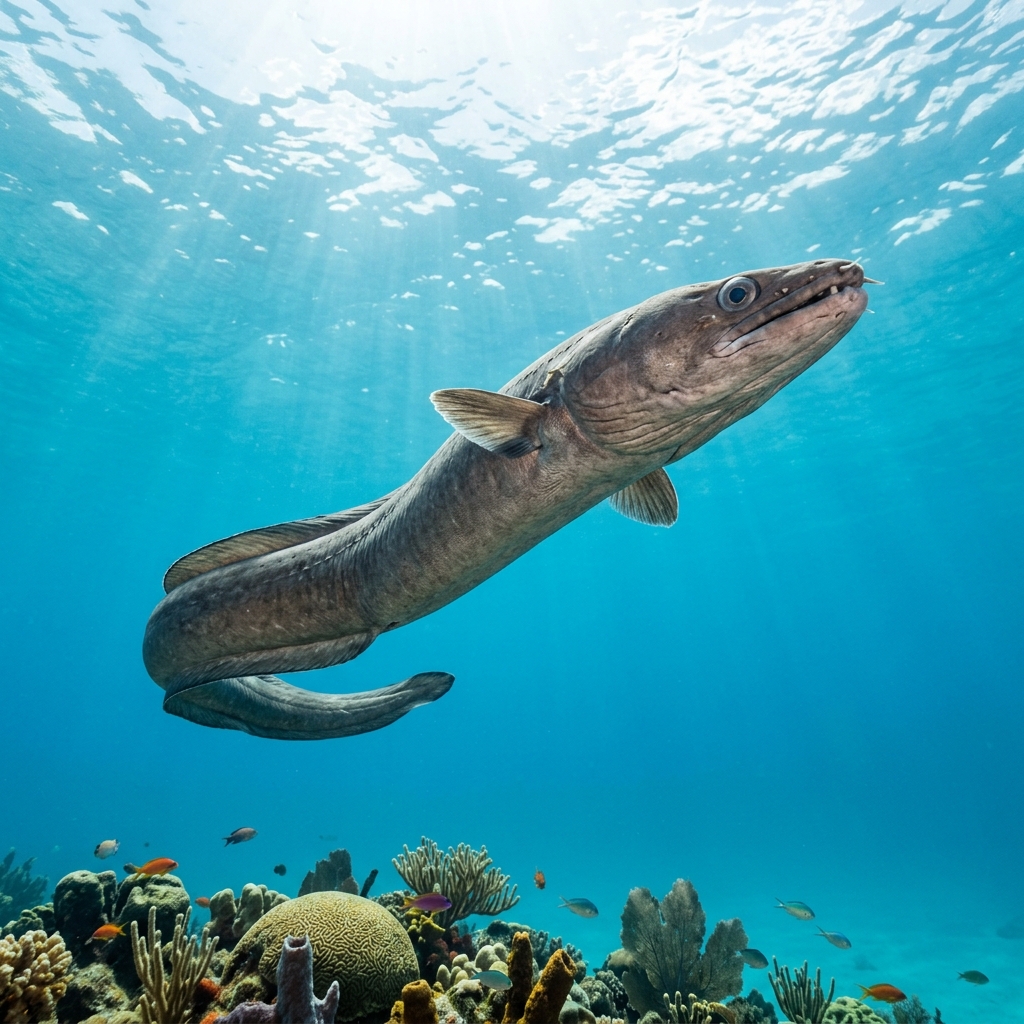
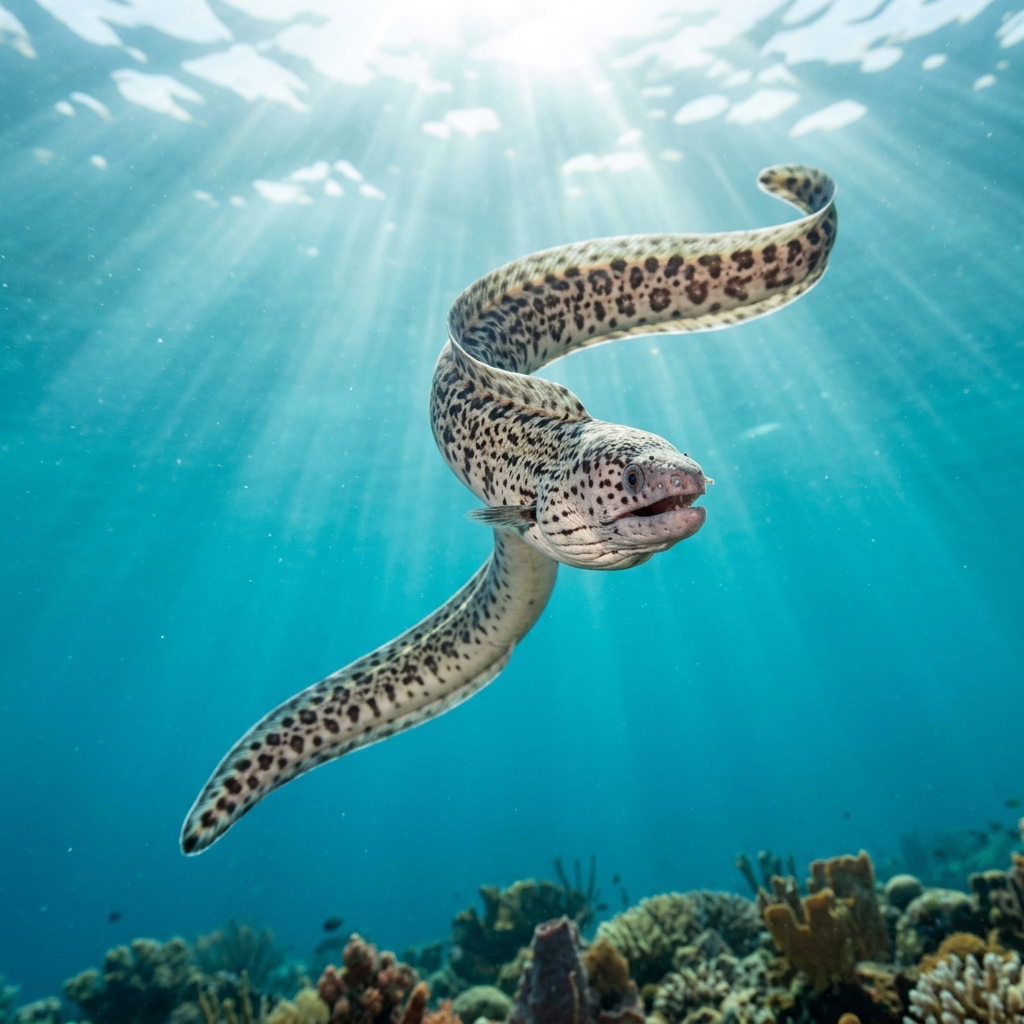
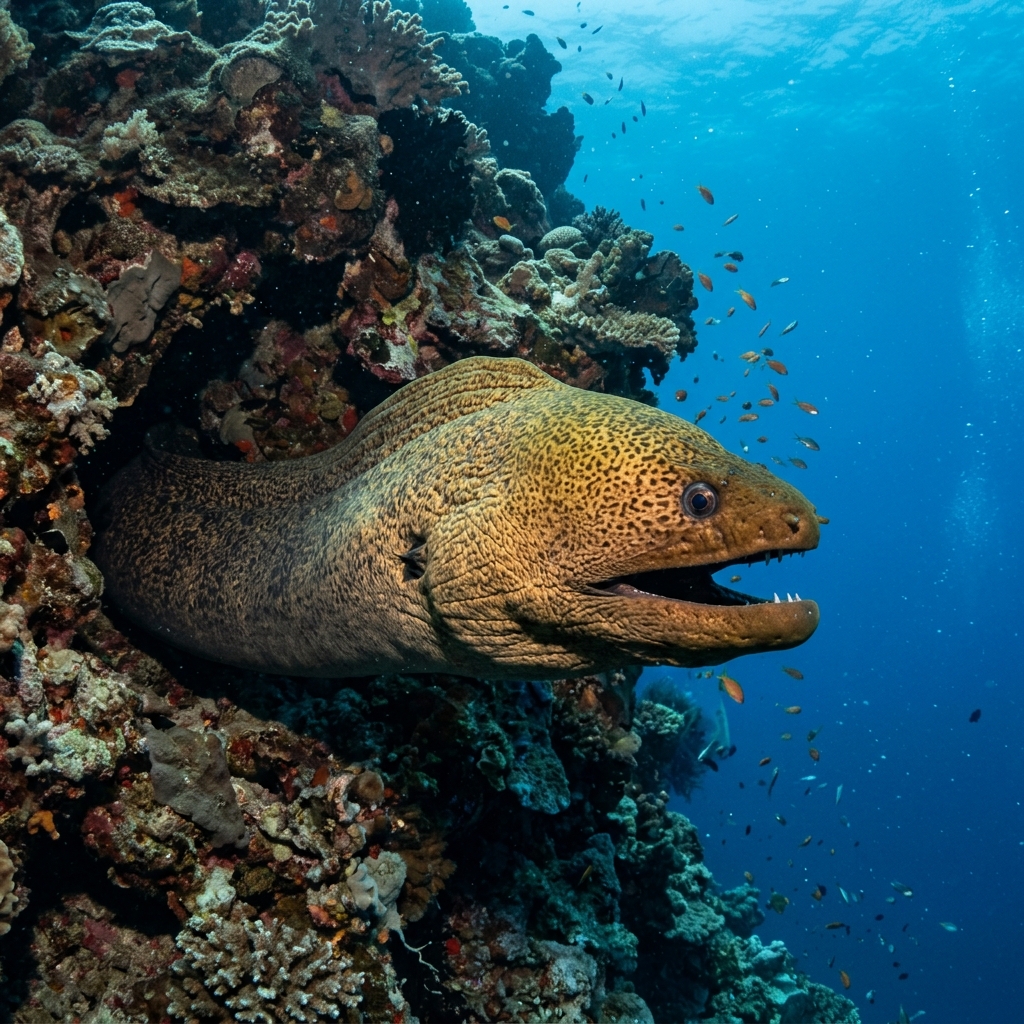
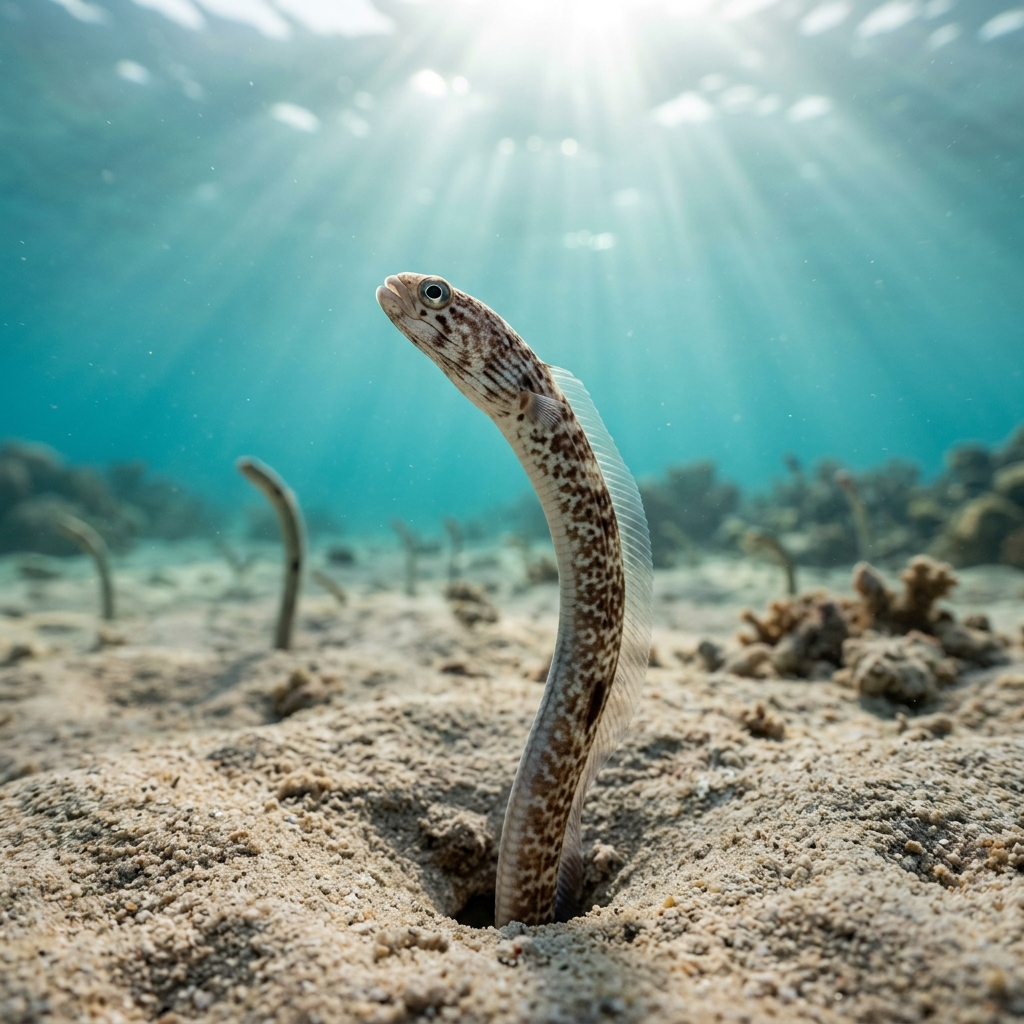
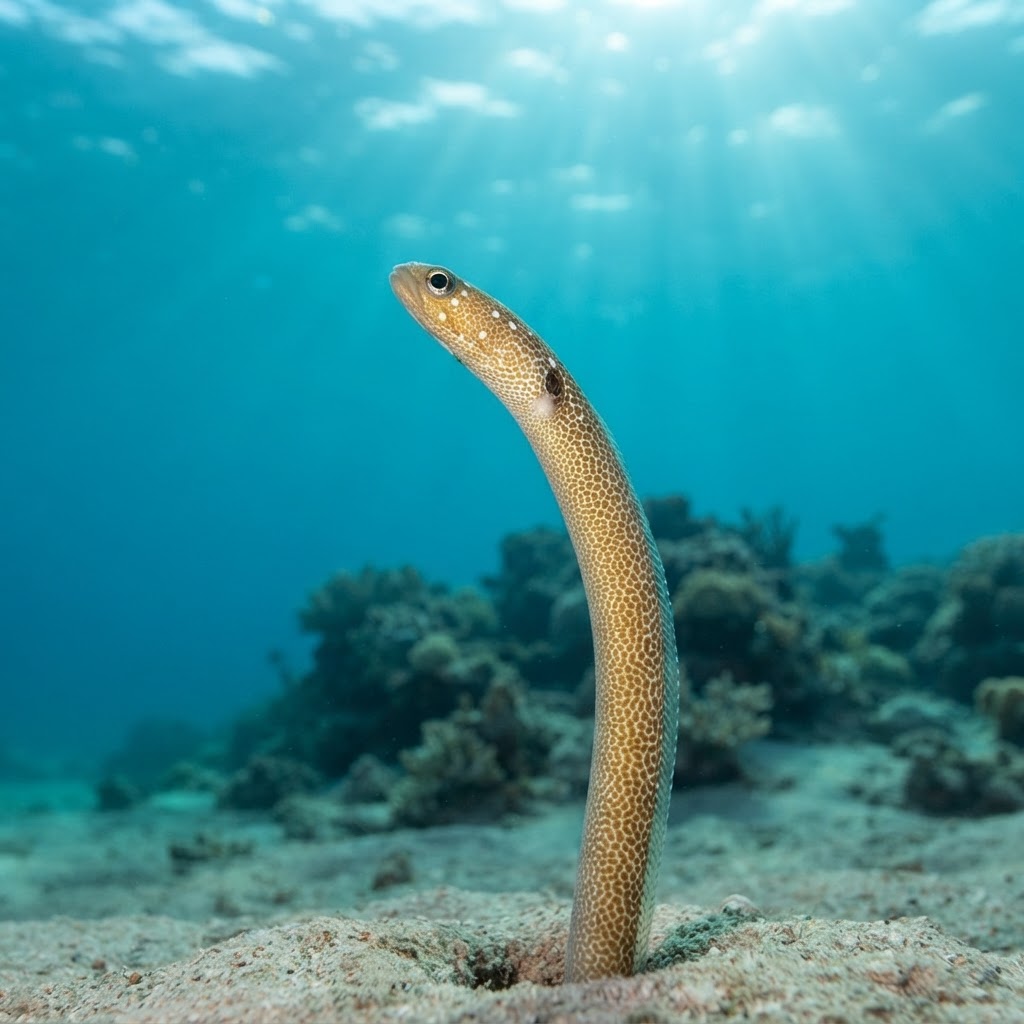
A slender, tube-shaped body up to about 85 cm long, though only the front third or so ever pokes above the sand while the rest stays anchored below. Colouring runs pale grey to sandy brown, often with fine speckling that helps it blend into the substrate it lives in. Look for a colony of these upright, swaying forms poking from a sand or rubble slope, each one retracting into its burrow the moment it senses movement nearby.
Found in loose colonies on open sand or rubble slopes, each eel anchored tail-down in its own burrow and body swaying gently with the current to feed on drifting plankton. They are shy around divers, sinking back into their burrows as soon as a diver approaches too closely or too quickly, which means a slow drift-by from a distance gives the best chance of watching them feeding rather than just glimpsing tail-tips disappearing into sand. Colonies tend to sit in slightly deeper, current-swept sand patches away from the reef itself.
Garden eels never leave their burrow entirely; each individual secretes mucus that cements the burrow walls, so the same eel can spend essentially its whole adult life anchored in that one spot of sand.
There is no strong seasonal pattern in the sightings, so treat this as a year-round species on the sites where it occurs. Observed water temperatures sit in a narrow 27.2 to 29.3 C band, consistent with a species that stays comfortable on tropical sand slopes all year.
Most consistently logged on sandy slopes in the Visayas region of the Philippines, which accounts for the large majority of confirmed sightings, with additional records from Luzon in the Philippines and from Bali, Indonesia. Divers heading to the Philippines have by far the best odds of finding a colony.
Mapping where Barnes' Garden Eel is logged…
The strongest sightings come from the Visayas region of the Philippines, with further records from Luzon and from Bali in Indonesia. The Philippines overall offers the best odds of finding a colony on sandy slopes.
There is no clear seasonal pattern in the sightings, so they can be found year-round on the sites where they occur. Water temperatures on these sites stay in a warm 27.2 to 29.3 C range throughout.
Look for slender, grey to sandy-brown bodies rising from open sand or rubble in a loose colony, each one swaying in the current with only its front portion visible above the burrow. They are uncommon, so spotting a colony at all is the main challenge before ID.
They reach around 85 cm in total length, though most of that length stays buried in the sand burrow and only a fraction is ever visible to a diver.
No, they pose no danger to divers. They are shy filter feeders that retreat into their burrows well before a diver gets close.
Each eel builds and cements its own burrow with mucus and rarely if ever leaves it, feeding on passing plankton while anchored tail-first in the sand for most of its life.
Site and sighting data is aggregated from diver logs, iNaturalist and GBIF. For taxonomy and conservation status:
Garden Eel
2,448 sites