Barbatula barbatula
Spot stone loach in the Limburg Lakes, Netherlands, in cool water between 6 and 17 °C. Here's what to look for on the riverbed.
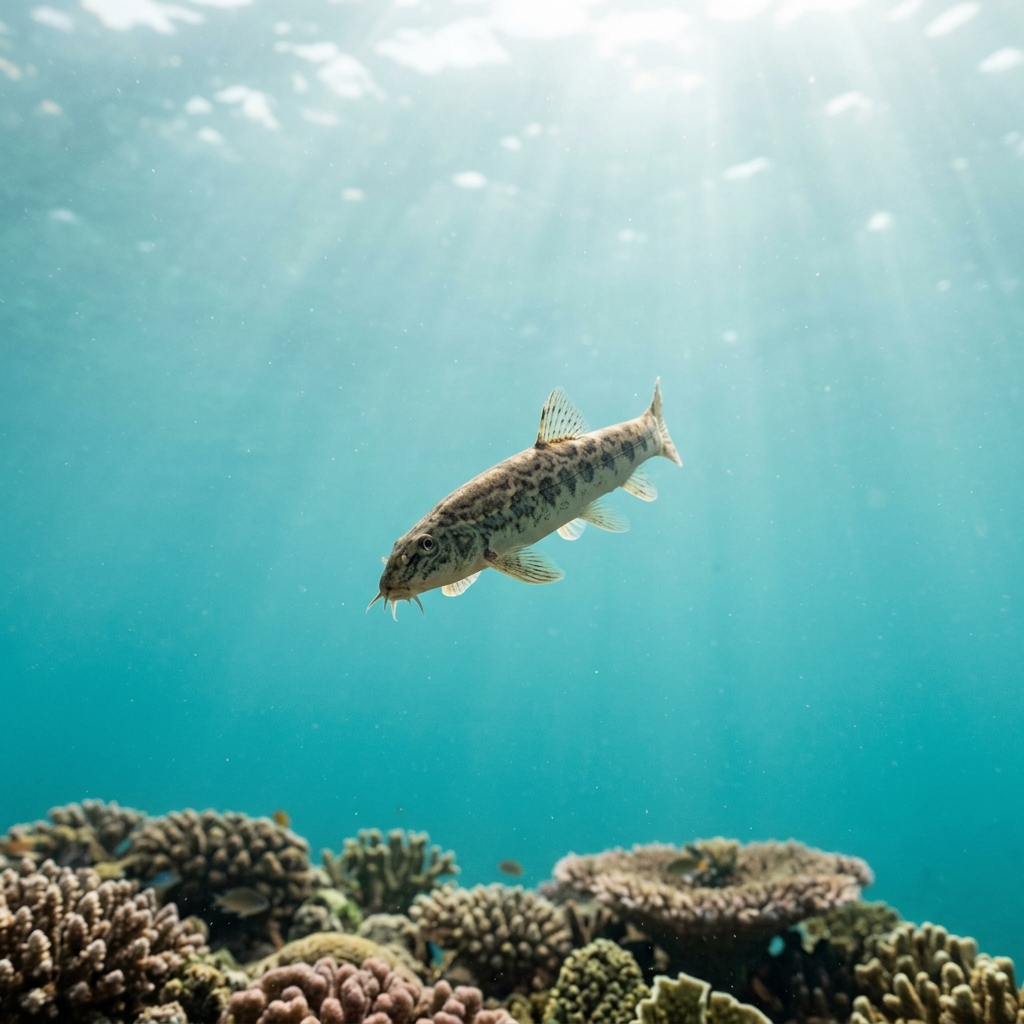
A small, elongated fish that hugs the bottom, the stone loach is mottled brown and cream with darker blotches running along the flanks, making it blend almost perfectly into gravel or sand. Look for the six short barbels (whisker-like sensory projections) framing the downward-facing mouth, that cluster of barbels is the single most reliable field mark. The body is roughly cylindrical and quite slender, tapering to a small, rounded tail.
Stone loach are benthic (bottom-dwelling) fish that spend most of their time resting motionless on gravel, sand, or among leaf litter, which is exactly how divers usually encounter them. They tend to stay very still when approached, relying on their camouflage rather than fleeing, which makes a slow, careful approach worthwhile. Activity picks up at low light, so dusk dives or dives in shaded, deeper water may improve your odds of catching one moving.
Stone loach can absorb oxygen directly through their skin as a supplement to gill breathing, which helps them survive in the low-oxygen conditions of silty lake beds and slow-moving water, habitats where other small fish struggle.
There is not enough monthly sighting data to pinpoint a peak season, so it should be treated as a year-round possibility. It is recorded in water as cold as 5.7 °C, so cool Dutch winters do not push it out of range.
All recorded dive observations come from the Netherlands, concentrated in the Limburg Lakes region. If you want a realistic chance of an encounter, Limburg is currently the only region where divers are logging this species.
Mapping where Stone Loach is logged…
Diver observations are concentrated in the Netherlands, specifically the Limburg Lakes region. This is currently the only area where stone loach sightings have been reliably logged by divers, making Limburg the go-to destination if you're hoping to see one.
There is no clear seasonal peak in the sighting data, so stone loach can be considered a year-round possibility. They are recorded in water temperatures from under 6 °C to around 17 °C, meaning cold-water months in the Netherlands do not drive them away.
Look for a small, slender, bottom-hugging fish with mottled brown and cream blotches. The key feature is the ring of six short barbels around the downward-pointing mouth. It rarely lifts off the substrate, so check gravel and sand carefully, the camouflage is very effective.
Stone loach are small fish, typically reaching around 8 to 12 cm in length in the wild, though Fin's current data does not include an observed size from dive logs. Expect a fish roughly the length of a finger.
Yes, stone loach can supplement gill breathing by absorbing oxygen through their skin. This lets them survive in silty, low-oxygen environments that many other small freshwater fish cannot tolerate, which explains why they are found in calm lake beds and slow rivers.
Site and sighting data is aggregated from diver logs, iNaturalist and GBIF. For taxonomy and conservation status:
Sun Perch
2,182 sites