Ariosoma balearicum
Sandy-bottom eel logged year-round from Murcia to the Turquoise Coast, comfortable in 19 to 28C water. Here's where to find it.
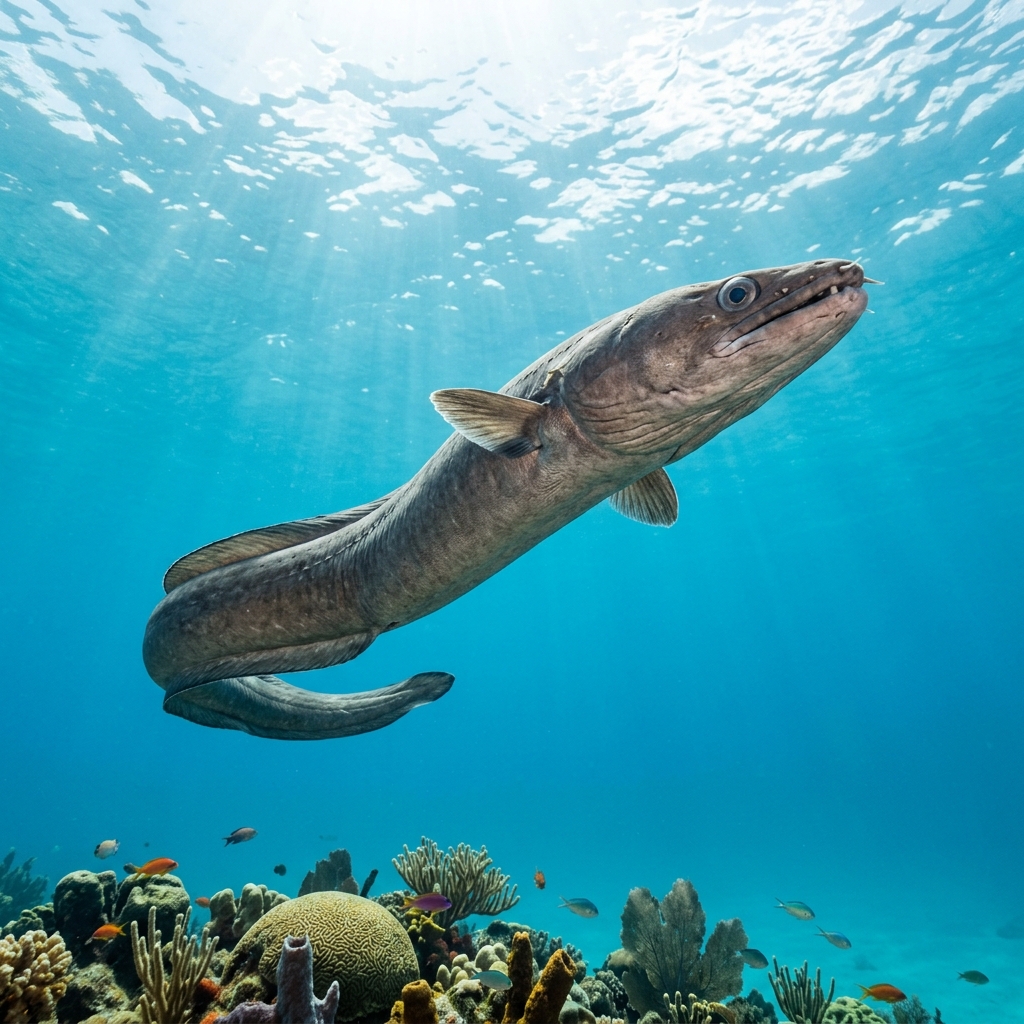
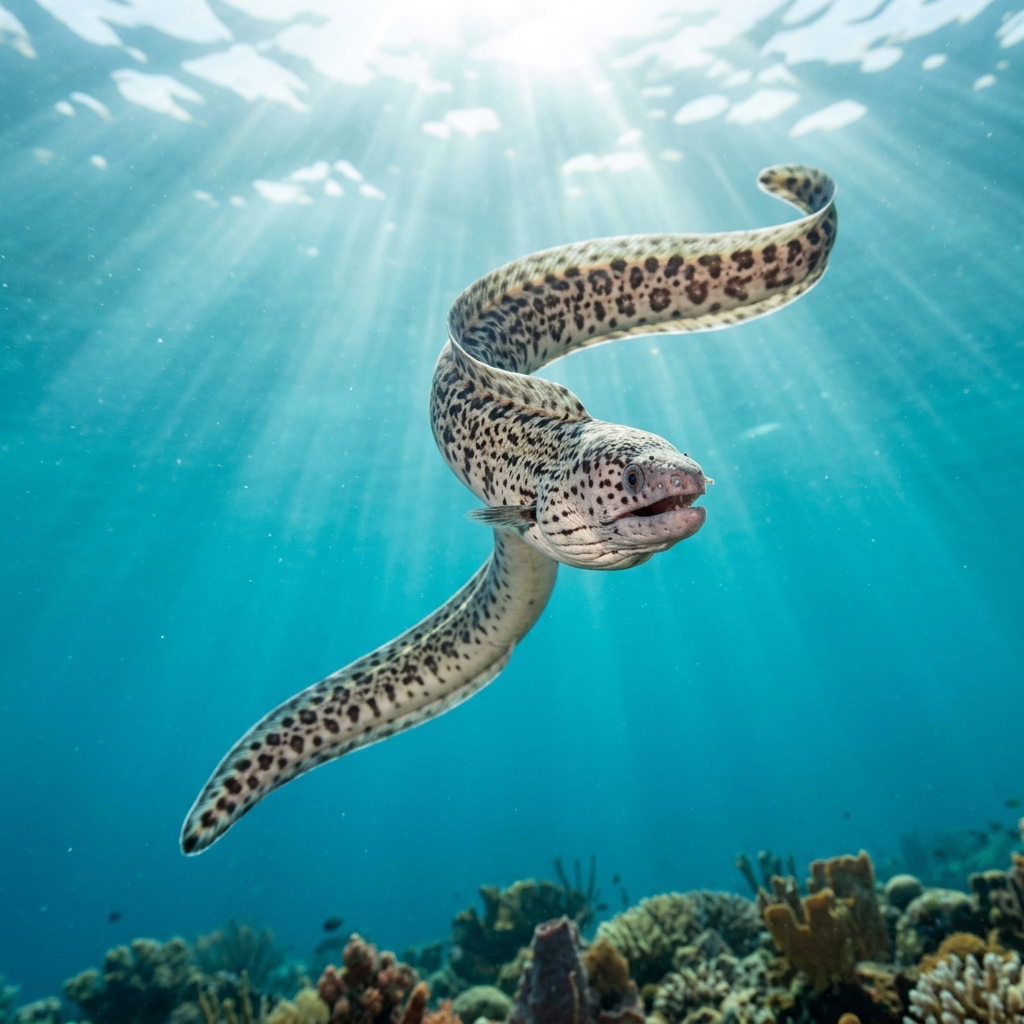
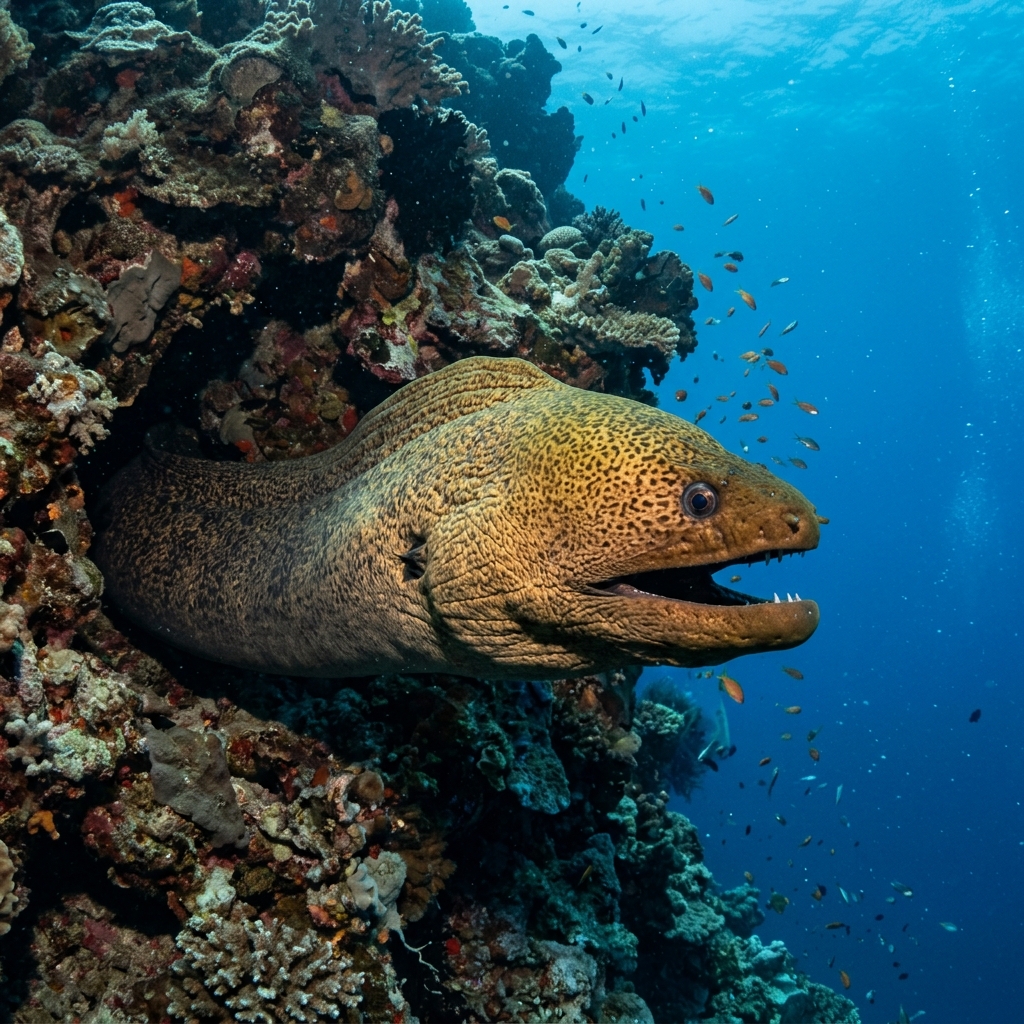
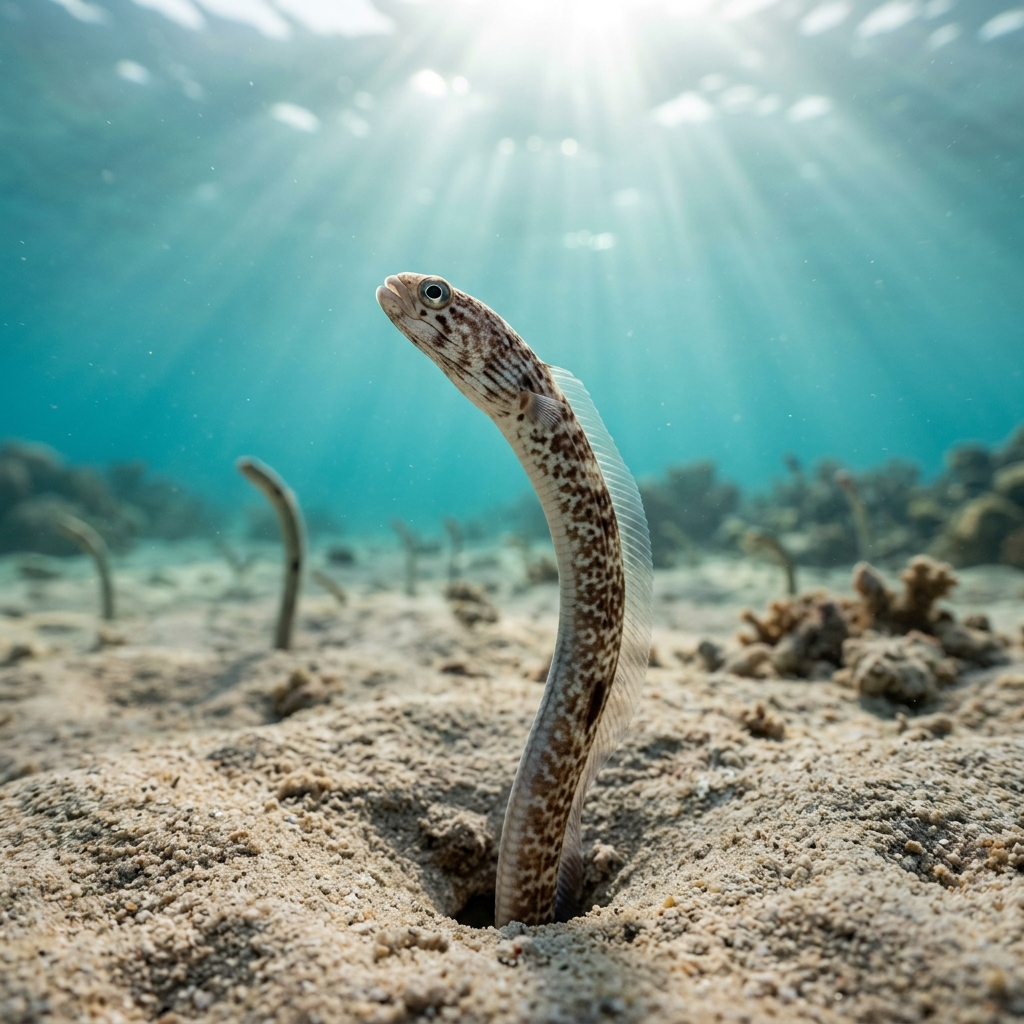
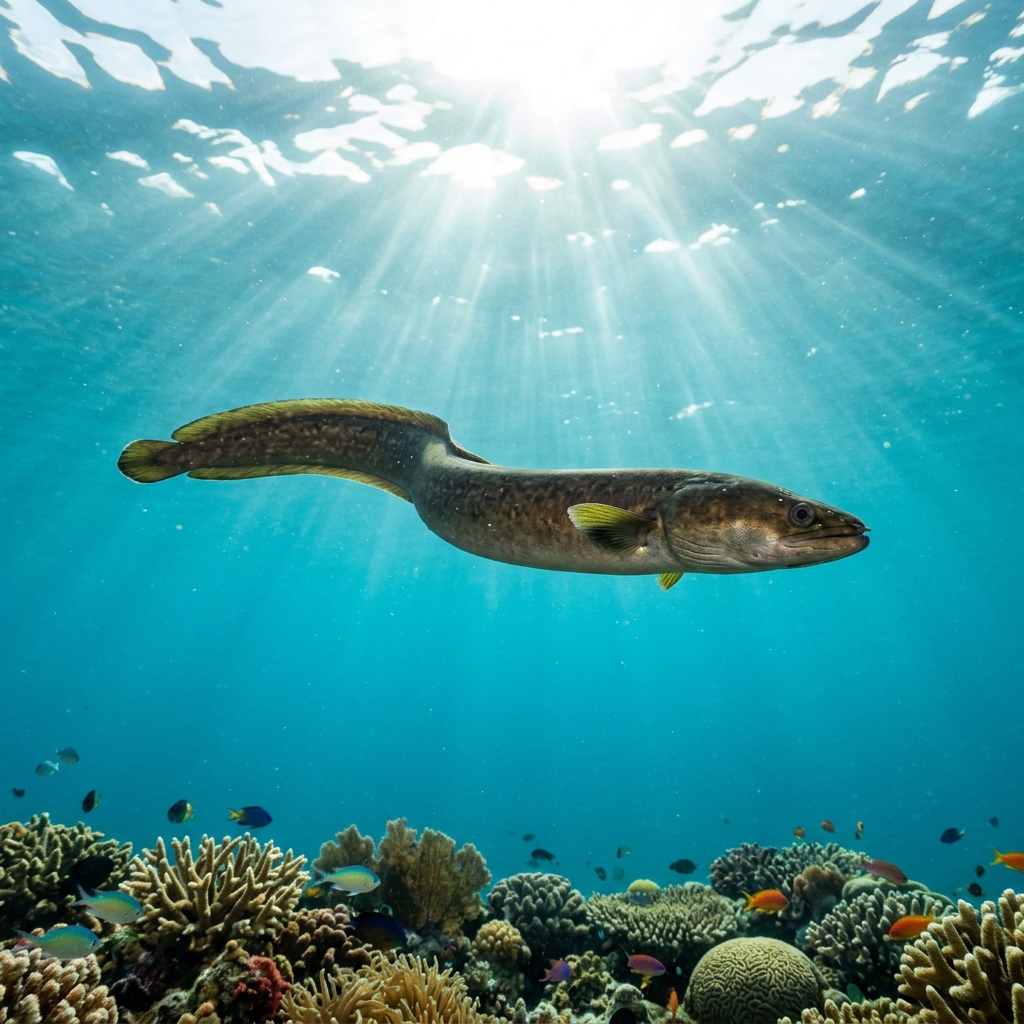
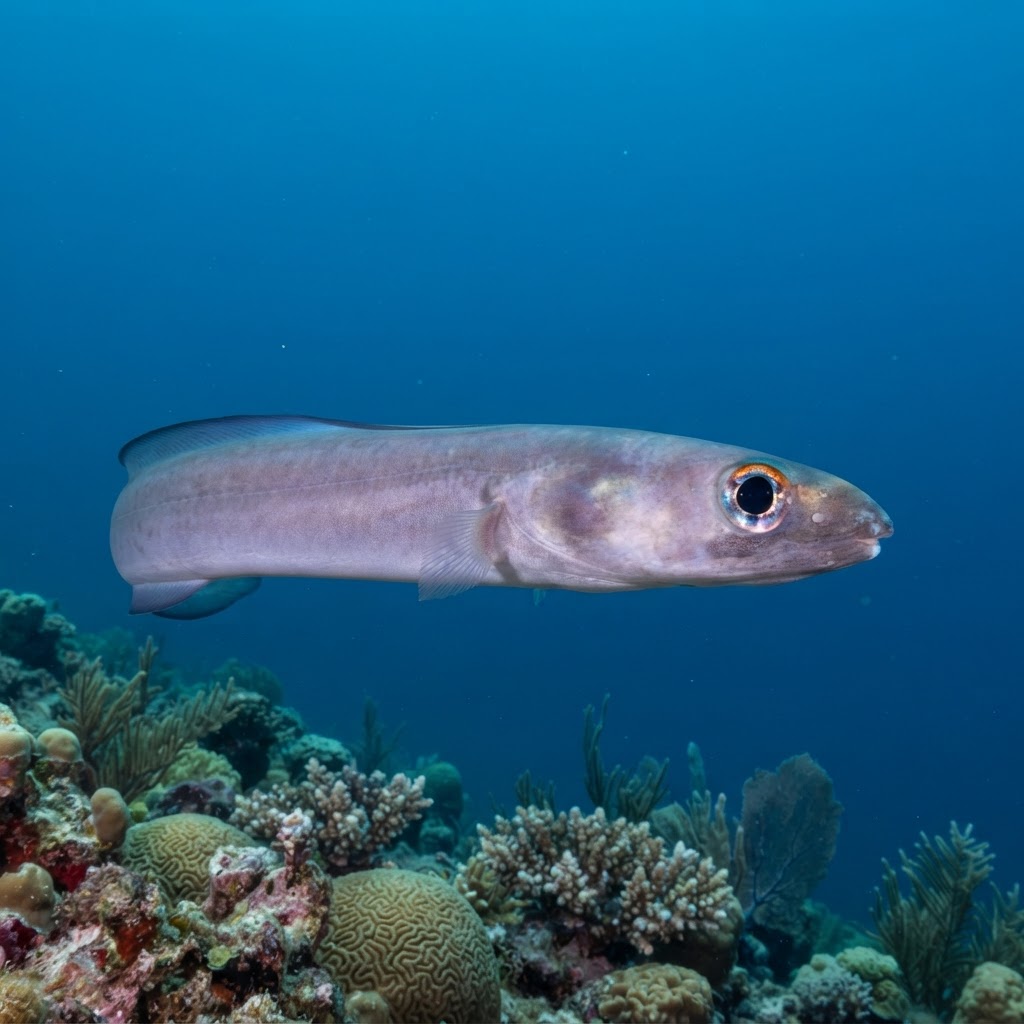
A slender, pale sandy-brown eel around 24cm long, usually seen with just its head and a short length of body poking out of a burrow in sand or rubble near reef structure. Look for the dark eye set against a lighter, unbanded body and the tapering, snake-like profile typical of conger eels rather than the thicker build of a moray. It has no obvious bold pattern, which is itself a clue when ruling out the boldly marked morays it sometimes gets confused with at a glance.
Divers most often find it tucked into a burrow in sand, rubble or gravel patches close to reef edges, with just the head visible watching the water column. It is not a fish that swims out to greet divers; approach slowly and it will usually hold position rather than bolt, though a sudden move overhead sends it straight back into its hole. Most logs describe it as an uncommon find rather than something you can reliably plan a dive around, so a slow scan of open sandy patches near rock or reef is the best way to spot one.
Like other conger eels, it spends most of daylight hours with its body anchored in a burrow and only the head exposed, using the hole as a base to ambush small prey that drifts or swims within range.
Sightings show no clear seasonal pattern, and with a comfortable range of roughly 19 to 28C it can turn up on Mediterranean and Atlantic reefs at almost any time of year. Treat it as a year-round possibility rather than a seasonal target.
Spain is the strongest base for this species, especially around Murcia, with further reliable sightings across the Canary Islands in Lanzarote, Tenerife and El Hierro. It also turns up along Turkey's Turquoise Coast, in Tuscany and Corsica, and less often in Occitanie and Greece.
Mapping where Bandtooth Conger is logged…
Spain is the most reliable country, particularly Murcia, with strong records across the Canary Islands in Lanzarote, Tenerife and El Hierro. It's also logged along Turkey's Turquoise Coast, in Tuscany and Corsica.
There's no strong seasonal pattern in the sighting data, so it's best treated as a year-round species on Mediterranean and Atlantic reefs where water stays within its 19 to 28C comfort range.
Look for a slender, pale sandy-coloured eel around 24cm long with its head poking out of a burrow in sand or rubble near reef structure, lacking bold banding or blotches.
They typically reach about 24cm, making them a small, easily overlooked eel compared to larger reef-associated congers and morays.
No, they are not considered dangerous to divers. They stay burrowed in sand or rubble and retreat rather than confront anyone nearby.
It spends most of its time anchored in a burrow with only its head exposed, ambushing small prey from that fixed position rather than actively hunting across open reef.
Site and sighting data is aggregated from diver logs, iNaturalist and GBIF. For taxonomy and conservation status:
Garden Eel
2,448 sites