Soleichthys heterorhinos
A speckled, wavy-finned flatfish rarely spotted on sandy patches in Okinawa and Saipan, comfortable in 25 to 29 C reef water year-round.
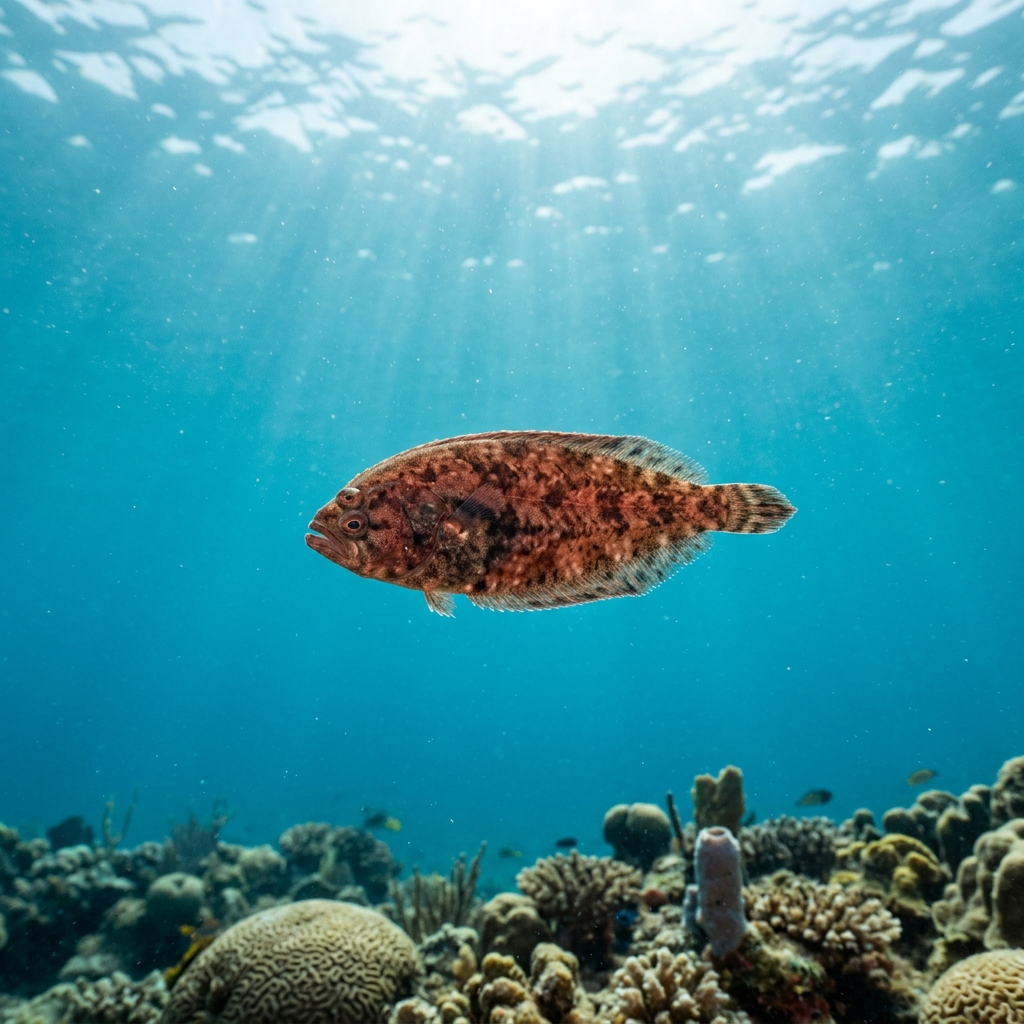
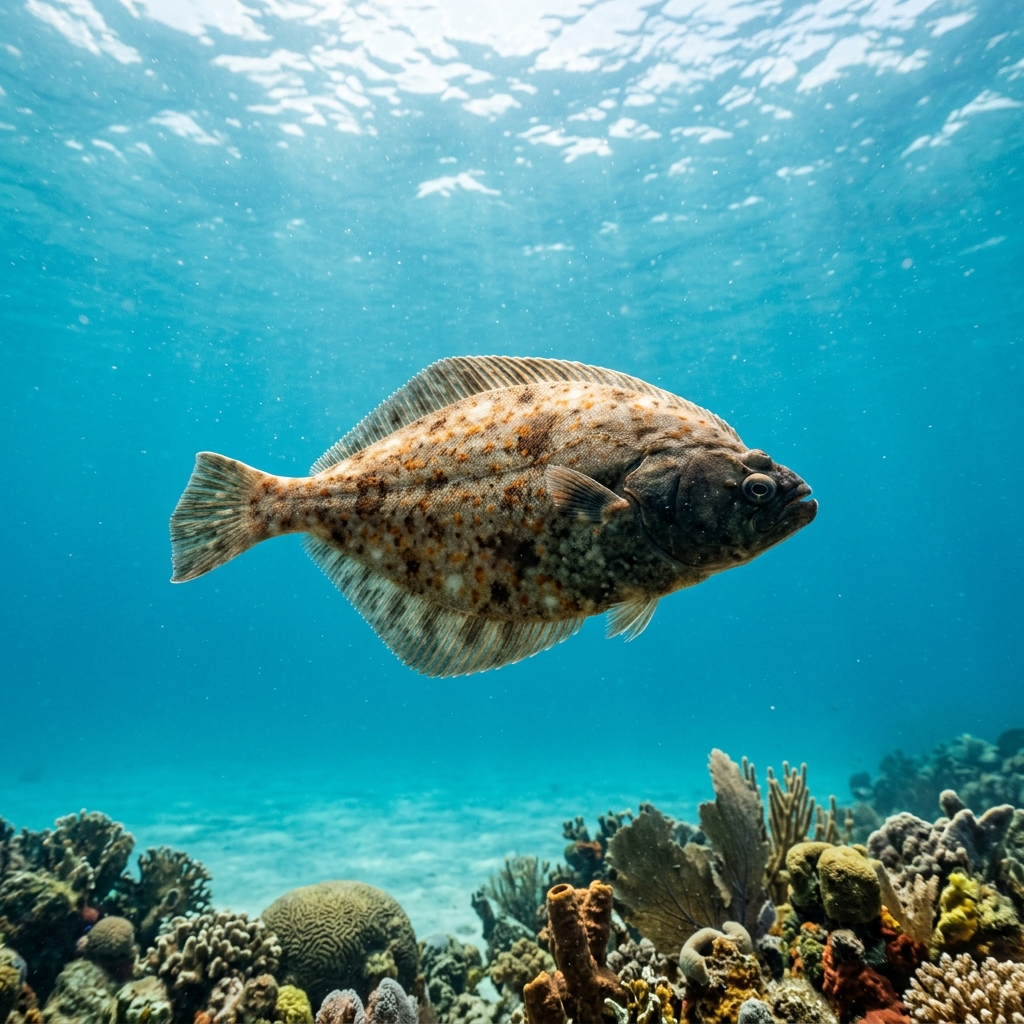
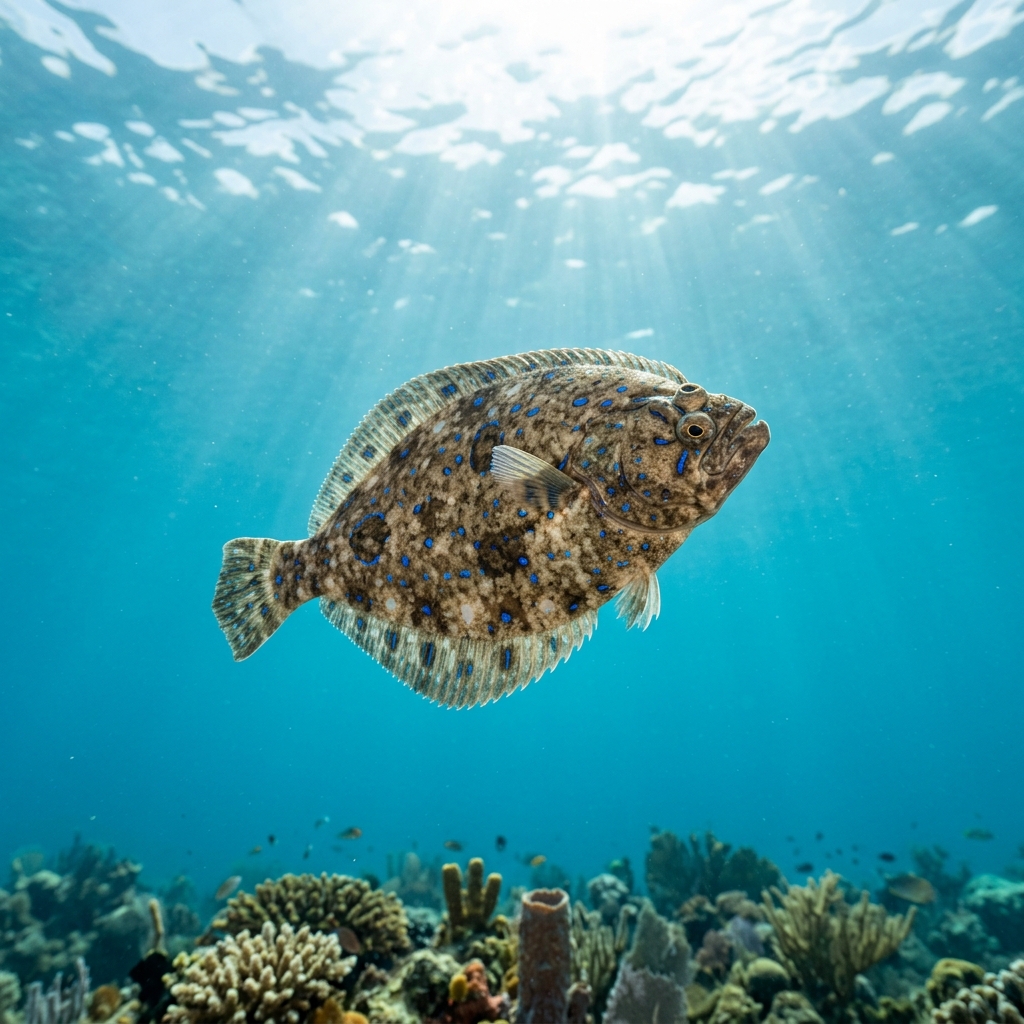
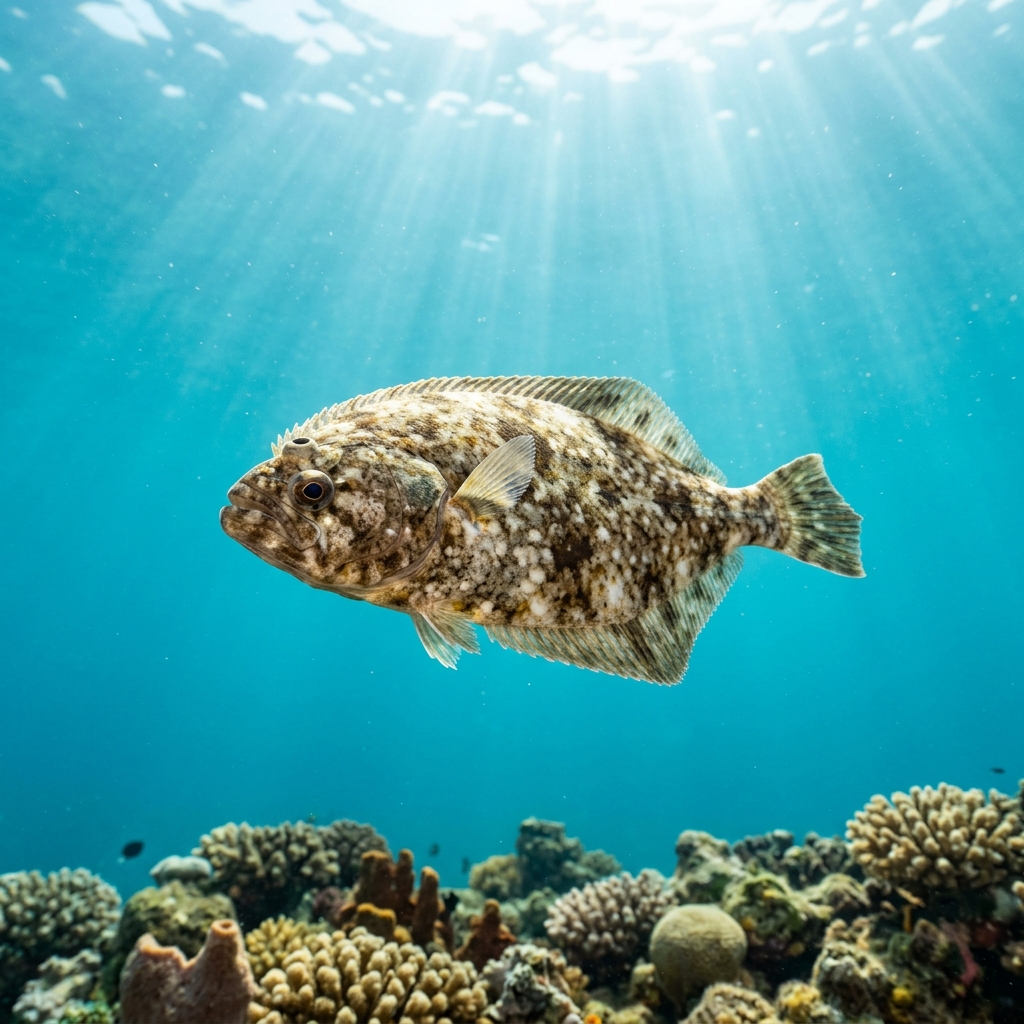
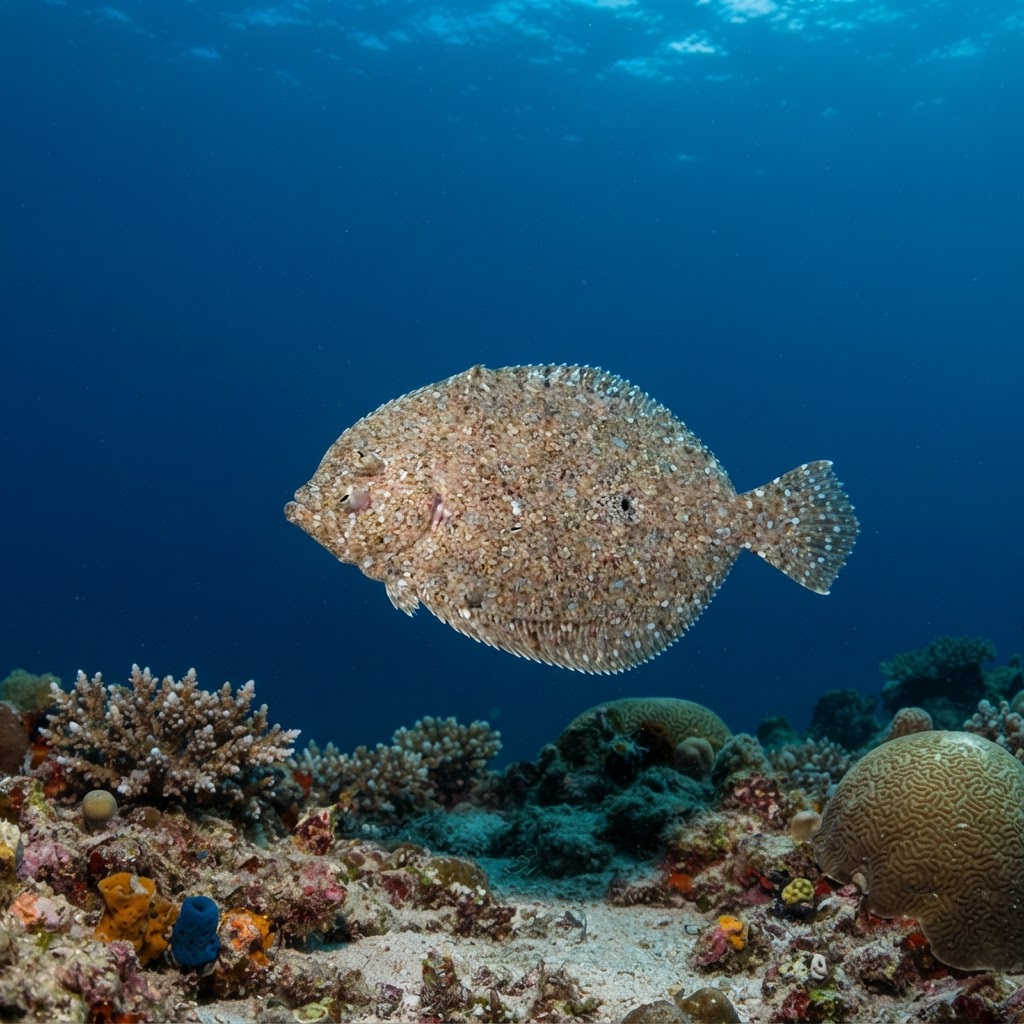
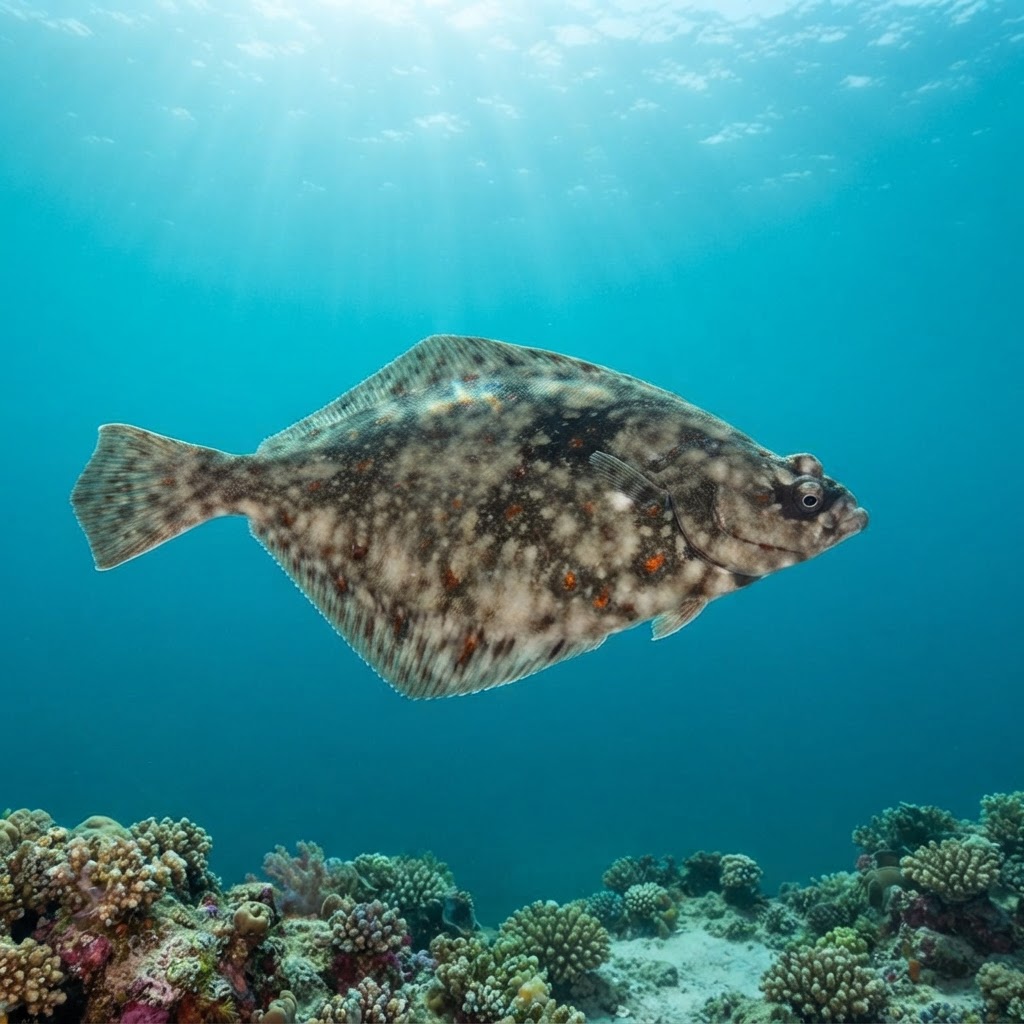
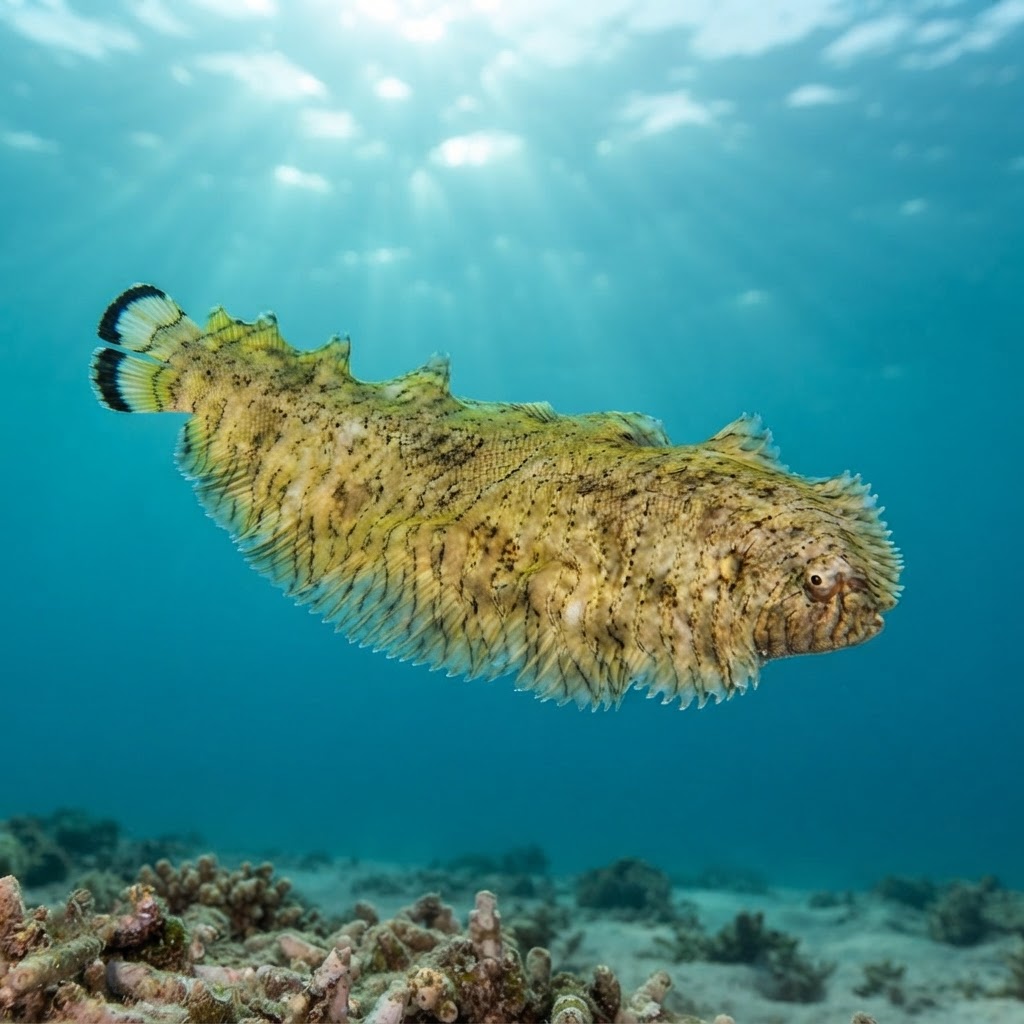
A small, flattened fish barely 13 cm long, lying almost invisible against sand or rubble with both eyes on one side of its head. Look for a mottled brown-and-cream banded pattern across the body and a continuous, frilly fin edge that runs almost all the way around it, giving a wavy outline rather than a fish-shaped silhouette. It tends to sit dead still, so divers usually spot it by the pattern breaking up the plain sand rather than by movement.
Spends most of its time resting motionless on sand, rubble or fine sediment patches, relying on its banded camouflage rather than fleeing when divers approach. It's logged as uncommon to rare at the sites where it appears, so most sightings come from divers deliberately scanning open sand rather than reef structure. When disturbed it tends to make a short, low glide before settling again rather than darting off.
Like other soles, it has both eyes on the same side of its head, an adaptation that lets it lie flat with one side pressed to the seabed while still watching for predators above.
Sightings show no clear seasonal pattern, and the observed water temperature range of 25.1 to 29.3 C is typical of tropical and subtropical reefs year-round, so there's no particular month to plan around.
Most reliably logged in Japan, especially around Okinawa and the Ryukyu Islands, with a second cluster of sightings off Saipan in the Northern Mariana Islands. Smaller numbers turn up in Nusa Tenggara, Indonesia, and off Dili in Timor-Leste, so it's a wider Indo-Pacific find rather than a one-country specialty.
Mapping where Banded Sole is logged…
Japan's Okinawa and Ryukyu Islands region has the most logged sightings, with Saipan in the Northern Mariana Islands a close second. It's also been recorded in Nusa Tenggara, Indonesia, and near Dili in Timor-Leste.
There's no detected season in the sighting data, and it's found in water from about 25 to 29 C, so it can turn up on tropical reefs at any time of year.
Scan sandy or rubble patches for a flat, oval outline with brown and cream banding and a frilly fin running around its edge. It rarely swims off when spotted, so once you see the pattern break up the sand it's usually easy to confirm.
They're small, reaching around 13 cm in length, so they're easy to miss unless you're actively looking at sand and rubble areas.
It's a flatfish adaptation: as it settles to lie flat on the seabed, one eye migrates over so both can watch for danger from above while the fish stays camouflaged against the substrate.
Site and sighting data is aggregated from diver logs, iNaturalist and GBIF. For taxonomy and conservation status:
Wide Eyed Flounder
1,624 sites