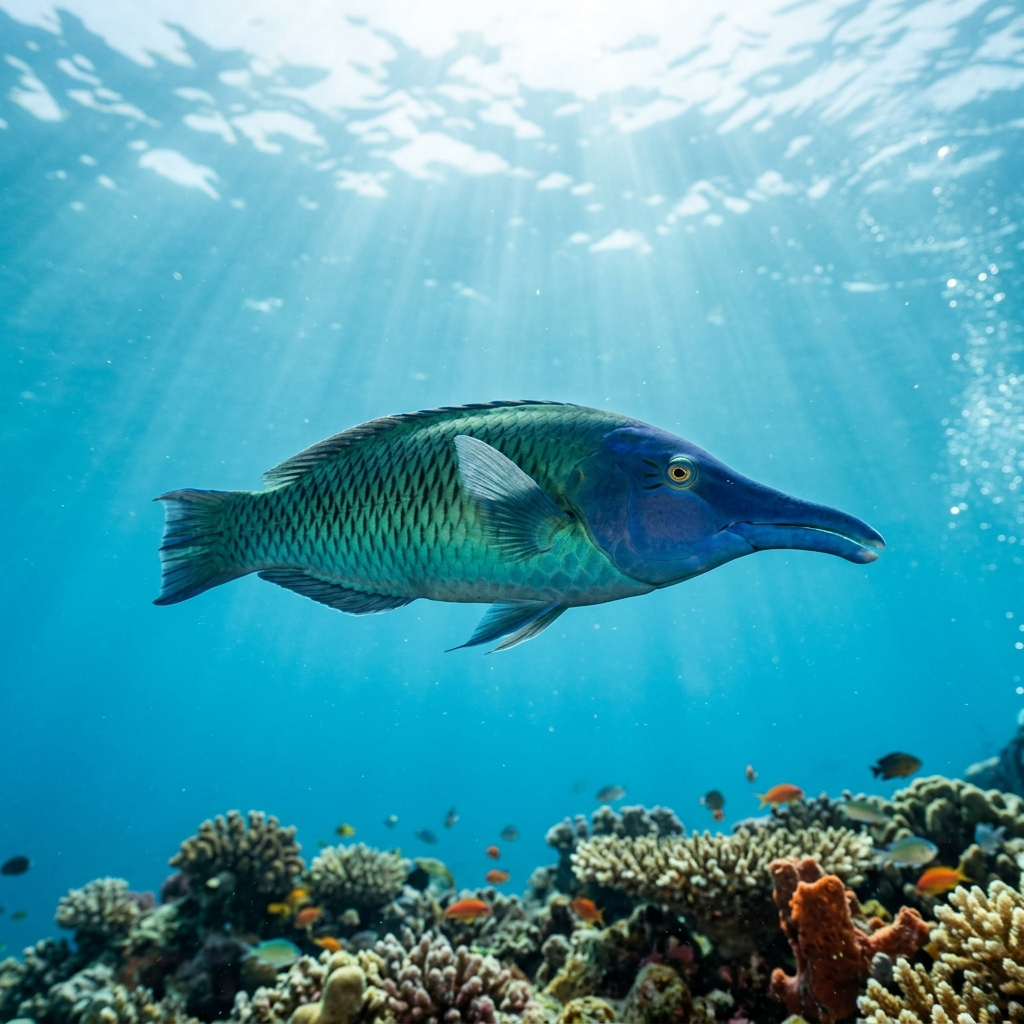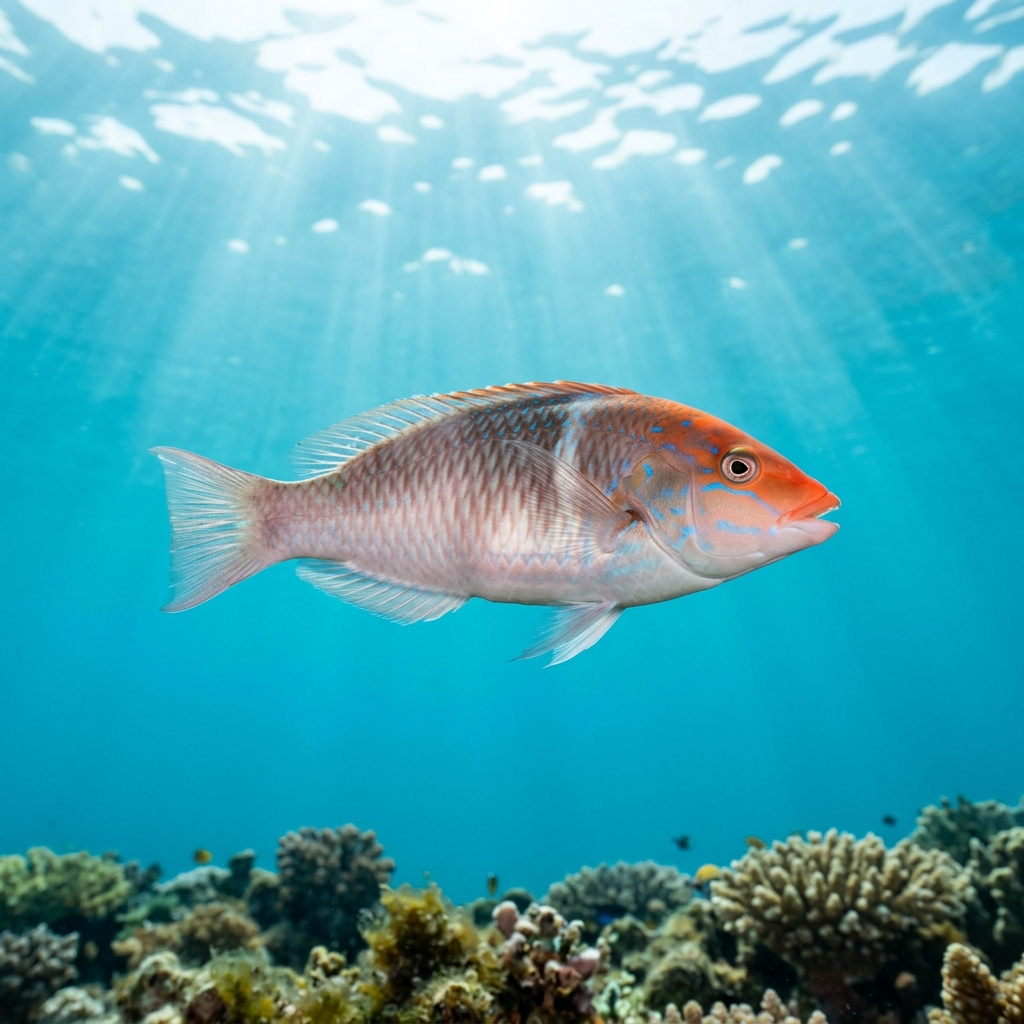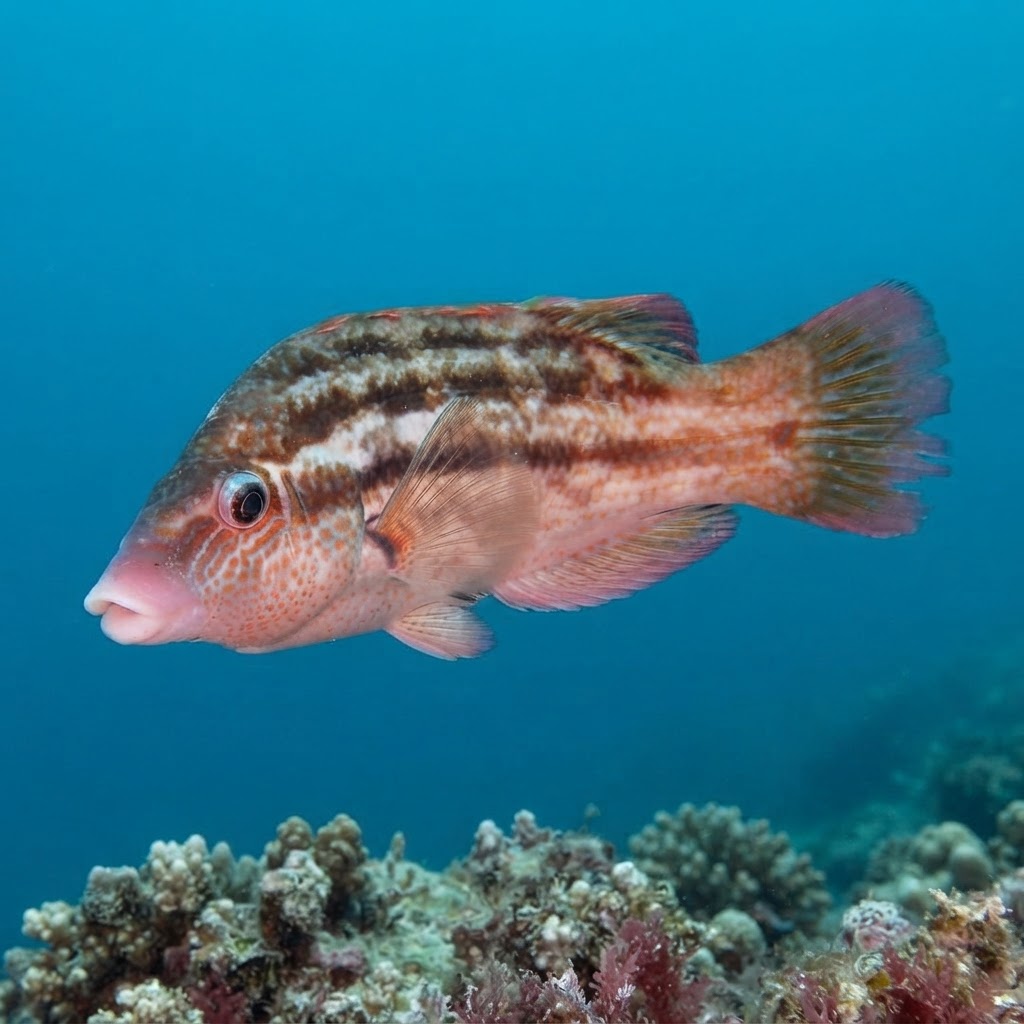
Symphodus bailloni
Small reef wrasse most often logged along the Bay of Biscay and Lisbon Coast, in cool 9-19C Atlantic water, year-round.
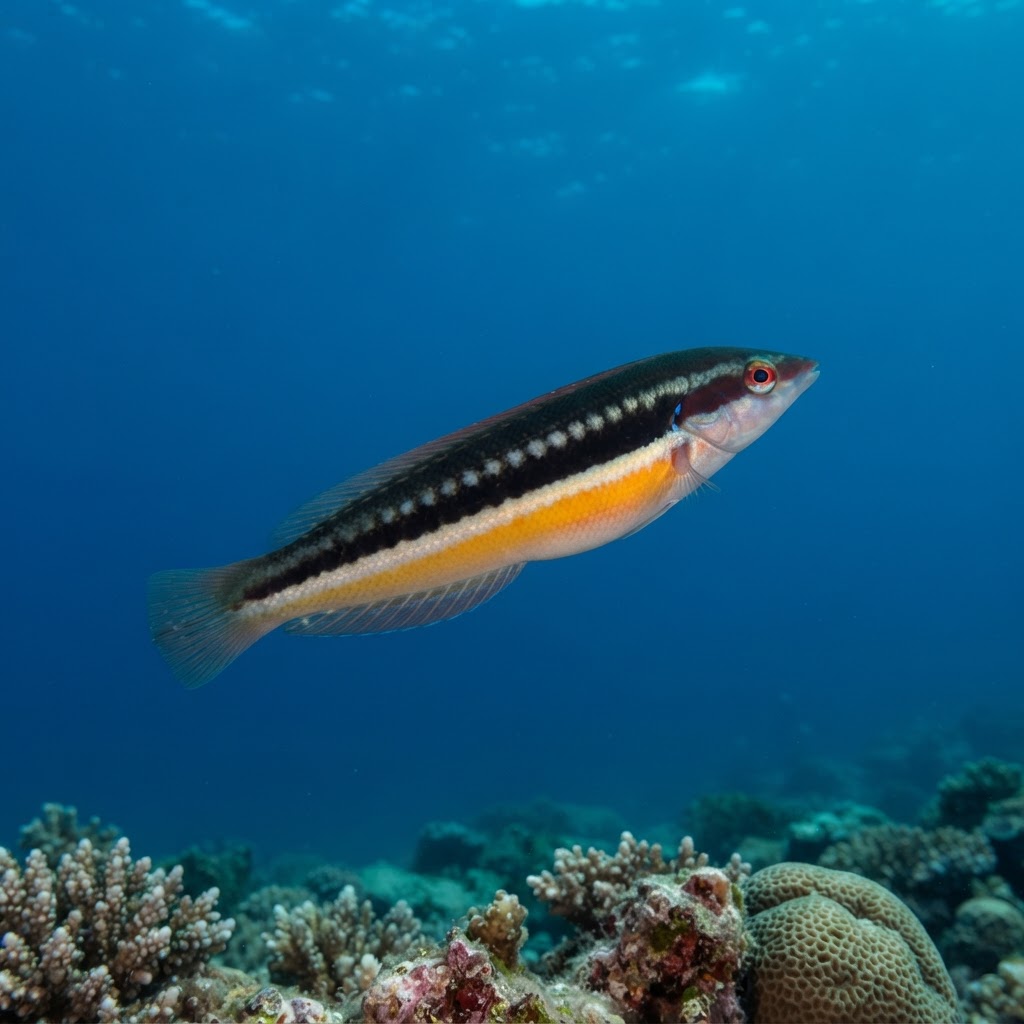
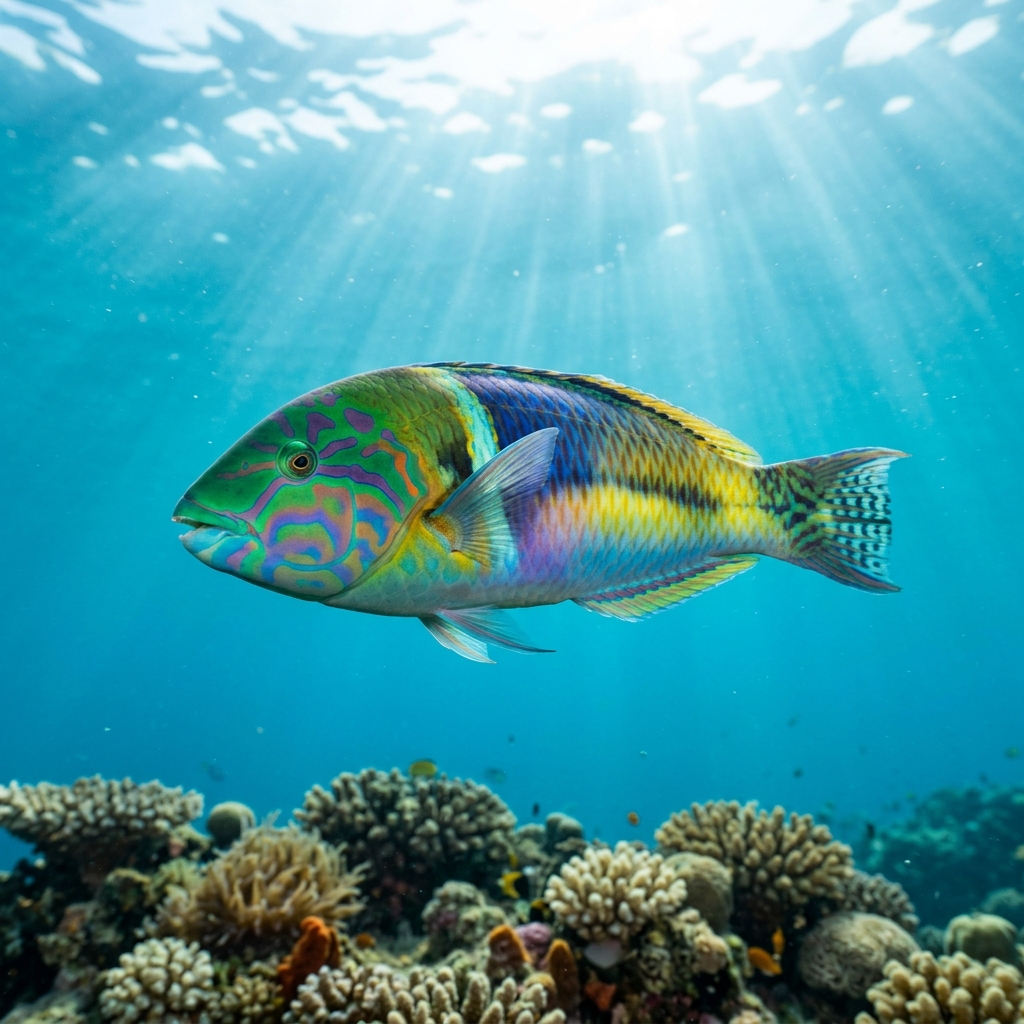
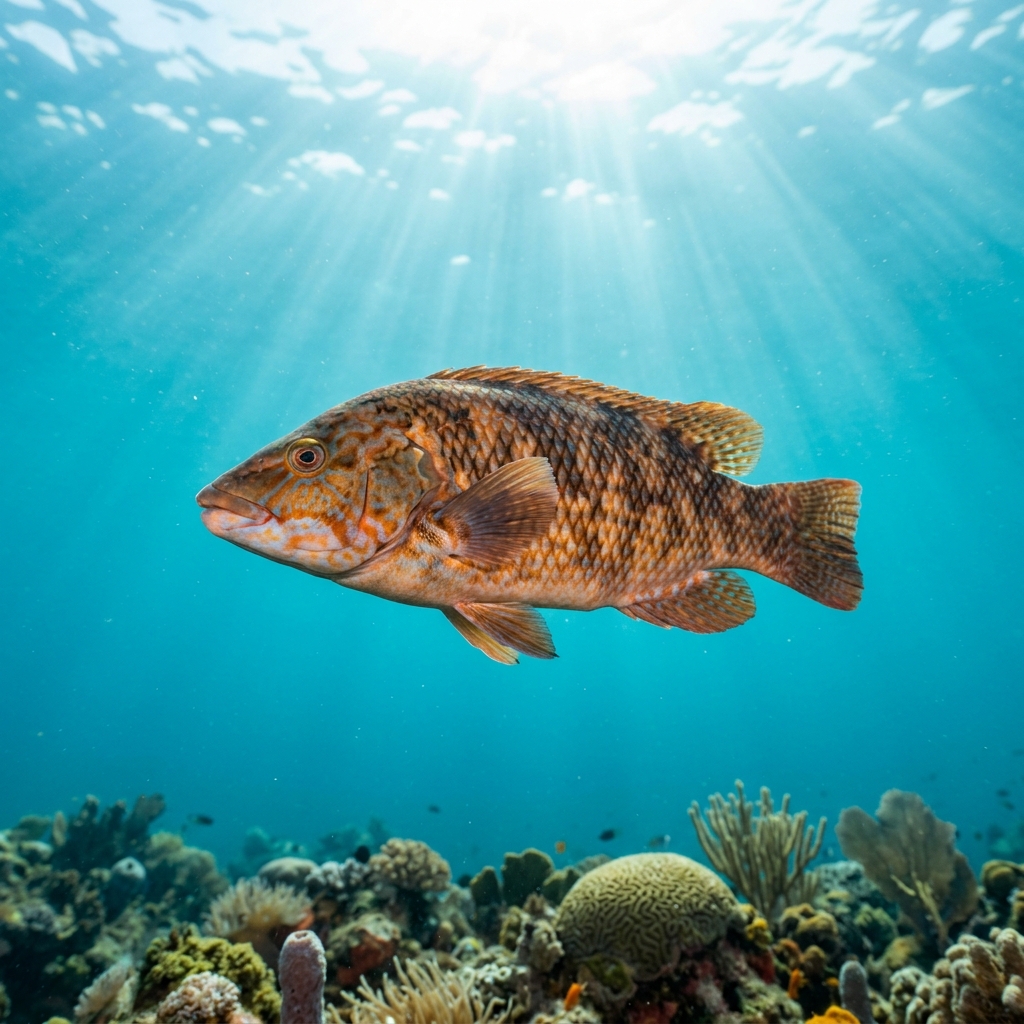
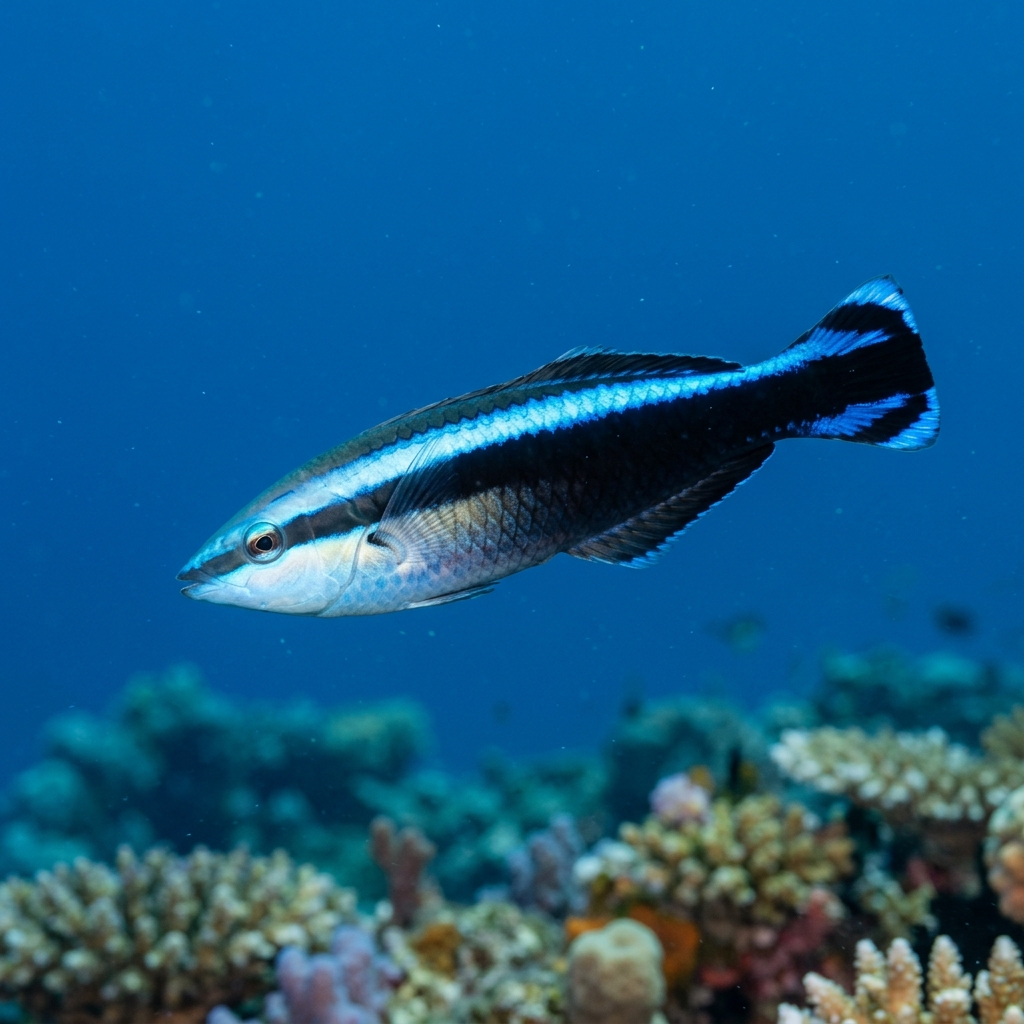
A small, slender wrasse rarely more than 14 cm, with a mottled brown to olive body flecked with orange and pale blotches that break up its outline against rock and weed. Look for a slightly pointed snout and a single dark spot near the base of the tail, a common wrasse marker. It tends to hang close to rocky crevices rather than open water, so it reads as a small, camouflaged shape rather than a bold swimmer.
Divers usually find it tucked close to rocky reef structure, picking around crevices and weed rather than cruising in open water. It's an uncommon-to-rare find at most sites it's logged, so sightings tend to be brief, low-key encounters rather than repeated close approaches, and it doesn't show much interest in divers either way.
Like many Symphodus wrasses, it likely builds or uses simple nests among rock and algae for spawning, a trait typical of the genus that separates its breeding behaviour from open-water broadcast spawners.
No clear seasonal pattern shows in the sightings, and it's found across a wide 8.9 to 18.9C range, so it's logged year-round at these Atlantic sites rather than in one particular month.
Reef neighbours a diver could mistake it for. Use the identification notes above to tell them apart.
Most reliably logged in France, especially around the Bay of Biscay and Brittany, and in Portugal along the Lisbon Coast and Costa Verde. Spain's Cantabrian Coast also turns it up regularly, making this a cool-water Atlantic species rather than a Mediterranean one.
Mapping where Baillon's Wrasse is logged…
It's most consistently found in France along the Bay of Biscay and in Brittany, and in Portugal on the Lisbon Coast and Costa Verde. Spain's Cantabrian Coast is another solid area to look.
There's no strong seasonal signal in the sightings, so it's considered a year-round find at these Atlantic sites, comfortable across a wide cool-water temperature range.
Look for a small, mottled brown and orange wrasse under 15 cm tucked near rocky crevices, with a faint dark spot near the tail base. It's easy to overlook against weedy rock rather than standing out in open water.
They're small, typically around 14 cm as adults, making them one of the more modest-sized wrasses divers log on Atlantic rocky reefs.
No, they pose no risk to divers. They're small, shy reef fish that keep to crevices and have no defensive behaviours divers need to worry about.
Like other Symphodus wrasses, it's thought to build simple nests in rock and algae for spawning rather than releasing eggs into open water, a trait shared across its genus.
Site and sighting data is aggregated from diver logs, iNaturalist and GBIF. For taxonomy and conservation status:
Bird Wrasses
3,632 sites