Scarus compressus
A blue-grey parrotfish seen most reliably along Baja California, Mexico and the Galápagos Islands, comfortable year-round in warm Pacific water.
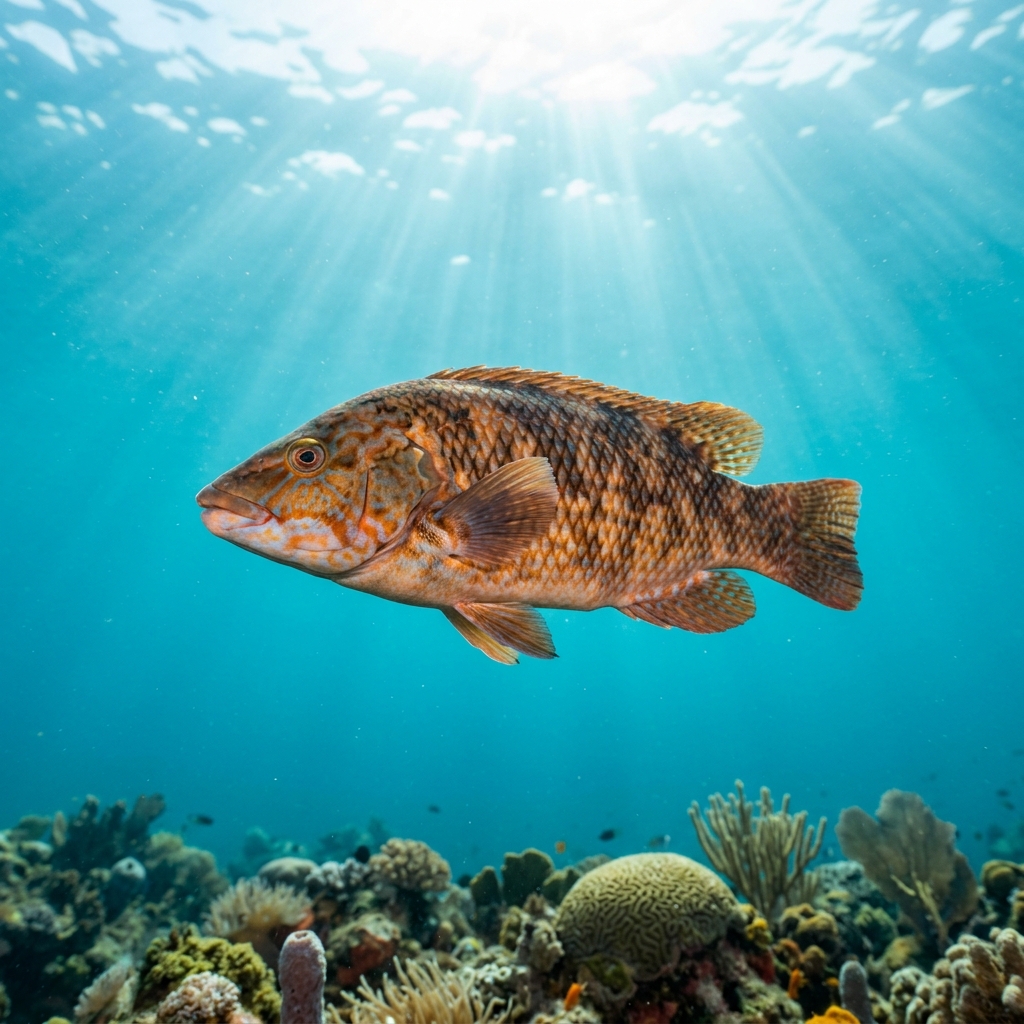
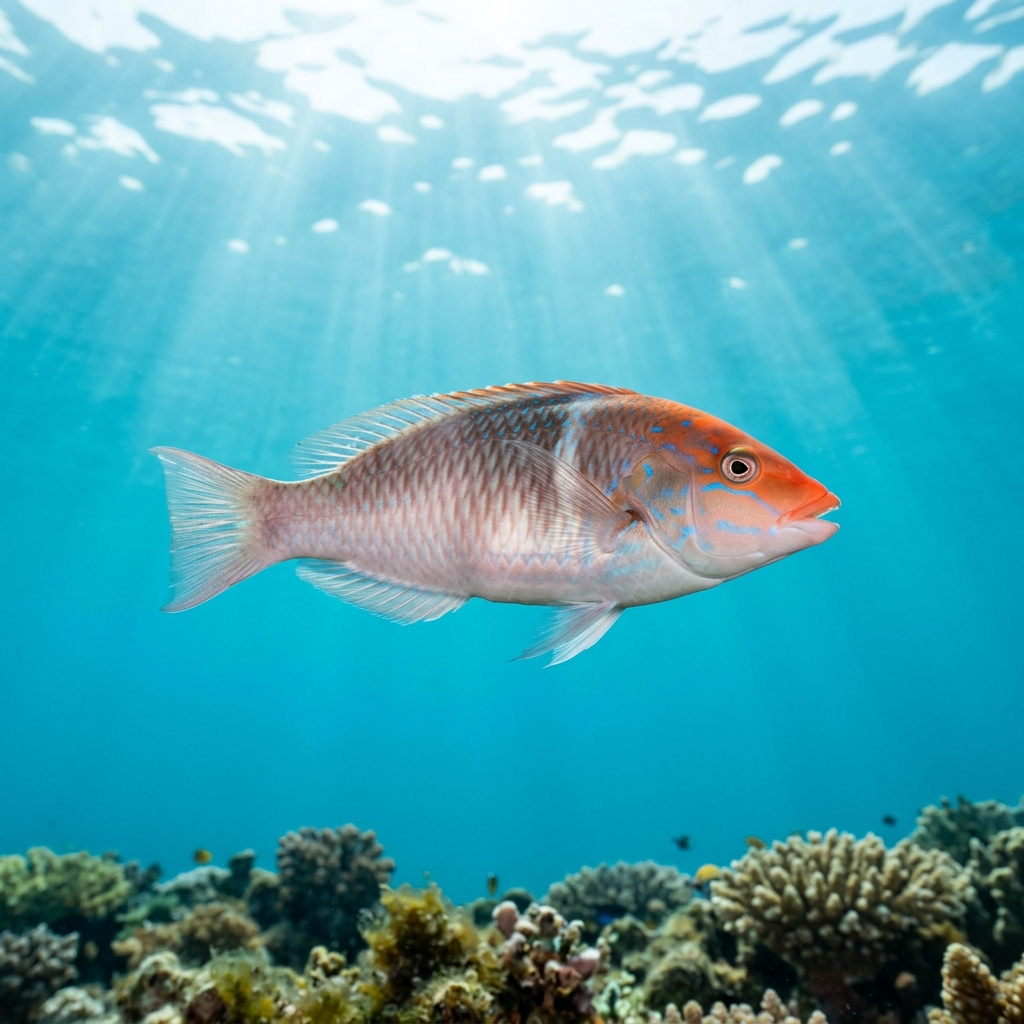
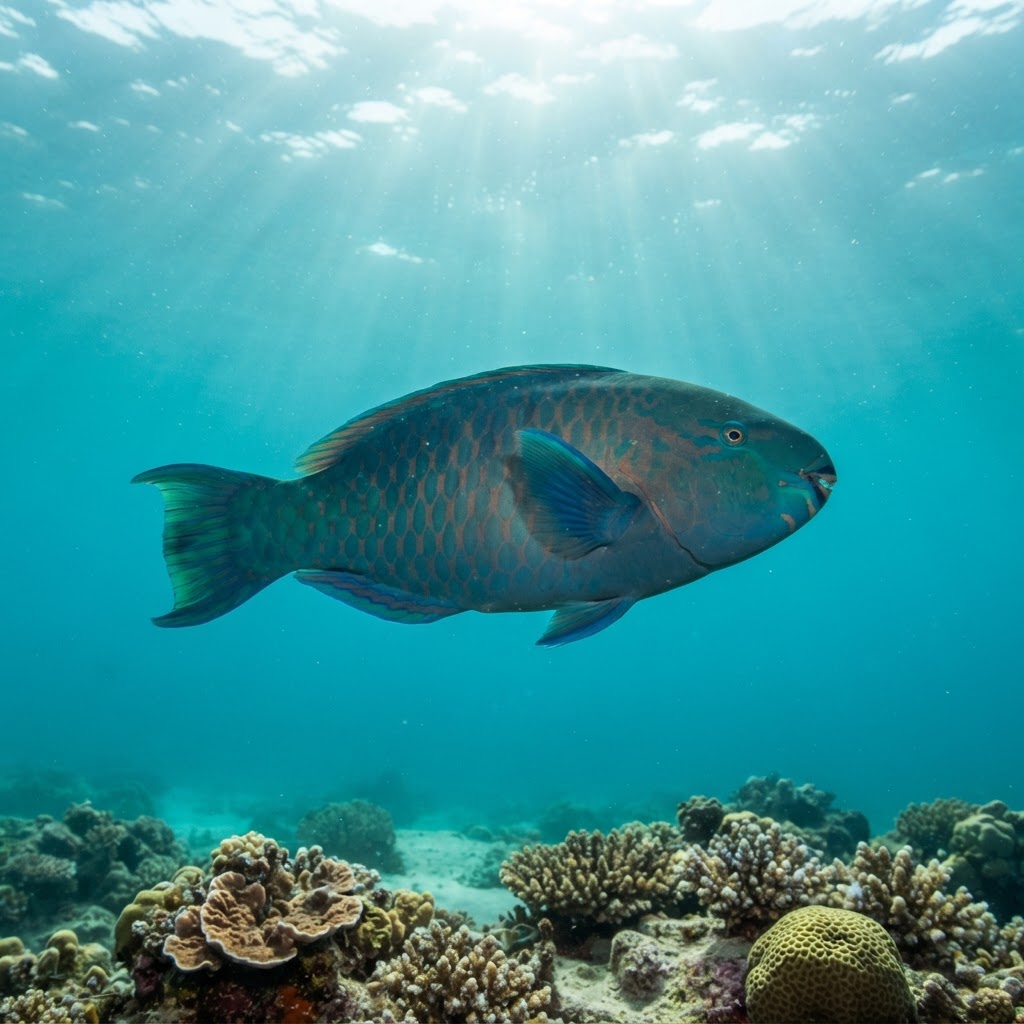
A bulky, blue-grey parrotfish reaching around 48 cm, with the fused beak-like teeth typical of the family used to scrape algae off rock and reef. Look for a slightly humped profile through the forehead and a solid, muted colour rather than the bright patchwork of many reef parrotfishes. Its size and steady, deliberate cruising over rocky bottom help separate it from smaller, more frantic reef fish sharing the same ground.
Divers typically find it grazing over rocky reef and boulder terrain, working the surface with its beak rather than schooling in open water. It tends to be unhurried around divers, more likely to keep feeding or move off at its own pace than to bolt, though it's logged as uncommon to rare at most sites so sightings are a bonus rather than a given. Look for it on the same rocky, algae-covered structure you'd check for other Pacific reef grazers.
Like other parrotfish, it grazes algae off hard rock and reef substrate with fused beak-like teeth, and the grinding of that material through its gut is part of how these fish generate reef sediment.
Sightings show no clear seasonal pattern, so treat it as a year-round species on these Pacific coasts. It's logged across a water-temperature range of roughly 22.5 to 29.1 C, wide enough that timing your trip for whale sharks or mantas in a given region is a bigger factor than chasing a parrotfish season.
Most consistently logged along Baja California in Mexico, which accounts for the bulk of sightings, followed by a solid presence around the Galápagos Islands in Ecuador. A smaller number of dives report it along the Pacific coast of Panama, making this very much an eastern Pacific species rather than one you will find on Caribbean or Indo-Pacific reefs.
Mapping where Azure Parrotfish is logged…
Baja California in Mexico is the strongest area for sightings, with the Galápagos Islands in Ecuador close behind. A smaller number of dives also report it along Panama's Pacific coast, so it's best thought of as an eastern Pacific species.
There's no detected season in the sighting data, so it's considered a year-round fish. It's recorded in water from about 22.5 to 29.1 C, a range typical of the Baja California and Galápagos dive seasons.
Look for a solid blue-grey, bulky-bodied parrotfish around 48 cm with a slightly humped forehead and a fused beak-like mouth. It's usually seen grazing slowly over rocky reef rather than schooling in open water.
They typically reach around 48 cm in length, a solid mid-size parrotfish rather than one of the giants of the family.
No, they're not considered dangerous to divers. They graze on rock and reef surfaces and generally continue feeding or move off calmly when divers approach.
Most dive sites where it's been recorded rate it as uncommon, with a handful reporting it as rare, so it's a fish you may go several dives without seeing even in its core range.
Site and sighting data is aggregated from diver logs, iNaturalist and GBIF. For taxonomy and conservation status:
Bird Wrasse
3,632 sites