Halichoeres podostigma
A small reef wrasse most reliably logged across the Visayas, Philippines, in warm 28C water year-round.
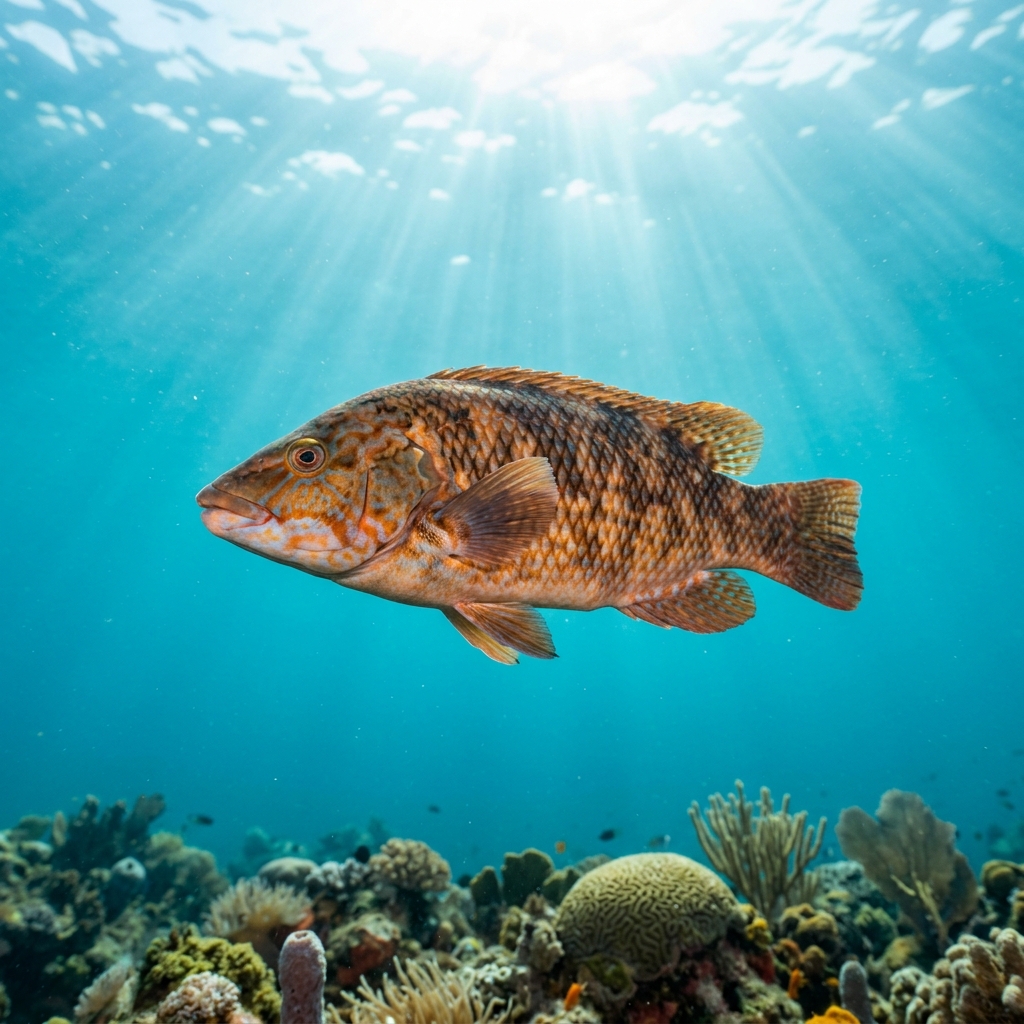
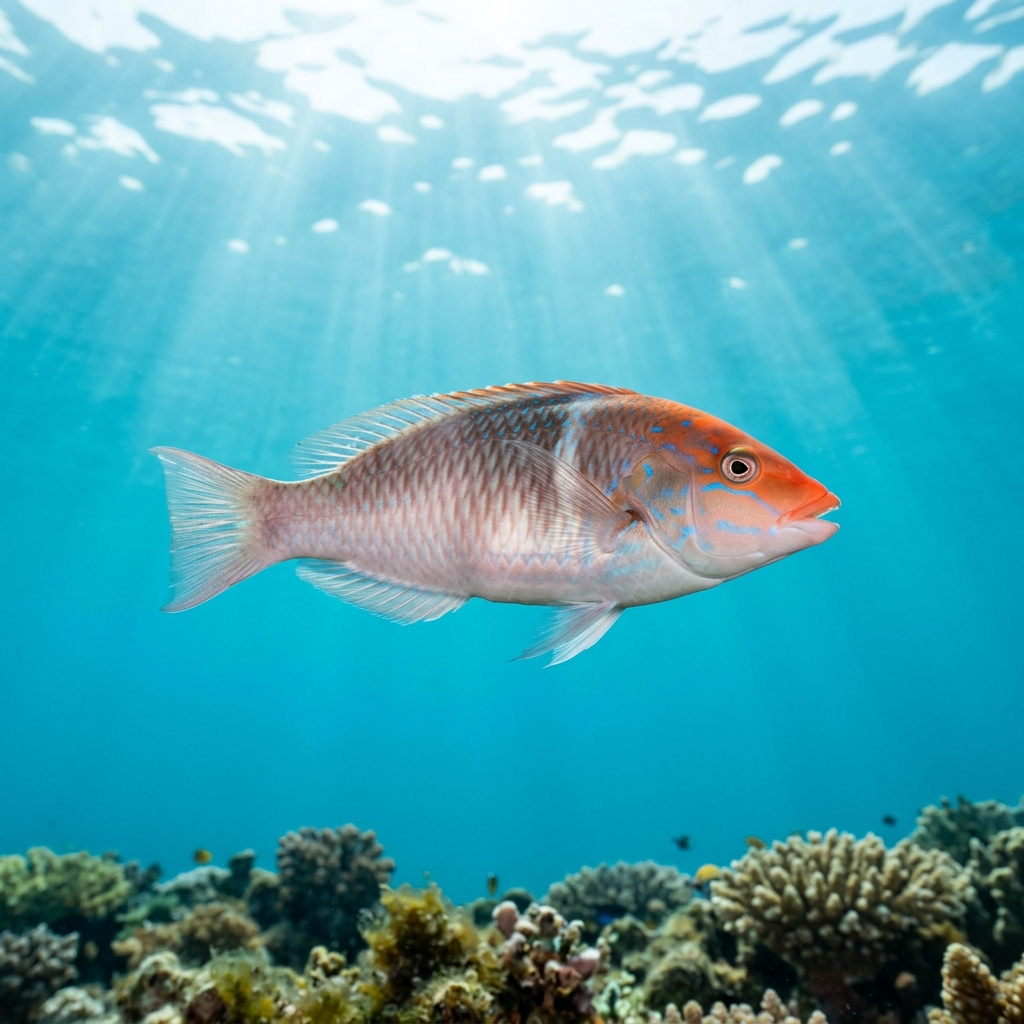
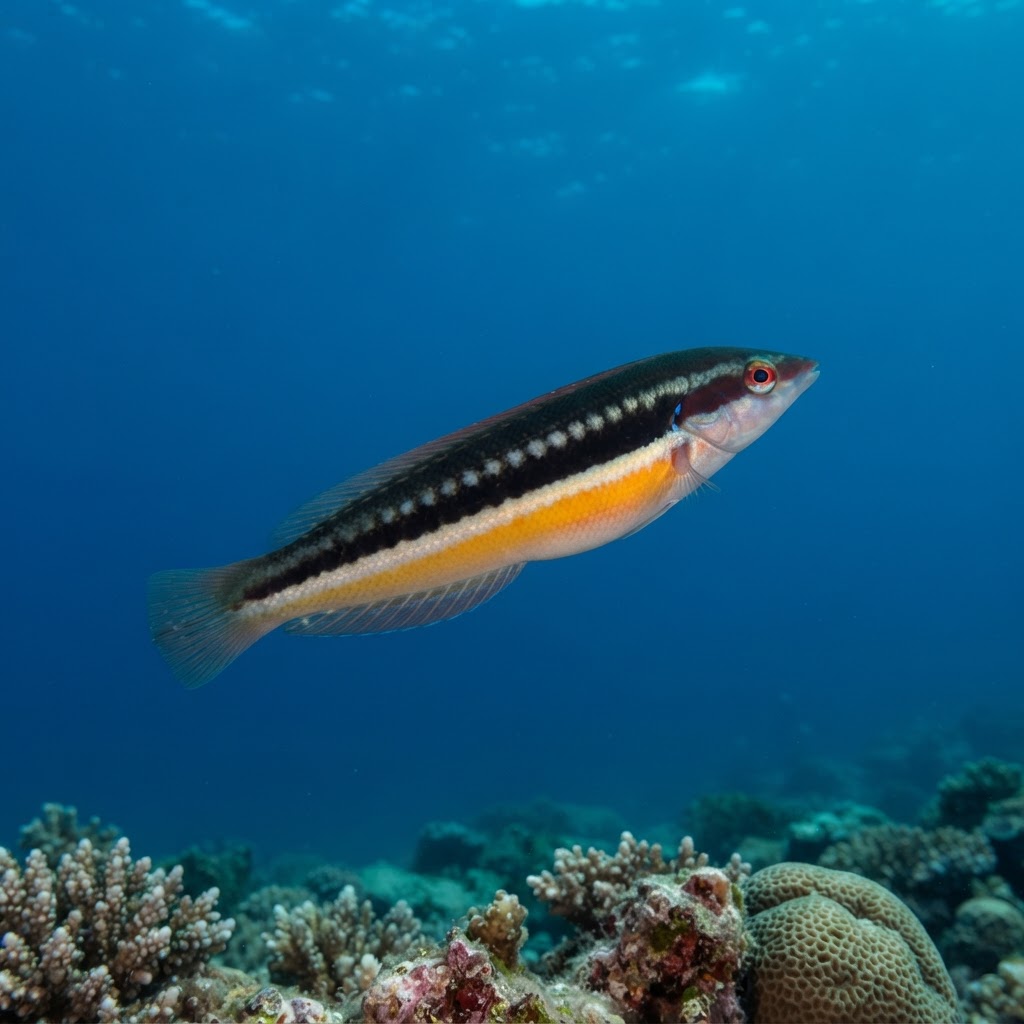
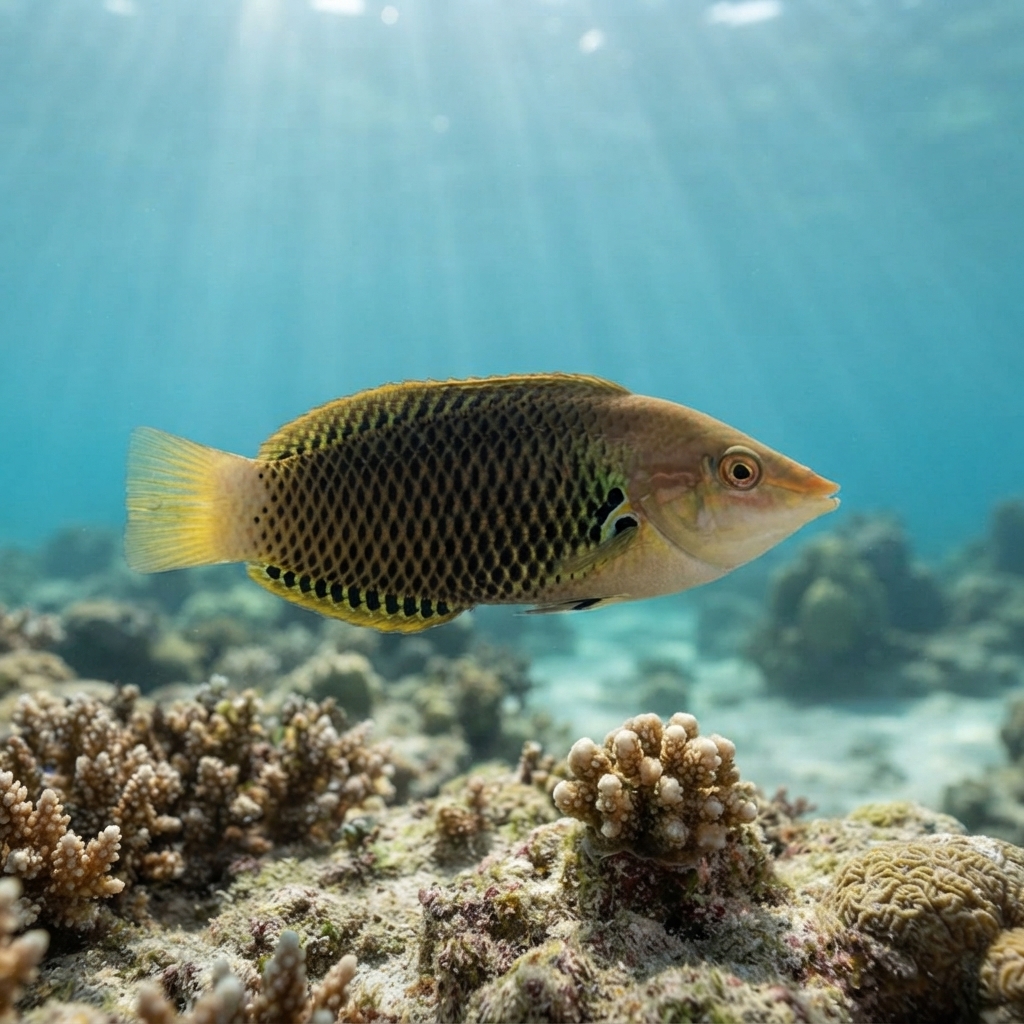
A small, slim-bodied wrasse that tops out around 12 cm, so it is easy to overlook among reef debris and rubble patches. The giveaway mark is a dark axil spot on the shoulder just behind the head, sitting against a body that shows the streaky, greenish-to-pale barring typical of Halichoeres wrasses. It swims with the same darting, stop-start pattern as its relatives, flicking between coral heads and sand pockets rather than cruising in the open.
Divers typically spot this wrasse picking around rubble and coral edges close to the reef floor, often in the shallower half of its 2 to 25 m range. It is not a fish that pauses for a photo: expect quick, low darts between cover rather than any curiosity toward divers. Look for it during the day when reef fish activity is highest, working the same patch of substrate rather than roaming.
Like other Halichoeres wrasses, it likely buries itself in sand at night and when startled, a common defence strategy in the genus that lets small wrasses vanish from view in an instant.
No clear seasonal pattern shows up in the sighting data, and with a comfortable niche of roughly 28 to 29C, warm Philippine and Indonesian reefs suit it all year. Treat it as a year-round target rather than something tied to a particular month.
This one is very much a Philippines fish on the current record, most commonly logged across the Visayas region, with the Indonesian side represented by smaller numbers in Sulawesi and Nusa Tenggara. If you are hunting for it specifically, Visayas dive sites give you the best odds, though it turns up as an uncommon find rather than a guaranteed sighting even there.
Mapping where Axilspot Wrasse is logged…
The strongest records come from the Visayas region of the Philippines, with additional sightings in Sulawesi and Nusa Tenggara in Indonesia. It is logged as an uncommon find even at these sites, so patience helps.
There is no detected seasonal pattern, and it lives in consistently warm water around 28 to 29C, so it is present on Philippine and Indonesian reefs throughout the year.
Look for a small, slender wrasse around 12 cm with a dark spot on the shoulder just behind the head. It moves in quick darts near rubble and coral edges rather than swimming openly in the water column.
They stay small, typically reaching around 12 cm in length, which is one reason they are easy to miss on a reef unless you are looking closely at the substrate.
No, they pose no danger to divers. They are small, reef-associated fish that keep their distance and have no venomous spines or aggressive behaviour toward people.
Site and sighting data is aggregated from diver logs, iNaturalist and GBIF. For taxonomy and conservation status:
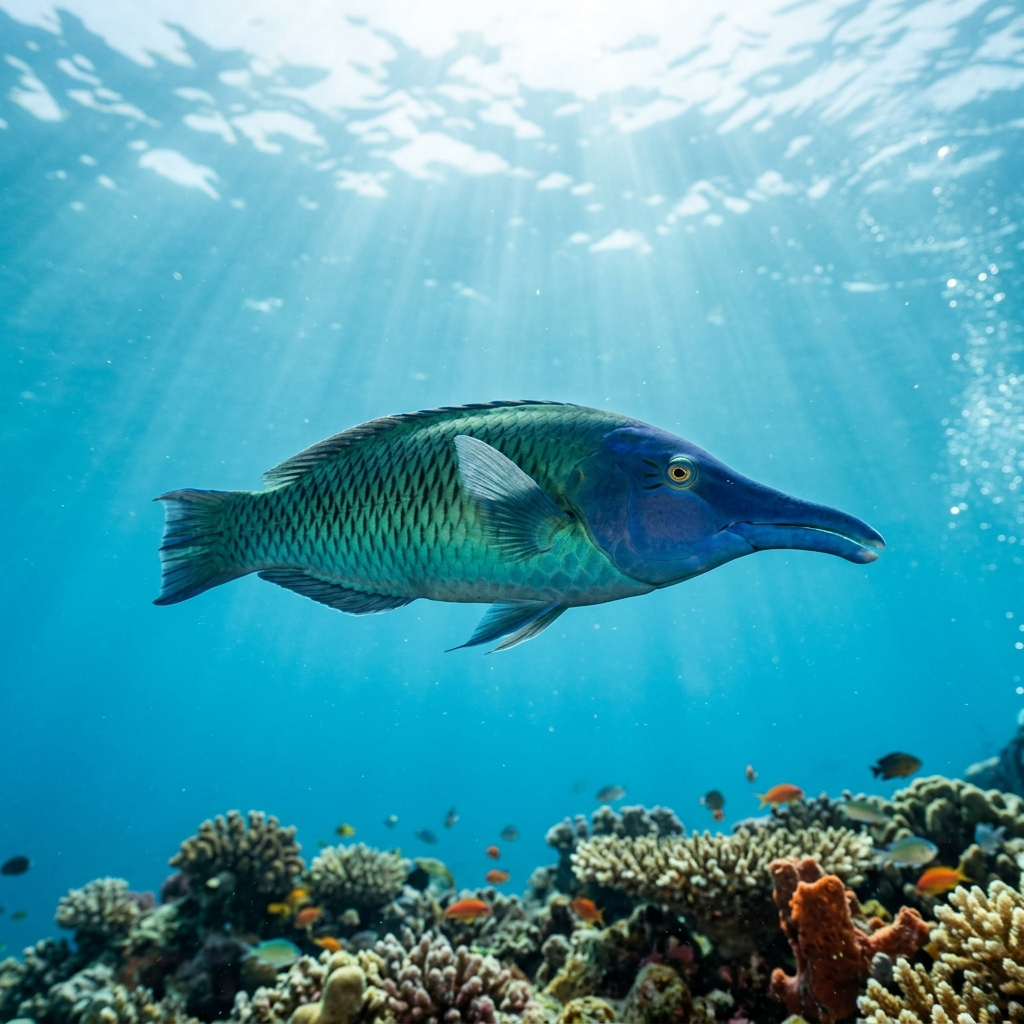
Bird Wrasse
3,632 sites