Acanthopagrus australis
Silver-bronze bream of NSW rocky reefs, logged at over 200 sites and seen year-round in 20-26C water. Here's where to find it.
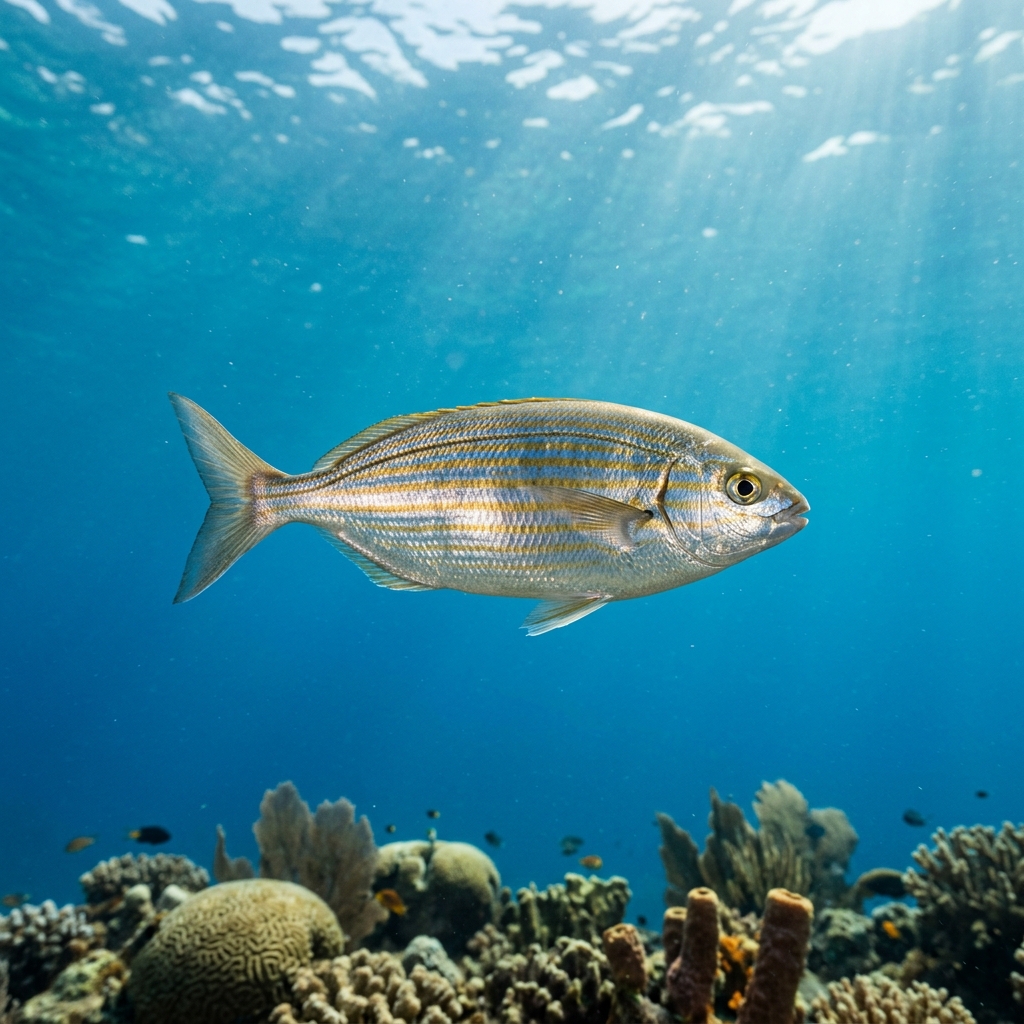
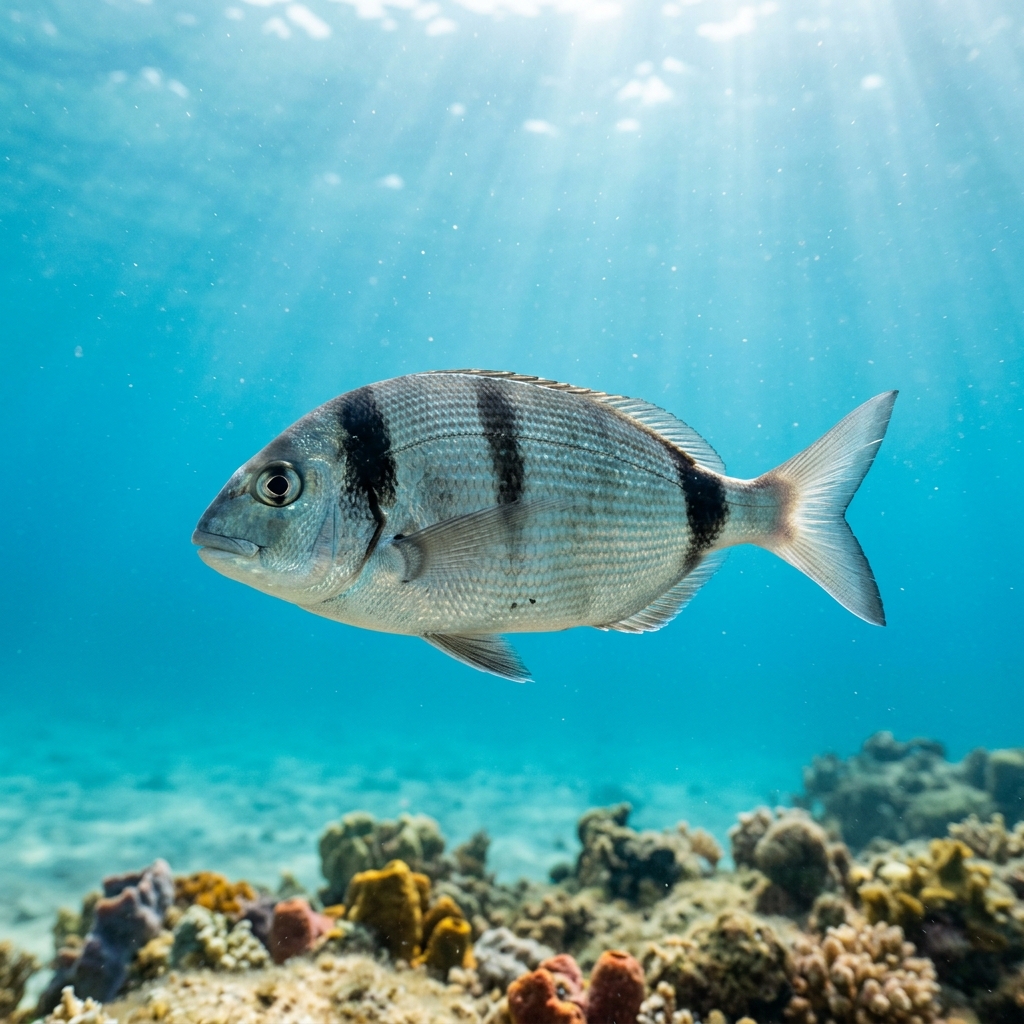
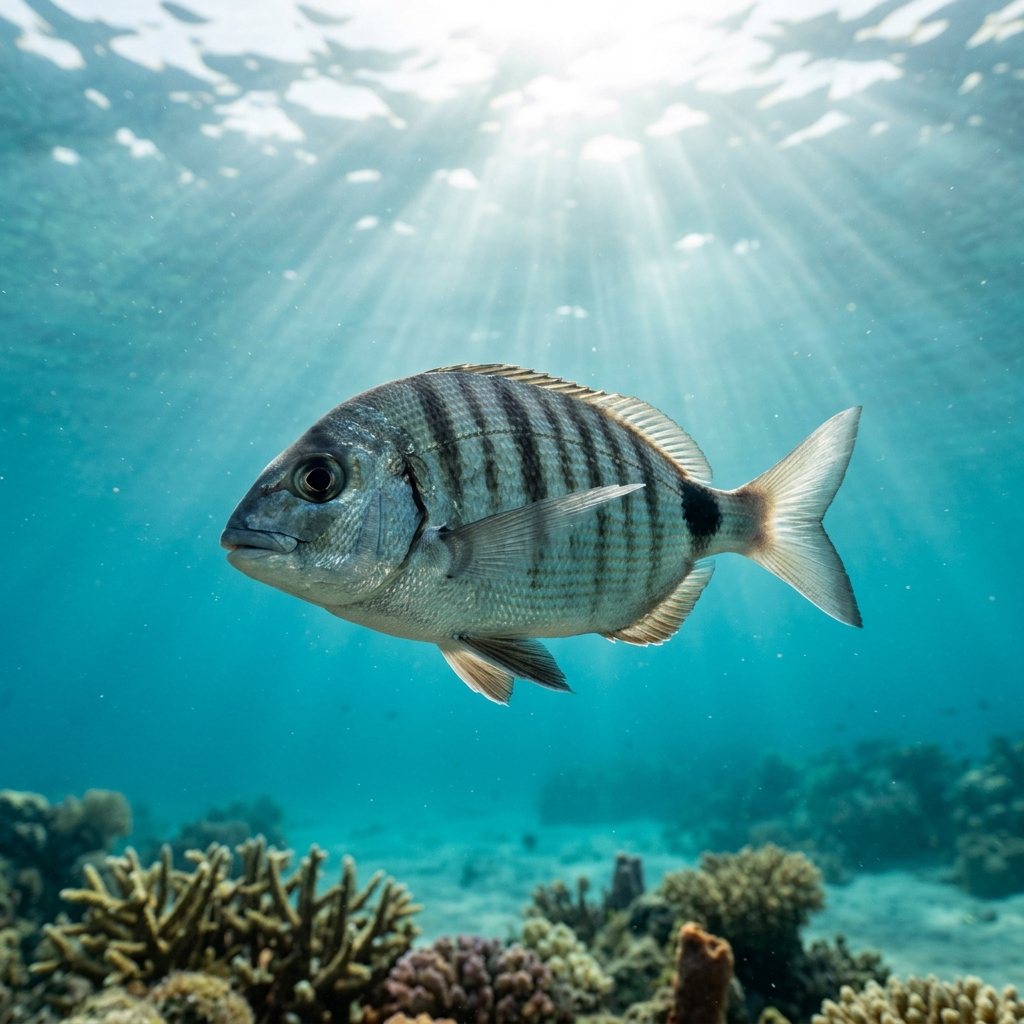
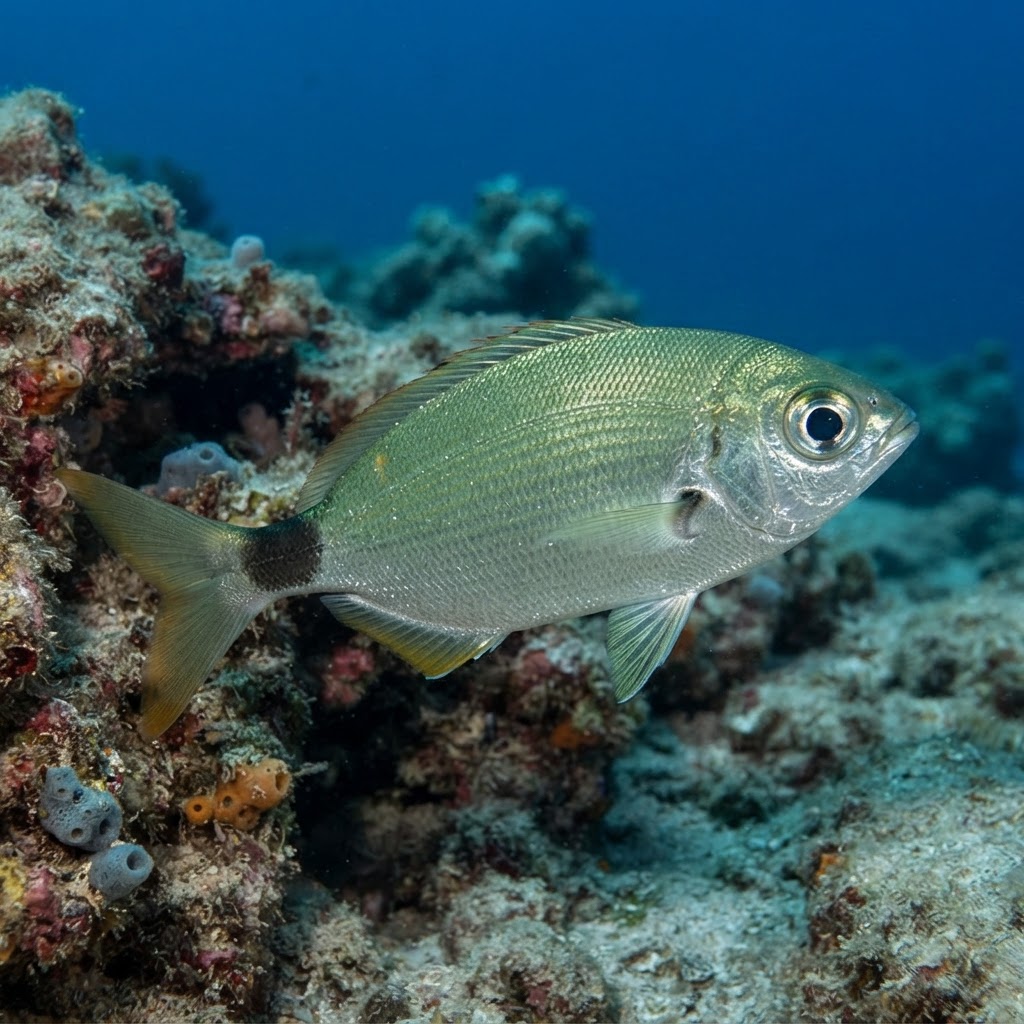
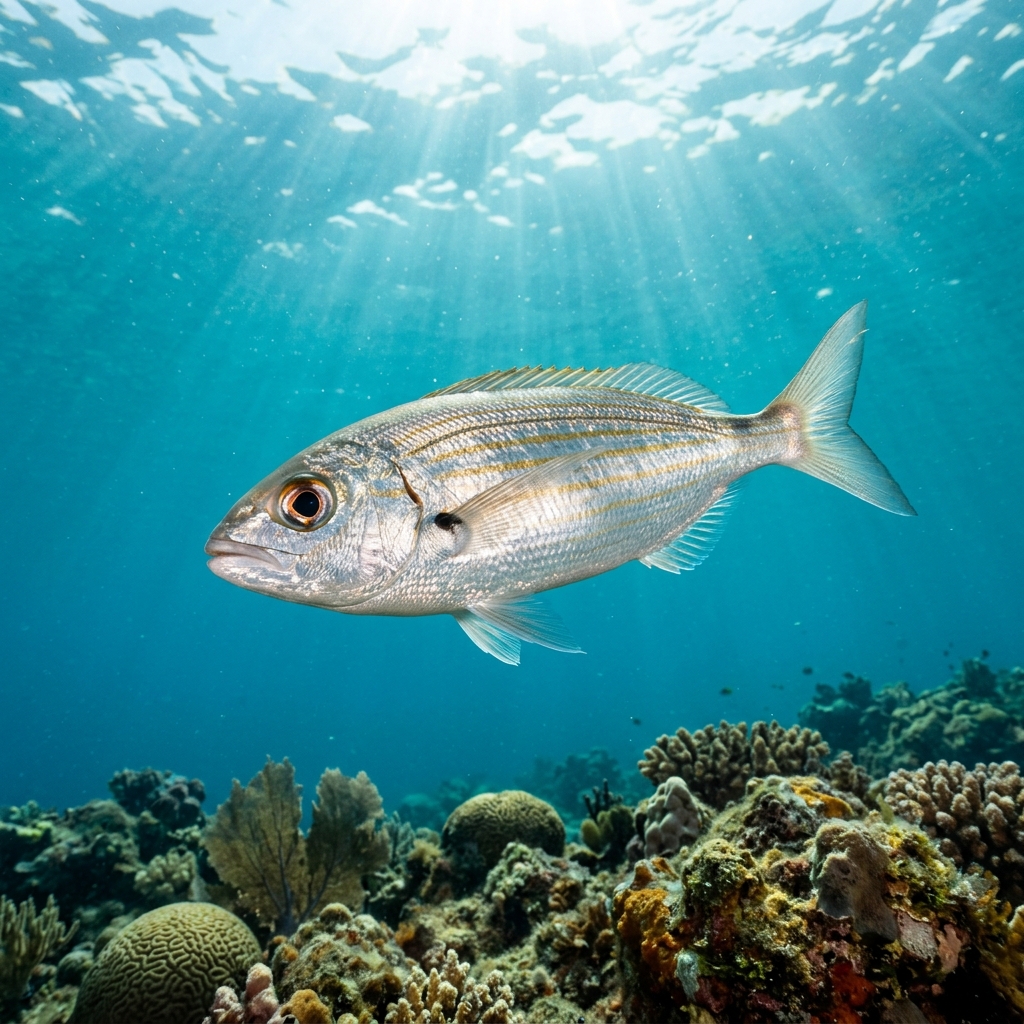
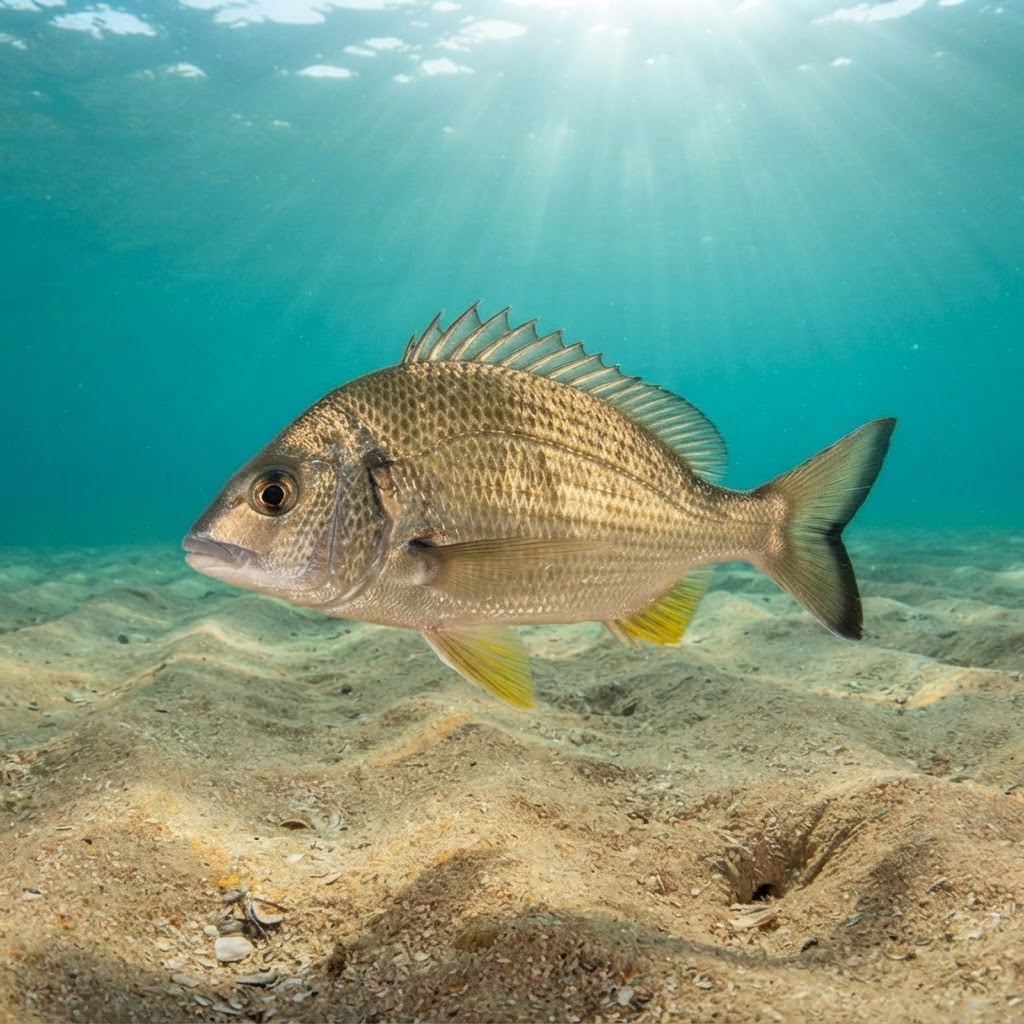
Deep-bodied and laterally flattened, this bream shows a silvery to bronze flank with a faint yellowish tinge and darker dorsal and tail fin edges. Adults reach around 46 cm and have a steep forehead profile with a small mouth set low for picking at the bottom. Look for the humped back shape typical of sea bream rather than any bold stripe or spot pattern.
Divers typically find this bream hovering low over rocky reef and sand patches, picking at the substrate for small invertebrates rather than schooling in open water. It tends to hold its distance from divers, drifting off at a steady pace rather than bolting, and is more often seen singly or in small loose groups than in tight schools.
Like many sparids, this species is a protandric hermaphrodite, starting life as a male before some individuals switch to female as they mature, a trait shared across much of the sea bream family.
Sightings are spread across the year with no clear seasonal peak in the data, and the observed water temperature range of 20.2 to 26.1C covers most of the diving calendar in NSW and Queensland. Plan around good conditions rather than a specific month.
This is a species almost entirely reported from Australia, with New South Wales the strongest region by far and Queensland a secondary hotspot. Divers log it consistently along rocky reefs and headlands in both states, most often as an uncommon to common sighting rather than a guaranteed one.
Mapping where Australian Seabream is logged…
It's most reliably logged along rocky reefs in New South Wales, with Queensland offering a secondary but still solid chance of a sighting.
There's no strong seasonal pattern in sighting data, and it's found across a 20.2 to 26.1C temperature range, so it's a reasonable year-round target in NSW and Queensland.
Look for a deep, laterally flattened body with a silvery bronze sheen, a steep forehead, and darker edges on the dorsal and tail fins. It sits low near rocky reef and sand rather than schooling in the open.
They typically reach around 46 cm, making them a solidly built mid-sized reef fish rather than a tiny bottom-dweller.
No, they pose no threat to divers and will typically keep their distance rather than approach.
They're protandric hermaphrodites, meaning individuals start life as males and some later change sex to female as they grow, a pattern common across the sea bream family.
Site and sighting data is aggregated from diver logs, iNaturalist and GBIF. For taxonomy and conservation status:
Saddled Bream
3,846 sites