Chirolophis ascanii
A frilly-headed cold-water fish logged in Northern Ireland and Jutland's cold, clear waters below 12C. Rare but worth the hunt.
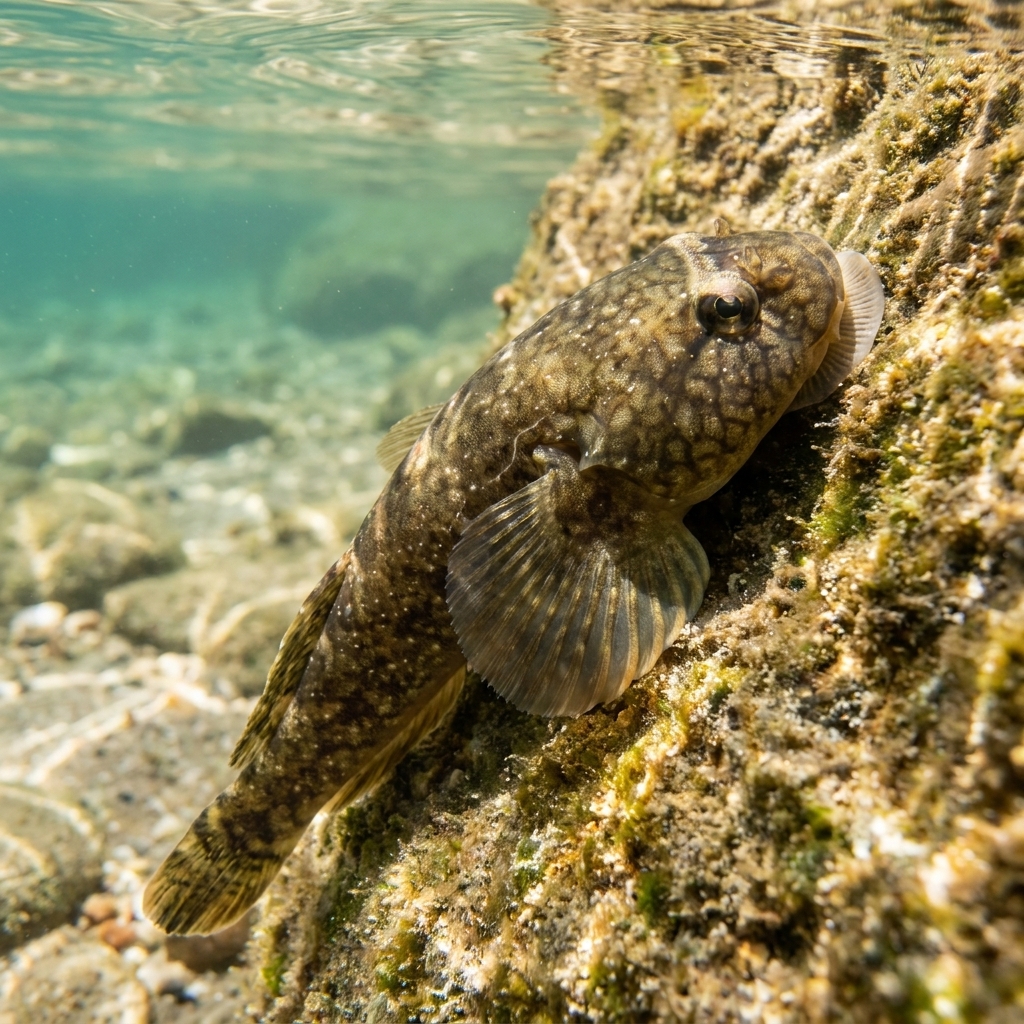
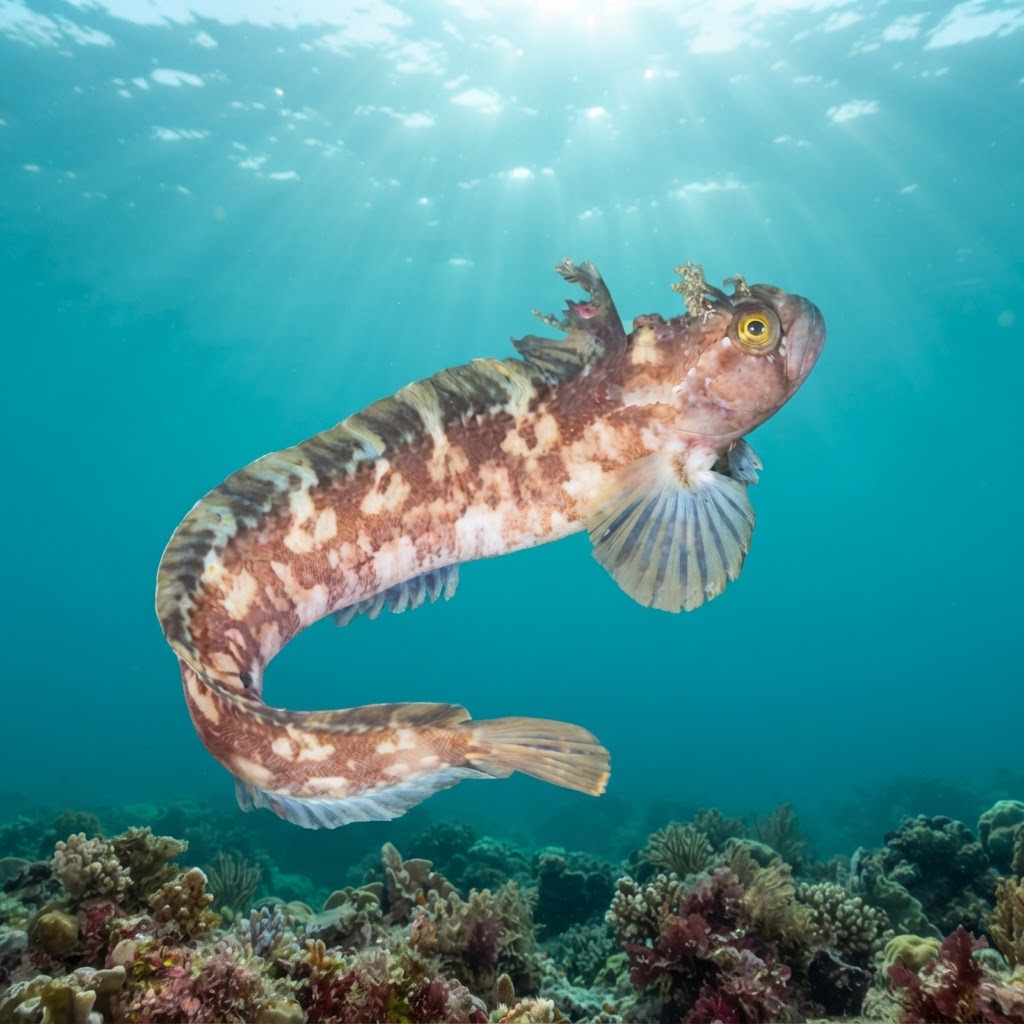
Tops out around 18 cm, with a long, slender, eel-like body that tapers toward the tail. The giveaway is the head: a fringe of branching, feathery appendages (cirri) above the eyes and along the head gives it a shaggy, almost comical look. Colour runs mottled brown to reddish with darker blotches down the flanks, which helps it disappear against rock and weed. Look for it wedged into a crevice or empty shell rather than swimming in open water.
Divers find it tucked into rocky crevices, holes, or old shells rather than out cruising the reef, often sitting still enough that its fringed head is the only clue something's home. It's logged as rare at nearly every site where it turns up, so spotting one usually comes down to slow, careful looking rather than luck on an open swim. Torch light into dark crevices on rocky or mixed ground is the usual way divers pick one out.
Those feathery head appendages aren't just decoration: they help break up its outline against weed and rock, making an already well-camouflaged fish even harder to spot until it moves.
Sighting data doesn't show a clear seasonal pattern, so treat it as a year-round find in the 6.7 to 12C water it favours. Cold, temperate sites like these hold a fairly stable temperature range across the year, which likely explains the lack of a strong season in the logs.
Most reliably logged around Northern Ireland and England within the UK, with a solid second cluster in Jutland, Denmark, and a smaller presence off Nordland, Norway. This is a cold-water, rocky-reef species rather than a tropical one, so look to temperate Atlantic sites rather than reef destinations further south.
Mapping where Atlantic Warbonnet is logged…
Northern Ireland and England account for most logged sightings, with additional records from Jutland in Denmark and Nordland in Norway. It's a cold-water rocky-reef species, so look to temperate Atlantic coastlines rather than warm-water dive destinations.
Sighting logs don't show a strong season, so it's considered a year-round find. It's typically seen in water between 6.7 and 12C, a range that stays fairly stable across the year at the cold-water sites where it lives.
Look for a slim, eel-like body around 18 cm long, mottled brown-red, wedged into a rocky crevice or shell. The clearest ID feature is the fringe of feathery appendages on its head, which gives it a distinctly shaggy look no other fish in the same habitat shares.
They reach around 18 cm in length, making them a small, easy-to-overlook fish. Most of that length is a slender, tapering body rather than bulk.
Yes, it's logged as rare at almost every site where divers record it, with only a handful of sites reporting it as uncommon. Finding one usually takes deliberate crevice-searching rather than a chance encounter in open water.
Site and sighting data is aggregated from diver logs, iNaturalist and GBIF. For taxonomy and conservation status:
Soldierfish
3,612 sites