Cancer irroratus
Cold-water crab logged at reefs from Nova Scotia to New England, comfortable down to 3.3C and seen year-round on rocky bottoms.
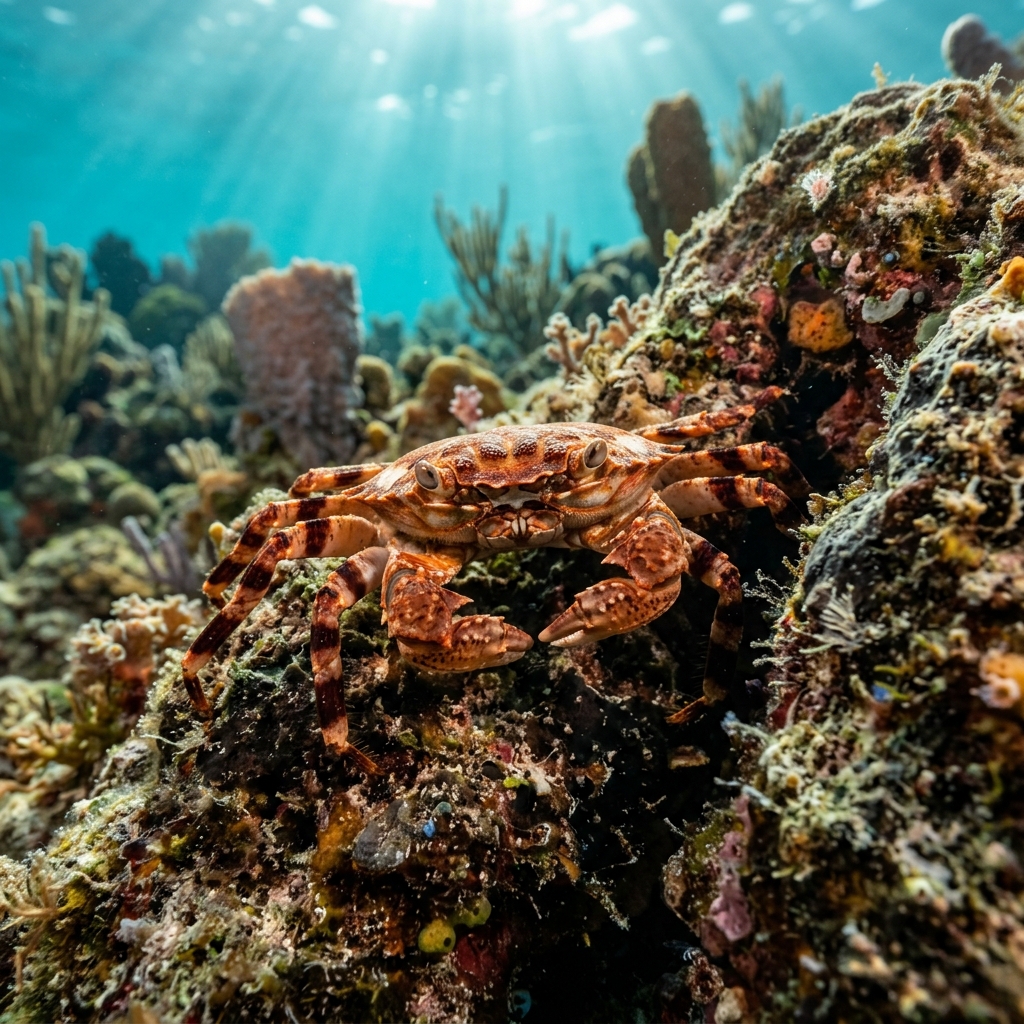
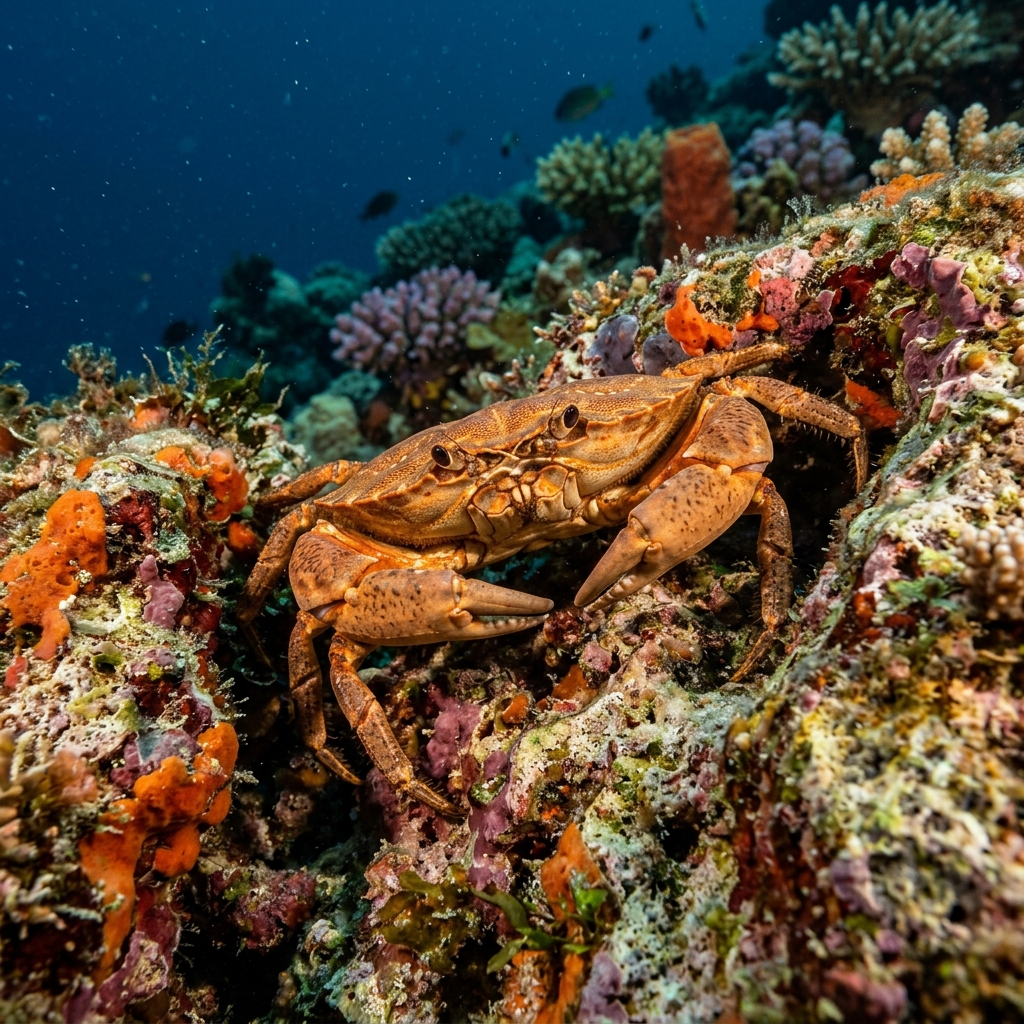
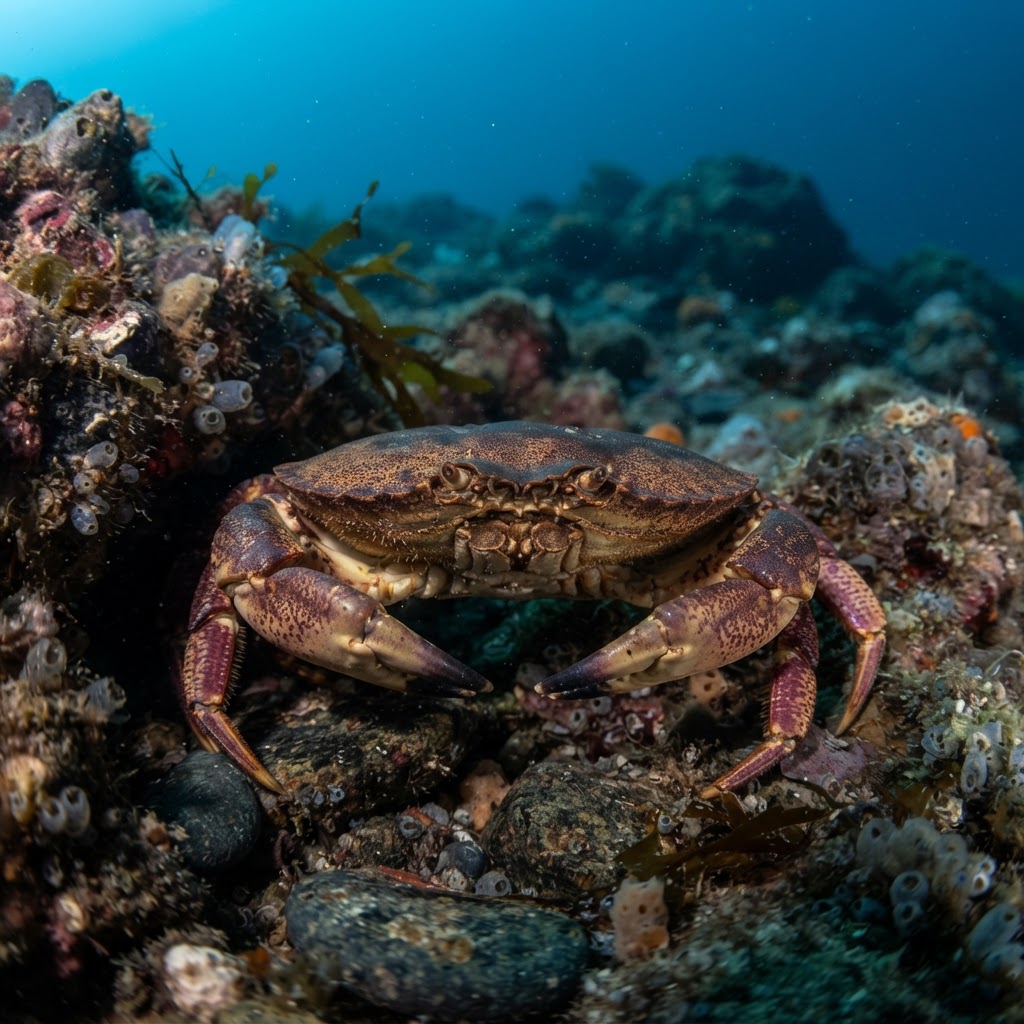
Look for a fan-shaped, mottled reddish-brown to purplish shell with a finely scalloped front edge, usually tucked against rocks or half-buried in sand or gravel. The claws are pale, often yellowish or cream, and noticeably smoother than the spinier claws of some lookalike crabs. Most individuals divers encounter sit low and still on the bottom, relying on their colour to blend into cobble and shell debris rather than swimming or fleeing openly.
Divers most often find this crab sitting motionless on rock, gravel, or shell-strewn bottoms, sometimes tucked into a crevice or half-covered by sediment. It is a scavenging carnivore, picking over the substrate for whatever it can find rather than actively hunting in open water, and it tends to hold its ground or shuffle away slowly rather than bolt when a diver approaches. Most logs describe it as an uncommon but steady sighting rather than something divers see in numbers on any given dive.
It ranges from the shallows right down past 500 metres, which means the same species divers see poking around a shallow cobble bottom in Nova Scotia is also quietly working the deep continental shelf far offshore.
Sightings show no clear seasonal spike in the data, and given its tolerance for water as cold as 3.3C, it is a plausible find on cold-water dives through most of the year rather than a warm-season specialty.
This is a cold-water regular across eastern Canada and the northeastern United States, most reliably logged in Nova Scotia and Quebec, with strong numbers also reported from New Brunswick and Prince Edward Island. South of the border it turns up consistently through the Northeast US, making it one of the more dependable benthic finds on rocky dive sites from the Bay of Fundy down to New England.
Mapping where Atlantic Rock Crab is logged…
It is most reliably seen in Nova Scotia and Quebec, with good numbers also reported from New Brunswick, Prince Edward Island, and the Northeast United States. Rocky and gravel bottoms in these cold-water regions are the best bet.
There is no strong seasonal pattern in the sighting data, and it tolerates water as cold as 3.3C, so it is realistic to find one on a cold-water dive at almost any time of year.
Check for a fan-shaped, mottled reddish-brown shell with a scalloped front margin and pale, smooth claws. It usually sits still against rock or gravel rather than swimming, which makes it easy to walk right past if you are not looking down.
No, this species poses no danger to divers. It is a small benthic scavenger that will move away or hold still rather than confront anything approaching it.
It is a carnivore that scavenges along the seafloor, picking over rock, gravel, and sediment for whatever animal matter it can find rather than actively chasing prey.
Site and sighting data is aggregated from diver logs, iNaturalist and GBIF. For taxonomy and conservation status:
European Green Crab
2,469 sites