Synodus saurus
Sand-coloured and motionless on the seabed, Atlantic Lizardfish turn up all year at dive sites from Tenerife to the French Riviera.
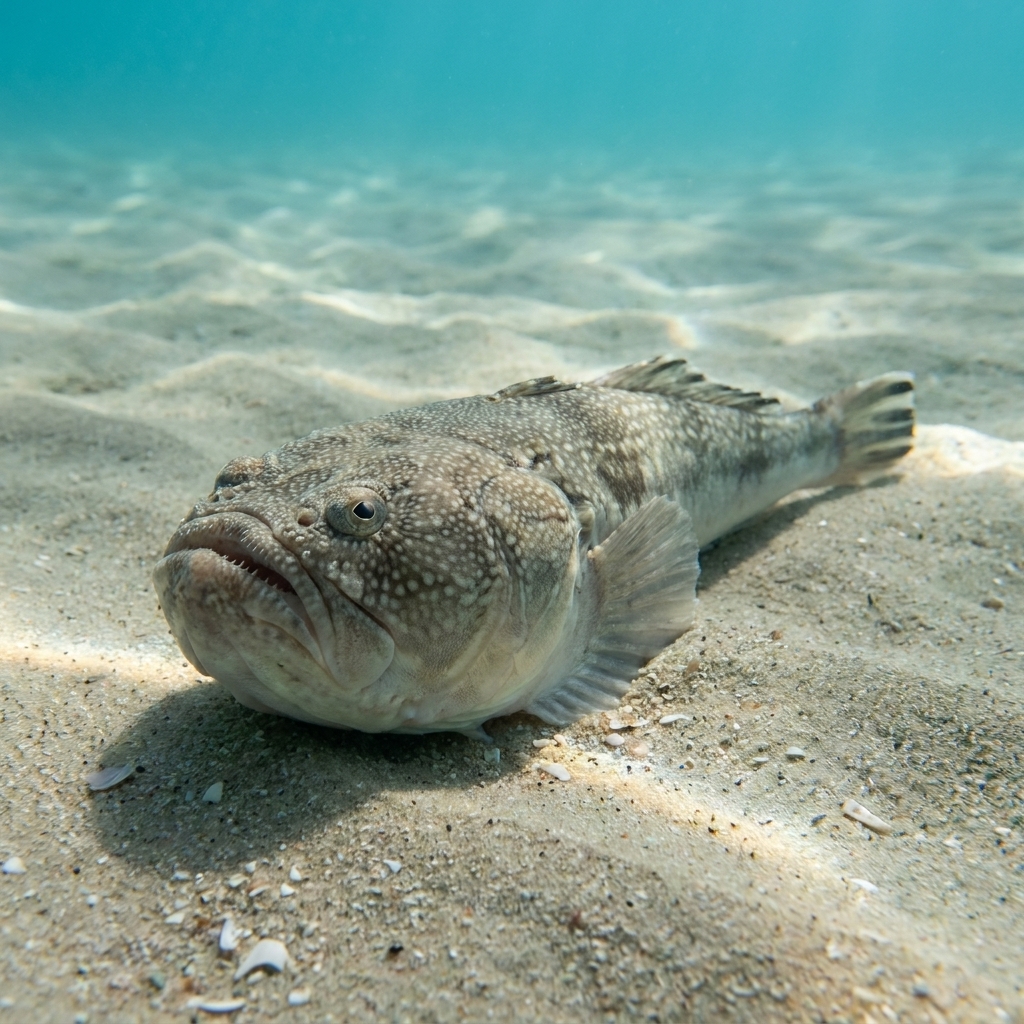
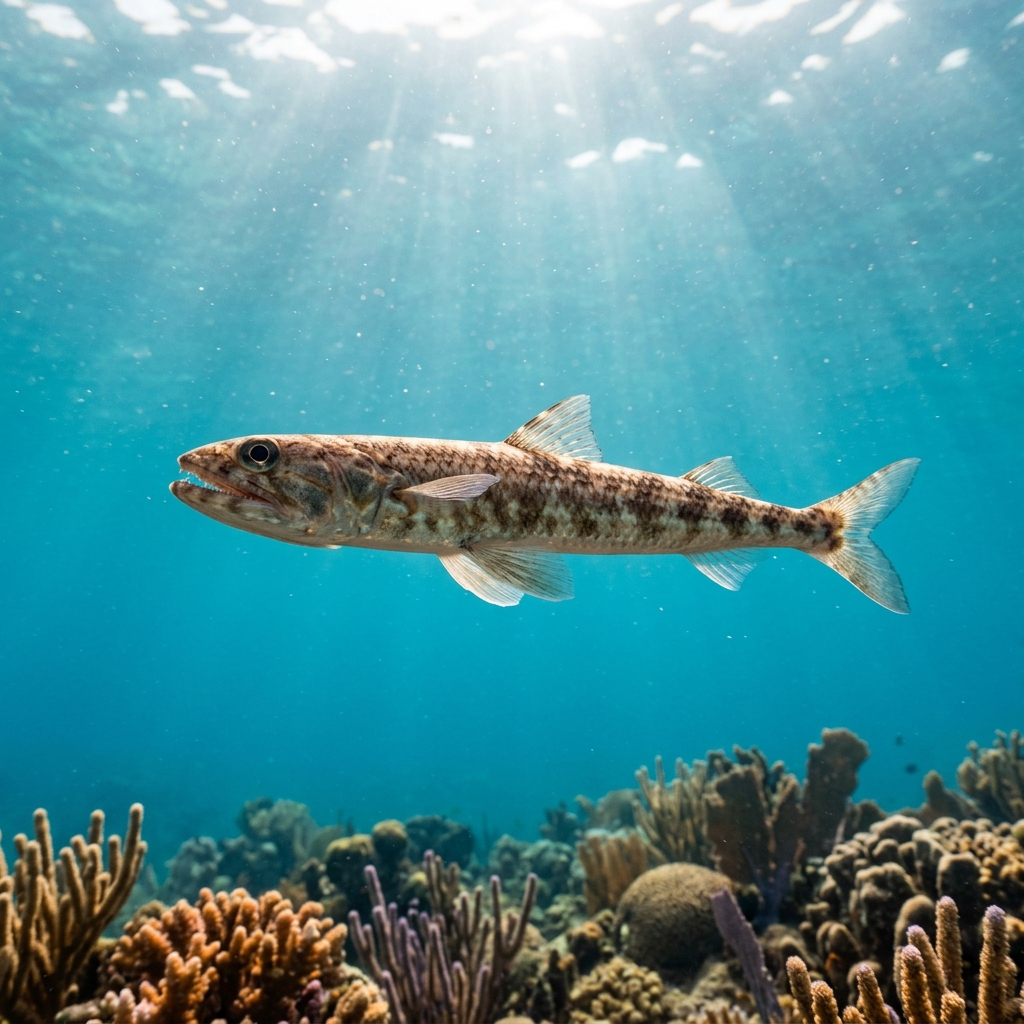
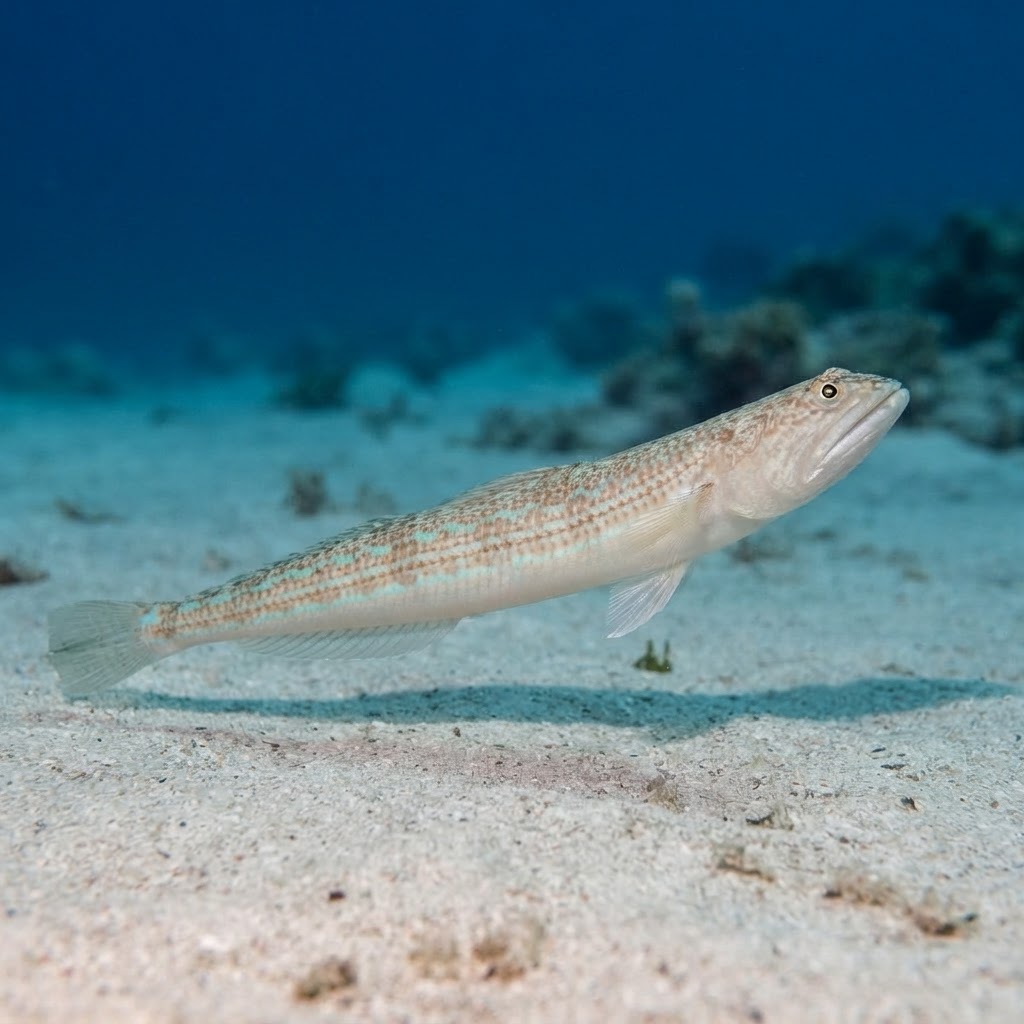
A slender, torpedo-shaped body up to about 28cm, mottled in browns, greys and cream so it blends almost perfectly with sand or rubble. The flattened, reptilian head and upward-pointing mouth full of small teeth give it its name, and it usually props itself up on its pelvic fins like a sphinx rather than lying flat. Look for the pattern of diagonal blotches along the flank, which breaks up its outline against the seabed.
Expect to find it parked motionless on sand, rubble or seagrass edges, often half-buried or propped on its lower fins, watching for small fish and invertebrates to wander past. It relies on camouflage rather than flight, so a slow approach usually lets you get close before it darts off in a short, quick burst. Most sightings are on the move only briefly, during an ambush strike or when a diver gets too close, otherwise it simply sits and waits.
It hunts by ambush, staying still for long stretches and relying on a fast strike rather than pursuit to catch prey, which is why divers usually see it resting rather than swimming.
No clear seasonal pattern shows up in the sightings, and it is comfortable across a wide temperature range from about 16 to 28C, so it is a year-round find on Mediterranean and Canary Islands dive sites rather than a seasonal target.
This is a strong sighting across the Canary Islands, especially Tenerife, Lanzarote, Gran Canaria and Fuerteventura, where sandy patches and rubble zones between reefs suit its ambush lifestyle. It is also a reliable find along the French Riviera and Provence, in Murcia and other parts of Spain, in Italy's Tuscany coast, and around the Cyclades in Greece and Malta, with occasional records from Turkey and Cape Verde.
Mapping where Atlantic Lizardfish is logged…
The Canary Islands are the strongest area, particularly Tenerife, Lanzarote, Gran Canaria and Fuerteventura. It also shows up regularly along the French Riviera, in Murcia and other Spanish coasts, in Italy's Tuscany region, around Greece's Cyclades and in Malta.
There is no strong season for this species, and it tolerates a wide temperature range from around 16 to 28C. That makes it a year-round sighting on Mediterranean and Canary Islands dives rather than something tied to a particular month.
Look on open sand or rubble for a slender, mottled brown and cream fish resting propped on its pelvic fins with a flattened, upturned mouth. Its camouflage pattern of diagonal blotches breaks up its outline, so it is often spotted only when it moves.
They typically reach around 28cm in length, a slim, torpedo-shaped body built for sitting still and striking fast rather than sustained swimming.
No, they pose no threat to divers. They are small ambush predators focused on tiny fish and invertebrates, and they simply dart away if approached too closely.
They spend most of their time completely motionless, propped on their pelvic fins on sand or rubble, relying on camouflage and a sudden ambush strike to catch prey rather than actively hunting around the reef.
Site and sighting data is aggregated from diver logs, iNaturalist and GBIF. For taxonomy and conservation status:
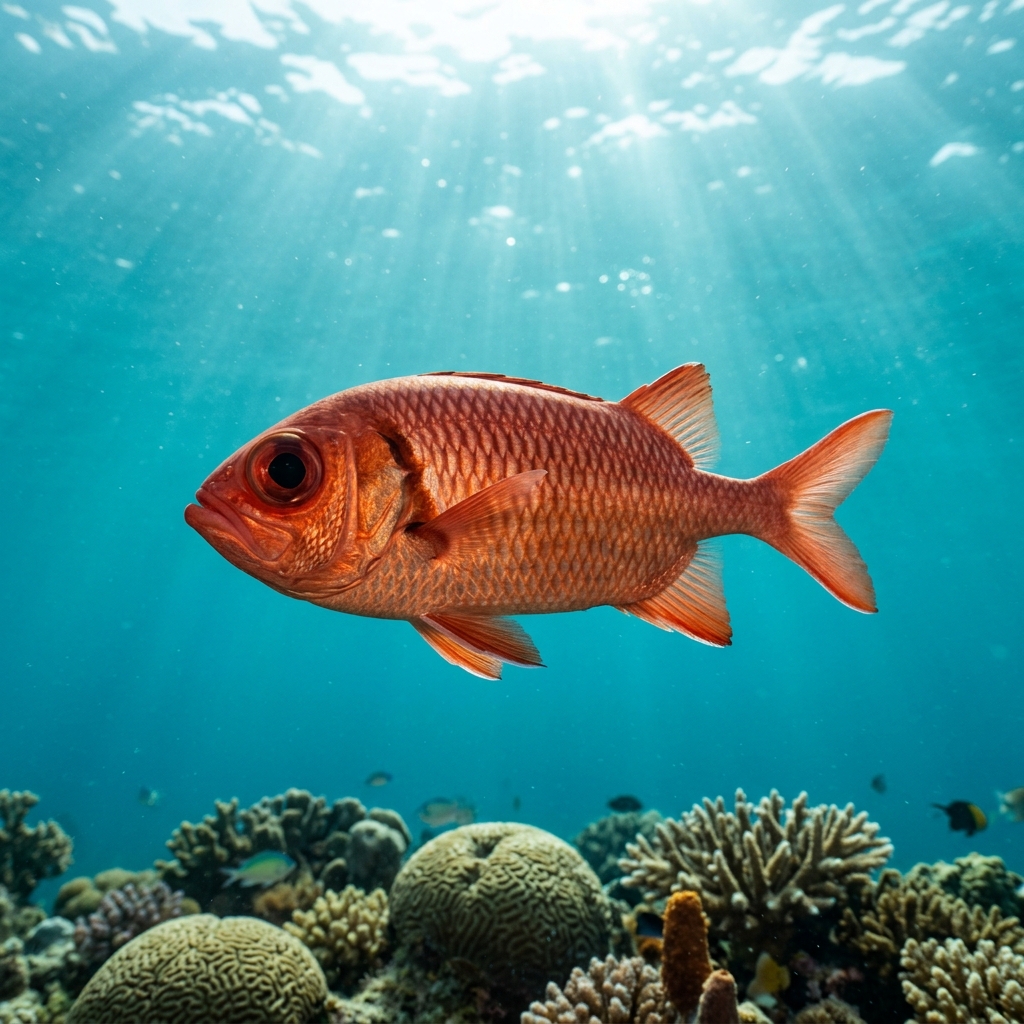
Soldierfish
3,612 sites