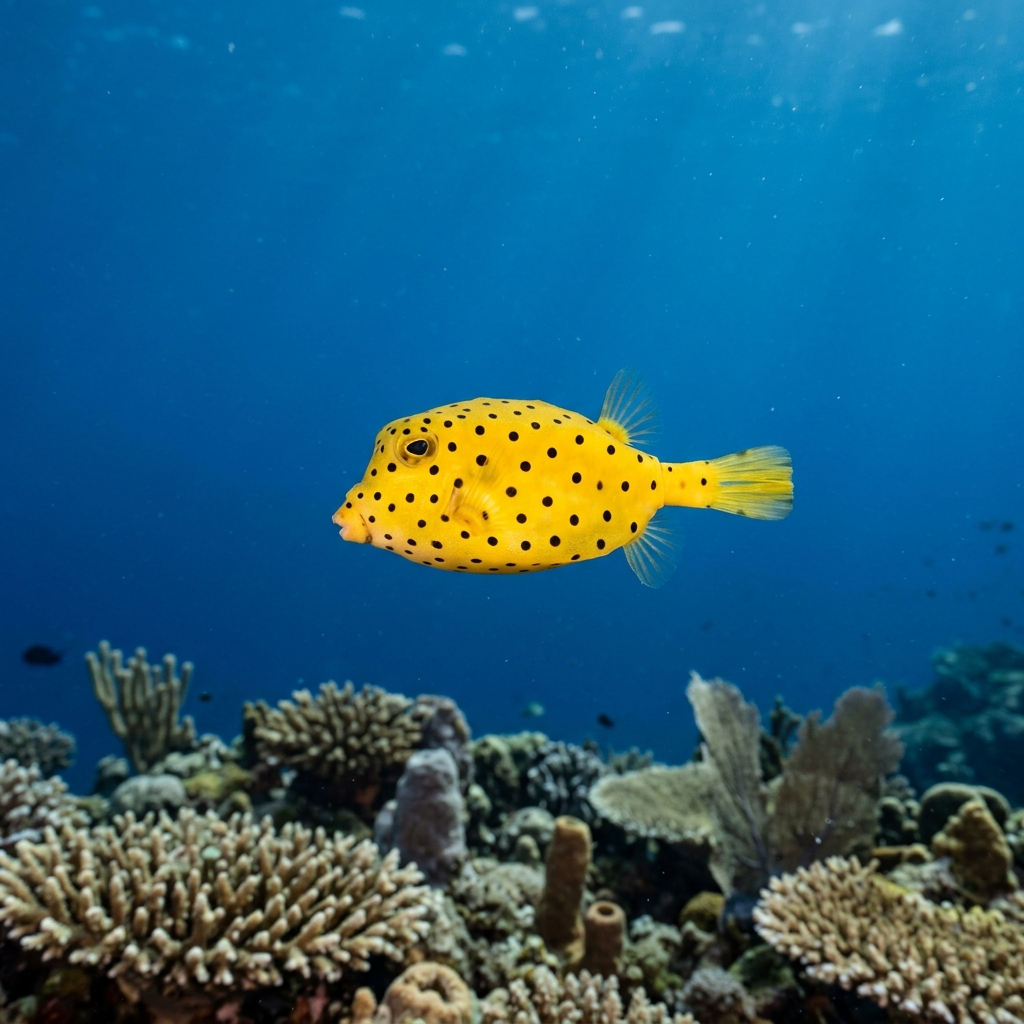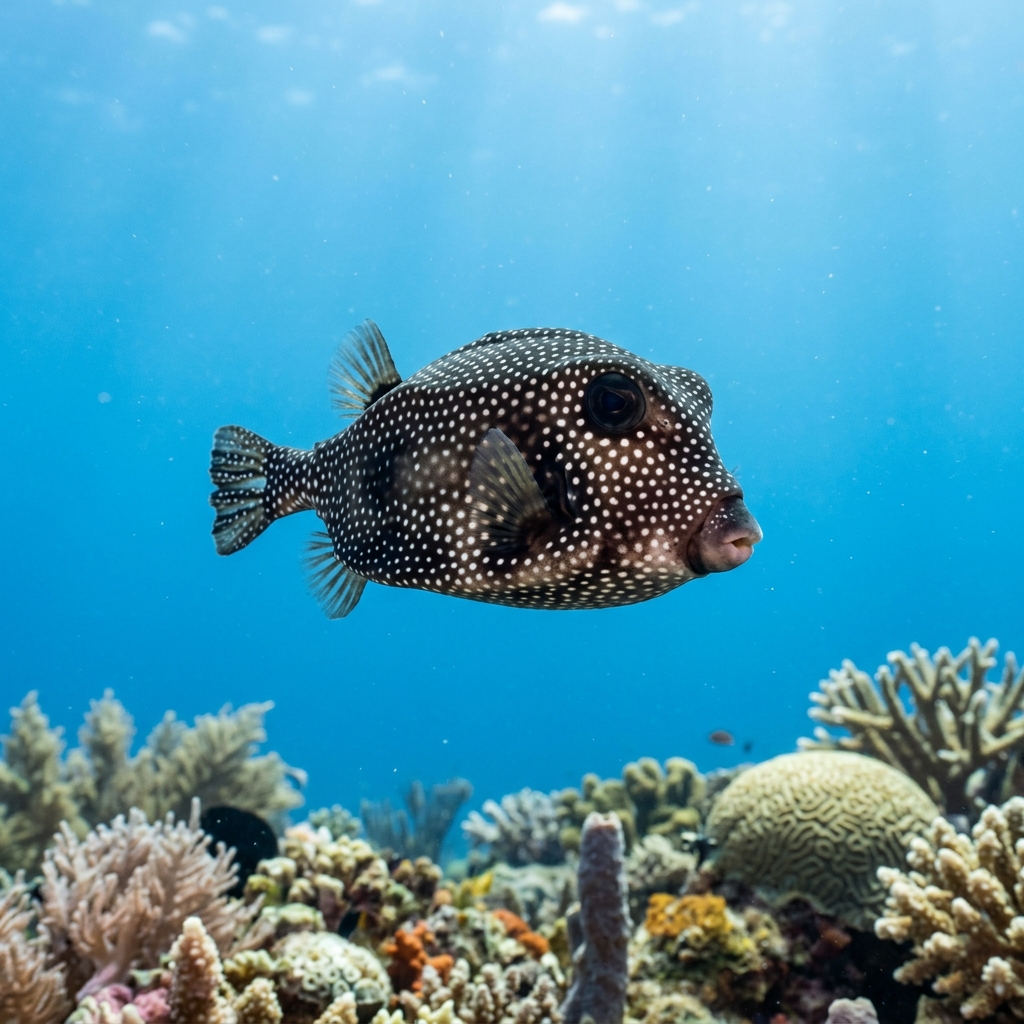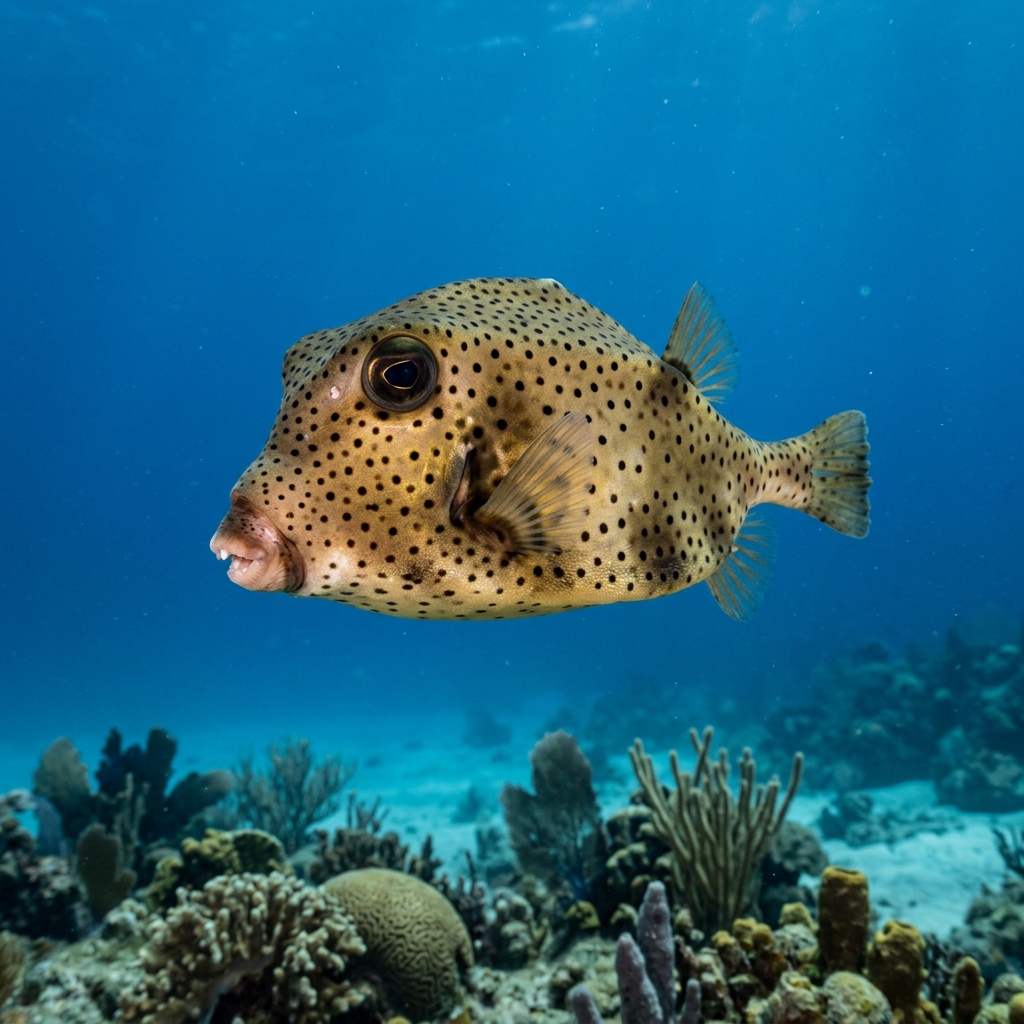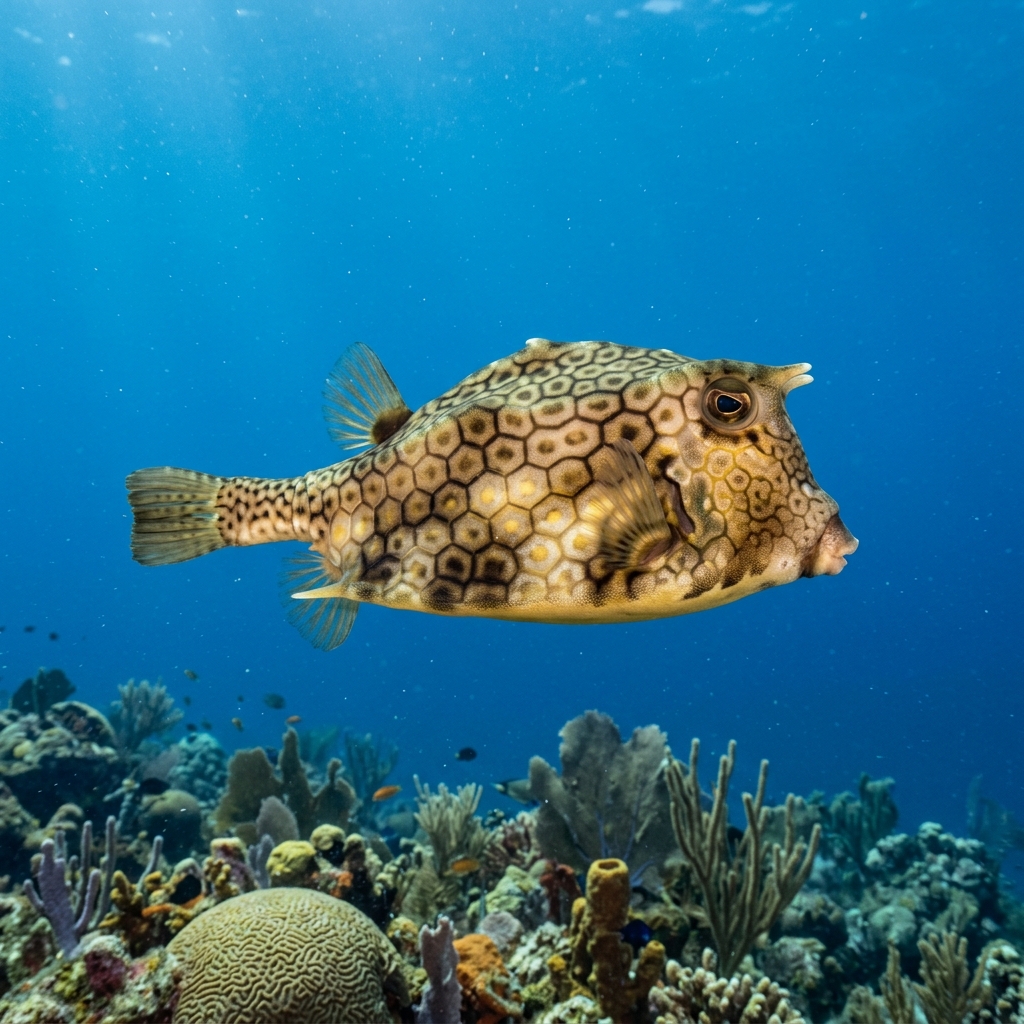
Aracana aurita
Shaw's Cowfish lurks in cool southern Australian waters from Western Australia to Tasmania. Here's where to find it and how to recognise it underwater.
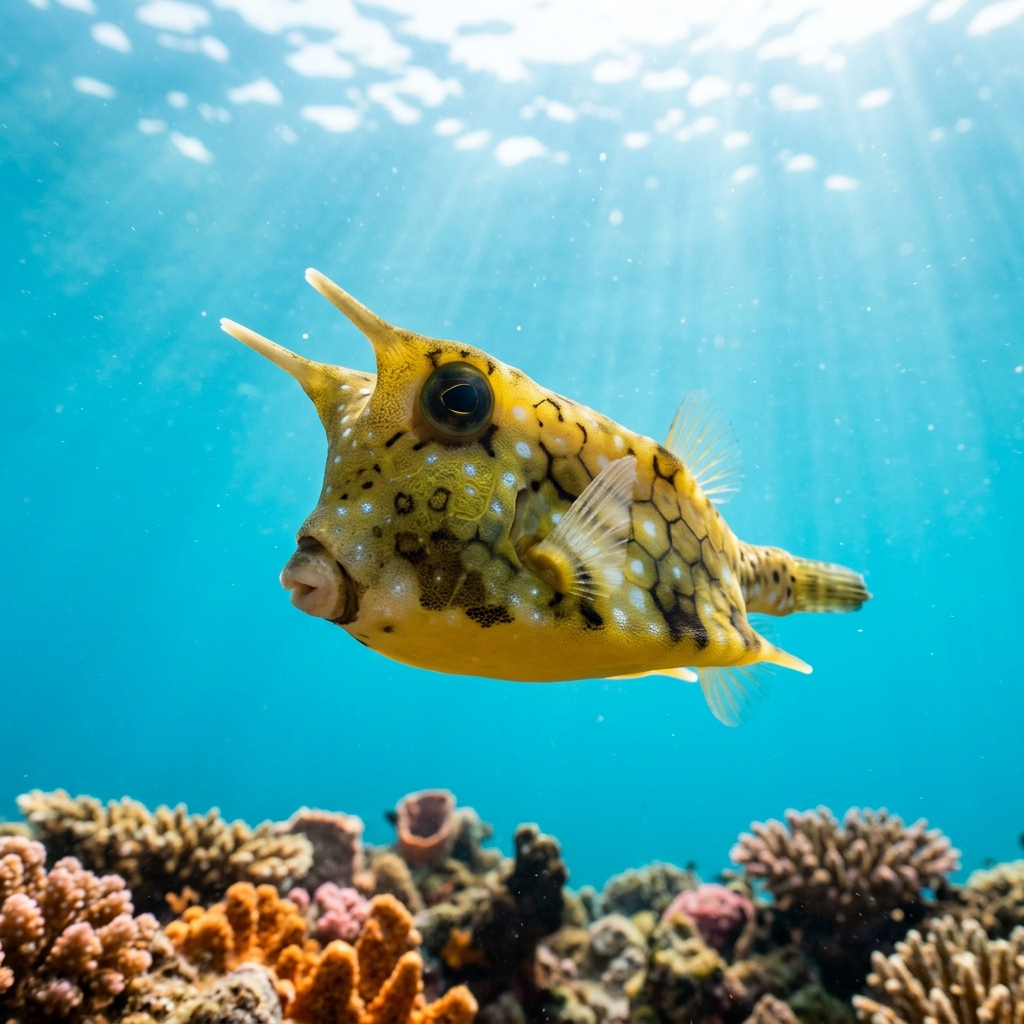
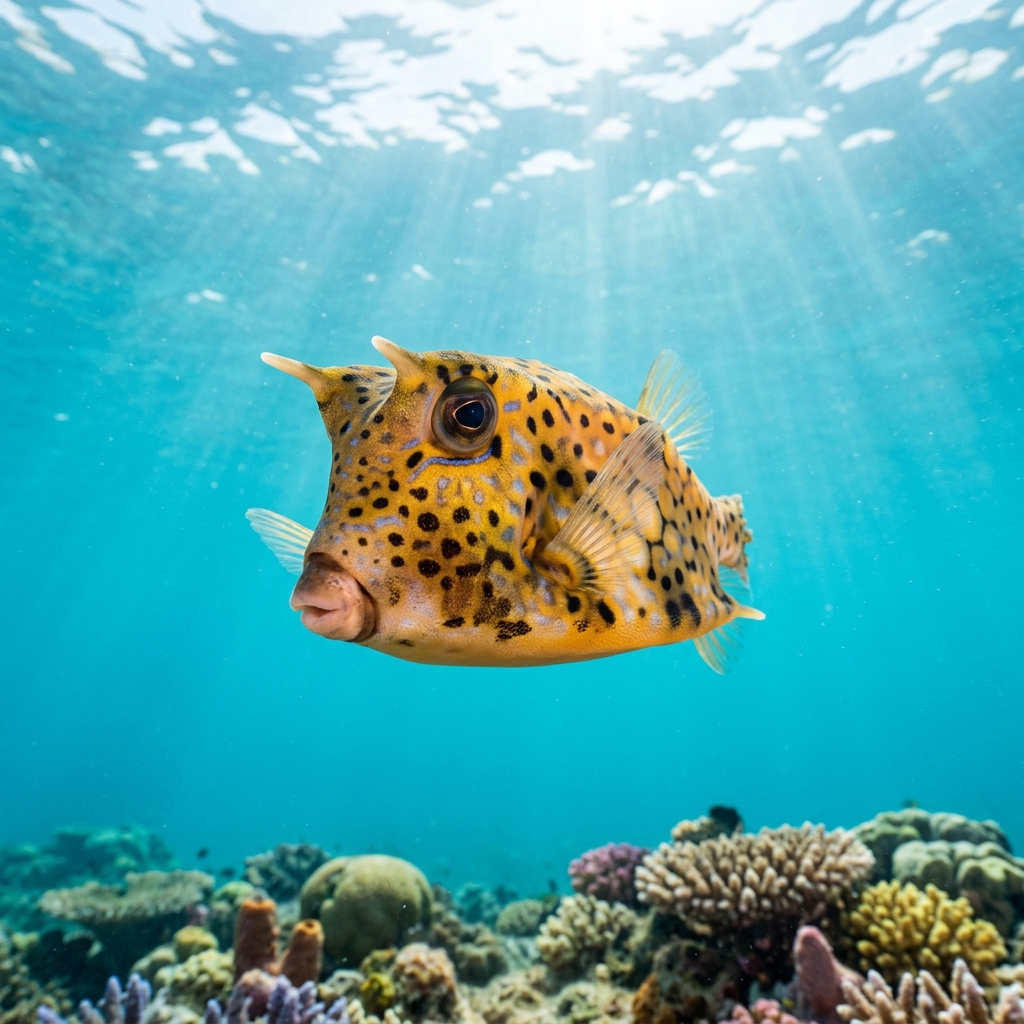
Shaw's cowfish has the unmistakable boxy silhouette shared by all boxfish relatives, a rigid, armoured body made up of fused hexagonal plates that gives it an almost geometric outline underwater. Look for the small horn-like ridges above the eyes and along the lower body margins, which help separate it from other boxfish-family members in Australian waters. Colouring tends towards yellowish-brown to olive, often with blue spotting or streaking across the body, making it blend surprisingly well against weedy or rocky reef. It moves slowly and deliberately, using its small fins to hover and manoeuvre around structure.
Shaw's cowfish is typically encountered moving slowly and methodically over rocky reefs, seagrass beds, and sandy patches adjacent to structure, picking at small invertebrates. It is generally unhurried around divers and will often continue foraging rather than fleeing, making patient observation straightforward. Most encounters happen during the day when it is actively feeding.
Like other members of the Aracanidae family, Shaw's cowfish is encased in a rigid bony carapace (a fused shell of bony plates) that limits flexible movement but provides strong physical protection against predators, the trade-off that makes its slow, almost comical swimming style entirely logical.
Sightings concentrate from July through to April across southern Australian sites, suggesting a broad season with a possible dip in the autumn-to-early-winter gap. Water temperatures at observed sites range from about 13 to 21 °C, so this is a cool-water species that suits a drysuit or a quality wetsuit year-round.
Shaw's cowfish is an exclusively Australian animal in the dive records, logged at sites spanning the entire southern coastline. Western Australia and Victoria account for the strongest representation, with South Australia and Tasmania also producing reliable sightings. It is essentially a temperate southern-coast species, so look to reefs and kelp beds in these regions rather than tropical northern waters.
Mapping where Shaw’s Cowfish is logged…
Shaw's cowfish is found exclusively along southern Australia's coastline. Western Australia and Victoria have the most logged sightings, with South Australia and Tasmania also worth targeting. Rocky reefs and kelp beds in these cool-temperate regions are your best bet.
Diver records show sightings concentrated from July through to April, giving a long but not quite year-round window. The species favours water temperatures between roughly 13 and 21 °C, so southern Australian winter and spring dives are well within range.
Key on the boxy, armoured body shape, it looks almost like a swimming box. Small horn-like ridges sit above the eyes and along the body margins, and the skin shows yellowish-brown to olive colouring with blue spots or streaks. Its slow, hovering swimming style confirms the ID.
Shaw's cowfish is a small species, typically reaching around 15 to 25 centimetres in total length. Underwater they can feel even smaller because the rigid body shape makes them look compact and dense rather than elongated.
No, Shaw's cowfish pose no threat to divers. They are slow-moving, non-aggressive, and will usually just carry on foraging when approached carefully. Simply move slowly and give them space to avoid startling them into retreating under the reef.
Shaw's cowfish belongs to the Aracanidae family, whose members are encased in a rigid carapace of fused bony plates. This armour is so stiff that the fish cannot flex its body to swim normally; instead it rows itself along using its pectoral and dorsal fins. It is a striking adaptation that makes their movement immediately recognisable underwater.
Site and sighting data is aggregated from diver logs, iNaturalist and GBIF. For taxonomy and conservation status:
Honeycomb Cowfish
1,691 sites